
Alcoholism, Drug Abuse, Mental Health, and Treatment in Alabama
What are the main addictions people in Alabama suffer from?
The main addictions people in Alabama suffer from include:
- Alcohol Addiction: Alcohol Addiction affects 260,000 individuals, 5.3% of residents aged 12 and older. Males tend to have higher rates of alcohol addiction compared to females.18,200 males that make up 7.0% and 9,880 females (3.8%) in the state of Alabama have experienced Alcohol Addiction.
- Tobacco Addiction: 1.1 million adults have Tobacco Addiction, and are current smokers. This is 22.1% of adults in Alabama. Tobacco Addiction is slightly higher among males which are 264,000 that is 24% of the adult population than 220,000 females that is 20%.
- Opioid Addiction: 63,000 individuals aged 12 or older in Alabama have Opioid Addiction, representing 12.3% of the Alabama population. Number of male individuals with opioid addiction is 37,800 (60%), while number of female individuals with opioid addiction is 25,200 (40%)
- Cannabis Addiction: 111,000 individuals in Alabama are affected by Cannabis Addiction. This is 30% of the population. The number of male addicts are 66,600 that is 60% and 44,400 female users which are 40%.
- Methamphetamine Addiction: 35,000 individuals struggling with Methamphetamine Addiction across Alabama which is 5% of Alabama’s adult population. Male methamphetamine users are 21,000 that make up 60% of the total number of addicts. Female methamphetamine users are 14,000 and account for 40% of the total.
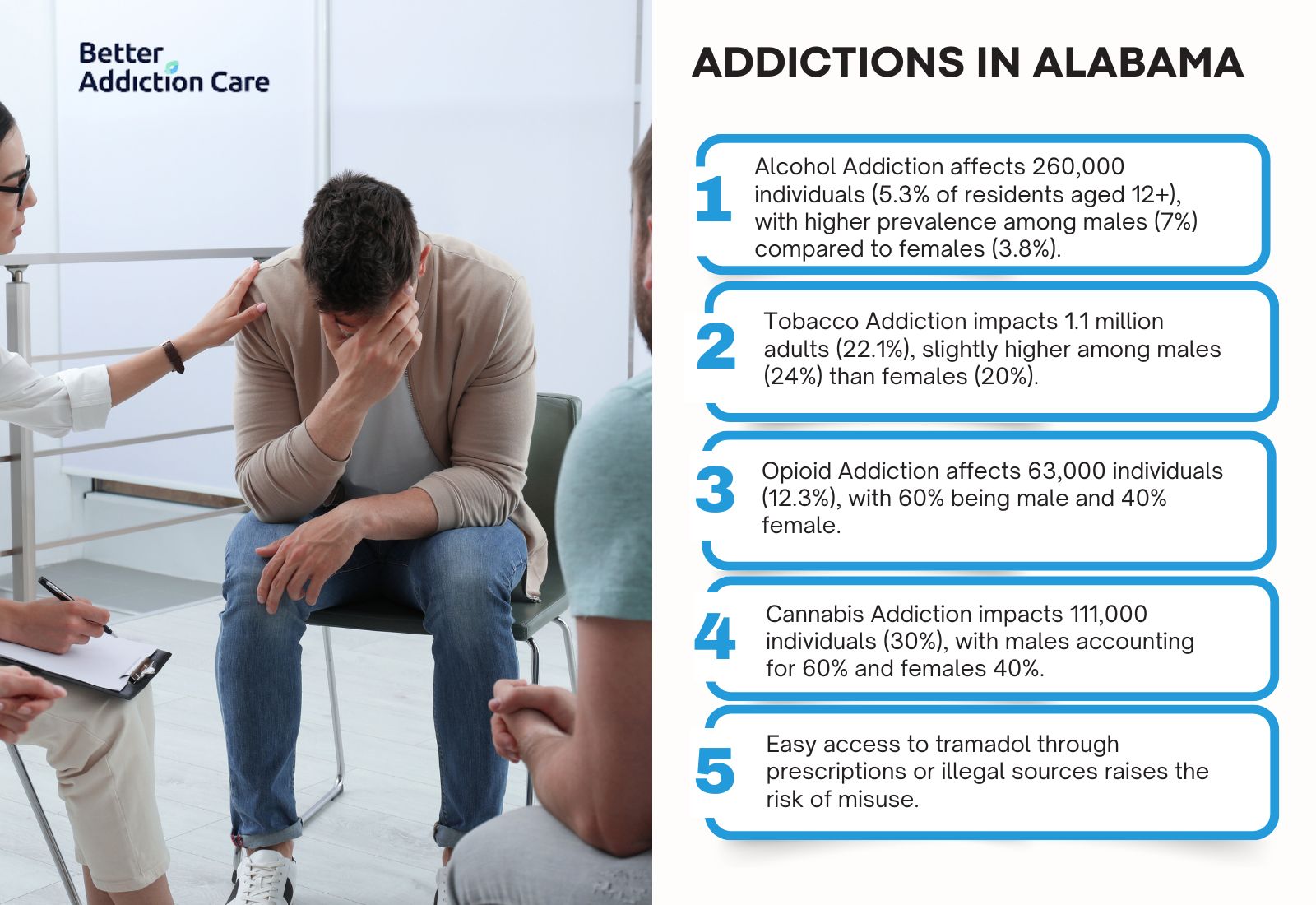
The given statistics illustrate the widespread and severe nature of addictions affecting Alabama's population across different demographics.
What is the cost of rehab centers in Alabama?
The cost of rehab centers in Alabama is $58,607. For a 30-day Inpatient program, the cost of rehab centers in Alabama is $55,000. Outpatient programs range from $1,500 to $5,000 per month, with an average cost of $3,250.
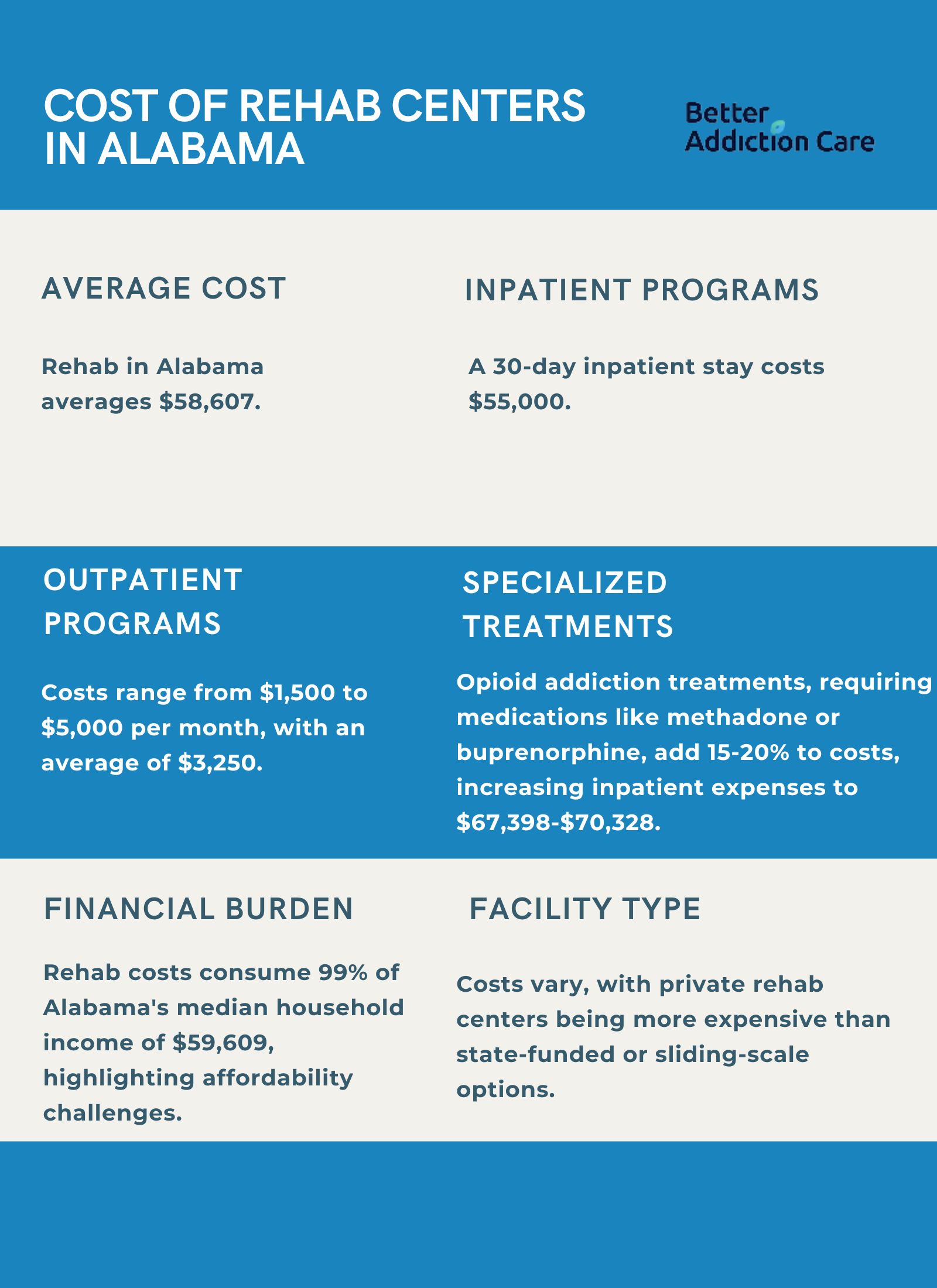
The cost of rehab centers in Alabama varies depending on the program and level of care. Certain addiction types like opioid addiction treatment often require specialized medication like methadone or buprenorphine, raising the price on average $20,512 making it up to 15-20% rise. This increase of cost results in an additional $8,791 to $11,721, bringing the total inpatient cost up to $67,398 to $70,328.
The cost of rehab centers in Alabama consumes 99% of the average annual income since Alabama’s median household income is $59,609. The cost of rehab centers in Alabama highlights its financial burden on many residents. Costs of rehab centers in Alabama also differ based on the type of rehab center, with private facilities generally being more expensive than state-funded or sliding-scale options.
What is the cost of LGBTQ+ rehab centers in Alabama?
The cost of LGBTQ+ rehab centers in Alabama is $12,500. For residential programs, the average cost for a 30-day stay is between $5,000 and $20,000, with a median of $12,500. Outpatient programs range from $1,000 to $10,000, with a median cost of $5,500.
Costs of LGBTQ+ rehab centers rise by 20-40% based on factors like the severity of addiction and the inclusion of medical detox services, potentially adding up to an additional $5,000. Intensive outpatient programs, especially those involving medications such as methadone, see costs increase by 30%, adding $1,650 more. In Alabama, addiction treatment costs differ depending on the type and duration of the program.
The median household income in Alabama is $59,609.The cost of LGBTQ+ rehab centers in Alabama is $12,500 represents 23% of the annual income, while outpatient services costing $5,500 equate to 10%. This suggests that outpatient programs are relatively more affordable for most households.
The addiction being treated also influences the cost of LGBTQ+ rehab centers. For example, opioid addiction treatments involving medication-assisted therapy raise expenses by 20-50% due to the additional cost of medications. The choice of facility plays a role in the overall cost. State-funded centers often offer reduced fees or free services, while private facilities tend to be more expensive due to their enhanced amenities and specialized care.
What is the cost of Faith-Based rehab centers in Alabama?
The cost of Faith-Based rehab centers in Alabama is $58,607. For a 30-day inpatient program, the cost of rehab centers in Alabama is $55,000. Outpatient programs range from $1,500 to $5,000 per month, with an average cost of $3,250.
The addiction being treated influences treatment costs like medical detoxification, often necessary for substances like alcohol or opioids, is more expensive, averaging $144,488. This represents an increase of $85,881, or 146%, compared to the standard inpatient program cost.
The cost of a Faith-Based rehab center is $58,607 for a 30-day inpatient program that consumes nearly the entire annual income of a median household since Alabama's median household income is $59,609. It indicates a significant financial burden for many families. Costs of Faith-Based rehab centers vary based on the type of facility, such as inpatient or outpatient centers, and the specific services offered.
What is the cost of Men-Only rehab centers in Alabama?
The cost of a Men-Only rehab center in Alabama is $56,600. For a 30-day inpatient program, the cost of rehab centers in Alabama is $55,000. Outpatient programs range from $1,500 to $5,000 per month, with an average cost of $3,250.
The addiction being treated impacts the overall expense. The treatments for opioid or alcohol addiction often cost 20% to 30% more due to the need for specialized detox and medication-assisted therapies. This increase adds an extra $11,700 to $17,600 for a 30-day inpatient stay.
The cost of a Men-Only rehab center is $56,600 constitute 95% of median household income since the median household income is $59,609, indicating a significant financial burden for many families. However, with insurance coverage up to 80%, daily costs drop to $130, making treatment more affordable. Costs of a Men-Only rehab center also vary based on the type of rehab center, such as luxury facilities versus state-funded programs.
What is the cost of Women-Only rehab centers in Alabama?
The cost of Women-Only rehab centers in Alabama is $18,500. Inpatient programs, which offer comprehensive care, cost between $7,000 and $30,000 for a 30-day stay, averaging $18,500. Outpatient programs range from $1,500 to $5,000 per month, with an average cost of $3,250. The cost of Women-Only rehab centers varies by program type and amenities.
Addictions, like opioid or alcohol addiction, increase costs of Women-Only rehab centers by 20-30% due to the need for more intensive medical treatment, detoxification services, or specialized therapies. For example, an opioid addiction treatment might push the average cost from $18,500 to $24,000.
The median household income in Alabama is $59,609 per year. An average monthly Women-Only rehab cost of $3,250 to $18,500, represents 6% to 32% of the annual income for a single 30-day treatment. The cost of Women-Only rehab also varies based on the type of facility chosen, with state-funded or non-profit centers offering lower-cost or even free options, while luxury centers demand the highest fees.
What is the cost of Teen Rehab centers in Alabama?
The cost of Teen Rehab centers in Alabama is $58,630. Inpatient rehab programs generally cost $58,600 per complete treatment plan. Outpatient services are less expensive, averaging $56.77 per day without insurance. With 60% insurance coverage, the daily cost decreases to $22.71, and with 80% coverage, it further reduces to $11.35 per day. It depends on the type of program and the duration of treatment.
Treatment costs of Teen Rehab centers increase based on the addiction being treated. For instance, managing opioid addiction often requires medication-assisted therapy, which raises the cost by 25%, increasing the inpatient treatment expense to $73,250.
In Alabama, the median household income is $59,609, while the Teen Rehab center cost $58,600 almost matching the average income. This high cost is a financial burden for many families, especially without comprehensive insurance coverage. Teen Rehab Center costs also vary depending on the type of facility. Private centers are more expensive, while state-funded or non-profit centers provide low-cost or free services based on financial need.
What is the cost of Young Adult rehab centers in Alabama?
The cost of Young Adult rehab centers in Alabama is $57,900. The average cost for a 30-day inpatient rehab program is $56,600. Outpatient treatment costs $8,600. Costs of Young Adult rehab centers vary based on the type of treatment program. For example, specialized therapies like the Adolescent Community Reinforcement Approach (A-CRA) range from $1,700 to $2,200 per episode. Addiction types like opioid addiction affect costs significantly. For instance, medical detox is 146% higher than the average inpatient cost, reflecting the intensive medical care required. Medical detox, the most intensive option, averages $144,500. Outpatient programs are 85% cheaper than inpatient care.
The median household income in Alabama is $59,609, which means the average cost of a Young Adult rehab center almost matches the annual income for many households, making affordability a challenge. However, insurance plans, including Medicaid and Medicare, reduce out-of-pocket expenses. Some centers offer sliding-scale fees to increase accessibility. The cost also depends on the specific rehab facility, with luxury centers and those providing specialized care generally charging higher fees.
What is the cost of Luxury Rehab centers in Alabama?
The cost of Luxury Rehab centers in Alabama is $45,000. The average cost for a luxury rehab center in Alabama ranges from $30,000 to $60,000 per month. Outpatient treatment costs $8,600.
Luxury Rehab centers in Alabama provide premium services and personalized care, contributing to higher costs compared to standard facilities. The price is influenced by factors such as the type of addiction being treated. For instance, treating alcohol addiction increases the cost by $6,750 (15%), while prescription drug treatments raise expenses by $11,250 (25%).
The cost of a single month of Luxury Rehab is $45,000 that equates to 83% of the annual income since the average household income in Alabama is $59,609, which demands a significant financial commitment for many households. The cost of a single month of Luxury Rehab highlights the importance of insurance coverage, which helps in offset expenses. The type of rehab facility, whether inpatient or outpatient, also affects the total cost of Luxury Rehab centers in Alabama.
What is the cost of Dual Diagnosis rehab centers in Alabama?
The cost of Dual Diagnosis rehab centers in Alabama is $32,188 . It ranges from $5,000 to $60,000 per month for inpatient programs, while outpatient services have an average daily cost of $57,00 (17.53%) without insurance coverage. These costs of Dual Diagnosis rehab centers vary based on the addiction. For example, treatments for opioid addiction tend to be more expensive, potentially increasing the overall cost by 25% to 50%.
The average household income in Alabama is $59,609, a one-month inpatient program of Dual Diagnosis rehab centers is 32,188 that is 54% of the median household income. Alabama offers state-funded Dual Diagnosis rehab centers that provide low or no-cost treatment for individuals without insurance, operating on a sliding scale based on financial need.
Is drug abuse and addiction a problem in Alabama?
Yes, drug abuse and addiction is a problem in Alabama. Firstly, the opioid addiction has escalated sharply, with Alabama consistently ranking among the top states for opioid addiction. In 2024, Alabama had the highest opioid prescribing rate in the U.S., at 97.5 prescriptions per 100 residents, more than double the national average.
Secondly, Alabama has seen a surge in methamphetamine addiction, contributing to rising rates of drug-related hospitalizations and overdose deaths. In 2024, methamphetamine addiction was involved in 42% of drug overdose deaths in Alabama, a dramatic increase from 17% in 2022.
Thirdly, the lack of access to adequate addiction treatment services, especially in rural areas, has exacerbated the issue, leaving many without the necessary support. The number of overdose deaths in Alabama nearly doubled from 2019 to 2024, indicating a worsening trend over the years.
Is alcoholism a problem in Alabama?
Yes, alcoholism is a problem in Alabama for several reasons. Firstly, alcohol-related fatalities are on the rise, with alcohol addiction contributing to 20% of traffic deaths in Alabama. The alcohol addiction trend has been increasing steadily, highlighting the growing danger. Secondly, binge drinking rates have climbed, with the percentage of adults engaging in binge drinking rising from 14% in 2021 to 18% in 2024. The increase is particularly noticeable among young adults and college students, indicating a troubling trend. Thirdly, limited access to treatment services, especially in rural areas, makes it difficult for those struggling with alcohol dependence to receive proper care, worsening the problem statewide.
Is Mental Health a problem in Alabama?
Yes, mental health is a problem in Alabama for three main reasons. Firstly, Alabama has a high prevalence of mental health disorders, with 20% of adults reporting some form of mental illness in recent years. From 2015 to 2024, the rate of adults experiencing serious mental health issues increased by 15%, indicating a growing crisis. Secondly, Alabama faces a severe shortage of mental health professionals. The state of Alabama ranks among the lowest in the U.S. for access to mental health services, with only one provider available for every 1,200 residents, worsening the disparity over the last decade. Thirdly, the rates of suicide and self-harm have seen a troubling increase. Suicide rates in Alabama rose by over 25% between 2012 and 2024, reflecting the escalating mental health challenges faced by its population.
Can you travel to Alabama for rehab?
Yes, you can travel to Alabama for rehab, and there are several compelling reasons to choose Alabama. Firstly, Alabama offers a variety of specialized treatment centers, including facilities known for their comprehensive programs focused on addiction and co-occurring mental health disorders. This diversity allows patients to find personalized care tailored to their specific needs. Secondly, the state of Alabama provides a serene and natural environment, with access to tranquil locations like the Appalachian Mountains and Gulf Coast, which aid in relaxation and support a therapeutic setting for recovery. Lastly, the cost of rehab center services in Alabama is generally lower compared to many other states of the U.S., making it a more affordable option without compromising the quality of care. These factors make Alabama a unique and attractive destination for those seeking effective rehab.
Can addiction be treated in Alabama?
Yes, addiction can be treated in Alabama for several reasons. Firstly, Alabama has a growing number of accredited treatment centers offering a range of services, including detox programs, inpatient and outpatient care, and medication-assisted treatments, ensuring comprehensive support. Secondly, Alabama's healthcare providers are increasingly integrating mental health services with addiction treatment, addressing co-occurring disorders effectively and improving recovery outcomes. Thirdly, the state of Alabama has community-based programs and support groups that play a crucial role in long-term recovery, providing ongoing resources and a network of peer support to help individuals maintain sobriety.
What is the state of Alabama?
The state of Alabama is in the southeastern United States. It is bordered by Tennessee to the north, Georgia to the east, Florida to the south, and Mississippi to the west. The state also has a coastline along the Gulf of Mexico in the southwest.
Alabama has a population of 5 million people. The gender distribution is close to equal, with 2.42 million (48%) males and 2.58 million (51.6%) females.
Alabama has a mixed economy but tends to rank below the national average in terms of wealth and income. The median household income is lower than the national average, indicating a relatively higher poverty rate. However, certain urban areas like Birmingham and Huntsville have seen economic growth due to industries such as aerospace, technology, and automotive manufacturing.
What is the population of Alabama?
The population of Alabama is 5.1 million people. The gender breakdown shows 2.5 million males (49%) and 2.6 million females (51%). By age group, the 0-14 years is 1.05 million (20.6% of the population), 15-24 years is 690,000 (13.5%), 25-54 years is 2.1 million (41.2%), 55-64 years is 660,000 (13%), 65 years and older is 800,000 (15.7%). Alabama has a slightly higher percentage of residents aged 65 and older than the national average, indicating an aging population trend.
What is the income of people from Alabama?
The income of people from Alabama is $82,992, the population of Alabama, while the median household income is $59,609, falling below the national income. On average, males earn $40,000 per year, whereas females have an average income of $29,000, indicating a significant gender income gap. Income levels also differ by age group, with individuals under 25 earning $28,000 annually. Those aged 25 to 44 earn $45,000, while people aged 45 to 64 have an income of $52,000. For those aged 65 and older, the income drops to $33,000. Overall, income generally increases with age until retirement, and males tend to earn more than females across all age groups.