
This page lists 853 treatment facilities in Florida across 169 cities and towns. Of the rehab centers in Florida we list, 270 accept Medicaid and 203 accept Medicare. Outpatient care is the most common level of care. Standard outpatient is offered at 476 facilities, intensive outpatient programs (IOP) at 120, and day treatment or partial hospitalization at 154.
For people who need more structure, 108 facilities offer residential programs and 94 provide detox. In addition, 212 facilities treat addiction together with co-occurring mental health conditions.
Florida Medicaid covers treatment through Statewide Medicaid Managed Care (SMMC) plans. Addiction services in the state are overseen by the Florida Department of Children and Families (DCF) through its Office of Substance Abuse and Mental Health. DCF also licenses treatment providers under Chapter 397. Florida has not expanded Medicaid, so adults without children rarely qualify. Residents without insurance can reach state-funded treatment through one of seven regional Managing Entities, which contract that care for the state, and can dial 211 for local referrals. Our Florida free and Medicaid rehab list is another place to start.
The largest metros for drug rehab in Florida are Miami with 61 facilities, Fort Lauderdale with 47, and Tampa and West Palm Beach with 38 each: see Miami, Fort Lauderdale, Tampa and West Palm Beach. Readers outside these areas can use the filters above to sort by level of care and find programs within reach. Virtual or in-home treatment is available from 61 rehab centers in Florida.
When a loved one will not seek help voluntarily, Florida's Marchman Act (Florida Statutes Chapter 397) lets a family petition the court for involuntary assessment and treatment. Support can continue after a program ends: our Florida meetings page lists 3,871 AA meetings and 1,229 NA meetings for anyone looking beyond drug rehab in Florida. The Better Addiction Care helpline at 866-567-3138 is a sponsored placement.
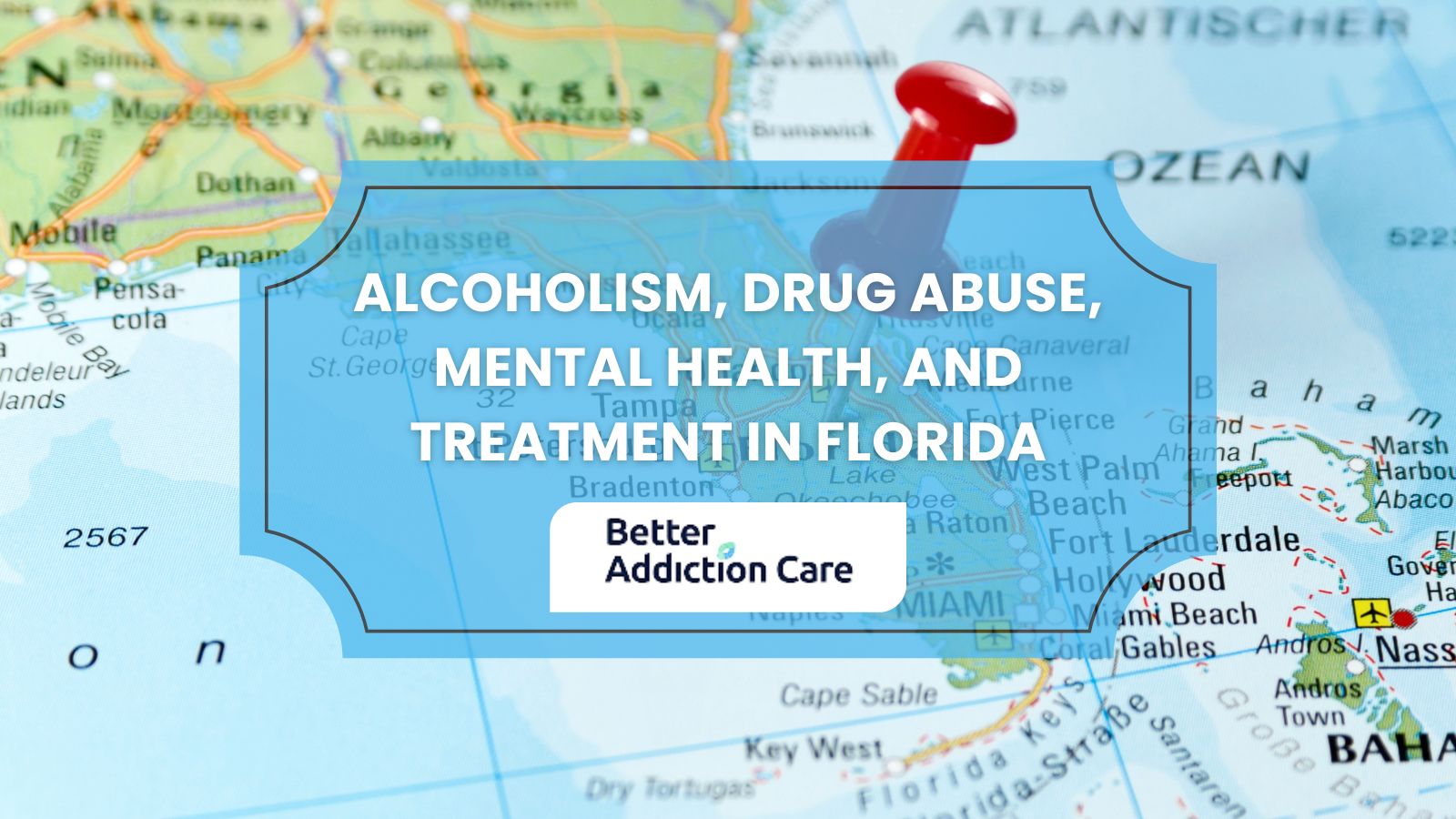
Alcoholism, Drug Abuse, Mental Health, and Treatment in Florida
What are the main addictions people in Florida suffer from?
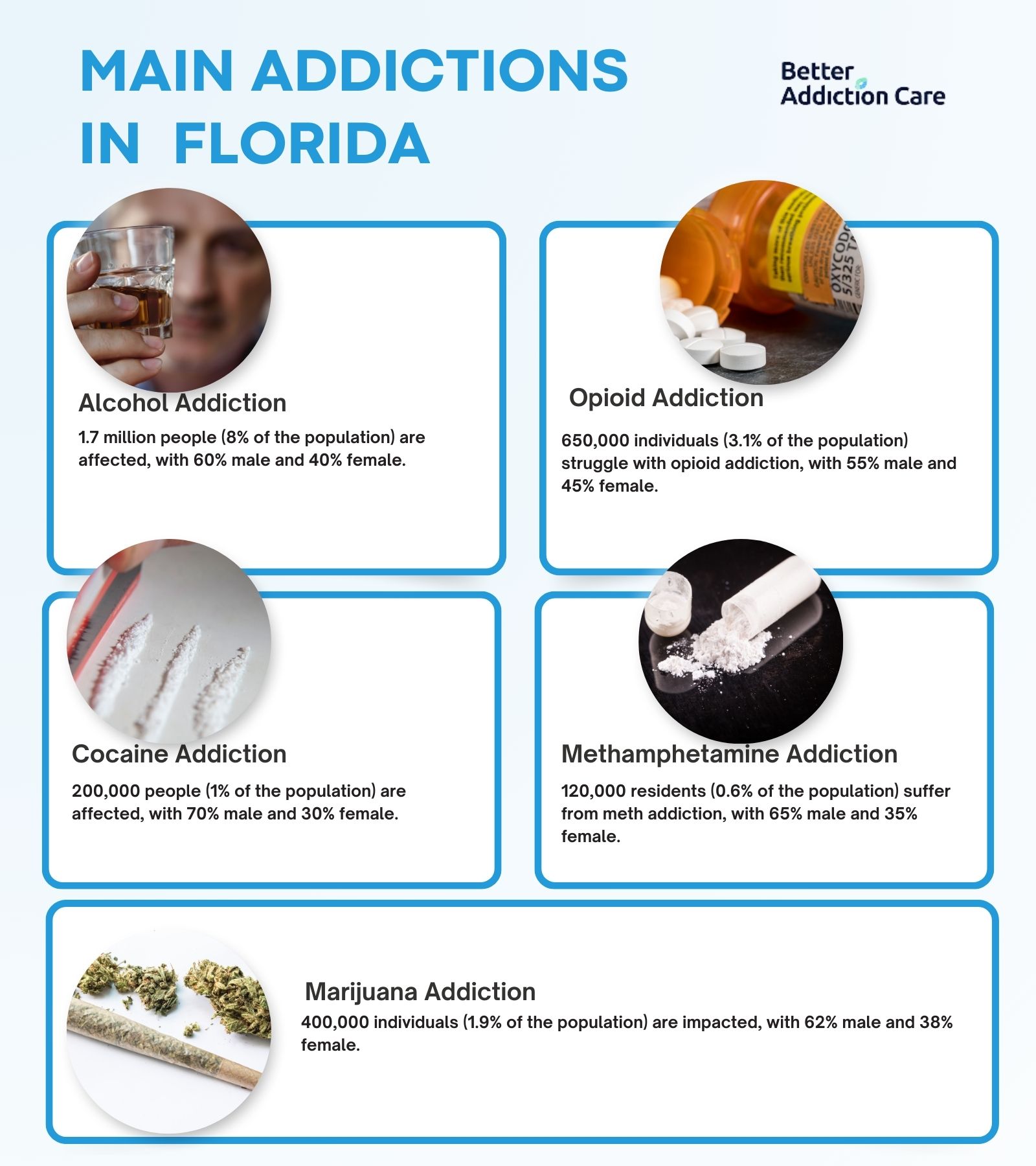
The main addictions people in Florida suffer from includes:
1. Alcohol Addiction: 1.7 million people in Florida experience alcohol dependency, accounting for 8% of Florida's population. 1.02 million (60%) male, representing 9.6% of Florida's male population. 680,000 (40%) female, representing 6.4% of Florida's female population affected from alcohol addiction.
2. Opioid Addiction: 650,000 individuals face opioid addiction, or 3.1% of the population. 357,500 (55%) male, representing 3.3% of the male population. 292,500 (45%) male, representing 2.8% of the female population affected from opioid addiction.
3. Cocaine Addiction: 200,000 individuals, equating to 1% of Floridians affected from Cocaine addiction. 140,000 (70%) male, representing 1.3% of the male population 60,000 (30%), representing 0.6% of the female population.
4. Methamphetamine Addiction: Methamphetamine Addiction affects 120,000 residents, or 0.6% of Florida's population. 78,000 (65%), representing 0.7% of the male population. 42,000 (35%), representing 0.4% of the female population face methamphetamine dependency.
5. Marijuana Addiction: Impacts 400,000 people, or 1.9% of Florida's population. 248,000 (62%), representing 2.3% of males. 152,000 (38%), representing 1.4% of females, used marijuana in 2024.
Florida's addiction patterns reflect both its local environment and national trends, with factors such as tourism and proximity to drug trafficking routes influencing substance availability and consumption rates.
What is the cost of rehab centers in Florida?
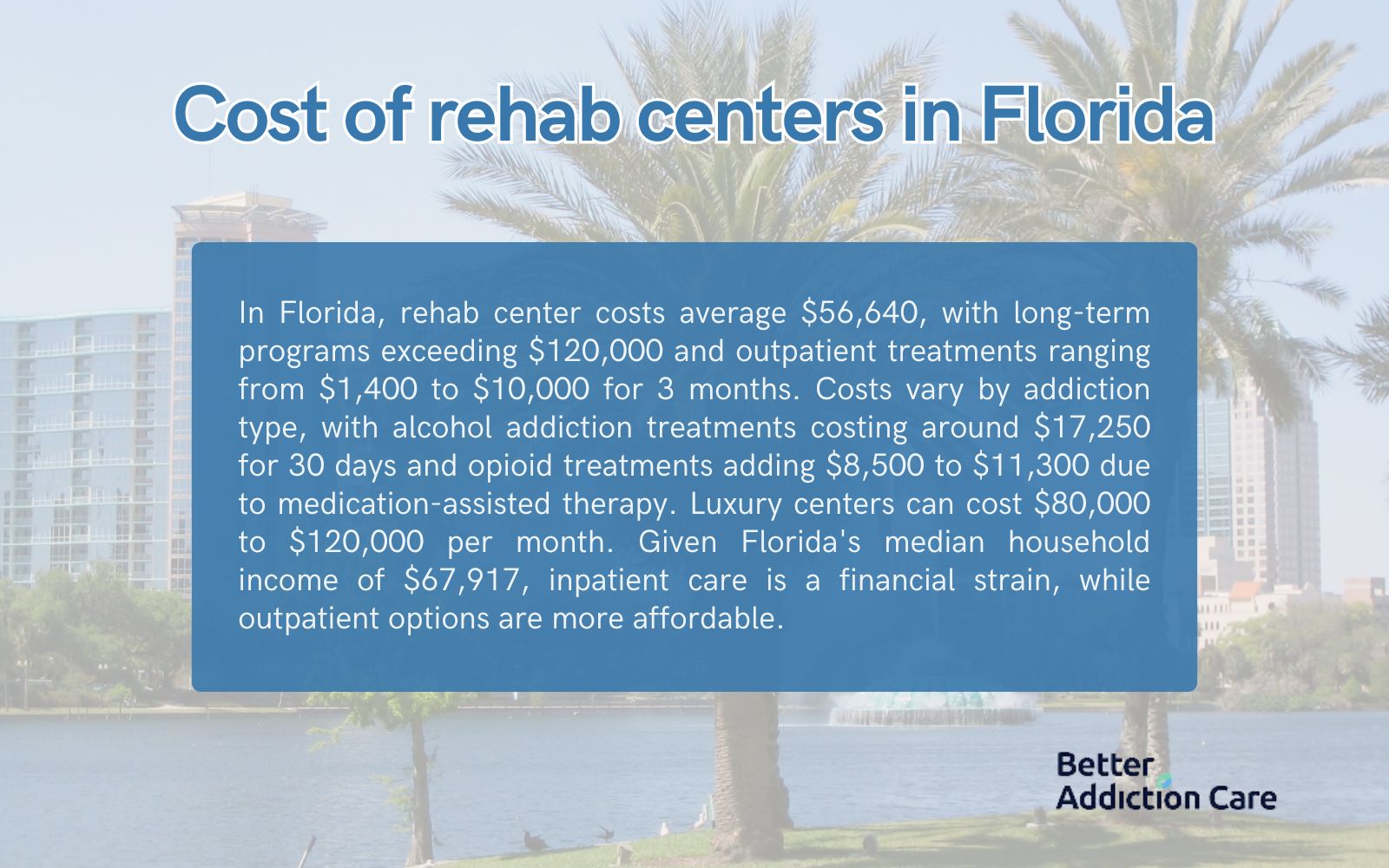
The cost of the rehab center in Florida is $56,640, which equates to 78.5%. Long-term residential programs for 60-90 days reach $120,000 or more. Outpatient programs cost $1,400 to $10,000 for 3 months. The cost of the rehab center represents the cost of a full residential treatment program, which includes lodging, meals, detox services, therapy, and medical supervision.
The type of addiction treated influences the cost. For instance, alcohol addiction often involves detox and therapy, with outpatient care ranging from $500 to $650 per day and averaging $575 daily, resulting in a 30-day cost of $17,250. Opioid addiction, on the other hand, often requires medication-assisted treatment (MAT) with drugs like Suboxone or methadone, which increases the cost by 15-20%, amounting to an additional $8,500 to $11,300 for a month-long program. Similarly, treatment for dual diagnoses, which address both substance addiction and mental health disorders, add $10,000 to $20,000 to the overall cost. The type of rehab program also plays a critical role, with standard facilities offering essential services at more affordable rates, while luxury rehab centers with private rooms, high-end amenities, and alternative therapies cost between $80,000 and $120,000 per month.
The median household income in Florida is $67,917. This means the cost of an inpatient program represents 83% of the average annual income, highlighting the financial burden such programs impose without insurance or financial assistance. Outpatient programs, by contrast, cost between 2-15% of the median household income, offering a more affordable route to treatment. While costs are affected by the type of addiction and the services required, the type of facility is another important factor, with luxury rehab centers potentially tripling the expense of a standard program. Ultimately, financial assistance programs, insurance coverage, and choosing the right type of facility make rehab more accessible for individuals seeking treatment.
What is the cost of LGBTQ+ rehab centers in Florida?
The cost of LGBTQ+ rehab centers in Florida is $70,000, equates to 70%. On average, a 30-day inpatient program at an LGBTQ+ rehab center in Florida costs $65,000 to $75,000, depending on the facility and level of care, while Outpatient programs cost $1,400 to $10,000. The inpatient program is higher than the general average of $56,640 for standard inpatient programs, representing an increase of $8,360 to $18,360, or 15-32%. LGBTQ+ rehab centers are higher than general rehab facilities due to the specialized services they provide, such as inclusive environments, trauma-focused therapies, and staff trained in LGBTQ+ issues. The costs vary further based on the type of addiction being treated. For example, alcohol addiction treatment in an outpatient setting costs between $15,000 and $19,500 for a 30-day program, while opioid addiction requiring medication-assisted treatment (MAT) increases costs by an additional 15-20%, adding $9,750 to $15,000.
The median household income in Florida is $67,917, meaning that a 30-day LGBTQ+ inpatient program costing $70,000 consumes over 100% of the annual median income, highlighting affordability challenges. Outpatient options, costing $1,400 to $10,000 for three months, represent a more accessible route for many individuals. Costs of LGBTQ+ rehab centers also fluctuate based on the type of rehab center, with luxury facilities offering private rooms and high-end amenities further increasing expenses, while standard LGBTQ+ facilities provide more cost-effective solutions tailored to the community's needs.
What is the cost of Faith-Based rehab centers in Florida?
The cost of Faith-Based rehab centers in Florida is $50,000, equates to 72.5%. The average cost of a 30-day inpatient faith-based rehab program in Florida ranges between $45,000 and $55,000, which is slightly lower than the general inpatient average of $56,640. The cost reflects a cost reduction of $1,640 to $11,640, or 3-20% less than standard inpatient programs. Outpatient programs cost $1,400 to $10,000 for 3 months.
Faith-Based rehab centers offer a unique approach to addiction recovery by incorporating spiritual and religious principles into treatment. These centers vary in cost, with some, such as Faith Farm Ministries, providing programs at no cost, making them an accessible option for individuals who afford standard rehab programs. Costs fluctuate based on the type of addiction treated. For example, alcohol addiction treated in an outpatient Faith-Based setting costs $500 to $650 per day, averaging $575 daily and amounting to $17,250 for a 30-day program. Opioid addiction requiring medication-assisted treatment (MAT) increases costs by 15-20%, adding an extra $6,750 to $11,000 for the same duration.
Florida’s median household income is $67,917, the cost of a Faith-Based inpatient program represents 66-81% of the annual income, indicating that even these programs pose financial challenges for many households. However, free or subsidized Faith-Based centers provide a critical option for those in need of affordable care. Costs of Faith-Based rehab centers also vary depending on the type of facility, with luxury Faith-Based rehab centers offering premium amenities increasing expenses, while standard centers provide more budget-friendly options tailored to spiritual recovery.
What is the cost of Men-Only rehab centers in Florida?
The cost of Men-Only rehab centers in Florida is $55,000, equates to 72%. The cost of a 30-day inpatient Men-Only rehab program in Florida averages $50,000 to $60,000, slightly below or comparable to the general average of $56,640 for standard inpatient facilities. The cost represents a potential reduction or increase of $6,640 to $3,360, or 12% less to 6% more, depending on the facility and services provided. Outpatient programs cost $1,400 to $10,000 for 3 months. Men-Only rehab centers provide tailored addiction treatment programs that focus on the specific needs and challenges faced by men during recovery. The cost varies significantly based on the type of addiction being treated. For instance, alcohol addiction treated in an outpatient setting costs between $500 and $650 per day, averaging $575 daily and amounting to $17,250 for a 30-day program. Opioid addiction, often requiring medication-assisted treatment (MAT) with drugs like Suboxone, increases the overall expense by 15-20%, or an additional $7,500 to $12,000 for a month-long program.
The median household income of Florida is $67,917, the average cost of a Men-Only inpatient rehab program constitutes 74-88% of the annual income, making affordability a concern for many individuals without insurance or financial assistance. Outpatient programs, which range from $1,400 to $10,000 for three months, are a more cost-effective option, consuming 2-15% of the median income.
It’s worth noting that the cost of Men-Only rehab centers also varies depending on the type of facility. Standard rehab centers offering essential services tend to be more affordable, while luxury facilities with premium amenities such as private rooms, specialized therapies, and recreational activities significantly increase the overall cost.
What is the cost of Women-Only rehab centers in Florida?
The cost of Women-Only rehab centers in Florida is $57,500, equates to 85%. The average cost for a 30-day inpatient Women-Only rehab program in Florida is $50,000 to $65,000, which is slightly below or above the general average cost of $56,640 for standard inpatient programs. The cost of Women-Only rehab centers represents a potential decrease of $6,640 or an increase of up to $8,360, translating to a cost change of 12% less to 15% more, depending on the facility and the level of care provided. Outpatient programs cost $1,400 to $10,000 for 3 months. Women-Only rehab centers offer specialized treatment programs tailored to the unique needs and challenges faced by women in recovery. The cost varies significantly based on the addiction being treated. For example, alcohol addiction treatment in an outpatient setting costs between $500 and $650 per day, averaging $575 daily, amounting to $17,250 for a 30-day program. Opioid addiction, often requiring medication-assisted treatment (MAT) with drugs like Suboxone or methadone, increases the overall expense by 15-20%, adding $7,500 to $13,000 to the total cost for a 30-day treatment.
The median household income of Florida is $67,917, the average cost of a Women-Only inpatient rehab program consumes 74-96% of the annual income, making it a significant financial commitment for many individuals without insurance or financial aid. However, outpatient programs, which range from $1,400 to $10,000 for three months, present a more affordable option, using only 2-15% of the median income.
It’s important to note that the cost of Women-Only rehab centers also depends on the type of facility. Luxury rehab centers with premium amenities, private accommodations, and alternative therapies increase expenses, while standard facilities offering essential services provide more budget-friendly solutions tailored to women’s recovery needs.
What is the cost of Teen rehab centers in Florida?
The cost of Teen rehab centers in Florida is $57,500, which equates to 85.5%. The average cost for a 30-day inpatient Teen rehab program in Florida is $50,000 to $65,000, comparable to or slightly higher than the general average of $56,640 for standard inpatient programs. This reflects a potential decrease of $6,640 or an increase of up to $8,360, translating to a cost change of 12% less to 15% more, depending on the facility and the level of care provided. Outpatient programs cost $1,400 to $10,000 for 3 months.
Teen rehab centers provide specialized care tailored to the needs of adolescents struggling with substance addiction and related issues. The cost varies based on the addiction being treated. For example, outpatient treatment for alcohol addiction costs between $500 and $650 per day, averaging $575 daily, amounting to $17,250 for a 30-day program. Opioid addiction treatment, often requiring medication-assisted treatment (MAT) with drugs like Suboxone or methadone, increase costs by 15-20%, adding $7,500 to $13,000 to the total cost for a month-long treatment.
The median household income in Florida is $67,917, the average cost of a 30-day inpatient Teen rehab program represents 74-96% of the annual income. This makes affordability a significant concern for families without insurance or financial assistance. However, outpatient programs, ranging from $1,400 to $10,000 for three months, provide a more budget-friendly option, consuming only 2-15% of the median income.
It’s worth noting that the cost of Teen rehab centers also depends on the type of facility. Luxury rehab centers with premium amenities, private accommodations, and specialized therapies for teens significantly increase expenses, while standard facilities offering essential services are more economical and focused on the unique needs of adolescents.
What is the cost of Young Adult rehab centers in Florida?
The cost of Young Adult rehab centers in Florida is $57,000, which equates to 85%. The average cost of a 30-day inpatient program for young adults is $50,000 to $65,000, which is in line with or slightly above the general average cost of $56,640 for standard inpatient rehab facilities. The cost represents a potential decrease of $6,640 or an increase of up to $8,360, translating to a cost change of 12% less to 15% more, depending on the level of care and services provided. Outpatient programs cost $1,400 to $10,000 for 3 months. Young Adult rehab centers provide specialized programs to address the unique challenges faced by individuals in their late teens and twenties struggling with substance use addiction. Costs fluctuate significantly based on the addiction being treated. For instance, outpatient treatment for alcohol addiction costs between $500 and $650 per day, averaging $575 daily and totaling $17,250 for a 30-day program. Opioid addiction treatment, which often requires medication-assisted treatment (MAT), increases expenses by 15-20%, adding $7,500 to $13,000 for a month-long treatment.
Florida’s median household income is $67,917, the cost of a Young Adult inpatient rehab program represents 74-96% of the annual income, making it a substantial financial commitment for families without insurance or financial aid. Outpatient programs, ranging from $1,400 to $10,000 for three months, are a more cost-effective alternative, consuming only 2-15% of the median household income.
The cost of Young Adult rehab also depends on the type of facility chosen. Luxury rehab centers with premium accommodations, advanced therapies, and recreational amenities significantly increase costs, while standard facilities offering essential services provide more affordable and focused care tailored to the needs of young adults.
What is the cost of Luxury Rehab centers in Florida?
The cost of Luxury rehab centers in Florida is $70,000, equates to 45%. The average cost of a 30-day stay at a luxury rehab center in Florida ranges from $30,000 to $100,000, depending on the level of exclusivity and services offered. This is notably higher than the general average of $56,640 for standard inpatient programs, reflecting an increase of $43,360, or up to 76% more at the higher end. Outpatient programs cost $1,400 to $10,000 for 3 months.
Luxury rehab centers provide premium services and high-end amenities, including private accommodations, gourmet meals, spa treatments, and personalized therapies, which increase their cost compared to standard facilities. The type of addiction being treated impacts the cost. For instance, alcohol addiction treatment in an outpatient setting costs $500 to $650 per day, averaging $575 daily and totaling $17,250 for 30 days. Opioid addiction treatment, which often requires medication-assisted treatment (MAT), further increases expenses by 15-20%, adding an additional $7,500 to $13,000 for the same duration.
The median household income in Florida is $67,917, the cost of a Luxury rehab program at its lower end represents 44% of annual income, while the upper end of $100,000 far exceeds the median income by nearly 47%. This makes Luxury rehab centers financially out of reach for many families unless covered by comprehensive insurance or supplemented with financial aid.
Costs of Luxury rehab centers vary based on the specific type of luxury facility. Some centers focus on exclusive settings and alternative therapies, while others provide standard addiction treatment with added comfort and privacy. These variations make it essential for individuals to choose a facility that aligns with their needs and budget.
What is the cost of Dual Diagnosis rehab centers in Florida?
The cost of Dual diagnosis rehab centers in Florida is $17,500, which equates to 44%. The average cost of a 30-day inpatient dual diagnosis program in Florida ranges from $5,000 to $30,000, depending on the facility and the services provided. This is significantly lower than the general average of $56,640 for standard inpatient rehab programs, especially at the lower end, reflecting a cost reduction of up to 91%, or significantly higher for facilities offering intensive mental health care and additional therapies. Outpatient programs cost $1,400 to $10,000 for 3 months.
Dual Diagnosis rehab centers cater to individuals with co-occurring substance use and mental health disorders, offering specialized care that make treatment more complex and costly. The average cost of a 30-day inpatient dual diagnosis program in Florida ranges from $5,000 to $30,000, depending on the facility and the services provided. This is significantly lower than the general average of $56,640 for standard inpatient rehab programs, especially at the lower end, reflecting a cost reduction of up to 91%, or significantly higher for facilities offering intensive mental health care and additional therapies. Costs vary further depending on the addiction type being treated. For example, outpatient treatment for alcohol addiction costs $500 to $650 per day, averaging $575 daily, resulting in a 30-day total of $17,250. Opioid addiction treatment, which requires medication-assisted treatment (MAT), increases expenses by 15-20%, adding an extra $7,500 to $13,000 for a month-long program.
Florida's median household income is $67,917, the affordability of Dual Diagnosis programs depends heavily on the specific facility. At the lower end of $5,000, the cost represents only 7% of the annual income, making it far more accessible. However, at the upper end of $30,000, the cost constitutes 44% of the median household income, which poses financial challenges for some families.
The cost of Dual Diagnosis rehab centers also depends on the type of facility chosen. Standard facilities offering essential care are generally more affordable, while luxury rehab centers with additional amenities, private accommodations, and advanced therapeutic services significantly increase costs. This variability underscores the importance of selecting a program that aligns with both the individual's clinical needs and financial circumstances.
Is drug abuse and addiction a problem in Florida?
Yes, Drug abuse and addiction is a problem in Florida, with several key factors contributing to the ongoing crisis. The state of Florida has experienced a sharp rise in drug overdose deaths, with 7,831 fatalities reported in 2024, marking a 37% increase from the previous year. Illicit drug use is prevalent, with 8% of Florida's population, or 1.5 million individuals, engaging in substance abuse. Youth substance addiction also remains a critical concern, as the 2023-2024 National Survey on Drug Use and Health reported that 97,000 individuals aged 12-17 in Florida had used illicit drugs in the past month. These statistics illustrate the persistent and growing challenges the state of Florida faces in combating drug addiction and its far-reaching impacts on public health and safety.
Is alcoholism a problem in Florida?
Yes, Alcoholism is a problem in Florida, reflected in several key statistics and trends.17.5% of adults in Florida engage in binge drinking at least once per month, with the median number of drinks per binge being 5.5, and the top 25% consuming a median of 7.3 drinks. This high prevalence of excessive alcohol consumption contributes to elevated alcohol-related death rates, with an average of 2,208 annual fatalities attributed to excessive drinking. Additionally, while Florida has one of the lowest rates of under-21 alcohol-related deaths nationally, underage drinking remains a concern, further contributing to the state of Florida's alcohol addiction challenges. These statistics underscore the persistent health and societal issues linked to alcoholism in Florida and the need for continued efforts to address them.
Is Mental Health a problem in Florida?
Yes, mental health is a problem in Florida, affecting a substantial portion of the population of Florida. Each year, 1 in 20 adults in the state of Florida, or 648,000 individuals, experience serious mental illness. Despite the prevalence of mental health challenges, access to care remains a critical concern. In February 2024, 40.8% of adults in Florida reported symptoms of anxiety or depression, yet 24.8% were unable to access necessary counseling or therapy services. Furthermore, suicide rates in Florida highlight the gravity of the situation. In 2024, suicide surpassed homicide as a cause of death in 60 of the Florida's 67 counties, meaning that 90% of Florida experienced more suicides than homicides. These statistics underscore the ongoing mental health crisis in Florida and the urgent need for improved access to care and support services.
Can you travel to Florida for rehab?
Yes, you can travel to Florida for rehab as it is an excellent choice due to Florida's unique advantages that set it apart from others. Florida is home to some of the most renowned rehab centers in the country, offering cutting-edge treatments, experienced staff, and specialized programs tailored to diverse needs, such as dual diagnosis care, LGBTQ+ support, and faith-based recovery. In addition to its top-tier facilities, Florida’s warm climate and scenic environment provide an ideal setting for healing. Florida's beaches, mild weather, and natural beauty create a calming atmosphere conducive to recovery, with many programs incorporating outdoor activities like yoga, meditation, and nature therapy. Furthermore, Florida boasts recovery-focused communities, particularly in areas like Delray Beach and West Palm Beach, which are known for their extensive support networks, sober living facilities, and aftercare programs. These elements combine to make Florida a leading destination for those seeking effective and transformative rehab experiences.
Can addiction be treated in Florida?
Yes, addiction can be treated in Florida. The state of Florida offers a wide range of specialized treatment programs tailored to meet individual needs, including dual diagnosis care, faith-based programs, LGBTQ+ support, and gender-specific treatments, ensuring personalized care for diverse circumstances. Florida is also home to some of the nation’s top addiction treatment centers, staffed by experienced medical professionals, therapists, and counselors who utilize evidence-based approaches to support recovery. Additionally, the state of Florida boasts comprehensive support networks, with well-established recovery communities, sober living homes, and groups like Alcoholics Anonymous and Narcotics Anonymous, providing essential resources for long-term sobriety and success.
What is the state of Florida?
The state of Florida is located in the southeastern United States, is bordered by Georgia to the north, Alabama to the northwest, the Atlantic Ocean to the east, and the Gulf of Mexico to the west. As of 2024, Florida's population is 22.6 million, with a gender distribution of 49.21% male and 50.79% female.
Economically, Florida is among the wealthier states, boasting a gross state product (GSP) of $1.695 trillion in 2024, ranking it as the fourth-largest economy in the United States.
The state's GDP per capita is $73,784, indicating a relatively high standard of living for its residents.
What is the population of Florida?
The population of Florida is 21.54 million, with a gender distribution of 49.21% male and 50.79% female. The population is spread across various age groups, with notable segments including 1,104,565 individuals under the age of 5 (5.13%), 1,396,272 people aged 30-34 (6.49%), and 1,478,297 individuals aged 55-59 (6.87%). The senior population is also significant, with 1,161,327 individuals aged 70-74 (5.39%) and 573,014 aged 85 and over (2.66%). Young adults aged 20-24 make up 6.05% of the population, reflecting Florida's diversity in age distribution. This data highlights Florida's demographic balance, with substantial representation across all age brackets and a slight majority of females.
What is the income of people from Florida?
The income of people from Florida is $41,902, per capita income, which is slightly below the national average of $43,313. The median household income in Florida is $73,311, compared to the national median of $77,719. Income also differs by age group: individuals under 25 earn between $20,000 and $30,000 annually, while those aged 25-44 tend to earn between $40,000 and $60,000. People in the 45-64 age group generally earn between $50,000 and $80,000, reflecting higher career earnings, while individuals aged 65 and older, often retired, earn $30,000 to $40,000, though many have other sources of income such as Social Security. Income also varies by gender, with men in Florida earning between $40,000 and $50,000 annually, while women earn $30,000 to $40,000, although the gender income gap has been narrowing over time. Income levels vary depending on the specific city or region within Florida, as well as other factors like education and occupation.