Alcoholism, Drug Abuse, Mental Health, and Treatment in Colorado
What are the main addictions people in Colorado suffer from?
The main addictions people in Colorado suffer from includes:
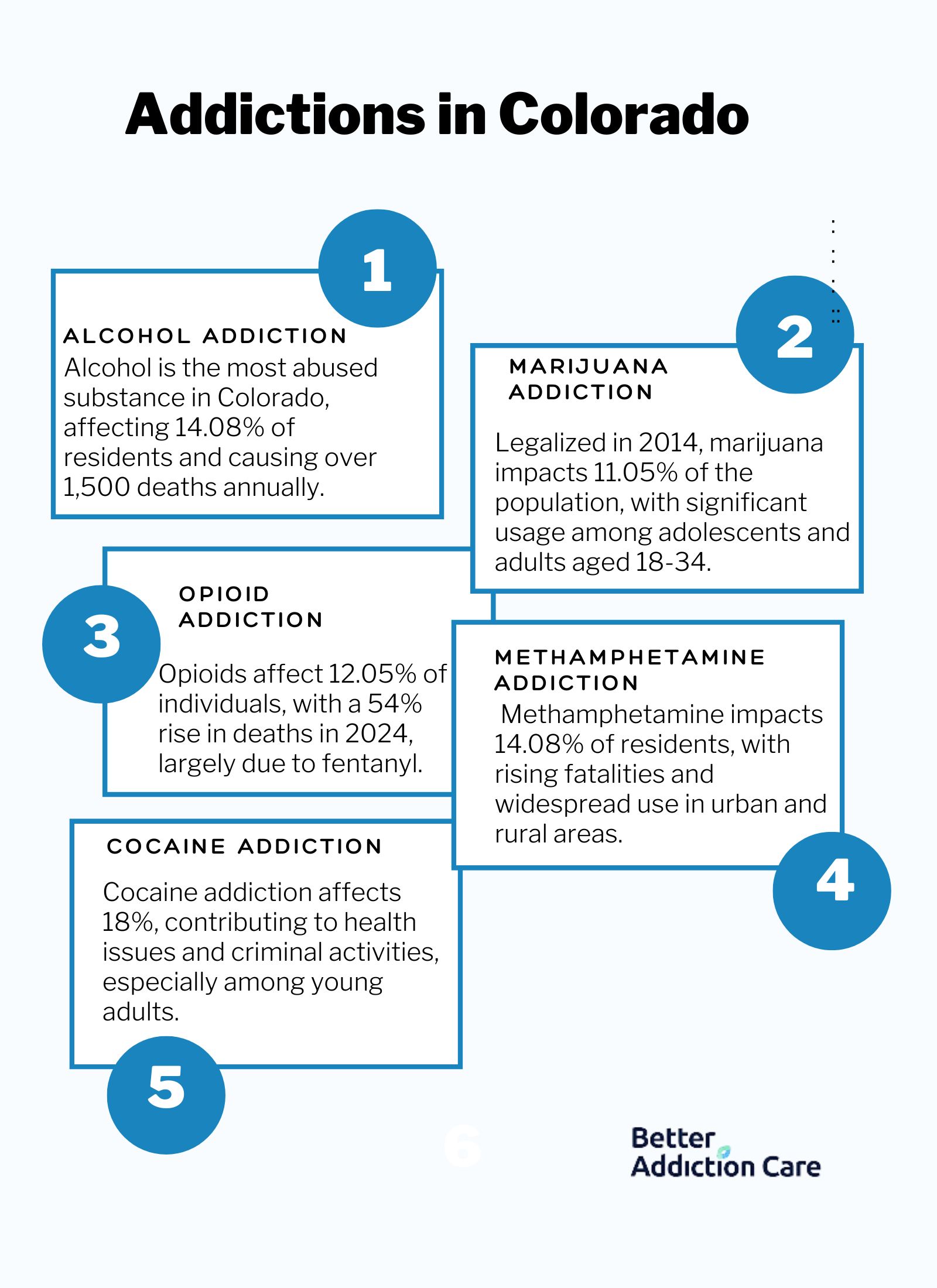
- Alcohol Addiction: In 2024, 424,022 (14.08%) of individuals aged 12 and older reported Alcohol Addiction. Alcohol is the most consumed substance in Colorado, with widespread binge drinking across different demographics. In 2024, over 1,500 fatalities were linked to excessive alcohol consumption. This accounts for a significant portion of preventable deaths in the state of Colorado. The rate of heavy drinking is notably higher among young male 424,022 (24.6%), while 84,804% (20%) reported binge drinking in the past month.
- Marijuana Addiction: 410,000 (11.05%) of individuals aged 12 and older reported Marijuana Addiction, with 424,000 (24%) male, and 80,804% (18%) female. Legalized recreational marijuana in 2014 has led to consistent usage among both adults and adolescents. The 2024 Healthy Kids Colorado Survey reported that 20.6% of high school students used marijuana. Adult usage rates have also increased, particularly among residents aged 18-34.
- Opioid Addiction: 310,800 (12.05%) of individuals aged 12 and older reported Opioid Addiction, with 224,000 (23.9%) male, and 10,804% (17%) female. Colorado faces severe challenges from Opioid Addiction, including both prescription opioids and illicit drugs like heroin and fentanyl. In 2024, opioid-related overdose deaths surged by 54%, with fentanyl responsible for 68% of these fatalities. This escalation of fatalities reflects a broader national trend of increased opioid-related deaths.
- Methamphetamine Addiction: Methamphetamine addiction has seen a marked increase in Colorado. 424,022 (14.08%) of individuals aged 12 and older reported methamphetamine Addiction, with 124,000 (32.5%) male, and 30,804% (26.05%) female contributing to a spike in overdose deaths, In 2024, methamphetamine-related fatalities rose sharply, indicating a growing problem across the state of Colorado. Methamphetamine Usage is prevalent in both urban and rural areas, complicating public health efforts.
- Cocaine Addiction: Cocaine addiction remains an issue, especially among young adults. In 2024, 124,092 (18%) of individuals aged 12 and older reported Cocaine Addiction, with 104,000 (23.5%) male, and 10,604% (16.5%) female. Colorado reported one of the highest drug abuse rates nationally, with more than 10% of residents experiencing a Cocaine addiction. Cocaine continues to contribute to both health complications and criminal activity.
What is the cost of rehab centers in Colorado?
The cost of rehab centers in Colorado is $56,413 per individual, which is 60.7%. Standard inpatient programs range from $14,000 to $27,000 for a 30-day stay which equates to (47%), while Outpatient programs tend to be more affordable, with costs $5000 to $10,000 that is 17%. The cost varies depending on factors such as the type of addiction. For instance, opioid addiction treatments often require medication-assisted therapy (MAT), which increase costs by up to 30%, adding $16,924 to the average and bringing the total to $73,337. Similarly, severe alcohol addiction necessitates extended detoxification and inpatient care, leading to 20% increase, or $11,283, making the total cost $67,696.
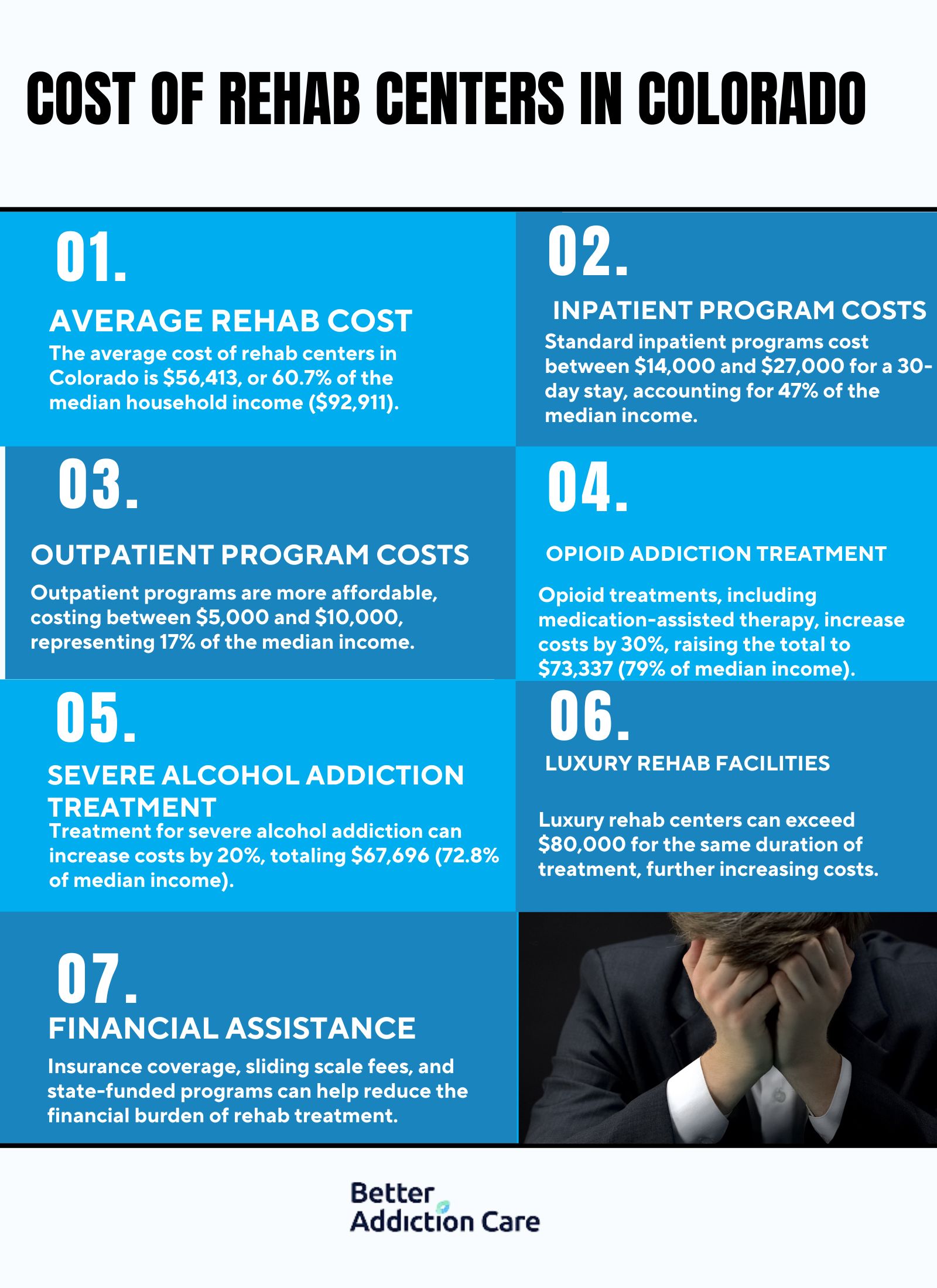
The median household income of Colorado is $92,911, the cost of rehab centers in Colorado constitutes 60.7% of this income. Costs for opioid addiction treatment rise to 79% of the median income, while severe alcohol addiction treatments consume 72.8%, highlight the financial burden that rehab centers in Colorado impose on individuals and families, although various measures like insurance coverage, sliding scale fees, and state-funded programs help alleviate some of the expense.
The type of rehab center chosen has a significant impact on the overall cost of rehab centers in Colorado, whereas luxury facilities exceed $80,000 for the same duration. The cost of rehab centers in Colorado varies based on intensity and length of treatment. This variation of costs underscores how both addiction type and facility choice substantially influence the financial commitment required for addiction recovery.
What is the cost of LGBTQ+ rehab centers in Colorado?
The cost of LGBTQ+ rehab centers in Colorado is $50,413 per individual. Standard inpatient programs cost $24,000 (38%) for 30 days. Outpatient programs are usually more affordable with $12,000 (16.9%). Costs of LGBTQ+ rehab centers vary significantly based on the addiction type. For example, opioid addiction often requires medication-assisted therapy (MAT), which increases costs by up to 30%, adding $16,924 and bringing the total to $73,337. Severe alcohol addiction necessitates extended detoxification and inpatient care, potentially raising costs by 20%, or $11,283, to a total of $67,696.
The median household income of Colorado is $92,911. The cost of LGBTQ+ rehab centers accounts for 58.7% of household income, making it a significant financial commitment for many households. For treatments involving opioid addiction, costs rise to 79% of the median income, and for severe alcohol addiction, costs rise to 72.8%. These expenses highlight the affordability challenges associated with LGBTQ+ rehab. However, many LGBTQ+ rehab centers accept insurance, offer sliding scale fees, or provide state-funded programs, which reduce the financial burden. Medicaid coverage is also available at some facilities, significantly lowering out-of-pocket costs.
LGBTQ+ rehab centers, such as AspenRidge Recovery, provide specialized care tailored to the unique needs of the LGBTQ+ community, ensuring both effective treatment and a supportive environment, which underscore how both addiction type and center type play a critical role in determining the cost of rehab.
What is the cost of Faith-Based rehab centers in Colorado?
The cost of Faith-Based rehab centers in Colorado is $56,413 (60.7%). Standard inpatient programs cost $24,000 (38%) for 30 days. Outpatient programs are usually more affordable with $12,000 (16.9%).
Cost of Faith-Based rehab centers varies widely, influenced by factors such as the type of addiction, treatment duration, and the specific facility chosen. Certain addictions require specialized treatments, impacting overall expenses. For instance, opioid addiction treatments often involve medication-assisted therapy (MAT), which increase costs by up to 30%, adding $16,924 to the average, totaling $73,337. Alcohol addiction necessitates extended detoxification and inpatient care, potentially increasing costs by 20%, or $11,283, bringing the total to $67,696.
The median household income of Colorado is $92,911, the average rehab cost of Faith-Based rehab centers constitutes 60.7% of this income. For treatments involving opioid addiction, the cost rises to 79% of the median income, and for severe alcohol addiction, it is 72.8%. This variation of costs underscores how both addiction type and facility choice substantially influence the financial commitment required for addiction recovery.
What is the cost of Men-Only rehab centers in Colorado?
The cost of Men-Only rehab centers in Colorado is $46,413 (50.5%). Standard inpatient programs cost $20,000 (30%) for 30 days. Outpatient programs are usually more affordable with $10,000 (14.06%) generally less expensive, varying based on the intensity and duration of treatment. The cost of Men-Only rehab centers varies based on factors such as the type of addiction, treatment duration, and the specific facility.
Certain addictions require specialized treatments, impacting overall expenses. For instance, opioid addiction treatments often involve medication-assisted therapy (MAT), which increase costs by up to 20%, adding $10,924 to the average, totaling $53,337. Similarly, severe alcohol addiction necessitates extended detoxification and inpatient care, potentially increasing costs by 10%, or $10,283, bringing the total to $57,696.
The median household income of Colorado is $92,911, the average rehab cost of Men-Only rehab centers constitutes 50.5% of this income. For treatments involving opioid addiction, the cost rises to 69% of the median income, and for severe alcohol addiction, it is 62.8%. These figures of Men-Only rehab centers indicate that rehab expenses represent a significant portion of household income, potentially posing affordability challenges. Many rehab centers accept insurance, offer sliding scale fees, or provide state-funded programs to assist with costs.
What is the cost of Women-Only rehab centers in Colorado?
The cost of Women-Only rehab centers in Colorado is $56,413 (60%). Standard inpatient programs cost $20,000 (30%) for 30 days. Outpatient programs are usually more affordable with $10,000 (14.06%) generally less expensive, varying based on the intensity and duration of treatment. The cost varies based on factors such as the type of addiction. For instance, medical detoxification is the most expensive, averaging $139,079.
The median household income of Colorado is $92,911, the average cost of Women-Only rehab centers constitutes 60% of the median income. This substantial percentage suggests that Women-Only rehab costs a significant financial burden for many households in the state of Colorado. Many centers also accept insurance, offer sliding scale fees, or provide state-funded options, which help alleviate the financial burden. These factors make it essential to carefully evaluate treatment options to ensure affordability and effectiveness.
What is the cost of Teen rehab centers in Colorado?
The cost of Teen Rehab centers in Colorado is $50,413 (60.7%) per individual. Standard inpatient programs cost $24,000 (38%) for 30 days. Outpatient programs are usually more affordable with $12,000 (16.9%) generally less expensive, varying based on the intensity and duration of treatment. The cost depends on various factors such as the type of treatment, duration, and facility. The type of addiction significantly impacts the expenses. For instance, opioid addiction treatments often require medication-assisted therapy (MAT), which increase costs by up to 30%, adding $16,924 to the average and bringing the total to $73,337. Severe alcohol addiction necessitates extended detoxification and inpatient care, potentially raising costs by 20%, or $11,283, resulting in a total of $67,696.
The median household income of Colorado is $92,911, the cost of Teen rehab centers represents 60.7% of income. For opioid addiction treatments, this cost rises to 79% of the median income, and for severe alcohol addiction, it reaches 72.8%. These figures underscore the financial challenges many families face when seeking treatment for Teens. Many centers also accept insurance, offer sliding scale fees, or provide state-funded options, which help alleviate the financial burden. These factors make it essential to carefully evaluate treatment options to ensure affordability and effectiveness.
What is the cost of Young Adult rehab centers in Arkansas?
The cost of Young Adult rehab centers in Colorado is $46,413 (50.5%). Standard inpatient programs cost $20,000 (30%) for 30 days. Outpatient programs are usually more affordable with $10,000 (14.06%) generally less expensive, varying based on the intensity and duration of treatment. The cost varies based on factors such as treatment type, duration, and facility. Certain addictions require specialized treatments, impacting overall expenses. For instance, opioid addiction treatments often involve medication-assisted therapy (MAT), which increase costs by up to 20%, adding $10,924 to the average, totaling $53,337. Similarly, severe alcohol addiction necessitates extended detoxification and inpatient care, potentially increasing costs by 10%, or $10,283, bringing the total to $57,696.
The median household income of Colorado is $92,911, the average rehab cost of Young Adult rehab centers constitutes 50.5% of this income. For treatments involving opioid addiction, the cost rises to 69% of the median income, and for severe alcohol addiction, it is 62.8%. These figures underscore the financial challenges many families face when seeking treatment for young adults. Many centers also accept insurance, offer sliding scale fees, or provide state-funded options, which help alleviate the financial burden.
What is the cost of Luxury Rehab centers in Arkansas?
The cost of Luxury rehab centers in Colorado is $60,000 (64.5%). Standard inpatient programs generally cost between $50,000 and $70,000 per month. Outpatient programs are usually more affordable with $30,000 generally less expensive, varying based on the intensity and duration of treatment. Facilities like All Points North Lodge in Vail represent the higher end of the spectrum, offering premium amenities and personalized treatment plans. These prices of Luxury Rehab centers increase based on the services chosen, room type, and the complexity of care provided.
The type of addiction treated significantly affects the cost. Complex addictions, such as those involving multiple substances or co-occurring mental health conditions, often require specialized therapies, extended care, and medication-assisted treatment. These factors raise the total expense by 10% to 20%, adding $5,000 to $14,000 to the average monthly cost.
The median household income of Colorado is $92,911, the average rehab cost of Luxury rehab centers constitutes 64.5% of this income. A single month of treatment at these facilities consumes 57% to 80% of an average household's yearly income. This disparity highlights the financial strain such specialized care impose on families without significant resources or insurance coverage.
Standard centers, often funded through state programs or insurance, provide effective care at a fraction of the cost, making them more accessible to a broader population, while Luxury rehab centers focus on providing exclusive accommodations and services, which significantly drive up costs compared to standard treatment facilities.
What is the cost of Dual Diagnosis rehab centers in Colorado?
The cost of Dual Diagnosis rehab centers in Colorado $50,413 (60.7%) per individual. Standard inpatient programs cost $24,000 (38%) for 30 days. Outpatient programs are usually more affordable with $12,000 (16.9%) generally less expensive. The cost of Dual Diagnosis rehab centers is varying based on the intensity and duration of treatment. This cost range of Dual Diagnosis rehab centers vary based on factors such as the facility's location, the duration of treatment, and the specific services offered. For instance, more intensive programs or those offering specialized therapies increase costs by 20% to 30%, adding $1,000 to $3,000 to the monthly expense.
The addiction being treated also influences the overall cost. Complex cases involving multiple substances or severe mental health disorders often require more comprehensive care, potentially raising expenses by an additional 15% to 25%. This equates to an increase of $750 to $2,500 per month over the average cost.
The median household income of Colorado is $92,911, revealing that a month of dual diagnosis treatment constitutes 60.7% of this income. While this is a significant financial commitment, it is more accessible than luxury rehab options.
Is drug abuse and addiction a problem in Colorado?
Yes, drug abuse and addiction is a problem in Colorado. The state of Colorado has seen a substantial increase in drug overdose deaths, with 1,811 fatalities reported in 2024, reflecting 31 deaths per 100,000 residents, representing the second-highest overdose death rate since 1999. Data from the National Survey on Drug Use and Health revealed that in 2024, over 10% of Coloradans aged 12 or older had a drug use disorder, ranking Colorado seventh highest in the nation. The surge in fentanyl-related fatalities further illustrates the severity of the issue, with Denver alone reporting a 300% increase in fentanyl-related deaths between 2023 and 2024. These statistics highlight the escalating challenge of tackling drug abuse and addiction in the state over the years.
Is alcoholism a problem in Colorado?
Yes, alcoholism is a problem in Colorado. The state of Colorado has experienced a 60% increase in alcohol-related deaths between 2023 and 2024, surpassing the national average. Colorado's per capita alcohol consumption is higher than the national average, with residents consuming 645 standard drinks per person annually, compared to the national average of 536. The prevalence of binge drinking among adults in Colorado has remained consistently high, with 18.2% reporting such behavior in 2024. These statistics underscore the growing challenge of addressing alcoholism in the state of Colorado over recent years.
Is Mental Health a problem in Colorado?
Yes, mental health is a problem in Colorado. In 2024, 26.5% of Coloradans aged 5 and older reported experiencing poor mental health, marking the highest rate recorded by the Colorado Health Access Survey (CHAS). 17% of residents indicated they do not access needed mental health care, a figure that has more than doubled since 2022. Colorado ranks 40th in the nation for adult mental health prevalence and access to care, highlighting the state of Colorado's ongoing challenges in addressing mental health issues. These statistics underscore the escalating mental health crisis in Colorado over recent years.
Can you travel to Colorado for rehab?
Yes, you can travel to Colorado for rehab, and there are compelling reasons to consider Colorado. Colorado's serene natural environment, renowned for its majestic mountains and tranquil landscapes, offers a calming atmosphere conducive to healing and recovery. The state of Colorado is also home to numerous top-tier rehab centers that specialize in advanced therapies, including dual diagnosis treatment and evidence-based approaches, ensuring comprehensive care. Colorado's strong emphasis on outdoor therapy, leveraging activities like hiking and adventure-based recovery programs, sets it apart as a unique destination for those seeking to combine traditional treatment with holistic healing methods. These factors make Colorado a standout option for rehab.
Can addiction be treated in Colorado?
Yes, addiction can be treated in Colorado for several reasons. The state of Colorado offers a wide network of specialized rehab centers that provide evidence-based treatments such as cognitive-behavioral therapy, medication-assisted treatment, and holistic approaches tailored to individual needs. Colorado is also known for its access to dual diagnosis programs, addressing both addiction and co-occurring mental health disorders, ensuring comprehensive care.
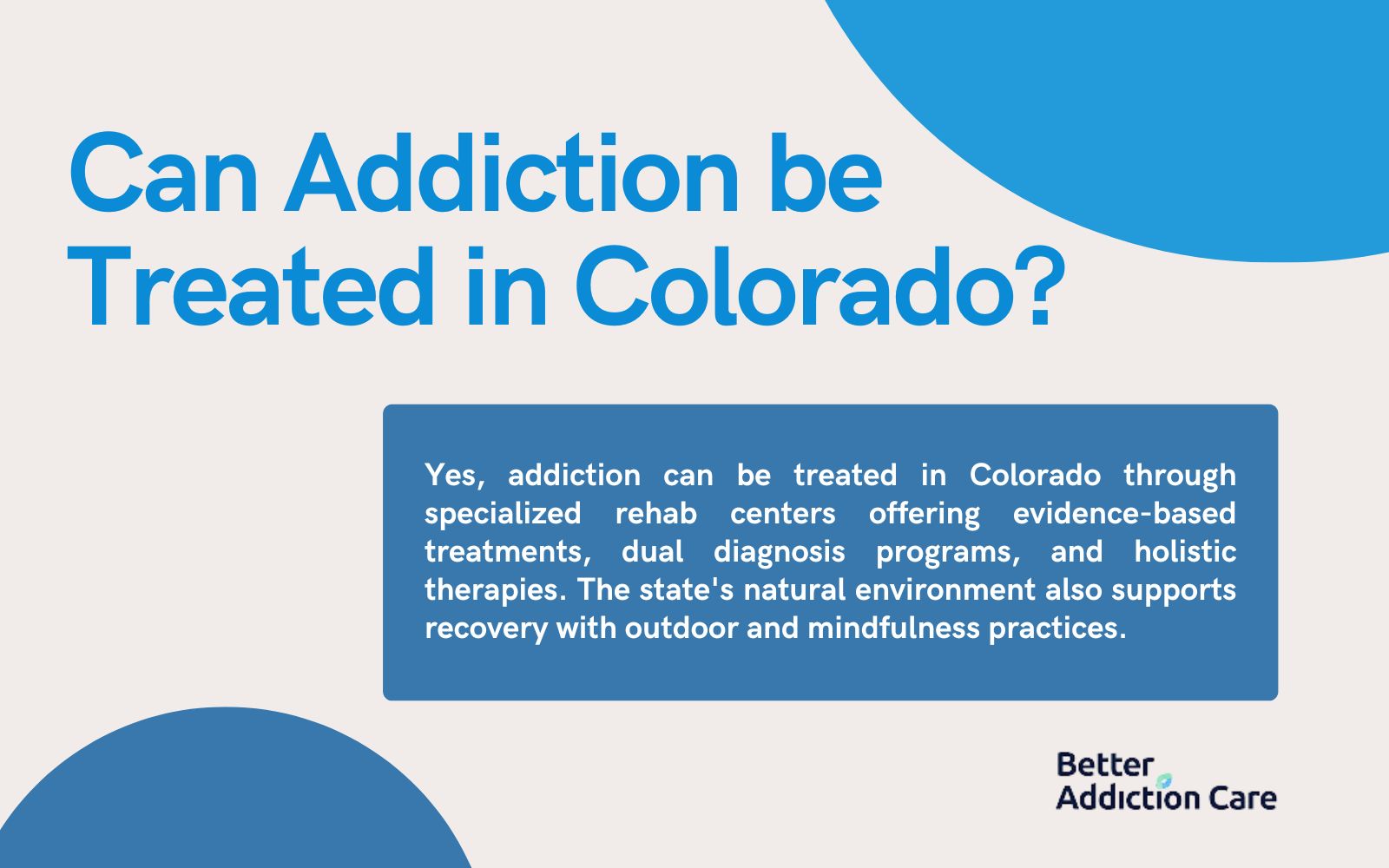
The state of Colorado's natural environment supports alternative therapies like outdoor adventure programs and mindfulness practices, which enhance the recovery process by promoting emotional and physical well-being.
What is the state of Colorado?
The state of Colorado is in the United States, located in the western region of the country. It is bordered by Wyoming to the north, Nebraska to the northeast, Kansas to the east, Oklahoma to the southeast, New Mexico to the south, Utah to the west, and Arizona at its southwestern corner, forming the "Four Corners" region.
Colorado has a population of 5.8 million people, with a fairly balanced gender distribution: 2.89 million males and 2.91 million females. Economically, Colorado ranks as one of the wealthier states in the U.S. Its economy is driven by industries such as aerospace, technology, agriculture, and tourism, supported by the state of Colorado's rich natural resources and a strong labor market. The median household income of Colorado is $92,911, placing it above the national average, although wealth distribution varies significantly across urban and rural areas.
What is the population of Colorado?
The population of Colorado is 5,877,610 (60.5%) people. The gender distribution is nearly even, with 2,981,000 males (50.7%) and 2,896,610 females (49.3%). The population spans various age groups, reflecting a diverse demographic profile. Children under 5 years old account for 317,189 people (5.4%), while those aged 5 to 14 make up a combined 703,985 (12%). Young adults aged 20 to 34 form a significant portion, with 1,288,083 people (21.9%). The middle-aged group, spanning 35 to 54 years, includes 1,528,045 people (26%). Seniors aged 65 and over comprise 855,353 individuals (14.6%), with those 85 and older making up 92,304 (1.6%). These statistics highlight a balanced population distribution across genders and age groups, offering insights into Colorado's demographic diversity.
What is the income of people from Colorado?
The income of people from Colorado is $47,346, per capita income. The median household income stands at $92,911, reflecting the state of Colorado's relatively strong economic position. Income increases with age, with individuals aged 25 to 44 earning an average of $44,231, and those aged 45 to 64 earning $53,865 on average. However, notable disparities exist between genders. The median income for all male workers aged 15 and older is $54,271, compared to $37,065 for females. Among full-time, year-round workers, males earn a median income of $72,763, while females earn $58,811. These statistics illustrate the economic dynamics of Colorado, including income disparities across age and gender groups. In Colorado, income levels show significant variation across individuals, households, age groups, and genders.