This directory lists 766 treatment facilities in 213 Illinois cities and towns. Of those, 390 accept Medicaid and 312 accept Medicare. Outpatient care is the most common form of drug rehab in Illinois, with standard outpatient treatment available at 559 facilities. A smaller group offers more structure: 79 run intensive outpatient programs (IOP), 84 offer day treatment or partial hospitalization, 54 have residential beds, and 30 provide detox. For people who also have depression, anxiety or another mental health condition, 247 facilities treat both at the same time.
HealthChoice Illinois is the state's Medicaid managed care program. Addiction services are overseen by the Illinois Department of Human Services, Division of Substance Use Prevention and Recovery (SUPR), which also licenses substance use treatment providers. Residents without insurance may be able to get care through SUPR-funded providers, which serve uninsured residents on a sliding scale. For programs that take Medicaid, see our list of free and Medicaid rehab centers in Illinois.
With 210 facilities, Chicago has far more rehab centers in Illinois than any other city. Beyond Chicago the numbers drop quickly: Joliet and Peoria have 14 each, and Woodstock has 13. If you live outside those cities, filter the directory by level of care to find drug rehab in Illinois that fits your needs. When the closest clinic is a long drive, 60 programs offer virtual or in-home treatment.
Our Illinois meetings directory lists 2,283 AA meetings and 648 NA meetings for support during treatment and after it ends. To talk through your options, you can call the state's Illinois Helpline for Opioids and Other Substances at 1-833-234-6343, available 24 hours. You can also call the Better Addiction Care helpline at 866-567-3138, which is a sponsored service.
Alcoholism, Drug Abuse, Mental Health, and Treatment in Illinois
What are the main addictions people in Illinois suffer from?
The main addictions people in Illinois suffer from include:
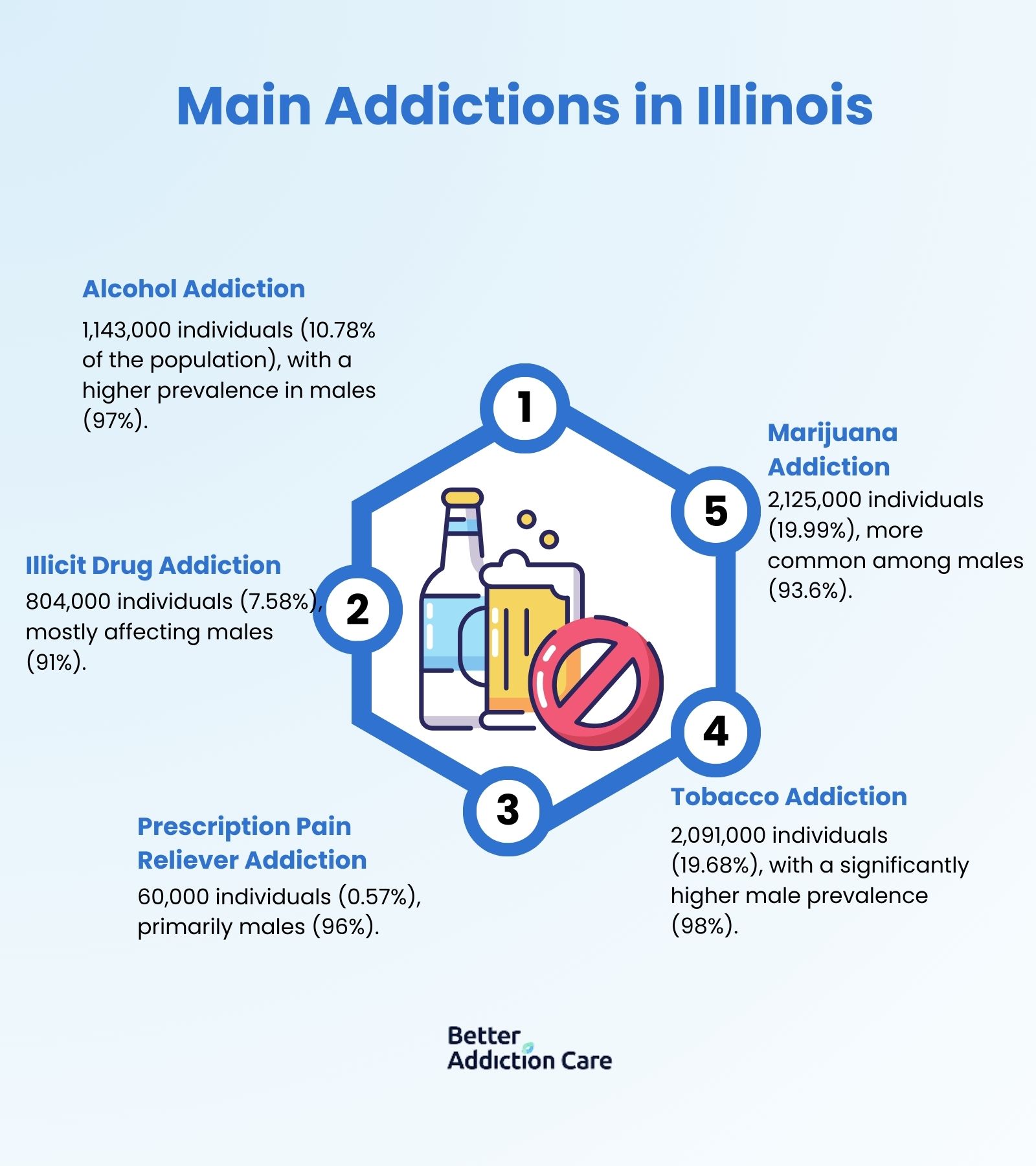
- Alcohol Addiction: 1,143,000 individuals aged 12 or older, representing 10.78% of the population, have alcohol addiction. Among adults aged 18 or older, 1,109,000 individuals (97%) males and 34000 females representing 29%.
- Illicit Drug Addiction: 804,000 individuals aged 12 or older, accounting for 7.58% of the population have Illicit Drug addiction. Among adults aged 18 or older, 737,000 individuals (91%) males and 67,000 females representing 83%.
- Prescription Pain Reliever Addiction: 60,000 individuals aged 12 or older, which is 0.57% of the population have Prescription Pain Reliever addiction. Among adults aged 18 or older, 58,000 individuals (96%) males and 2000 females representing 33.3%.
- Tobacco Addiction: 2,091,000 individuals aged 12 or older, representing 19.68% of the population have tobacco addiction. Among adults aged 18 or older, 2,063,000 individuals (98%) males and 28,000 females representing 1.3%.
- Marijuana Addiction: 2,125,000 individuals aged 12 or older reported past-year marijuana use, equating to 19.99% of the population. Among adults aged 18 or older, 1,989,000 individuals (93.6%) males and 136,000 females representing 6.4%.
What is the cost of rehab centers in Illinois?
The cost of rehab centers in Illinois is $56,666 that equates to 64.5%. Long-term inpatient programs average $50,004, which is $6,662 less than the overall average, reflecting an 11.8% decrease. Outpatient treatment costs in Illinois also vary. Standard outpatient programs average $8,309, while outpatient methadone treatment is slightly more affordable, averaging $7,382.
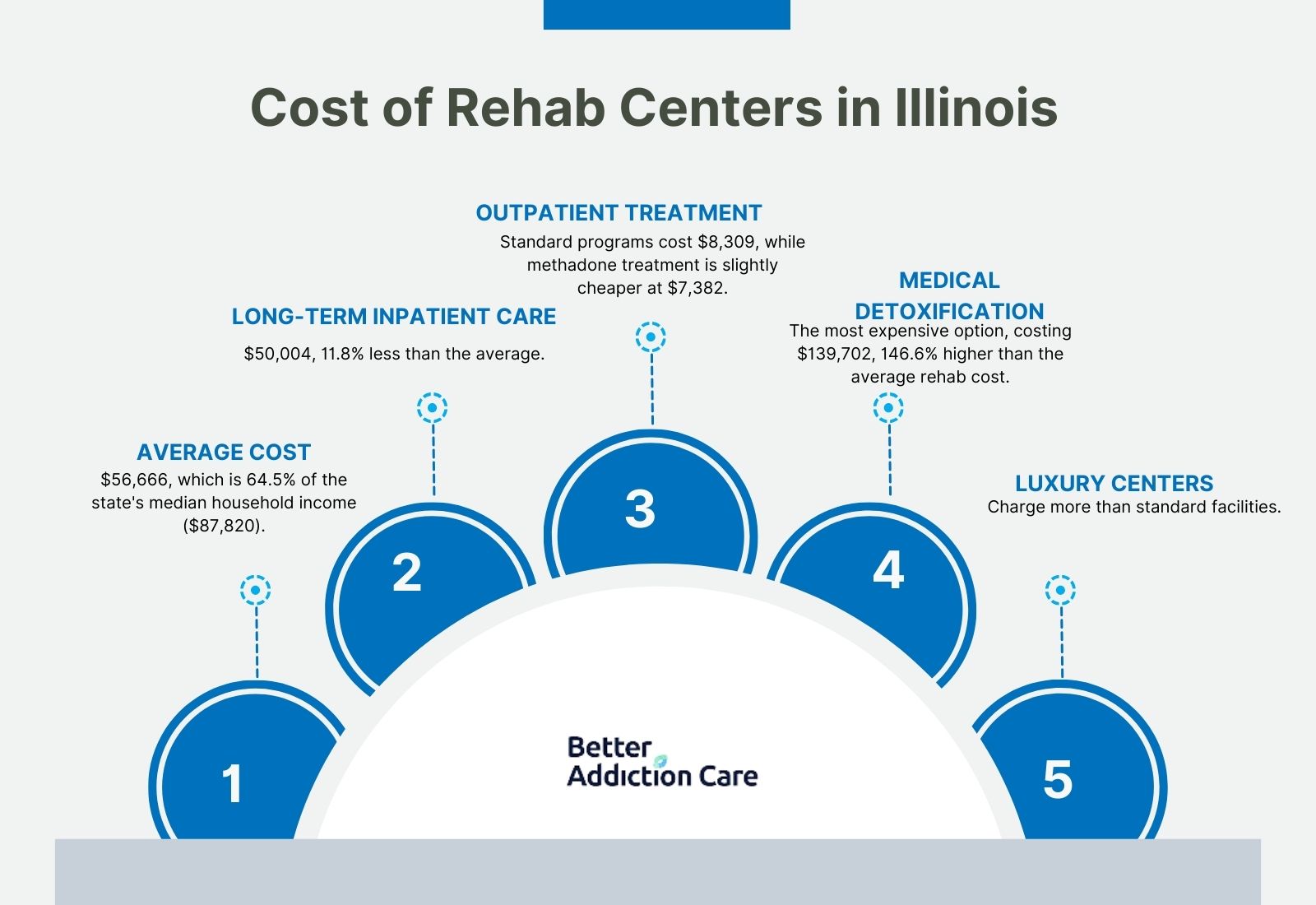
The cost of rehab centers in Illinois vary based on several factors, notably the type of addiction and the required treatment approach. For example, medical detoxification, often necessary for substances like alcohol or opioids, is the most expensive, averaging $139,702. The cost is $83,036 higher than the general average, marking a 146.6% increase.
Illinois's median household income is $87,820 in 2024. The cost of rehab centers $56,666 constitutes 64.5% of this income, indicating a substantial financial commitment for many households. Medical detox costs, at $139,702, amount to 159% of the median household income, underscoring a significant financial burden. In contrast, long-term inpatient care, averaging $50,004, represents 57% of the median household income. Outpatient treatments are more affordable, with standard programs at $8,309 (9.5% of median income) and methadone treatment at $7,382 (8.4% of median income).
The cost of rehab centers also vary based on the type of facility. Luxury or private centers charge more than standard facilities. Insurance coverage significantly offset these costs, making treatment more accessible for those with adequate plans.
What is the cost of LGBTQ+ rehab centers in Illinois?
The cost of LGBTQ+ rehab centers in Illinois is $56,000 that equates to 63.7%. Long-term inpatient programs average $50,004, which is $6,662 less than standard programs—a decrease of 11.8%. Standard outpatient programs average $8,309. Inpatient programs generally cost more than outpatient services due to the comprehensive care and accommodation provided.
The cost of LGBTQ+ rehab centers varies based on factors such as the type of addiction, treatment modality, and facility amenities. Medical detoxification, often necessary for substances like opioids or alcohol, averages $139,702, which is $83,036 more than standard programs—a 146.6% increase. The type of addiction influences costs; treatments for certain substances require specialized care, leading to higher expenses. For LGBTQ+ individuals seeking rehab services in Illinois, certain centers offer specialized programs tailored to their unique needs. For instance, the Gateway Foundation in Chicago provides a residential treatment program specifically for LGBTQ+ individuals, addressing experiences of discrimination and rejection common in this community.
Illinois's median household income is $87,820 in 2024. The cost of LGBTQ+ rehab centers in Illinois represents 63.7% of this income. The type of rehab facility also affects costs; luxury or private centers have higher fees due to enhanced amenities and personalized services. Insurance coverage significantly offset expenses, making treatment more accessible.
What is the cost of Faith-Based rehab centers in Illinois?
The cost of faith-based rehab centers in Illinois is $55,278 which equates to 62.9%. Long-term inpatient programs average $50,004, which is $6,662 less than standard programs—a decrease of 11.8%. Standard outpatient programs average $8,309.
The cost of faith-based rehab centers varies based on factors such as the type of addiction, treatment duration, and facility amenities. Medical detoxification, often necessary for substances like opioids or alcohol, averages $139,702, which is $83,036 more than standard programs—a 146.6% increase. The type of addiction influences costs; treatments for certain substances require specialized care, leading to higher expenses. Inpatient programs generally cost more than outpatient services due to the comprehensive care and accommodation provided.
Illinois's median household income is $87,820 in 2024. The cost of faith-based rehab centers represents 62.9% of this income. Long-term inpatient programs constitute 57% of the median household income. The type of rehab facility also affects costs; luxury or private centers have higher fees due to enhanced amenities and personalized services. Insurance coverage significantly offset expenses, making treatment more accessible. It's advisable to consult with specific facilities to obtain detailed cost information and explore available financial assistance options.
What is the cost of Men-Only rehab centers in Idaho?
The cost of Men-Only rehab centers in Idaho is $56,100, which equates to 64%. Long-term inpatient programs average $50,004, which is $6,662 less than the overall average—a decrease of 11.8%. Outpatient rehab services are generally more affordable, with standard outpatient programs averaging $8,309 and outpatient methadone treatment at $7,382. These costs represent 9.5% and 8.4% of Illinois's median household income, respectively. Men-only rehab centers in Illinois offer tailored programs addressing the specific needs of men in recovery. These facilities provide a supportive environment where men focus on their rehab without potential distractions.
The cost of Men-Only rehab centers vary based on factors such as the type of addiction, treatment modality, and facility amenities. For instance, medical detoxification, often necessary for substances like alcohol or opioids, averages $139,702, which is $83,036 more than the general average—a 146.6% increase.
Illinois's median household income is $87,820 in 2024. The cost of Men-Only rehab centers constitutes 64% of this income, indicating a significant financial commitment for many households. Medical detoxification expenses surpass the median income by 59%, underscoring a substantial financial burden. Long-term inpatient care accounts for 57% of the median household income, while outpatient treatments are more accessible, ranging from 8.4% to 9.5% of the median income. Luxury or private centers have higher fees due to enhanced services, while standard facilities offer more affordable options. Insurance coverage significantly offset these costs, making treatment more accessible.
What is the cost of Women-Only rehab centers in Illinois?
The cost of Women-Only rehab centers in Illinois is $54,666, which is 62%. Long-term inpatient programs average $50,004, which is $6,662 less than standard programs—a decrease of 11.8%. Outpatient rehab services are generally more affordable, with standard outpatient programs averaging $8,309 and outpatient methadone treatment at $7,382. These costs represent 9.5% and 8.4% of Illinois's median household income, respectively.
The cost of women-only rehab centers varies based on factors such as the type of addiction, treatment modality, and facility amenities. Medical detoxification, often necessary for substances like opioids or alcohol, averages $139,702, which is $83,036 more than standard programs—a 146.6% increase. The type of addiction influences costs; treatments for certain substances require specialized care, leading to higher expenses. Inpatient programs generally cost more than outpatient services due to the comprehensive care and accommodation provided.
Illinois's median household income is $87,820 in 2024. The cost of women-only rehab centers represents 62% of this income, while medical detoxification accounts for 159%, indicating a significant financial burden. Long-term inpatient programs constitute 57% of the median household income. The type of rehab facility also affects costs; luxury or private centers have higher fees due to enhanced amenities and personalized services. Insurance coverage significantly offset expenses, making treatment more accessible. It's advisable to consult with specific women-only rehab centers to obtain detailed cost information and explore available financial assistance options.
What is the cost of Teen rehab centers in Illinois?
The cost of Teen rehab centers in Illinois is $53,890, which equates to 61%. Long-term inpatient programs average $50,004, which is $6,662 less than standard programs—a decrease of 11.8%. Outpatient rehab services are generally more affordable, with standard outpatient programs averaging $8,309 and outpatient methadone treatment at $7,382. These costs represent 9.5% and 8.4% of Illinois's median household income, respectively.
The cost of rehab programs for adolescents in Illinois varies based on factors such as the type of addiction, treatment modality, and facility amenities. Medical detoxification, often necessary for substances like opioids or alcohol, averages $139,702, which is $83,036 more than standard programs—a 146.6% increase. The type of addiction influences costs; treatments for certain substances require specialized care, leading to higher expenses. Inpatient programs generally cost more than outpatient services due to the comprehensive care and accommodation provided.
Illinois's median household income is $87,820 in 2024. The cost of Teen rehab centers represents 61% of this income, while medical detoxification accounts for 159%, indicating a significant financial burden. Long-term inpatient programs constitute 57% of the median household income. The type of rehab facility also affects costs; luxury or private centers have higher fees due to enhanced amenities and personalized services. Insurance coverage significantly offset expenses, making treatment more accessible. It's advisable to consult with specific facilities to obtain detailed cost information and explore available financial assistance options.
What is the cost of Young Adult rehab centers in Illinois?
The cost of Young Adult rehab centers in Illinois is $56,000, which equates to 61%. Long-term inpatient programs average $50,004, which is $6,662 less than standard programs—a decrease of 11.8%. Outpatient rehab services are generally more affordable, with standard outpatient programs averaging $8,309 and outpatient methadone treatment at $7,382. These costs represent 9.5% and 8.4% of Illinois's median household income, respectively.
The cost of young adults rehab centers in Illinois varies based on factors such as the type of addiction, treatment modality, and facility amenities. Medical detoxification, often necessary for substances like opioids or alcohol, averages $139,702, which is $83,036 more than standard programs—a 146.6% increase. The type of addiction influences costs; treatments for certain substances require specialized care, leading to higher expenses. Inpatient programs generally cost more than outpatient services due to the comprehensive care and accommodation provided.
Illinois's median household income is $87,820 in 2024. The cost of Young Adult rehab centers in Illinois represent 61% of this income, while medical detoxification accounts for 159%, indicating a significant financial burden. Long-term inpatient programs constitute 57% of the median household income. The type of rehab facility also affects costs; luxury or private centers have higher fees due to enhanced amenities and personalized services. Insurance coverage significantly offset expenses, making treatment more accessible.
What is the cost of Luxury Rehab centers in Illinois?
The cost of Luxury Rehab centers in Illinois is $40,000, equates to 45.6%. Standard inpatient rehab programs average $56,666 representing 64.5%. Standard outpatient programs averaging $8,309 represent 9.5%. Luxury rehab centers in Illinois provide enhanced amenities and personalized services, resulting in higher costs compared to standard rehab programs.
Factors influencing the cost of Luxury Rehab centers include the type of addiction, as treatments for substances like opioids or alcohol require specialized care such as medical detoxification, which increases expenses. Additionally, inpatient programs generally cost more than outpatient services due to the comprehensive care and accommodation provided.
Illinois's median household income is $87,820 in 2024. The cost of luxury rehab represents 45.6% of the median household income. The type of rehab facility also affects costs; luxury or private centers have higher fees due to enhanced amenities and personalized services. Insurance coverage significantly offset expenses, making treatment more accessible.
What is the cost of Dual Diagnosis rehab centers in Illinois?
The cost of dual diagnosis rehab centers in Illinois is $55,000, which is 62.6%. Long-term inpatient programs average $50,004, which is $6,662 less than standard programs—a decrease of 11.8%. Outpatient rehab services are generally more affordable, with standard outpatient programs averaging $8,309 and outpatient methadone treatment at $7,382. These costs represent 9.5% and 8.4% of Illinois's median household income, respectively. Inpatient programs generally cost more than outpatient services due to the comprehensive care and accommodation provided.
The cost of dual diagnosis rehab centers varies based on factors such as the type of addiction, treatment modality, and facility amenities. Medical detoxification, often necessary for substances like opioids or alcohol, averages $139,702, which is $83,036 more than standard programs—a 146.6% increase. The type of addiction influences costs; treatments for certain substances require specialized care, leading to higher expenses.
Illinois's median household income is $87,820 in 2024. The cost of dual diagnosis rehab centers represents 62.6% of this income, while medical detoxification accounts for 159%, indicating a significant financial burden. Long-term inpatient programs constitute 57% of the median household income. The type of rehab facility also affects costs; luxury or private centers typically have higher fees due to enhanced amenities and personalized services. Insurance coverage offset expenses, making treatment more accessible.
Is drug abuse and addiction a problem in Illinois?
Yes, Drug abuse and addiction is a problem in Illinois, as evidenced by rising overdose deaths, increased synthetic opioid use, and elevated opioid overdose mortality rates. In 2024, Illinois reported 3,908 drug overdose deaths, a 5.1% increase from the previous year, indicating a growing crisis. Since 2021, deaths involving synthetic opioids like fentanyl have surged by 3,341%, highlighting the increasing prevalence of potent synthetic drugs in Illinois' illicit drug market. The age-adjusted opioid overdose mortality rate in 2024 was 26 per 100,000 population, reflecting the substantial impact of opioid misuse on public health within the state. These statistics of Drug abuse and addiction underscore the escalating nature of drug abuse and addiction in Illinois over recent years.
Is alcoholism a problem in Illinois?
Yes, Alcoholism is a problem in Illinois. 25.6% of adults in Illinois report engaging in binge drinking, exceeding the national average of 16.9%, which suggests a higher tendency toward excessive alcohol consumption. Between 2022 and 2024, nearly 30% of motor vehicle fatalities in Illinois involved alcohol, highlighting the ongoing issue of impaired driving and its deadly consequences. Underage drinking also persists as a problem; in 2024, it accounted for 16% of all alcohol sales in the United States. These statistics of Alcohol consumption underscore the persistent and evolving nature of alcohol-related issues in Illinois over the years.
Is Mental Health a problem in Illinois?
Yes, mental health is a problem in Illinois. One in five adults in Illinois experience mental illness annually, a prevalence that has remained consistent over time, indicating persistent challenges in addressing mental health needs. Access to care is limited, with over 4.8 million Illinois residents living in areas lacking sufficient mental health professionals. Consequently, more than 56% of adults with mental illness do not receive treatment, a figure that has shown little improvement in recent years. Suicide rates have been rising; in 2022 - 2024, there were 1,488 deaths by suicide in Illinois, reflecting an upward trend over the past decade and underscoring the growing mental health crisis within the state of Illinois. These statistics of mental health problems highlight the ongoing and escalating mental health challenges in Illinois, emphasizing the need for enhanced resources and interventions.
Can you travel to Illinois for rehab?
Yes, you can travel to Illinois for rehab offers several distinct advantages. The state of Illinois provides a comprehensive array of treatment options, including inpatient, outpatient, and specialized programs tailored to diverse needs, ensuring that individuals find plans aligning with their specific requirements. Illinois is home to numerous accredited facilities staffed by experienced professionals, guaranteeing high-quality care and evidence-based treatment approaches. Its central location in the Midwest makes Illinois easily accessible from various parts of the country, facilitating travel for those seeking rehab services. These factors collectively make Illinois a compelling choice for individuals pursuing effective and accessible rehab options.
Can addiction be treated in Illinois?
Yes, Addiction can be treated in Illinois due to several key factors. The state of Illinois offers a comprehensive range of treatment options, including inpatient and outpatient services, medication-assisted treatment (MAT), and counseling, all designed to address various substance addiction and cater to individual needs. Illinois is home to numerous accredited facilities staffed by experienced professionals specializing in addiction treatment, ensuring that patients receive evidence-based care tailored to their specific circumstances.
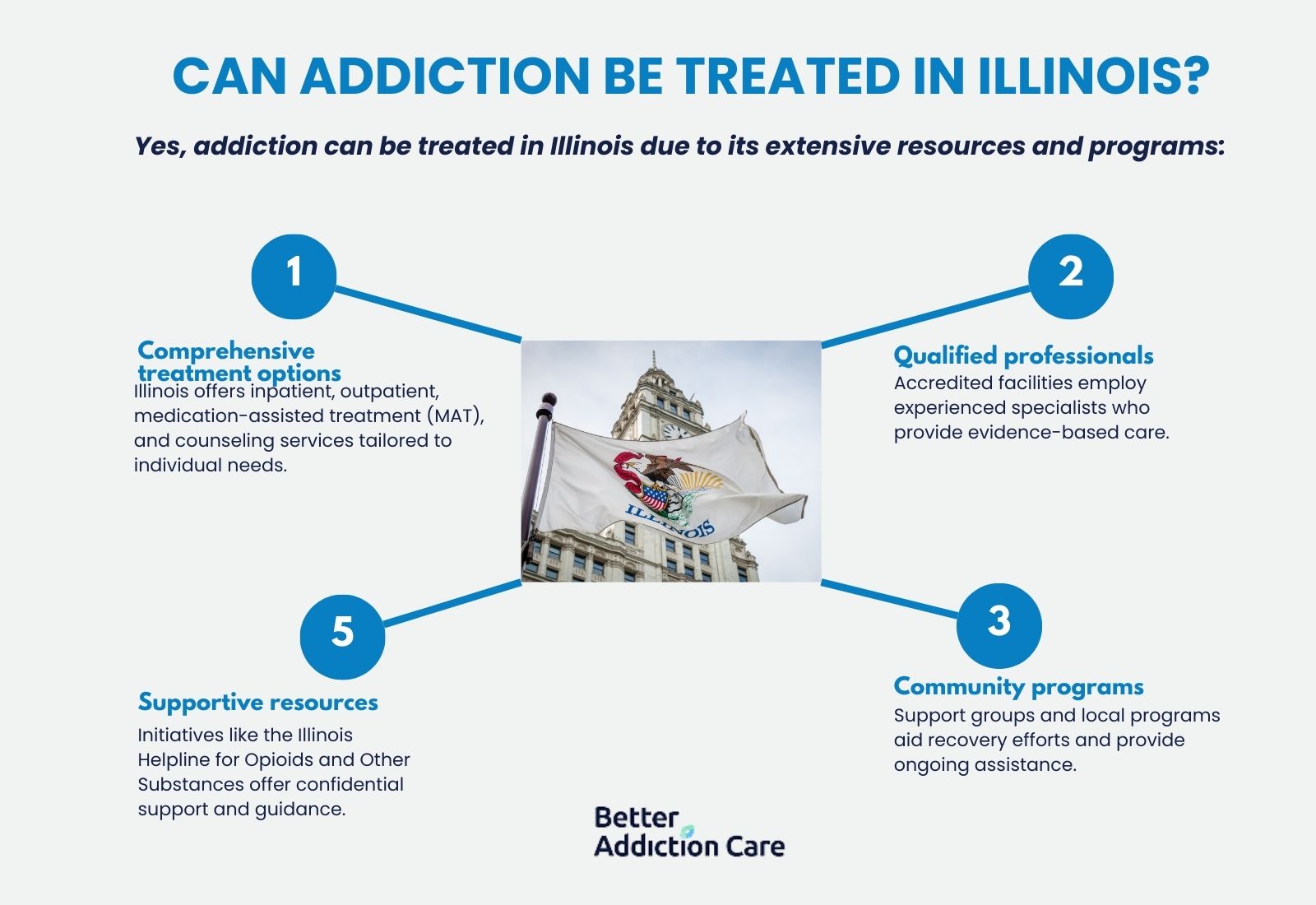
The state of Illinois has implemented supportive resources and initiatives, such as the Illinois Helpline for Opioids and Other Substances, which provides confidential support and resources. Community-based programs and support groups are also available to assist individuals in their recovery journey. These combined efforts contribute to the effective treatment of addiction within Illinois.
What is the state of Illinois?
The state of Illinois is located in the Midwestern United States, is bordered by Wisconsin to the north, Iowa and Missouri to the west, Kentucky to the south, and Indiana to the east. As of 2024, Illinois's population is 12,549,689, with a near-equal gender distribution: 50.9% female and 49.1% male.
Economically, Illinois is a significant contributor to the U.S. economy, accounting for 3.9% of the nation's gross domestic product (GDP) in the third quarter of 2024, ranking it fifth among all states and Washington, D.C.
However, Illinois faces financial challenges, including budget deficits and pension liabilities, which impact its overall economic health. Despite these issues, Illinois maintains a diverse economy with strong sectors in finance, manufacturing, agriculture, and services.
What is the population of Illinois?
The population of Illinois is 12.5 million people, with a nearly equal gender distribution: 50.9% female (6.36 million individuals) and 49.1% male (6.14 million individuals). The age distribution is as follows: under 18 years old constitute 23% of the population (2.88 million individuals), those aged 18 to 64 make up 62% (7.75 million individuals), and individuals 65 years and older account for 15% (1.88 million individuals). These figures illustrate the demographic composition of Illinois's population by age and gender.
What is the income of people from Illinois?
The income of people from Illinois is $72,245, per capita. In Illinois, income levels vary across different demographics. While the median household income is $80,306. Income distribution by age group reveals that households headed by individuals under 25 have a median income of $31,000. Those aged 25 to 44 have a median income of $77,000, and the 45 to 64 age group sees a peak median income of $81,000. Households led by individuals 65 and older have a median income of $45,000. In Illinois, income disparities between genders are evident across various employment categories. Full-time, year-round male workers had a median income of $70,000, while their female counterparts earned $55,000. These figures illustrate a notable income gap, with men consistently earning more than women.