Alcoholism, Drug Abuse, Mental Health, and Treatment in Michigan
What are the main addictions people in Michigan suffer from?
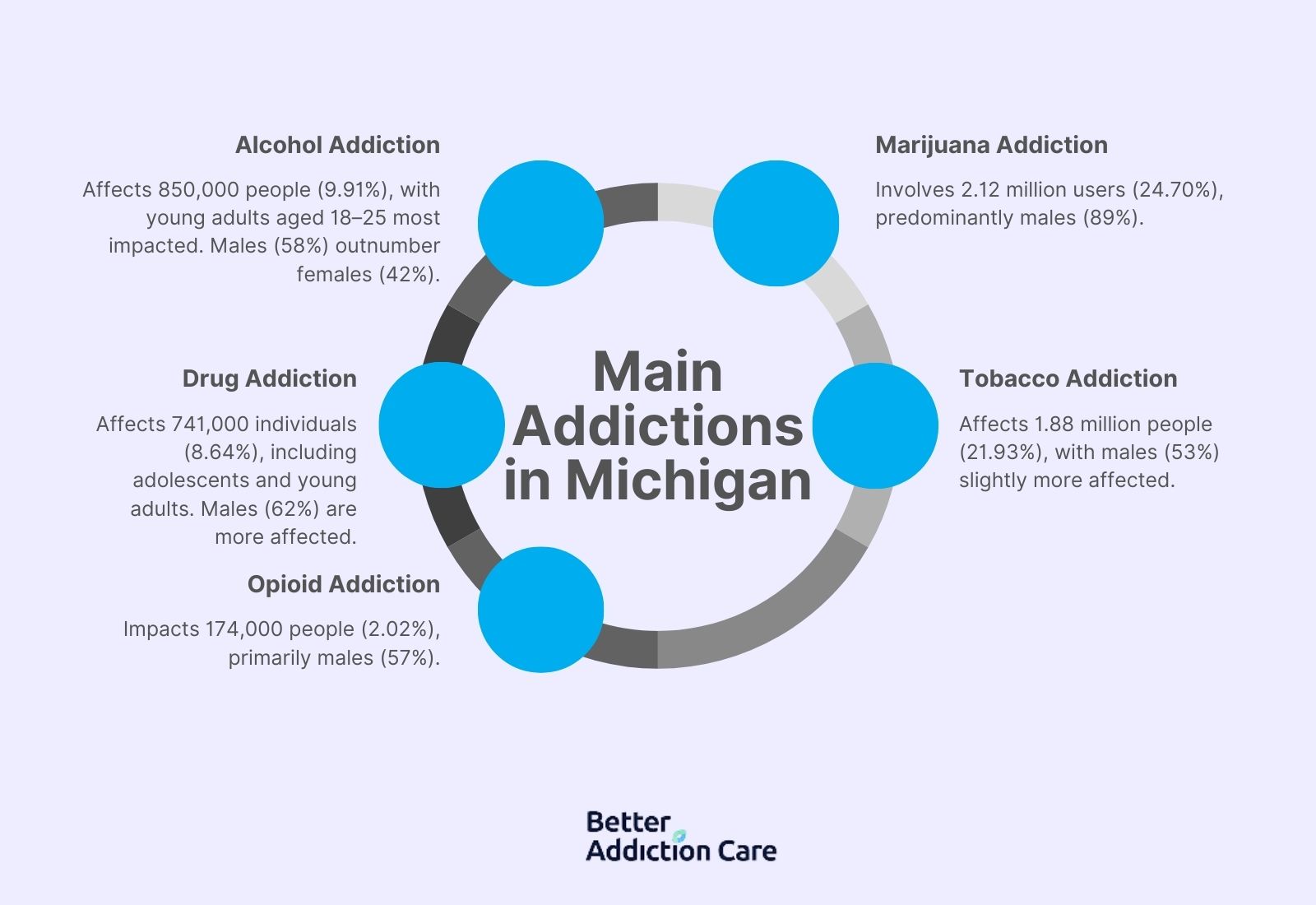
The main addictions people in Michigan suffer from include:
- Alcohol Addiction: 850,000 individuals aged 12 and older, representing 9.91% of this age group, experience Alcohol Addiction. Among young adults aged 18 to 25, 163,000 individuals (15.55%) are affected. In the 26 and older demographic, 665,000 individuals (9.84%) have AUD. 490,000 (58%) Males are higher in number as compared to 360,000 (42%) females.
- Drug Addiction: 741,000 individuals aged 12 and older (8.64%) suffer from drug addiction. This includes 57,000 adolescents aged 12 to 17 (7.37%) and 177,000 young adults aged 18 to 25 (16.97%). 459,000 (62%) Males are higher in number as compared to 282,000 (38%) females.
- Opioid Addiction: 174,000 individuals aged 12 and older (2.02%) are affected by opioid addiction. This includes 7,000 adolescents aged 12 to 17 (0.85%) and 13,000 young adults aged 18 to 25 (1.29%). 99,000 (57%) Males are higher in number as compared to 75,000 (43%) females.
- Marijuana Addiction: 2.12 million individuals aged 12 and older (24.70%) have used marijuana in the past year. This includes 106,000 adolescents aged 12 to 17 (13.74%) and 451,000 young adults aged 18 to 25 (43.07%). 1,890,000 (89%) Males are higher in number as compared to 230,000 (11%) females.
- Tobacco Addiction: 1.88 million individuals aged 12 and older (21.93%) have used tobacco products in the past month. This includes about 21,000 adolescents aged 12 to 17 (2.72%) and 199,000 young adults aged 18 to 25 (19.03%). 990,000 (53%) Males are higher in number as compared to 890,000 (47%) females.
What is the cost of rehab centers in Michigan?
The cost of rehab centers in Michigan is $56,508, which equates to 82.5%. A 30-day inpatient program costs $56,000 (82%). Outpatient programs are generally less expensive, with costs averaging $8,286 (16%).
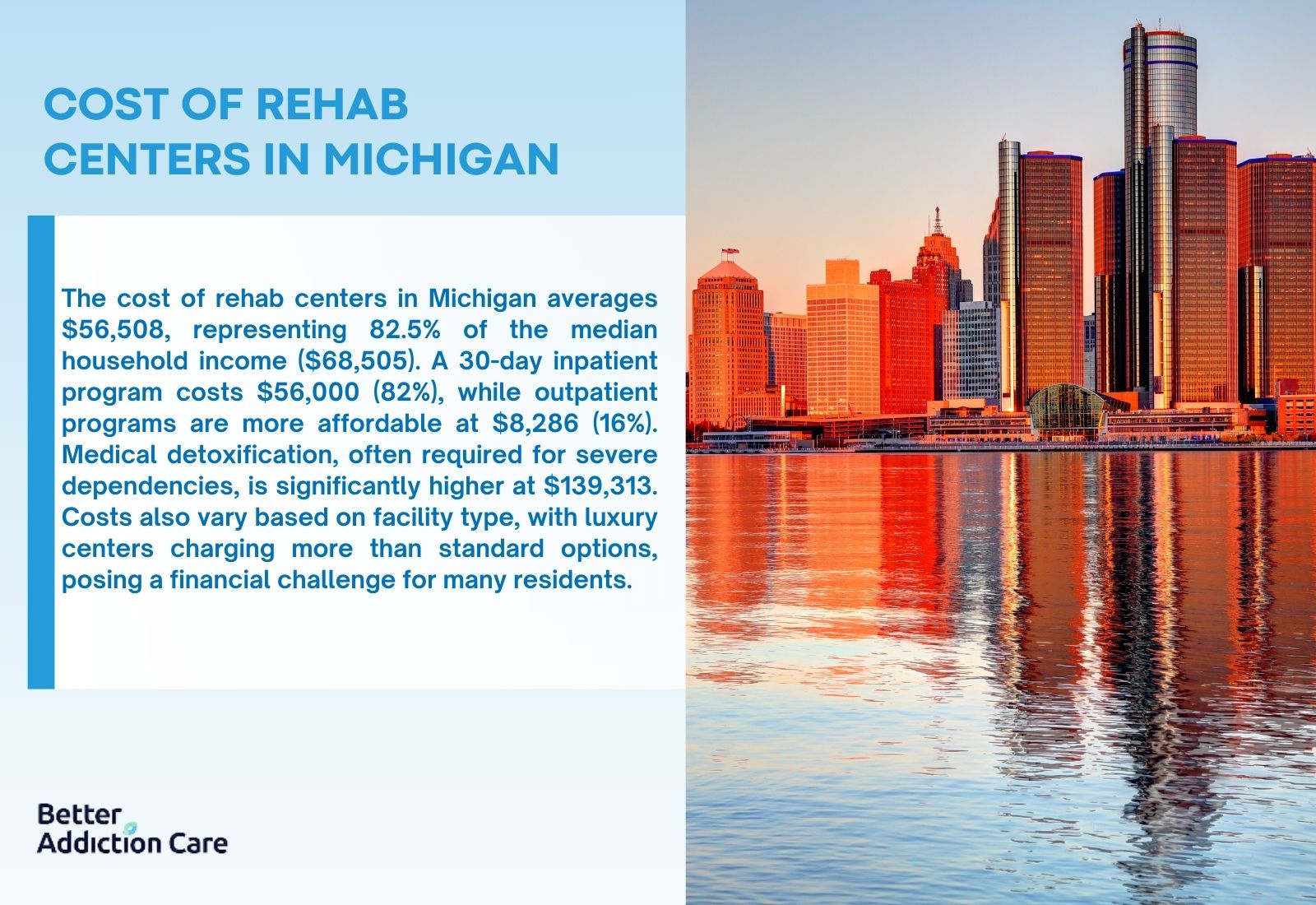
The type of addiction significantly impacts treatment costs of rehab centers in Michigan. For instance, medical detoxification, often necessary for severe alcohol or opioid dependencies, averages $139,313, which is about 146.5% higher than standard inpatient programs.
Michigan's median household income is $68,505. The cost of rehab centers in Michigan is $56,508 constitutes 82.5% of this annual income, indicating that such treatment may pose a significant financial burden for many residents.
The cost of rehab centers in Michigan also fluctuate depending on the facility type. Luxury rehab centers, offering premium amenities, have substantially higher costs than standard facilities.
What is the cost of LGBTQ+ rehab centers in Michigan?
The cost of LGBTQ+ rehab centers in Michigan is $55,008, which equates to 80%. A 30-day inpatient program costs $56,000 (82%). Outpatient programs are generally less expensive, with costs averaging $8,286 (16%).
The type of addiction significantly impacts treatment costs of LGBTQ+ rehab centers in Michigan. For instance, medical detoxification, often necessary for severe alcohol or opioid dependencies, averages $139,313, which is about 146.5% higher than standard inpatient programs.
Michigan's median household income is $68,505. The cost of LGBTQ+ rehab centers in Michigan is $55,008 constituting 80% of this annual income, indicating that such treatment may pose a significant financial burden for many residents.
The cost of LGBTQ+ rehab centers in Michigan also fluctuate depending on the facility type. Luxury rehab centers, offering premium amenities, have substantially higher costs than standard facilities.
What is the cost of Faith-Based rehab centers in Michigan?
The cost of Faith-Based rehab centers in Michigan is $54,890, which equates to 80%. A 30-day inpatient program costs $56,000 (82%). Outpatient programs are generally less expensive, with costs averaging $8,286 (16%).
The type of addiction significantly impacts treatment costs of Faith-Based rehab centers in Michigan. For instance, medical detoxification, often necessary for severe alcohol or opioid dependencies, averages $139,313, which is about 146.5% higher than standard inpatient programs.
Michigan's median household income is $68,505. The cost of Faith-Based rehab centers in Michigan is $54,890 constituting 80% of this annual income, indicating that such treatment may pose a significant financial burden for many residents.
The cost of Faith-Based rehab centers in Michigan also fluctuate depending on the facility type. Luxury rehab centers, offering premium amenities, have substantially higher costs than standard facilities.
What is the cost of Men-Only rehab centers in Michigan?
The cost of Men-Only rehab centers in Michigan is $56,000, which equates to 82%. A 30-day inpatient program costs $56,000 (82%). Outpatient programs are generally less expensive, with costs averaging $8,286 (16%).
The type of addiction significantly impacts treatment costs of Men-Only rehab centers in Michigan. For instance, medical detoxification, often necessary for severe alcohol or opioid dependencies, averages $139,313, which is about 146.5% higher than standard inpatient programs.
Michigan's median household income is $68,505. The cost of Men-Only rehab centers in Michigan is $56,000 constitutes 82% of this annual income, indicating that such treatment may pose a significant financial burden for many residents.
The cost of Men-Only rehab centers in Michigan also fluctuate depending on the facility type. Luxury rehab centers, offering premium amenities, have substantially higher costs than standard facilities.
What is the cost of Women-Only rehab centers in Michigan?
The cost of Women-Only rehab centers in Michigan is $53,000, which equates to 77%. A 30-day inpatient program costs $56,000 (82%). Outpatient programs are generally less expensive, with costs averaging $8,286 (16%).
The type of addiction significantly impacts treatment costs of Women-Only rehab centers in Michigan. For instance, medical detoxification, often necessary for severe alcohol or opioid dependencies, averages $139,313, which is about 146.5% higher than standard inpatient programs.