Alcoholism, Drug Abuse, Mental Health, and Treatment in Ohio
What are the main addictions people in Ohio suffer from?
The main addictions people in Ohio suffer from include:
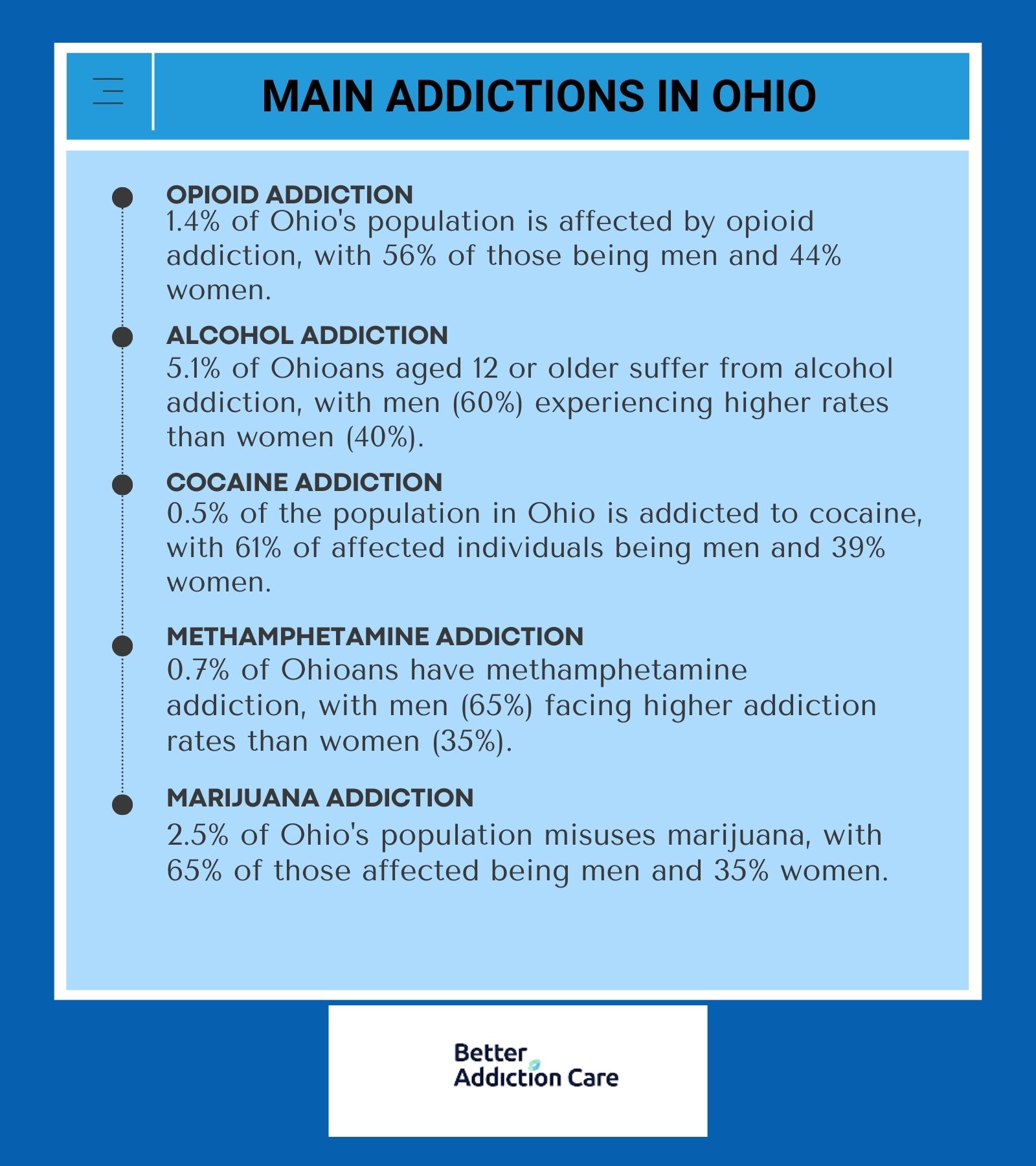
- Opioid Addiction: 164,920 (1.4% of the population) are affected by opioid addiction. 92,355 (56%) males are more affected by Opioid misuse as compared to 72,565 (44%) females.
- Alcohol Addiction: 600,810 (5.1% of the population) aged 12 or older reported using alcohol in the past month. 360,486 (60%) males and 240,324 (40%) females are affected by Alcohol addiction.
- Cocaine Addiction: 62,000 (0.5% of the population) aged 12 or older reported using Cocaine in the past month. 37,820 (61%) males and 24,180 (39%) females are affected by Cocaine Addiction.
- Methamphetamine Addiction: 80,000 (0.7% of the population) aged 12 or older have Methamphetamine Addiction. 52,000 (65%) males and 28,000 (35%) females reported misusing Methamphetamine.
- Marijuana Addiction: 300,000 (2.5% of the population) aged 12 or older reported misuse of Marijuana. 195,000 (65%) males and 105,000 (35%) females are affected by Marijuana addiction.
What is the cost of rehab centers in Ohio?
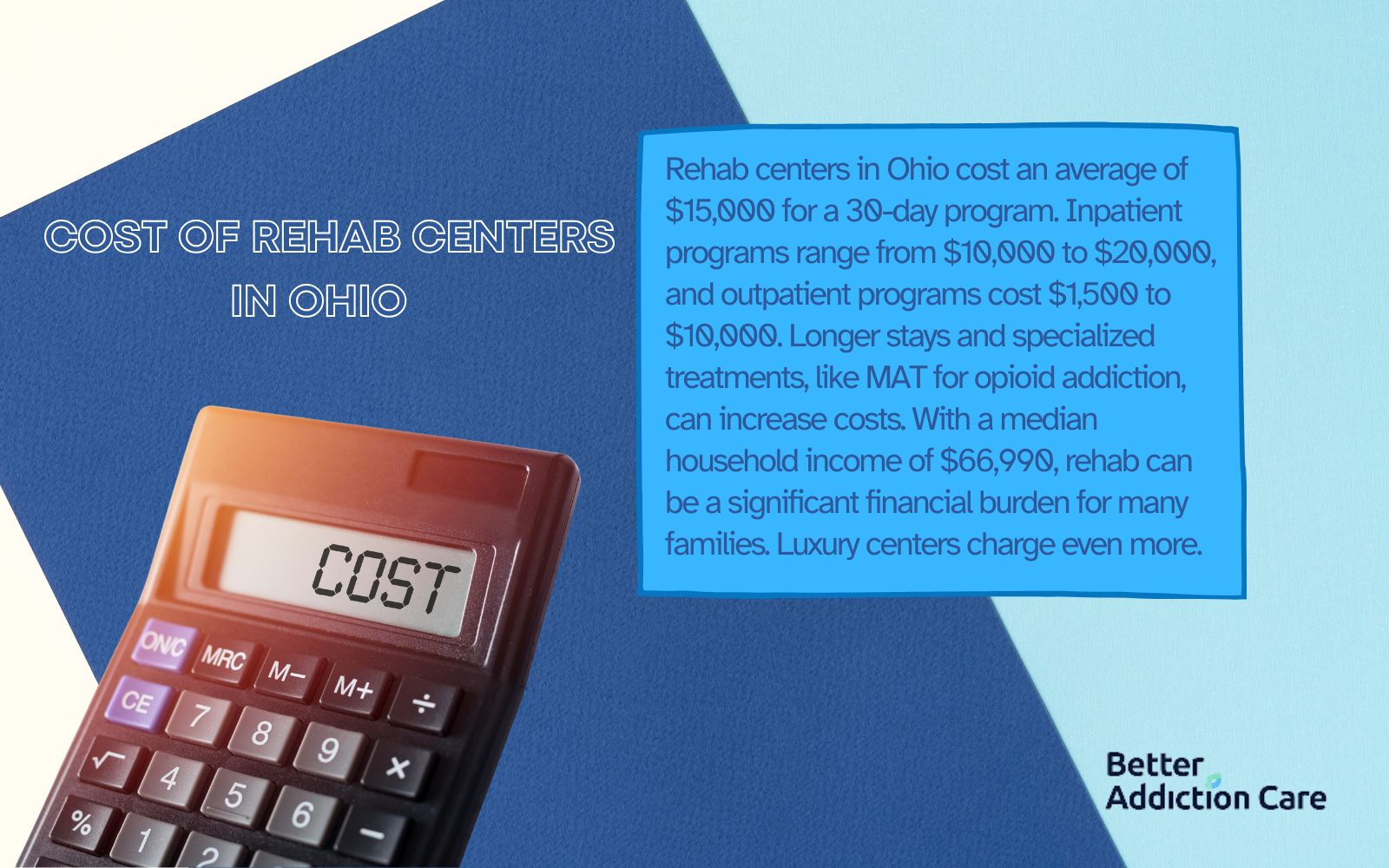
The cost of rehab centers in Ohio is $15,000 for a 30-day program. Inpatient rehab programs range from $10,000 to $20,000 for 30 days, while outpatient programs cost between $1,500 and $10,000 for the same period. Longer inpatient programs, such as 60 to 90-day treatments, cost anywhere from $12,000 to $60,000, significantly increasing the overall expense.
The cost of rehab centers also vary based on the type of addiction. For example, opioid addiction often requires medication-assisted treatment (MAT), with methadone treatment averaging $5,000 for a three-month course, increasing the cost of care. These figures highlight the financial challenge for many Ohio families.
The median household income is $66,990, the cost of rehab centers of $15,000 represents 22.7% of the annual income, underscoring the affordability issues faced by many. The cost of rehab centers fluctuate depending on the type of facility. Luxury or specialized treatment centers often charge significantly more than standard centers, further influencing affordability.
What is the cost of LGBTQ+ rehab centers in Ohio?
The cost of LGBTQ+ rehab centers in Ohio is $16,000 for a 30-day program. Inpatient rehab programs range from $10,000 to $20,000 for 30 days, while outpatient programs cost between $1,500 and $10,000 for the same period. Longer inpatient programs, such as 60 to 90-day treatments, cost anywhere from $12,000 to $60,000, significantly increasing the overall expense.
The cost of LGBTQ+ rehab centers also vary based on the type of addiction. For example, opioid addiction often requires medication-assisted treatment (MAT), with methadone treatment averaging $5,000 for a three-month course, increasing the cost of care. These figures highlight the financial challenge for many Ohio families.
The median household income is $66,990, the cost of LGBTQ+ rehab centers of $16,000 represents 23.8% of the annual income, underscoring the affordability issues faced by many. The cost of LGBTQ+ rehab centers fluctuate depending on the type of facility. Luxury or specialized treatment centers often charge significantly more than standard centers, further influencing affordability.
What is the cost of Faith-Based rehab centers in Ohio?
The cost of Faith-Based rehab centers in Ohio is $14,500 for a 30-day program. Inpatient rehab programs range from $10,000 to $20,000 for 30 days, while outpatient programs cost between $1,500 and $10,000 for the same period. Longer inpatient programs, such as 60 to 90-day treatments, cost anywhere from $12,000 to $60,000, significantly increasing the overall expense.
The cost of Faith-Based rehab centers also vary based on the type of addiction. For example, opioid addiction often requires medication-assisted treatment (MAT), with methadone treatment averaging $5,000 for a three-month course, increasing the cost of care. These figures highlight the financial challenge for many Ohio families.
The median household income is $66,990, the cost of Faith-Based rehab centers of $14,500 represents 21.6% of the annual income, underscoring the affordability issues faced by many. The cost of Faith-Based rehab centers fluctuate depending on the type of facility. Luxury or specialized treatment centers often charge significantly more than standard centers, further influencing affordability.
What is the cost of Men-Only rehab centers in Ohio?
The cost of Men-Only rehab centers in Ohio is $14,750 for a 30-day program. Inpatient rehab programs range from $10,000 to $20,000 for 30 days, while outpatient programs cost between $1,500 and $10,000 for the same period. Longer inpatient programs, such as 60 to 90-day treatments, cost anywhere from $12,000 to $60,000, significantly increasing the overall expense.
The cost of Men-Only rehab centers also vary based on the type of addiction. For example, opioid addiction often requires medication-assisted treatment (MAT), with methadone treatment averaging $5,000 for a three-month course, increasing the cost of care. These figures highlight the financial challenge for many Ohio families.
The median household income is $66,990, the cost of Men-Only rehab centers of $14,750 represents 22% of the annual income, underscoring the affordability issues faced by many. The cost of Men-Only rehab centers fluctuate depending on the type of facility. Luxury or specialized treatment centers often charge significantly more than standard centers, further influencing affordability.
What is the cost of Women-Only rehab centers in Ohio?
The cost of Women-Only rehab centers in Ohio is $14,020 for a 30-day program. Inpatient rehab programs range from $10,000 to $20,000 for 30 days, while outpatient programs cost between $1,500 and $10,000 for the same period. Longer inpatient programs, such as 60 to 90-day treatments, cost anywhere from $12,000 to $60,000, significantly increasing the overall expense.
The cost of Women-Only rehab centers also vary based on the type of addiction. For example, opioid addiction often requires medication-assisted treatment (MAT), with methadone treatment averaging $5,000 for a three-month course, increasing the cost of care. These figures highlight the financial challenge for many Ohio families.
The median household income is $66,990, the cost of Women-Only rehab centers of $14,020 represents 20.9% of the annual income, underscoring the affordability issues faced by many. The cost of Women-Only rehab centers fluctuate depending on the type of facility. Luxury or specialized treatment centers often charge significantly more than standard centers, further influencing affordability.
What is the cost of Teen rehab centers in Ohio?
The cost of Teen rehab centers in Ohio is $13,050 for a 30-day program. Inpatient rehab programs range from $10,000 to $20,000 for 30 days, while outpatient programs cost between $1,500 and $10,000 for the same period. Longer inpatient programs, such as 60 to 90-day treatments, cost anywhere from $12,000 to $60,000, significantly increasing the overall expense.
The cost of Teen rehab centers also vary based on the type of addiction. For example, opioid addiction often requires medication-assisted treatment (MAT), with methadone treatment averaging $5,000 for a three-month course, increasing the cost of care. These figures highlight the financial challenge for many Ohio families.
The median household income is $66,990, the cost of Teen rehab centers of $13,050 represents 19.4% of the annual income, underscoring the affordability issues faced by many. The cost of Teen rehab centers fluctuate depending on the type of facility. Luxury or specialized treatment centers often charge significantly more than standard centers, further influencing affordability.
What is the cost of Young Adult rehab centers in Ohio?
The cost of Young Adult rehab centers in Ohio is $13,600 for a 30-day program. Inpatient rehab programs range from $10,000 to $20,000 for 30 days, while outpatient programs cost between $1,500 and $10,000 for the same period. Longer inpatient programs, such as 60 to 90-day treatments, cost anywhere from $12,000 to $60,000, significantly increasing the overall expense.
The cost of Young Adult rehab also varies based on the type of addiction. For example, opioid addiction often requires medication-assisted treatment (MAT), with methadone treatment averaging $5,000 for a three-month course, increasing the cost of care. These figures highlight the financial challenge for many Ohio families.
The median household income is $66,990, the cost of Young Adult rehab centers of $13,600 represents 20.3% of the annual income, underscoring the affordability issues faced by many. The cost of Young Adult rehab centers fluctuate depending on the type of facility. Luxury or specialized treatment centers often charge significantly more than standard centers, further influencing affordability.
What is the cost of Luxury Rehab centers in Ohio?
The cost of Luxury rehab centers in Ohio is $65,000 for a 30-day program. Inpatient rehab programs range from $30,000 and $100,000 for 30 days, while outpatient programs cost between $1,500 and $10,000 for the same period. Longer inpatient programs, such as 60 to 90-day treatments, cost anywhere from $12,000 to $60,000, significantly increasing the overall expense.
The cost of Luxury rehab centers also vary based on the type of addiction. For example, opioid addiction often requires medication-assisted treatment (MAT), with methadone treatment averaging $5,000 for a three-month course, increasing the cost of care.
The median household income is $66,990, the cost of Luxury rehab centers of $65,000 represents 97% of the annual income. The cost of Luxury rehab centers fluctuate depending on the type of facility. Luxury or specialized treatment centers often charge significantly more than standard centers, further influencing affordability.
What is the cost of Dual Diagnosis rehab centers in Ohio?
The cost of Dual Diagnosis rehab centers in Ohio is $14,000 for a 30-day program. Inpatient rehab programs range from $10,000 to $20,000 for 30 days, while outpatient programs cost between $1,500 and $10,000 for the same period. Longer inpatient programs, such as 60 to 90-day treatments, cost anywhere from $12,000 to $60,000, significantly increasing the overall expense.
The cost of Dual Diagnosis rehab centers also vary based on the type of addiction. For example, opioid addiction often requires medication-assisted treatment (MAT), with methadone treatment averaging $5,000 for a three-month course, increasing the cost of care. These figures highlight the financial challenge for many Ohio families.
The median household income is $66,990, the cost of Dual Diagnosis rehab centers of $14,000 represents 20.8% of the annual income, underscoring the affordability issues faced by many. The cost of Dual Diagnosis rehab centers fluctuate depending on the type of facility. Luxury or specialized treatment centers often charge significantly more than standard centers, further influencing affordability.
Is drug abuse and addiction a problem in Ohio?
Yes, drug abuse and addiction is a problem in Ohio. Firstly, Ohio has experienced a persistent opioid crisis, with opioid-related overdose deaths accounting for the majority of fatal drug overdoses. In 2024 alone, Ohio reported over 4,000 opioid-related fatalities, marking a 25% increase from 2021. This crisis has been fueled by the proliferation of synthetic opioids like fentanyl, which are often more potent and deadly than prescription painkillers. Secondly, cocaine and methamphetamine use have also surged, with a notable rise in overdose deaths involving these substances.
In 2023, 27.3% of individuals entering public treatment programs in certain regions of Ohio reported methamphetamine use, up from 15% in 2019, highlighting the growing prevalence of stimulant abuse. Thirdly, Ohio faces significant socioeconomic challenges exacerbated by substance abuse, including increased healthcare costs, lost productivity, and strain on public resources.
Statistical evidence underscores the evolving nature of the problem. From 2019 to 2024, fatal drug overdoses in Ohio nearly doubled, rising from 14.2 deaths per 100,000 residents to 38.3 per 100,000 residents. Despite efforts to curb the epidemic through education, prevention programs, and access to naloxone, Ohio continues to grapple with high rates of addiction. These figures reflect not only the ongoing challenges but also the urgent need for comprehensive and sustained intervention strategies.
Is alcoholism a problem in Ohio?
Yes, alcoholism is a problem in Ohio. One reason is the high prevalence of binge drinking among adults and young people in Ohio. According to recent surveys, nearly 18% of Ohio adults engage in binge drinking, exceeding the national average of 16%. This behavior significantly increases the risk of developing alcohol addiction and contributes to alcohol-related health complications.
Secondly, the state of Ohio experiences substantial alcohol-related mortality and morbidity. In 2024, alcohol was a factor in more than 1,200 deaths in Ohio, including those caused by liver disease, traffic accidents, and alcohol poisoning, reflecting its deadly impact on public health. Thirdly, the economic and societal costs of excessive alcohol consumption strain state resources. Alcohol-related issues, including healthcare costs, lost productivity, and criminal justice expenses, are estimated to cost Ohio billions annually.
Statistical evidence shows how the issue has evolved. Over the past decade, deaths from alcohol-related liver disease have risen by over 30%, mirroring national trends. Emergency room visits for alcohol poisoning and other alcohol-related injuries have increased by 20% in the same period. These trends, coupled with the growing normalization of binge drinking and heavy alcohol consumption in certain communities, highlight the pervasive and persistent nature of alcoholism in Ohio. Despite ongoing efforts to address the issue through public health campaigns and treatment programs, alcoholism continues to be a major challenge for Ohio.
Is Mental Health a problem in Ohio?
Yes, mental health is a problem in Ohio. One reason is the increasing prevalence of mental health disorders across all age groups. Recent data shows that nearly 20% of Ohio adults experience mental illness annually, with 5% suffering from severe mental health conditions such as schizophrenia or bipolar disorder. Secondly, youth mental health is a growing concern, with suicide being the second-leading cause of death for Ohioans aged 10 to 24. The percentage of high school students in Ohio reporting persistent feelings of sadness or hopelessness has risen to over 30%, reflecting a disturbing trend. Thirdly, Ohio's mental healthcare system faces challenges in meeting the demand for services. Ohio has a shortage of mental health professionals, with some regions designated as mental health provider shortage areas, leaving many residents without adequate care.
Statistical trends highlight the worsening state of mental health in Ohio. Between 2014 and 2024, hospitalizations for mental health conditions increased by 18%, and the suicide rate rose by nearly 33% over the same period. The demand for mental health services surged during the COVID-19 pandemic, exacerbating existing gaps in the system. These patterns underscore the urgent need for expanded resources, targeted interventions, and comprehensive strategies to address mental health issues in Ohio. Despite increased awareness and efforts to reduce stigma, mental health remains a critical and persistent public health challenge in Ohio.
Can you travel to Ohio for rehab?
Yes, you can travel to Ohio for rehab, and Ohio offers several compelling reasons to consider it for treatment. Firstly, Ohio is home to a wide range of highly regarded rehab centers that cater to various needs, including substance addiction and mental health conditions. Many facilities in Ohio provide specialized treatments, such as medication-assisted therapy for opioid addiction and trauma-informed care, making it a destination for individuals seeking comprehensive and effective care.
Secondly, Ohio’s affordability sets it apart. Compared to other states with similar high-quality rehab programs, the cost of rehab centers in Ohio is often more reasonable. This affordability extends not only to treatment but also to accommodation and transportation, making it an attractive option for out-of-state individuals looking for value without compromising on care quality.
Thirdly, Ohio offers a supportive recovery environment with diverse landscapes and communities that enhance the healing process. From tranquil rural settings to urban areas with strong support networks and sober living communities, Ohio provides an ideal backdrop for individuals seeking a fresh start. These unique attributes, combined with a strong emphasis on evidence-based treatment, make Ohio an excellent choice for those considering traveling for rehab.
Can addiction be treated in Ohio?
Yes, addiction can be treated in Ohio, and Ohio offers several strong reasons for individuals seeking effective care. Firstly, Ohio has a robust network of treatment centers that provide comprehensive services, including detoxification, inpatient and outpatient programs, and long-term recovery support. These facilities often employ evidence-based approaches such as cognitive-behavioral therapy, medication-assisted treatment, and holistic therapies to address addiction effectively.
Secondly, Ohio has invested heavily in combating the addiction crisis, particularly in response to the opioid epidemic. Statewide initiatives like the Recovery Ohio program ensure that resources are available to expand access to treatment, prevent addiction, and support individuals in recovery. These efforts have significantly improved the availability and quality of care across Ohio.
Thirdly, Ohio fosters a strong community support system for those in recovery. With numerous sober living homes, peer support groups, and community-based programs, individuals recovering from addiction can access ongoing support to maintain sobriety. This combination of professional care, state-level commitment, and community involvement makes Ohio an excellent place for treating addiction.
What is the state of Ohio?
The state of Ohio is in the United States located in the Midwest region. According to the latest estimates, Ohio has a population of 11.8 million people, with a fairly balanced gender distribution of about 5.7 million males and 6.1 million females.
Geographically, Ohio is bordered by Michigan to the north, Indiana to the west, Kentucky to the south across the Ohio River, West Virginia to the southeast, and Pennsylvania to the east. It also has a northern coastline along Lake Erie, providing access to significant water transportation routes.
Economically, Ohio is considered a middle-income state with a median household income of around $66,990, slightly below the national median. The state has a diverse economy that includes manufacturing, agriculture, healthcare, and services, but certain regions face economic challenges, particularly in areas impacted by industrial decline. Despite these challenges, Ohio remains one of the top contributors to the U.S. economy due to its strategic location, robust infrastructure, and skilled workforce.
What is the population of Ohio?
The population of Ohio is 11.77 million people, with a fairly balanced gender distribution of 5.81 million males (49.38%) and 5.96 million females (50.62%). The population is spread across various age groups, with 2,593,322 individuals (22.02%) under 18 years, 7,112,799 individuals (60.41%) aged 18 to 64 years, and 2,068,562 individuals (17.57%) aged 65 years and over. These figures highlight Ohio's balanced demographics, with a significant working-age population alongside a notable proportion of children and seniors, contributing to Ohio's diverse community dynamics.
What is the income of people from Ohio?
The income of people from Ohio is $61,495, per capita personal income. The median household income stands at $66,990. Households led by individuals aged 45 to 64 years have the highest median income at $84,968, followed by those aged 25 to 44 years with a median income of $78,524. In contrast, households headed by individuals 65 years and over report a lower median income of $51,854. Gender disparities are evident, with males generally earning higher median incomes than females. These figures highlight the economic landscape of Ohio, reflecting variations in income distribution across age groups and between genders.