Alcoholism, Drug Abuse, Mental Health, and Treatment in Vermont
What are the main addictions people in Vermont suffer from?
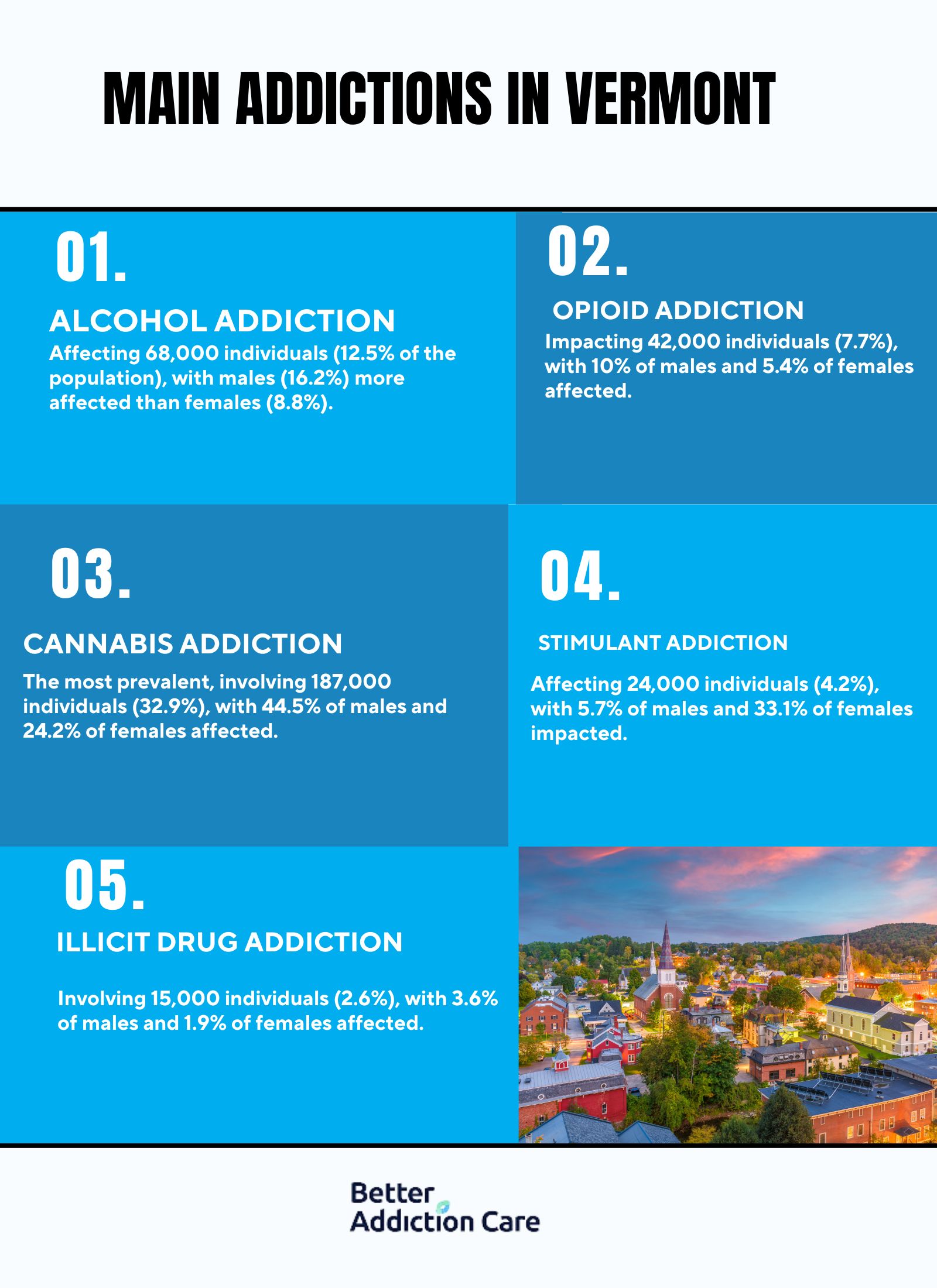
The main addictions people in Vermont suffer from include;
- Alcohol Addiction: 68,000 individuals aged 12 or older have alcohol addiction, equating to 12.5% of the population. 45,560 (16.2% of the male population) males are higher in number as compared to 22,440 (8.8%) of the female population.
- Opioid Addiction: 42,000 individuals aged 12 or older have Opioid addiction, equating to 7.7% of the population. 28,140 (10% of the male population) males are higher in number as compared to 13,860 (5.4% of the female population) females.
- Cannabis Addiction: 187,000 individuals aged 12 or older have cannabis addiction, equating to 32.9% of the population. 125,290 (44.5% of the male population) males are higher in number as compared to 61,710 (24.2% of the female population) females.
- Stimulant Addiction: 24,000 individuals aged 12 or older have stimulant addiction, equating to 4.2% of the population. 16,080 (5.7% of the male population) males are higher in number as compared to 7,920 (33.1% of the female population) females.
- Illicit Drug Addiction: 15,000 individuals aged 12 or older have illicit drug addiction, equating to 2.6% of the population. 10,050 (3.6% of the male population) males are higher in number as compared to 4,950 (1.9% of the female population) females.
What is the cost of rehab centers in Vermont?
The cost of rehab centers in Vermont is $10,000. Inpatient treatment, which includes accommodations, meals, therapy, and medical supervision, costs $640.74 per day, totaling $19,222.20 for a 30-day program. Outpatient treatment, which requires regular visits but does not include accommodations, is significantly less expensive at $51.43 per day, or $1,542.90 for a 30-day program. The cost of rehab centers vary based on the type of treatment and facility.
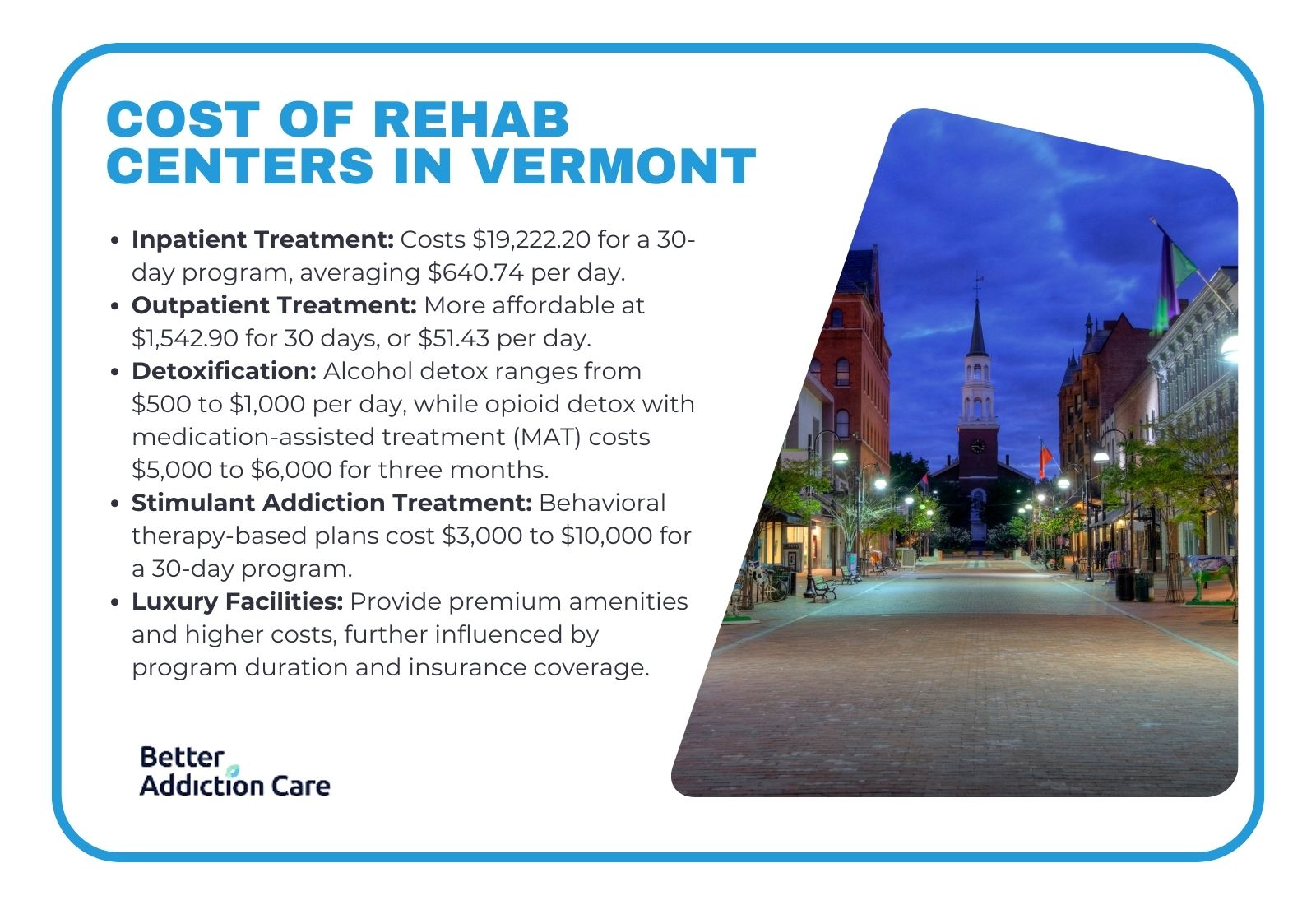
Costs of rehab centers fluctuate based on the type of addiction being treated. For example, detox for alcohol addiction costs $500 to $1,000 per day, while medication-assisted treatment (MAT) for opioid addiction ranges from $5,000 to $6,000 for a three-month program. Treatment for stimulant use disorder, often involving intensive behavioral therapies, cost between $3,000 and $10,000 for a 30-day plan. The type of facility, such as luxury rehab centers offering premium amenities, also affects costs, as do the duration of the program and the availability of insurance coverage.
Vermont’s median household income of $81,211, the cost of rehab centers represents 23.7% of the annual income, making it a significant financial burden for many households. In contrast, outpatient programs cost only 1.9%, offering a more affordable alternative. Overall, costs of rehab centers vary widely based on the type of rehab center, with luxury options and extended stays driving expenses higher.
What is the cost of LGBTQ+ rehab centers in Vermont?
The cost of LGBTQ+ rehab centers in Vermont is $25,000, increasing by 10% to 15%. Inpatient treatment, which includes accommodations, meals, therapy, and medical supervision, costs an additional $1,922.22 to $2,883.33, raising the total cost to $21,144.42 to $22,105.53 for a 30-day program. For outpatient treatment, the increase adds $154.29 to $231.44, resulting in a total cost of $1,697.19 to $1,774.34 for the same duration. The cost of LGBTQ+ rehab centers vary based on the type of treatment and facility.
Costs of LGBTQ+ rehab centers fluctuate based on the type of addiction being treated. For example, detox for alcohol addiction costs $500 to $1,000 per day, while medication-assisted treatment (MAT) for opioid addiction ranges from $5,000 to $6,000 for a three-month program. Treatment for stimulant use disorder, often involving intensive behavioral therapies, cost between $3,000 and $10,000 for a 30-day plan. The type of facility, such as luxury rehab centers offering premium amenities, also affects costs of LGBTQ+ rehab centers, as do the duration of the program and the availability of insurance coverage.
Vermont’s median household income of $81,211, the cost of LGBTQ+ rehab centers represents 30.7% of the annual income, making it a significant financial burden for many households. In contrast, outpatient programs cost only 1.9%, offering a more affordable alternative. Overall, costs of LGBTQ+ rehab centers vary widely based on the type of rehab center, with luxury options and extended stays driving expenses higher.
What is the cost of Faith-Based rehab centers in Vermont?
The cost of Faith-Based rehab centers in Vermont is $12,000. Inpatient treatment, which includes accommodations, meals, therapy, and medical supervision, costs $640.74 per day, totaling $19,222.20 for a 30-day program. Outpatient treatment, which requires regular visits but does not include accommodations, is significantly less expensive at $51.43 per day, or $1,542.90 for a 30-day program. The cost of Faith-Based rehab centers vary based on the type of treatment and facility.
Costs of Faith-Based rehab centers fluctuate based on the type of addiction being treated. For example, detox for alcohol addiction costs $500 to $1,000 per day, while medication-assisted treatment (MAT) for opioid addiction ranges from $5,000 to $6,000 for a three-month program. Treatment for stimulant use disorder, often involving intensive behavioral therapies, cost between $3,000 and $10,000 for a 30-day plan. The type of facility, such as luxury rehab centers offering premium amenities, also affects costs, as do the duration of the program and the availability of insurance coverage.
Vermont’s median household income of $81,211, the cost of Faith-Based rehab centers represents 14.7% of the annual income, making it a significant financial burden for many households. In contrast, outpatient programs cost only 1.9%, offering a more affordable alternative. Overall, costs of Faith-Based rehab centers vary widely based on the type of rehab center, with luxury options and extended stays driving expenses higher.
#BBD0E0 »