Alcoholism, Drug Abuse, Mental Health, and Treatment in Minnesota
What are the main addictions people in Minnesota suffer from?
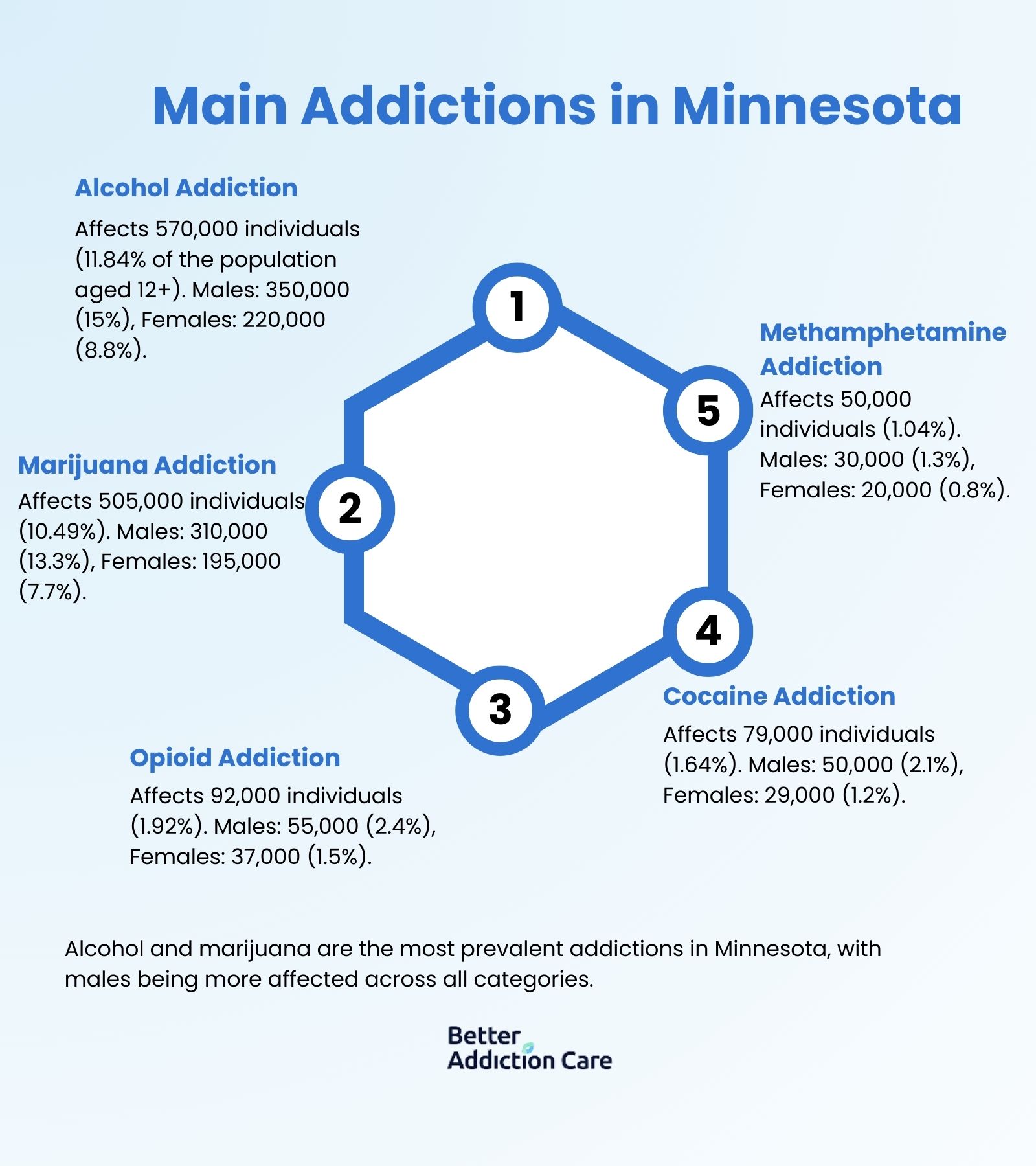
The main addictions people in Minnesota suffer from include;
- Alcohol Addiction: 570,000 individuals aged 12 or older, representing 11.84% of this age group have alcohol addiction. 350,000 (15.0%) of males aged 12 or older, while 220,000 (8.8%) of females aged 12 or older affected by Alcohol Addiction.
- Marijuana Addiction: 505,000 individuals aged 12 or older, accounting for 10.49% of this age group, have used marijuana in the past month. 310,000 (13.3%) of males aged 12 or older, while 195,000 (7.7%) of females aged 12 or older affected by Marijuana addiction.
- Opioid Addiction: 92,000 individuals aged 12 or older, representing 1.92% of this age group are affected. 55,000 (2.4%) of males aged 12 or older, while 37,000 (1.5%) of females aged 12 or older have Opioid Addiction.
- Cocaine Addiction: 79,000 individuals aged 12 or older, accounting for 1.64% of this age group are affected. 50,000 (2.1%) of males aged 12 or older, while 29,000 (1.2%) of females aged 12 or older have Cocaine Addiction.
- Methamphetamine Addiction: 50,000 individuals aged 12 or older, representing 1.04% of this age group are affected. 30,000 (1.3%) of males aged 12 or older, while 20,000 (0.8%) of females aged 12 or older have Methamphetamine Addiction.
What is the cost of rehab centers in Minnesota?
The cost of rehab centers in Minnesota is $56,630, which equates to 67.5%. In Minnesota, the average cost for a 30-day inpatient rehab program is $56,630 (67%), while outpatient programs are generally less expensive, costing $5,000 (5%) for a three-month program depending on the frequency and duration of treatment sessions. The type of addiction significantly influences these costs of rehab centers in Minnesota. For example, medical detoxification required for substances like opioids or alcohol add $1,000 to $1,500 to the total expense, representing an increase of 1.8% to 2.7% over the average cost.
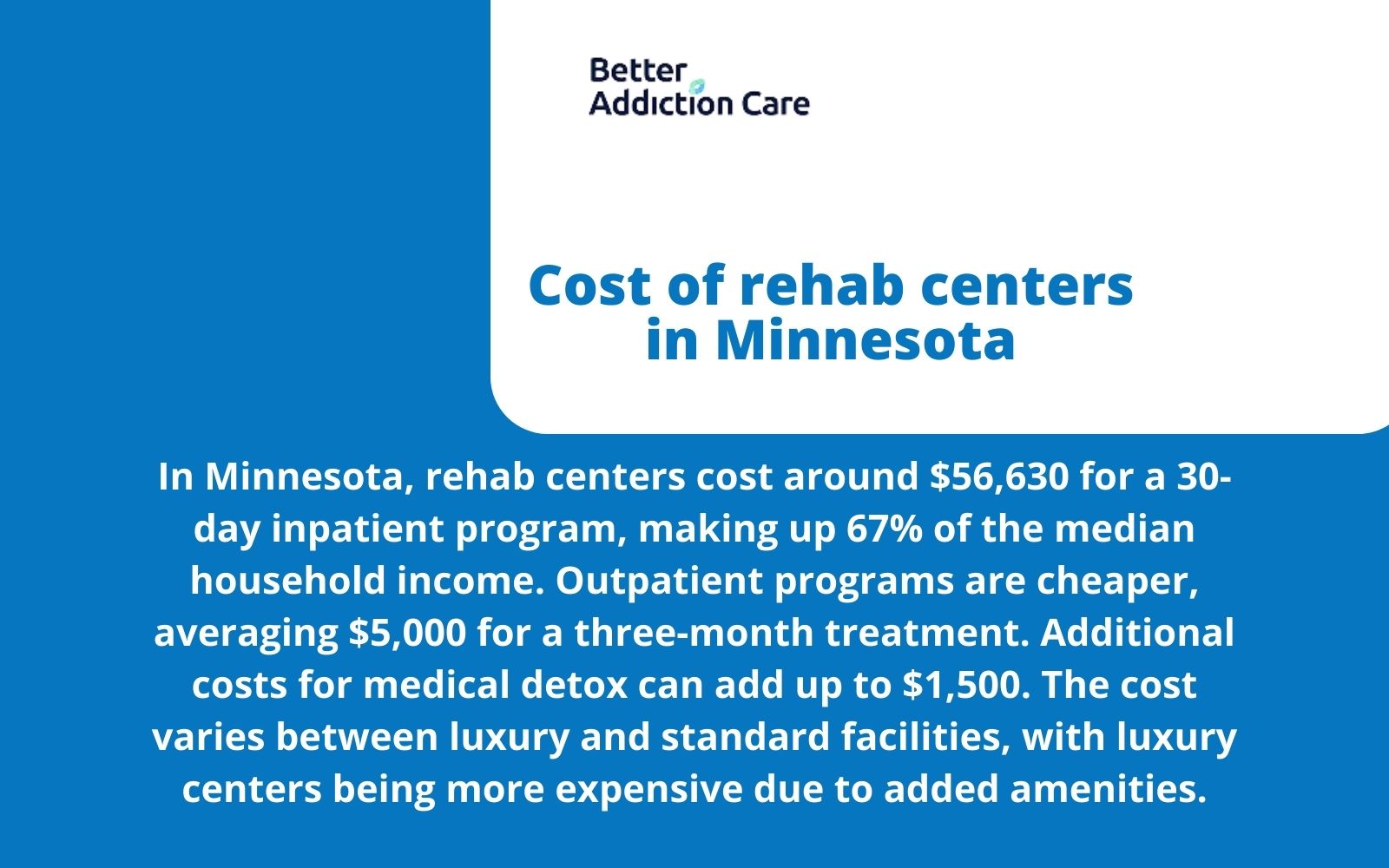
Minnesota's median household income is $84,313.The cost of rehab centers in Minnesota is $56,630, which equates to 67% of the average annual household earnings, as this financial burden is a barrier for many families seeking treatment. The type of rehab center plays a significant role in determining costs. Luxury facilities charge higher fees due to additional amenities and services, whereas standard centers are comparatively more affordable.
What is the cost of LGBTQ+ rehab centers in Minnesota?
The cost of LGBTQ+ rehab centers in Minnesota is $55,630, which equates to 66%. In Minnesota, the average cost for a 30-day inpatient rehab program is $56,630 (67%), while outpatient programs are generally less expensive, costing $5,000(5%) for a three-month program depending on the frequency and duration of treatment sessions. The type of addiction significantly influences these costs of LGBTQ+ rehab centers in Minnesota. For example, medical detoxification required for substances like opioids or alcohol add $1,000 to $1,500 to the total expense, representing an increase of 1.8% to 2.7% over the average cost.
Minnesota's median household income is $84,313.The cost of LGBTQ+ rehab centers in Minnesota is $55,630, which equates to 66% of the average annual household earnings, as this financial burden is a barrier for many families seeking treatment. The type of LGBTQ+ rehab center plays a significant role in determining costs. Luxury facilities charge higher fees due to additional amenities and services, whereas standard centers are comparatively more affordable.
What is the cost of Faith-Based rehab centers in Minnesota?
The cost of Faith-Based rehab centers in Minnesota is $54,000, which equates to 64%. In Minnesota, the average cost for a 30-day inpatient rehab program is $56,630 (67%), while outpatient programs are generally less expensive, costing around $5,000(5%) for a three-month program depending on the frequency and duration of treatment sessions. The type of addiction significantly influences these costs of Faith-Based rehab centers in Minnesota. For example, medical detoxification required for substances like opioids or alcohol add $1,000 to $1,500 to the total expense, representing an increase of 1.8% to 2.7% over the average cost.
Minnesota's median household income is $84,313.The cost of Faith-Based rehab centers in Minnesota is $54,000, which equates to 64% of the average annual household earnings, as this financial burden is a barrier for many families seeking treatment. The type of Faith-Based rehab center plays a significant role in determining costs. Luxury facilities charge higher fees due to additional amenities and services, whereas standard centers are comparatively more affordable.
What is the cost of Men-Only rehab centers in Minnesota?
The cost of Men-Only rehab centers in Minnesota is $52,000, which equates to 62%. In Minnesota, the average cost for a 30-day inpatient rehab program is $56,630 (67%), while outpatient programs are generally less expensive, costing $5,000(5%) for a three-month program depending on the frequency and duration of treatment sessions. The type of addiction significantly influences these costs of Men-Only rehab centers in Minnesota. For example, medical detoxification required for substances like opioids or alcohol add $1,000 to $1,500 to the total expense, representing an increase of 1.8% to 2.7% over the average cost.
Minnesota's median household income is $84,313.The cost of Men-Only rehab centers in Minnesota is $52,000, which equates to62% of the average annual household earnings, as this financial burden is a barrier for many families seeking treatment. The type of Men-Only rehab center plays a significant role in determining costs. Luxury facilities charge higher fees due to additional amenities and services, whereas standard centers are comparatively more affordable.
What is the cost of Women-Only rehab centers in Minnesota?
The cost of Women-Only rehab centers in Minnesota is $53,630, which equates to 64%. In Minnesota, the average cost for a 30-day inpatient rehab program is $56,630 (67%), while outpatient programs are generally less expensive, costing $5,000(5%) for a three-month program depending on the frequency and duration of treatment sessions. The type of addiction significantly influences these costs of Women-Only rehab centers in Minnesota. For example, medical detoxification required for substances like opioids or alcohol add $1,000 to $1,500 to the total expense, representing an increase of 1.8% to 2.7% over the average cost.
Minnesota's median household income is $84,313.The cost of Women-Only rehab centers in Minnesota is $53,630, which equates to 64% of the average annual household earnings, as this financial burden is a barrier for many families seeking treatment. The type of Women-Only rehab center plays a significant role in determining costs. Luxury facilities charge higher fees due to additional amenities and services, whereas standard centers are comparatively more affordable.
What is the cost of Teen rehab centers in Minnesota?
The cost of Teen rehab centers in Minnesota is $55,000, which equates to 65%. In Minnesota, the average cost for a 30-day inpatient rehab program is $56,630 (67%), while outpatient programs are generally less expensive, costing $5,000(5%) for a three-month program depending on the frequency and duration of treatment sessions. The type of addiction significantly influences these costs of Teen rehab centers in Minnesota. For example, medical detoxification required for substances like opioids or alcohol add $1,000 to $1,500 to the total expense, representing an increase of 1.8% to 2.7% over the average cost.
Minnesota's median household income is $84,313.The cost of Teen rehab centers in Minnesota is $55,000, which equates to 65% of the average annual household earnings, as this financial burden is a barrier for many families seeking treatment. The type of Teen rehab center plays a significant role in determining costs. Luxury facilities charge higher fees due to additional amenities and services, whereas standard centers are comparatively more affordable.
What is the cost of Young Adult rehab centers in Minnesota?
The cost of Young Adult rehab centers in Minnesota is $50,630, which equates to 60%. In Minnesota, the average cost for a 30-day inpatient rehab program is $56,630 (67%), while outpatient programs are generally less expensive, costing around $5,000(5%) for a three-month program depending on the frequency and duration of treatment sessions. The type of addiction significantly influences these costs of Young Adult rehab centers in Minnesota. For example, medical detoxification required for substances like opioids or alcohol add $1,000 to $1,500 to the total expense, representing an increase of 1.8% to 2.7% over the average cost.
Minnesota's median household income is $84,313.The cost of Young Adult rehab centers in Minnesota is $50,630, which equates to 60% of the average annual household earnings, as this financial burden is a barrier for many families seeking treatment. The type of Young Adult rehab center plays a significant role in determining costs. Luxury facilities charge higher fees due to additional amenities and services, whereas standard centers are comparatively more affordable.
What is the cost of Luxury Rehab centers in Minnesota?
The cost of Luxury rehab centers in Minnesota is $42,500, which equates to 51%. In Minnesota, the average cost for a 30-day inpatient rehab program ranges from $5,000 to $80,000, while outpatient programs are generally less expensive, costing $5,000(5%) for a three-month program depending on the frequency and duration of treatment sessions. The type of addiction significantly influences these costs of Luxury rehab centers in Minnesota. For example, medical detoxification required for substances like opioids or alcohol add $1,000 to $1,500 to the total expense, representing an increase of 1.8% to 2.7% over the average cost.
Minnesota's median household income is $84,313.The cost of Luxury rehab centers in Minnesota is $42,500, which equates to 51% of the average annual household earnings. The type of Luxury rehab center plays a significant role in determining costs. Luxury facilities charge higher fees due to additional amenities and services, whereas standard centers are comparatively more affordable.
What is the cost of Dual Diagnosis rehab centers in Minnesota?
The cost of Dual Diagnosis rehab centers in Minnesota is $54,700, which equates to 65%. In Minnesota, the average cost for a 30-day inpatient rehab program is $56,630 (67%), while outpatient programs are generally less expensive, costing around $5,000(5%) for a three-month program depending on the frequency and duration of treatment sessions. The type of addiction significantly influences these costs of Dual Diagnosis rehab centers in Minnesota. For example, medical detoxification required for substances like opioids or alcohol add $1,000 to $1,500 to the total expense, representing an increase of 1.8% to 2.7% over the average cost.
Minnesota's median household income is $84,313.The cost of Dual Diagnosis rehab centers in Minnesota is $54,700, which equates to 65% of the average annual household earnings, as this financial burden is a barrier for many families seeking treatment. The type of Dual Diagnosis rehab center plays a significant role in determining costs. Luxury facilities charge higher fees due to additional amenities and services, whereas standard centers are comparatively more affordable.
Is drug abuse and addiction a problem in Minnesota?
Yes, drug abuse and addiction is a problem in Minnesota. Firstly, Minnesota has experienced a substantial increase in drug overdose deaths, rising from 846 in 2022 to 860 in 2024, marking a 2% increase in the seven-county metro area. Secondly, nonfatal emergency department visits for opioid-involved overdoses were highest among 25-34-year-olds in 2024, indicating a growing issue among young adults. Thirdly, the American Indian population, representing 1.5% of Minnesota's total population, accounted for 8% of all drug overdose deaths, highlighting significant disparities among different communities.
Over the years, Minnesota has seen fluctuating trends in substance addiction and related fatalities, with certain demographics experiencing disproportionate impacts, underscoring the ongoing challenges in addressing this public health crisis.
Is alcoholism a problem in Minnesota?
Yes, alcoholism is a problem in Minnesota. Firstly, Minnesota has one of the highest binge drinking rates in the nation, with 17.9% of adults reporting such behavior in 2024. This pattern has remained relatively stable since 2016, with men (21.9%) more likely to binge drink than women (13.9%). Secondly, alcohol-related deaths have increased over time; between 2005 and 2024, 100% alcohol-attributable deaths nearly doubled. Thirdly, the economic impact is substantial, with excessive alcohol use costing Minnesota $3.5 billion in 2024, primarily due to lost productivity.
Over the years, while adult alcohol use has remained relatively stable, youth alcohol consumption has declined, with 12% of 9th and 11th graders reporting use in 2024, down from 21% in 2017. Despite this positive trend among youth, the persistent high rates of adult binge drinking and the increasing number of alcohol-related deaths underscore the ongoing challenge of alcoholism in Minnesota.
Is Mental Health a problem in Minnesota?
Yes, mental health is a problem in Minnesota. Firstly, Minnesota has experienced a steady increase in suicide rates, with the age-adjusted suicide rate rising from 8.9 per 100,000 population in 2000 to 13.1 per 100,000 in 2019. Secondly, emergency department visits for self-inflicted injuries have escalated, jumping 15% from 13,293 in 2019 to 15,258 in 2024. Thirdly, the prevalence of major depressive episodes among adolescents aged 12 to 17 increased from 8.2% in 2017-2019 to 12.6% in 2022-2024.
These trends indicate a growing mental health crisis in Minnesota over the years, affecting various age groups and leading to increased morbidity and mortality.
Can you travel to Minnesota for rehab?
Yes, you can travel to Minnesota for rehab, and there are several compelling reasons to consider it. Minnesota is home to a robust and highly regarded network of rehab centers, including world-renowned facilities like the Hazelden Betty Ford Foundation, known for pioneering modern addiction treatment methods. The state of Minnesota also offers a serene and tranquil environment, with its abundance of lakes, forests, and natural beauty providing an ideal backdrop for recovery and healing. Minnesota's emphasis on integrating evidence-based practices with holistic therapies sets it apart, as many facilities incorporate mindfulness, wellness programs, and family therapy to address the comprehensive needs of individuals in recovery. These unique features make Minnesota a standout destination for those seeking effective and supportive addiction treatment.
Can addiction be treated in Minnesota?
Yes, addiction can be treated in Minnesota for several reasons. Firstly, the state has a diverse range of rehab centers that offer comprehensive treatment programs, including inpatient, outpatient, and specialized care tailored to different types of addictions, ensuring individuals receive the most appropriate support. Secondly, Minnesota is known for its commitment to evidence-based practices, combining medical detoxification, behavioral therapies, and aftercare planning to address the physical, emotional, and psychological aspects of addiction.
Thirdly, the state of Minnesota provides extensive community support through programs like Alcoholics Anonymous (AA), Narcotics Anonymous (NA), and other recovery groups, helping individuals maintain long-term sobriety and integrate back into society. These resources make Minnesota a strong choice for treating addiction effectively.
What is the state of Minnesota?
The state of Minnesota is in the Upper Midwest region of the United States, shares borders with Canada to the north, Wisconsin to the east, Iowa to the south, and North Dakota and South Dakota to the west. As of 2024, Minnesota's population is 5.8 million, with a nearly equal gender distribution: about 50.1% male and 49.9% female.
Economically, Minnesota is relatively affluent. The median household income stands at $84,313, surpassing the national median. Minnesota's economy is diverse, encompassing sectors such as manufacturing, healthcare, agriculture, and technology. However, Minnesota's economic growth has been modest in recent years, with a 0.5% increase in nonfarm payrolls since 2021, compared to the national average of 5.8%.
Despite this, the state of Minnesota maintains a low unemployment rate of 2.9%, indicating a relatively healthy labor market.
What is the population of Minnesota?
The population of Minnesota is 5,800,386 as of 2024, with a nearly equal gender distribution: 50.3% female and 49.7% male. The age distribution highlights a balanced demographic profile, with the largest group being individuals aged 25 to 34 years, making up 13.7% of the population. Younger age groups, such as those under 5 years, account for 6.2%, while those aged 5 to 14 years collectively represent 13%. The senior population, comprising individuals aged 65 years and older, makes up about 15% of the total population, indicating an aging trend. This includes 9.3% aged 65 to 74, 4.4% aged 75 to 84, and 1.3% aged 85 and above. The demographic breakdown demonstrates a diverse age structure, with a significant portion of the population in their working years, balanced by a growing elderly demographic.
What is the income of people from Minnesota?
The income of people from Minnesota is $44,947, per capita income. In Minnesota, the median household income is $84,313. Income levels vary across different age groups and between genders. For instance, the per capita personal income in Minnesota is $72,557 in 2024. However, specific income data segmented by age group and gender is not readily available in the provided sources. Generally, income tends to increase with age, peaking during the prime working years (ages 45-64), and then often declines upon retirement. Gender disparities in income are also common, with males often earning more than females, reflecting broader national trends.