
Alcoholism, Drug Abuse, Mental Health, and Treatment in New Mexico
What are the main addictions people in New Mexico suffer from?
The main addictions people in New Mexico suffer from include:
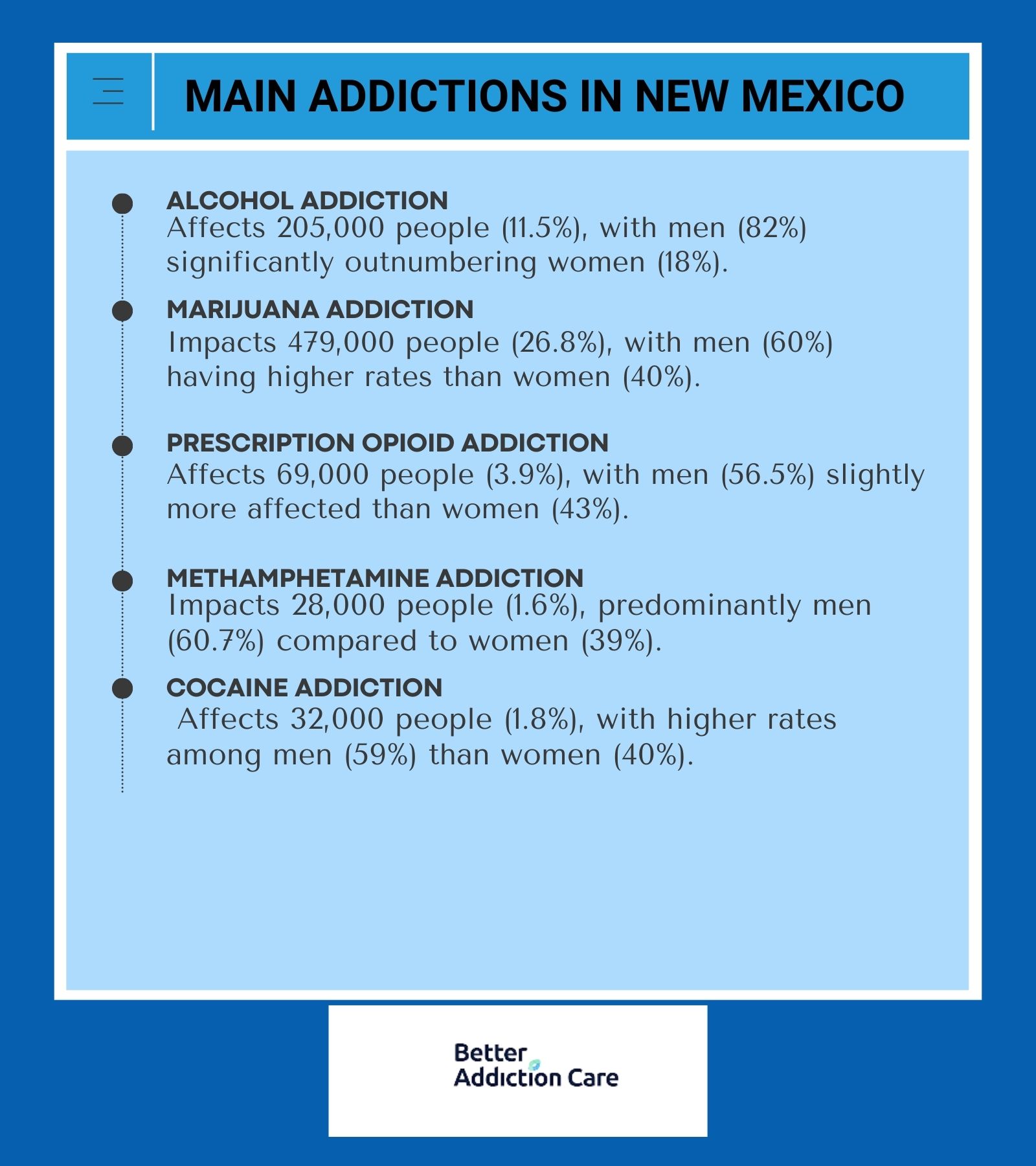
- Alcohol Addiction: 205,000 individuals aged 12 or older reported alcohol addiction in the past year, representing 11.5% of this age group. 168,000 (82%) Men have higher rates of alcohol addiction as compared to 37,000 (18%) women.
- Marijuana Addiction: 479,000 individuals aged 12 or older reported using marijuana in the past year, accounting for 26.8% of this population. 289,000 (60%) Men have higher rates of marijuana addiction as compared to 190,000 (40%) women.
- Prescription Opioid Addiction: 69,000 individuals aged 12 or older reported misusing prescription opioids in the past year, 3.9% of this age group. 39,000 (56.5%) Men have higher rates of Prescription Opioid addiction as compared to 30,000 (43%) women.
- Methamphetamine Addiction: 28,000 individuals aged 12 or older reported using methamphetamine in the past year, representing 1.6% of this population. 17,000 (60.7%) Men have higher rates of Methamphetamine addiction as compared to 11,000 (39%) women.
- Cocaine Addiction: 32,000 individuals aged 12 or older reported using cocaine in the past year, 1.8% of this age group. 19,000 (59%) Men have higher rates of Cocaine addiction as compared to 13,000 (40%) women.
What is the cost of rehab centers in New Mexico?
The cost of rehab centers in New Mexico is $57,989 without insurance. Inpatient rehab programs cost $644 per day, amounting to $19,329 for a 30-day program. In comparison, outpatient rehab is significantly less expensive, averaging $57 per day, or $1,700 for a 30-day course of treatment.
The costs of rehab centers vary depending on the type of addiction, with specialized treatments for substances like opioids often requiring additional therapies, which significantly increase expenses. For instance, medical detoxification raises costs by as much as $84,975, or 146.5% above the average.
New Mexico's median household income is $58,722, the cost of rehab centers is nearly equivalent, making affordability a challenge for many individuals without insurance or financial assistance. Beyond the type of addiction, the type of rehab facility also plays a significant role in costs. Standard inpatient programs range from $5,000 to $20,000 for 30 days, while luxury rehab centers offering premium amenities charge between $30,000 and $100,000 for the same period. These variations highlight the importance of considering insurance coverage and financial aid options when seeking treatment.
What is the cost of LGBTQ+ rehab centers in New Mexico?
The cost of LGBTQ+ rehab centers in New Mexico is $57,000 without insurance. Inpatient rehab programs cost $644 per day, amounting to $19,329 for a 30-day program. In comparison, outpatient rehab is significantly less expensive, averaging $57 per day, or $1,700 for a 30-day course of treatment.
The costs of LGBTQ+ rehab centers vary depending on the type of addiction, with specialized treatments for substances like opioids often requiring additional therapies, which significantly increase expenses. For instance, medical detoxification raises costs by as much as $84,975, or 146.5% above the average.
New Mexico's median household income is $58,722, the cost of LGBTQ+ rehab centers constitute 97%, making affordability a challenge for many individuals without insurance or financial assistance. Beyond the type of addiction, the type of rehab facility also plays a significant role in costs. Standard inpatient programs range from $5,000 to $20,000 for 30 days. These variations highlight the importance of considering insurance coverage and financial aid options when seeking treatment.
What is the cost of Faith-Based rehab centers in New Mexico?
The cost of Faith-Based rehab centers in New Mexico is $56,500 without insurance. Inpatient rehab programs cost $644 per day, amounting to $19,329 for a 30-day program. In comparison, outpatient rehab is significantly less expensive, averaging $57 per day, or about $1,700 for a 30-day course of treatment.
The costs of Faith-Based rehab centers vary depending on the type of addiction, with specialized treatments for substances like opioids often requiring additional therapies, which significantly increase expenses. For instance, medical detoxification raises costs by as much as $84,975, or 146.5% above the average.
New Mexico's median household income is $58,722, the cost of Faith-Based rehab centers constitute 96%, making affordability a challenge for many individuals without insurance or financial assistance. Beyond the type of addiction, the type of rehab facility also plays a significant role in costs of Faith-Based rehab. Standard inpatient programs range from $5,000 to $20,000 for 30 days. These variations highlight the importance of considering insurance coverage and financial aid options when seeking treatment.
What is the cost of Men-Only rehab centers in New Mexico?
The cost of Men-Only rehab centers in New Mexico is $54,989 without insurance. Inpatient rehab programs cost $644 per day, amounting to $19,329 for a 30-day program. In comparison, outpatient rehab is significantly less expensive, averaging $57 per day, or about $1,700 for a 30-day course of treatment.
The costs of Men-Only rehab centers vary depending on the type of addiction, with specialized treatments for substances like opioids often requiring additional therapies, which significantly increase expenses. For instance, medical detoxification raises costs by as much as $84,975, or 146.5% above the average.
New Mexico's median household income is $58,722, the cost of Men-Only rehab centers constitute 93.6%, making affordability a challenge for many individuals without insurance or financial assistance. Beyond the type of addiction, the type of rehab facility also plays a significant role in costs. Standard inpatient programs range from $5,000 to $20,000 for 30 days. These variations highlight the importance of considering insurance coverage and financial aid options when seeking treatment.
What is the cost of Women-Only rehab centers in New Mexico?
The cost of Women-Only rehab centers in New Mexico is $52,989 without insurance. Inpatient rehab programs cost $644 per day, amounting to $19,329 for a 30-day program. In comparison, outpatient rehab is significantly less expensive, averaging $57 per day, or $1,700 for a 30-day course of treatment.
The costs of Women-Only Rehab centers vary depending on the type of addiction, with specialized treatments for substances like opioids often requiring additional therapies, which significantly increase expenses. For instance, medical detoxification raises costs by as much as $84,975, or 146.5% above the average.
New Mexico's median household income is $58,722, the cost of Women-Only rehab centers constitute 92%, making affordability a challenge for many individuals without insurance or financial assistance. Beyond the type of addiction, the type of rehab facility also plays a significant role in costs. Standard inpatient programs range from $5,000 to $20,000 for 30 days. These variations highlight the importance of considering insurance coverage and financial aid options when seeking treatment.
What is the cost of Teen rehab centers in New Mexico?
The cost of Teen rehab centers in New Mexico is $50,900 without insurance. Inpatient rehab programs cost $644 per day, amounting to $19,329 for a 30-day program. In comparison, outpatient rehab is significantly less expensive, averaging $57 per day, or $1,700 for a 30-day course of treatment.
The costs of Teen rehab centers vary depending on the type of addiction, with specialized treatments for substances like opioids often requiring additional therapies, which significantly increase expenses. For instance, medical detoxification raises costs by as much as $84,975, or 146.5% above the average.
New Mexico's median household income is $58,722, the cost of Teen rehab centers constitute 86.6%, making affordability a challenge for many individuals without insurance or financial assistance. Beyond the type of addiction, the type of rehab facility also plays a significant role in costs. Standard inpatient programs range from $5,000 to $20,000 for 30 days. These variations highlight the importance of considering insurance coverage and financial aid options when seeking treatment.
What is the cost of Young Adult rehab centers in New Mexico?
The cost of Young Adult rehab centers in New Mexico is $54,000 without insurance. Inpatient rehab programs cost $644 per day, amounting to $19,329 for a 30-day program. In comparison, outpatient rehab is significantly less expensive, averaging $57 per day, or $1,700 for a 30-day course of treatment.
The costs of Young Adult rehab centers vary depending on the type of addiction, with specialized treatments for substances like opioids often requiring additional therapies, which significantly increase expenses. For instance, medical detoxification raises costs by as much as $84,975, or 146.5% above the average.
New Mexico's median household income is $58,722, the cost of Young Adult rehab centers 91.9, making affordability a challenge for many individuals without insurance or financial assistance. Beyond the type of addiction, the type of rehab facility also plays a significant role in costs. Standard inpatient programs range from $5,000 to $20,000 for 30 days. These variations highlight the importance of considering insurance coverage and financial aid options when seeking treatment.
What is the cost of Luxury Rehab centers in New Mexico?
The cost of Luxury rehab centers in New Mexico is $58,500 without insurance. Inpatient rehab programs cost $644 per day, amounting to $19,329 for a 30-day program. In comparison, outpatient rehab is significantly less expensive, averaging $57 per day, or $1,700 for a 30-day course of treatment.
The costs of Luxury rehab centers vary depending on the type of addiction, with specialized treatments for substances like opioids often requiring additional therapies, which significantly increase expenses. For instance, medical detoxification raises costs by as much as $84,975, or 146.5% above the average.
New Mexico's median household income is $58,722, the cost of Luxury rehab centers is nearly equivalent, making affordability a challenge for many individuals without insurance or financial assistance. Beyond the type of addiction, the type of rehab facility also plays a significant role in costs. Standard inpatient programs range from $5,000 to $20,000 for 30 days. These variations highlight the importance of considering insurance coverage and financial aid options when seeking treatment.
What is the cost of Dual Diagnosis rehab centers in New Mexico?
The cost of Dual Diagnosis rehab centers in New Mexico is $51,589 without insurance. Inpatient rehab programs cost $644 per day, amounting to $19,329 for a 30-day program. In comparison, outpatient rehab is significantly less expensive, averaging $57 per day, or $1,700 for a 30-day course of treatment.
The costs of Dual Diagnosis rehab centers vary depending on the type of addiction, with specialized treatments for substances like opioids often requiring additional therapies, which significantly increase expenses. For instance, medical detoxification raises costs by as much as $84,975, or 146.5% above the average.
New Mexico's median household income is $58,722, the cost of Dual Diagnosis rehab centers constitutes 87%, making affordability a challenge for many individuals without insurance or financial assistance. Beyond the type of addiction, the type of rehab facility also plays a significant role in costs. Standard inpatient programs range from $5,000 to $20,000 for 30 days. These variations highlight the importance of considering insurance coverage and financial aid options when seeking treatment.
Is drug abuse and addiction a problem in New Mexico?
Yes, drug abuse and addiction is a problem in New Mexico. The state of New Mexico consistently ranks among the highest in the United States for drug overdose death rates, driven largely by opioid abuse and methamphetamine use. Over the past decade, overdose deaths have steadily increased, with New Mexico reporting 32.9 drug overdose deaths per 100,000 people in 2024, up from 23.8 in 2019, according to the CDC. This rise reflects a growing prevalence of fentanyl, a powerful synthetic opioid, often mixed with other drugs. The state struggles with accessibility to treatment, particularly in rural areas where resources are limited, leaving many without adequate support. Another factor is the persistent socio economic challenges in New Mexico, such as poverty and unemployment, which exacerbate substance use disorders by creating environments where individuals are more susceptible to addiction. These issues combined have entrenched drug abuse as a serious public health crisis in the state of New Mexico.
Is alcoholism a problem in New Mexico?
Yes, alcoholism is a problem in New Mexico. The state of New Mexico has consistently ranked among the highest in the nation for alcohol-related deaths, with rates nearly twice the national average. In 2024, New Mexico reported 2,276 alcohol-related deaths, averaging six deaths per day. This high mortality rate is largely due to chronic liver disease and cirrhosis, which have increased by 52.5% from 2016 to 2024.
Excessive alcohol use cost New Mexico $2.2 billion in 2024, highlighting the substantial economic burden. These statistics underscore the severe and growing impact of alcoholism on New Mexico's public health and economy.
Is Mental Health a problem in New Mexico?
Yes, mental health is a problem in New Mexico. The state of New Mexico has experienced a persistent rise in suicide rates over the past 15 years, with rates consistently at least 50% higher than the national average. A substantial number of adults report frequent mental distress, with 72,000 individuals not receiving needed mental health care, 36.5% of whom cite cost as a barrier. Over 1.3 million New Mexicans reside in areas lacking sufficient mental health professionals, exacerbating the challenge of accessing timely and appropriate care. These factors collectively underscore the critical and growing mental health challenges faced by New Mexico's population.
Can you travel to New Mexico for rehab?
Yes, you can travel to New Mexico for rehab, and there are several compelling reasons to consider the state of New Mexico. New Mexico offers a unique environment for recovery, combining serene natural landscapes with culturally rich and spiritually grounding experiences. New Mexico’s high desert climate and tranquil settings provide an ideal backdrop for healing, far removed from the distractions of urban life. New Mexico is known for its integrative and holistic treatment approaches, often incorporating traditional Native American healing practices and therapies that address both mental and physical well-being. Lastly, New Mexico’s affordability compared to other rehab destinations makes it accessible for those seeking high-quality care without exorbitant costs. These elements make New Mexico a distinctive and appealing choice for individuals on their journey to recovery.
Can addiction be treated in New Mexico?
Yes, addiction can be treated in New Mexico. The state of New Mexico has a wide range of rehab centers offering comprehensive care, including detoxification, therapy, and aftercare programs tailored to individual needs. New Mexico also benefits from an increasing number of specialized programs that integrate traditional and evidence-based therapies, often addressing co-occurring mental health conditions alongside addiction.
The state of New Mexico has implemented initiatives to improve access to treatment, such as expanded Medicaid coverage and community-based programs, ensuring that more residents receive the support they need to overcome addiction. These resources make New Mexico a viable location for treating substance addiction.
What is the state of New Mexico?
The state of New Mexico is in the southwestern region of the United States. Its population is 2.1 million, with a fairly even gender distribution: about 50.2% female (1.05 million) and 49.8% male (1.05 million). New Mexico shares borders with Texas to the east and southeast, Oklahoma to the northeast, Colorado to the north, Arizona to the west, and it also has a small border with Mexico to the south.
Economically, New Mexico faces challenges with higher-than-average poverty rates compared to the national average. The median household income in New Mexico is $58,722, which is below the national median. Despite its struggles, the state of New Mexico benefits from industries such as oil and gas, agriculture, and tourism, alongside federal spending on research and development due to the presence of national laboratories like Los Alamos and Sandia. While it has significant economic potential, persistent poverty and unemployment remain issues.
What is the population of New Mexico?
The population of New Mexico is 2,117,522, with a nearly equal gender distribution: 50.5% female (1,068,340 individuals) and 49.5% male (1,049,182 individuals). The age distribution shows that 6.0% of the population is under 5 years old (127,051 individuals), 16.8% are between 5 and 17 years old (355,764 individuals), 59.4% fall within the 18 to 64 age group (1,258,805 individuals), and 17.8% are 65 years or older (375,902 individuals). This demographic breakdown reveals that 22.8% of New Mexico's population is under 18, while a significant 17.8% are seniors aged 65 and above, reflecting a balanced and diverse population spread across age groups.
What is the income of people from New Mexico?
The income of people from New Mexico is $32,667, per capita income. In New Mexico, the median household income is $58,722f. Income levels vary across different age groups and between genders. For instance, individuals aged 25 to 44 have an average income of $44,231, while those aged 45 to 64 earn $53,865. Gender disparities are evident, with males generally earning higher incomes than females. The median income for male full-time, year-round workers is $55,924, while their female counterparts earned a median income of $47,645. This indicates that women earned 85.2% of what men earned, highlighting a gender pay gap of 14.8%.