Alcoholism, Drug Abuse, Mental Health, and Treatment in South Carolina
What are the main addictions people in South Carolina suffer from?
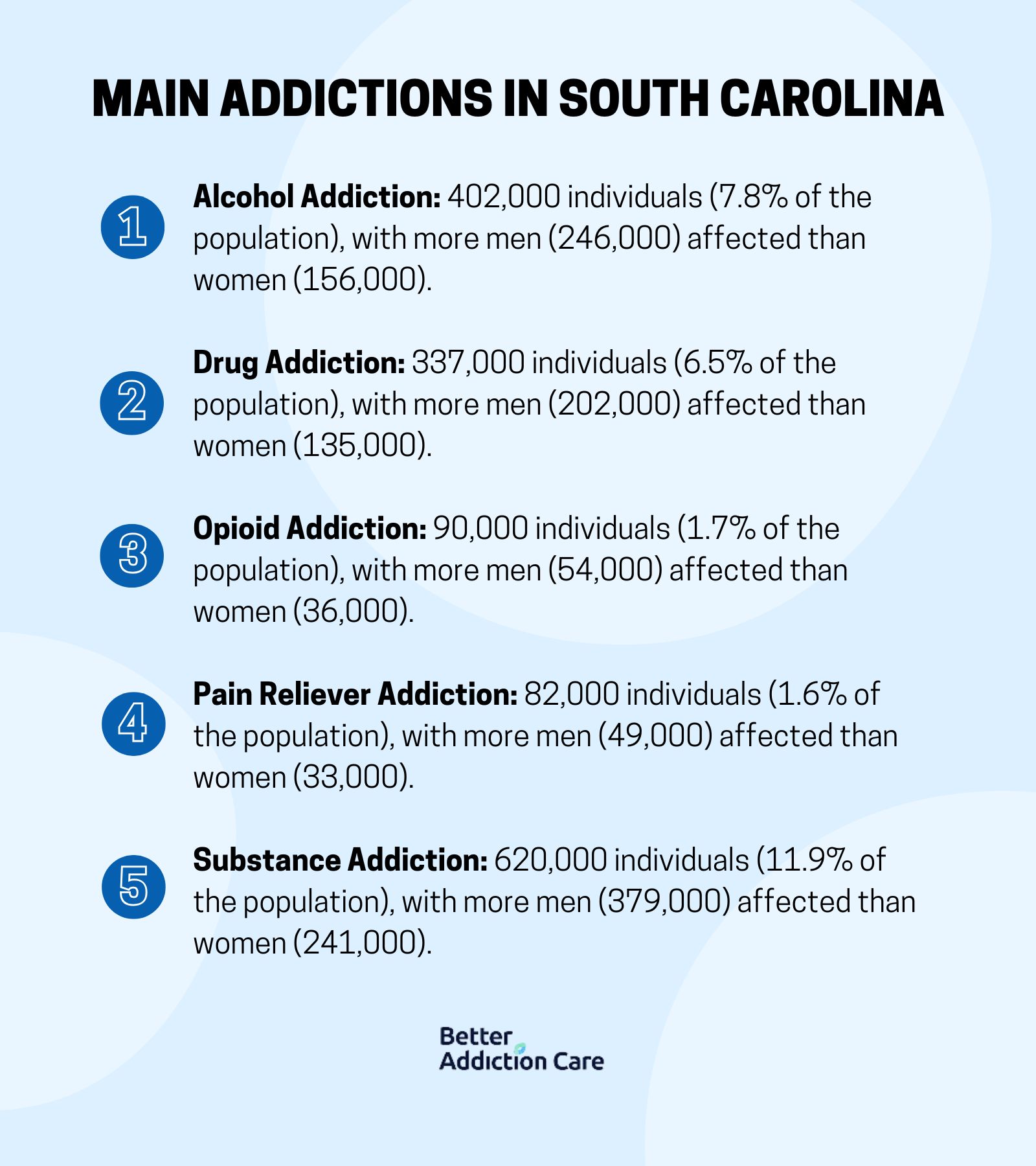
The main addictions people in South Carolina suffer from include;
- Alcohol Addiction: 402,000 individuals aged 12 or older use Alcohol in the past month, equating to 7.8% of South Carolina's population. 246,000 (12.3%) of men are higher in number as compared to 156,000 (6.2%) of women.
- Drug Addiction: 337,000 individuals aged 12 or older have Drug addiction. This is 6.5% of South Carolina's population. 202,000 (10.1%) of men are higher in number as compared to 135,000 (5.4%) of women.
- Opioid Addiction: 90,000 individuals aged 12 or older have Opioid addiction. This is 1.7% of South Carolina's population. 54,000 (2.7%) of men are higher in number as compared to 36,000 (1.4%) of women.
- Pain Reliever Addiction: 82,000 individuals aged 12 or older have Pain Reliever addiction. This is 1.6% of South Carolina's population. 49,000 (2.4%) of men are higher in number as compared to 33,000 (1.3%) of women.
- Substance Addiction: 620,000 individuals aged 12 or older have Substance addiction. This is 11.9% of South Carolina's population. 379,000 (19.0%) of men are higher in number as compared to 241,000 (9.6%) of women.
What is the cost of rehab centers in South Carolina?
The cost of rehab centers in South Carolina is $57,774. Inpatient rehab programs, which provide round-the-clock care and often include medical detoxification, range from $20,000 to $60,000 for a 30-day stay. Conversely, outpatient rehab programs are more affordable, averaging $5,000 to $10,000 for a 90-day program. These programs involve less frequent therapy sessions, but more intensive outpatient or partial hospitalization programs exceed $10,000. High-end inpatient facilities with luxury amenities or specialized care for conditions like opioid or alcohol addiction exceed $60,000, with medical detox adding another layer of cost.
Rehab costs in South Carolina vary widely, depending on the type of program and treatment offered.
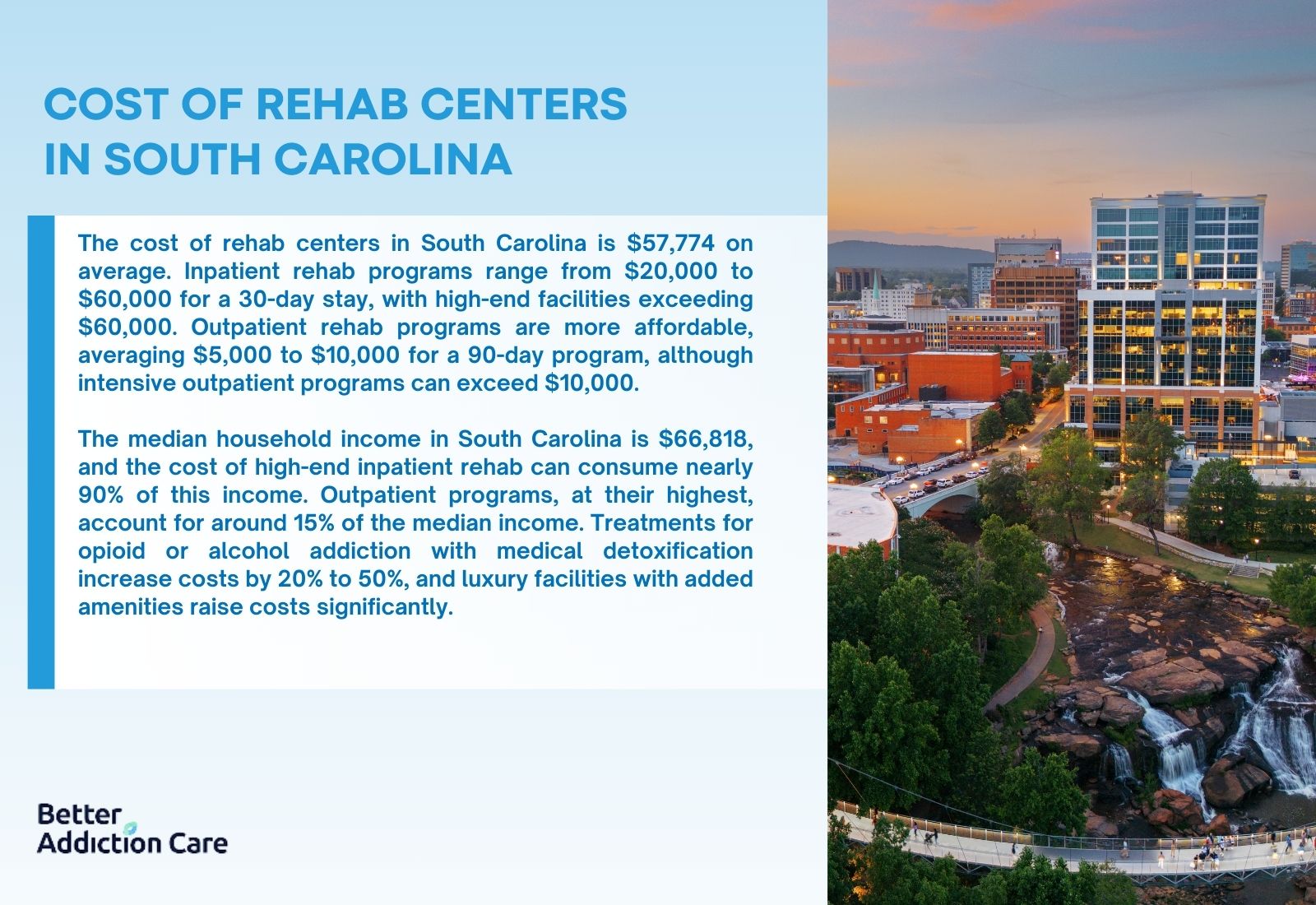
The median household income in South Carolina is $66,818.The cost of a high-end inpatient rehab program consumes nearly 90% of the average annual household income, making it a substantial financial burden for many families. On the other hand, outpatient programs, even on the higher end, are more manageable, accounting for 15% of the average income. However, the type of addiction being treated further influences costs. Treatments requiring intensive medical detoxification, such as for alcohol or opioid addiction, increase expenses by 20% to 50%. Luxury facilities that offer high-end amenities like private rooms, gourmet meals, and wellness activities significantly raise costs.
What is the cost of LGBTQ+ rehab centers in South Carolina?
The cost of rehab centers in South Carolina is $57,500. Inpatient rehab programs, which provide round-the-clock care and often include medical detoxification, range from $20,000 to $60,000 for a 30-day stay. Conversely, outpatient rehab programs are more affordable, averaging $5,000 to $10,000 for a 90-day program. These programs involve less frequent therapy sessions, but more intensive outpatient or partial hospitalization programs exceed $10,000. High-end inpatient facilities with luxury amenities or specialized care for conditions like opioid or alcohol addiction exceed $60,000, with medical detox adding another layer of cost.
Rehab costs in South Carolina vary widely, depending on the type of program and treatment offered.
The median household income in South Carolina is $66,818.The cost of a high-end inpatient rehab program consumes nearly 90% of the average annual household income, making it a substantial financial burden for many families. On the other hand, outpatient programs, even on the higher end, are more manageable, accounting for 15% of the average income. However, the type of addiction being treated further influences costs. Treatments requiring intensive medical detoxification, such as for alcohol or opioid addiction, increase expenses by 20% to 50%. Luxury facilities that offer high-end amenities like private rooms, gourmet meals, and wellness activities significantly raise costs.
What is the cost of Faith-Based rehab centers in South Carolina?
The cost of rehab centers in South Carolina is $57,000. Inpatient rehab programs, which provide round-the-clock care and often include medical detoxification, range from $20,000 to $60,000 for a 30-day stay. Conversely, outpatient rehab programs are more affordable, averaging $5,000 to $10,000 for a 90-day program. These programs involve less frequent therapy sessions, but more intensive outpatient or partial hospitalization programs exceed $10,000. High-end inpatient facilities with luxury amenities or specialized care for conditions like opioid or alcohol addiction exceed $60,000, with medical detox adding another layer of cost.
Rehab costs in South Carolina vary widely, depending on the type of program and treatment offered.
The median household income in South Carolina is $66,818.The cost of a high-end inpatient rehab program consumes nearly 90% of the average annual household income, making it a substantial financial burden for many families. On the other hand, outpatient programs, even on the higher end, are more manageable, accounting for 15% of the average income. However, the type of addiction being treated further influences costs. Treatments requiring intensive medical detoxification, such as for alcohol or opioid addiction, increase expenses by 20% to 50%. Luxury facilities that offer high-end amenities like private rooms, gourmet meals, and wellness activities significantly raise costs.
What is the cost of Men-Only rehab centers in South Carolina?
The cost of rehab centers in South Carolina is $56,500. Inpatient rehab programs, which provide round-the-clock care and often include medical detoxification, range from $20,000 to $60,000 for a 30-day stay. Conversely, outpatient rehab programs are more affordable, averaging $5,000 to $10,000 for a 90-day program. These programs involve less frequent therapy sessions, but more intensive outpatient or partial hospitalization programs exceed $10,000. High-end inpatient facilities with luxury amenities or specialized care for conditions like opioid or alcohol addiction exceed $60,000, with medical detox adding another layer of cost.
Rehab costs in South Carolina vary widely, depending on the type of program and treatment offered.
The median household income in South Carolina is $66,818.The cost of a high-end inpatient rehab program consumes nearly 90% of the average annual household income, making it a substantial financial burden for many families. On the other hand, outpatient programs, even on the higher end, are more manageable, accounting for 15% of the average income. However, the type of addiction being treated further influences costs. Treatments requiring intensive medical detoxification, such as for alcohol or opioid addiction, increase expenses by 20% to 50%. Luxury facilities that offer high-end amenities like private rooms, gourmet meals, and wellness activities significantly raise costs.
What is the cost of Women-Only rehab centers in South Carolina?
The cost of rehab centers in South Carolina is $56,900. Inpatient rehab programs, which provide round-the-clock care and often include medical detoxification, range from $20,000 to $60,000 for a 30-day stay. Conversely, outpatient rehab programs are more affordable, averaging $5,000 to $10,000 for a 90-day program. These programs involve less frequent therapy sessions, but more intensive outpatient or partial hospitalization programs exceed $10,000. High-end inpatient facilities with luxury amenities or specialized care for conditions like opioid or alcohol addiction exceed $60,000, with medical detox adding another layer of cost.
Rehab costs in South Carolina vary widely, depending on the type of program and treatment offered.
The median household income in South Carolina is $66,818.The cost of a high-end inpatient rehab program consumes nearly 90% of the average annual household income, making it a substantial financial burden for many families. On the other hand, outpatient programs, even on the higher end, are more manageable, accounting for 15% of the average income. However, the type of addiction being treated further influences costs. Treatments requiring intensive medical detoxification, such as for alcohol or opioid addiction, increase expenses by 20% to 50%. Luxury facilities that offer high-end amenities like private rooms, gourmet meals, and wellness activities significantly raise costs.
What is the cost of Teen rehab centers in South Carolina?
The cost of rehab centers in South Carolina is $56,000. Inpatient rehab programs, which provide round-the-clock care and often include medical detoxification, range from $20,000 to $60,000 for a 30-day stay. Conversely, outpatient rehab programs are more affordable, averaging $5,000 to $10,000 for a 90-day program. These programs involve less frequent therapy sessions, but more intensive outpatient or partial hospitalization programs exceed $10,000. High-end inpatient facilities with luxury amenities or specialized care for conditions like opioid or alcohol addiction exceed $60,000, with medical detox adding another layer of cost.
Rehab costs in South Carolina vary widely, depending on the type of program and treatment offered.
The median household income in South Carolina is $66,818.The cost of a high-end inpatient rehab program consumes nearly 90% of the average annual household income, making it a substantial financial burden for many families. On the other hand, outpatient programs, even on the higher end, are more manageable, accounting for 15% of the average income. However, the type of addiction being treated further influences costs. Treatments requiring intensive medical detoxification, such as for alcohol or opioid addiction, increase expenses by 20% to 50%. Luxury facilities that offer high-end amenities like private rooms, gourmet meals, and wellness activities significantly raise costs.
What is the cost of Young Adult rehab centers in South Carolina?
The cost of rehab centers in South Carolina is $55,900. Inpatient rehab programs, which provide round-the-clock care and often include medical detoxification, range from $20,000 to $60,000 for a 30-day stay. Conversely, outpatient rehab programs are more affordable, averaging $5,000 to $10,000 for a 90-day program. These programs involve less frequent therapy sessions, but more intensive outpatient or partial hospitalization programs exceed $10,000. High-end inpatient facilities with luxury amenities or specialized care for conditions like opioid or alcohol addiction exceed $60,000, with medical detox adding another layer of cost.
Rehab costs in South Carolina vary widely, depending on the type of program and treatment offered.
The median household income in South Carolina is $66,818.The cost of a high-end inpatient rehab program consumes nearly 90% of the average annual household income, making it a substantial financial burden for many families. On the other hand, outpatient programs, even on the higher end, are more manageable, accounting for 15% of the average income. However, the type of addiction being treated further influences costs. Treatments requiring intensive medical detoxification, such as for alcohol or opioid addiction, increase expenses by 20% to 50%. Luxury facilities that offer high-end amenities like private rooms, gourmet meals, and wellness activities significantly raise costs.
What is the cost of Luxury Rehab centers in South Carolina?
The cost of rehab centers in South Carolina is $60,000. Inpatient rehab programs, which provide round-the-clock care and often include medical detoxification, range from $20,000 to $60,000 for a 30-day stay. Conversely, outpatient rehab programs are more affordable, averaging $5,000 to $10,000 for a 90-day program. These programs involve less frequent therapy sessions, but more intensive outpatient or partial hospitalization programs exceed $10,000. High-end inpatient facilities with luxury amenities or specialized care for conditions like opioid or alcohol addiction exceed $60,000, with medical detox adding another layer of cost.
Rehab costs in South Carolina vary widely, depending on the type of program and treatment offered.
The median household income in South Carolina is $66,818.The cost of a high-end inpatient rehab program consumes nearly 90% of the average annual household income, making it a substantial financial burden for many families. On the other hand, outpatient programs, even on the higher end, are more manageable, accounting for 15% of the average income. However, the type of addiction being treated further influences costs. Treatments requiring intensive medical detoxification, such as for alcohol or opioid addiction, increase expenses by 20% to 50%. Luxury facilities that offer high-end amenities like private rooms, gourmet meals, and wellness activities significantly raise costs.
What is the cost of Dual Diagnosis rehab centers in South Carolina?
The cost of rehab centers in South Carolina is $57,000. Inpatient rehab programs, which provide round-the-clock care and often include medical detoxification, range from $20,000 to $60,000 for a 30-day stay. Conversely, outpatient rehab programs are more affordable, averaging $5,000 to $10,000 for a 90-day program. These programs involve less frequent therapy sessions, but more intensive outpatient or partial hospitalization programs exceed $10,000. High-end inpatient facilities with luxury amenities or specialized care for conditions like opioid or alcohol addiction exceed $60,000, with medical detox adding another layer of cost.
Rehab costs in South Carolina vary widely, depending on the type of program and treatment offered.
The median household income in South Carolina is $66,818.The cost of a high-end inpatient rehab program consumes nearly 90% of the average annual household income, making it a substantial financial burden for many families. On the other hand, outpatient programs, even on the higher end, are more manageable, accounting for 15% of the average income. However, the type of addiction being treated further influences costs. Treatments requiring intensive medical detoxification, such as for alcohol or opioid addiction, increase expenses by 20% to 50%. Luxury facilities that offer high-end amenities like private rooms, gourmet meals, and wellness activities significantly raise costs.
Is drug abuse and addiction a problem in South Carolina?
Yes, drug abuse and addiction is a problem in South Carolina, driven by increasing substance availability, high overdose rates, and inadequate access to treatment. Over the years, opioid-related deaths have surged dramatically, with 1,400 opioid-involved fatalities reported in 2024, marking a sharp increase from 573 deaths in 2019—a rise of over 144%. Methamphetamine use has also become a growing concern, with law enforcement seizures and related arrests escalating in the past decade. Cocaine-related overdose deaths have doubled between 2019 and 2024, highlighting the resurgence of stimulant use. These trends are exacerbated by limited access to treatment services, as only 10% of individuals with substance use disorders in South Carolina receive the care they need. Together, these factors underscore the pervasive and worsening nature of substance abuse in the state.
Is alcoholism a problem in South Carolina?
Yes, alcoholism is a problem in South Carolina, driven by high rates of binge drinking, alcohol-related traffic fatalities, and limited access to treatment. 15.4% of adults in the state of South Carolina reported binge drinking, surpassing the national average. Alcohol-related traffic deaths remain a persistent issue, with over 300 fatalities recorded annually, accounting for nearly 30% of all traffic deaths. From 2019 to 2024, the prevalence of alcohol addiction increased, reflecting a steady rise in problematic drinking behaviors. Despite this, access to treatment remains limited, with only a fraction of those in need receiving care. These factors highlight the ongoing and growing challenges posed by alcoholism in South Carolina.
Is Mental Health a problem in South Carolina?
Yes, mental health is a problem in South Carolina, driven by rising rates of mental health conditions, limited access to care, and high suicide rates. 20% of adults in the state of South Carolina experience mental illness each year, with the prevalence of anxiety and depression steadily increasing over the past decade. Suicide rates have also risen significantly, with South Carolina recording a 35% increase in suicide deaths from 2016 to 2024, placing it above the national average. Access to mental health services remains a major barrier, as South Carolina ranks among the lowest in the nation for mental health care availability, with only one mental health professional for every 470 residents. These challenges illustrate the urgent need for expanded resources and support for mental health in the state.
Can you travel to South Carolina for rehab?
Yes, you can travel to South Carolina for rehab, and there are several compelling reasons to consider the state for treatment. South Carolina offers serene and picturesque environments, including coastal retreats and tranquil countryside settings, which enhance the healing process by providing a peaceful atmosphere. The state of South Carolina is home to highly specialized rehab centers that cater to diverse needs, including luxury facilities, faith-based programs, and LGBTQ+-focused services, ensuring personalized and comprehensive care. Additionally, South Carolina’s relatively affordable cost of living compared to other states makes it a more accessible option for individuals seeking high-quality treatment without excessive financial strain. These factors combine to make South Carolina a unique and appealing destination for rehabilitation.
Can addiction be treated in South Carolina?
Yes, addiction can be treated in South Carolina due to the availability of diverse treatment options, a growing network of specialized rehab centers, and supportive community programs. The state offers a wide range of evidence-based treatment modalities, including inpatient and outpatient programs, medical detoxification, and counseling services tailored to various substance use disorders.
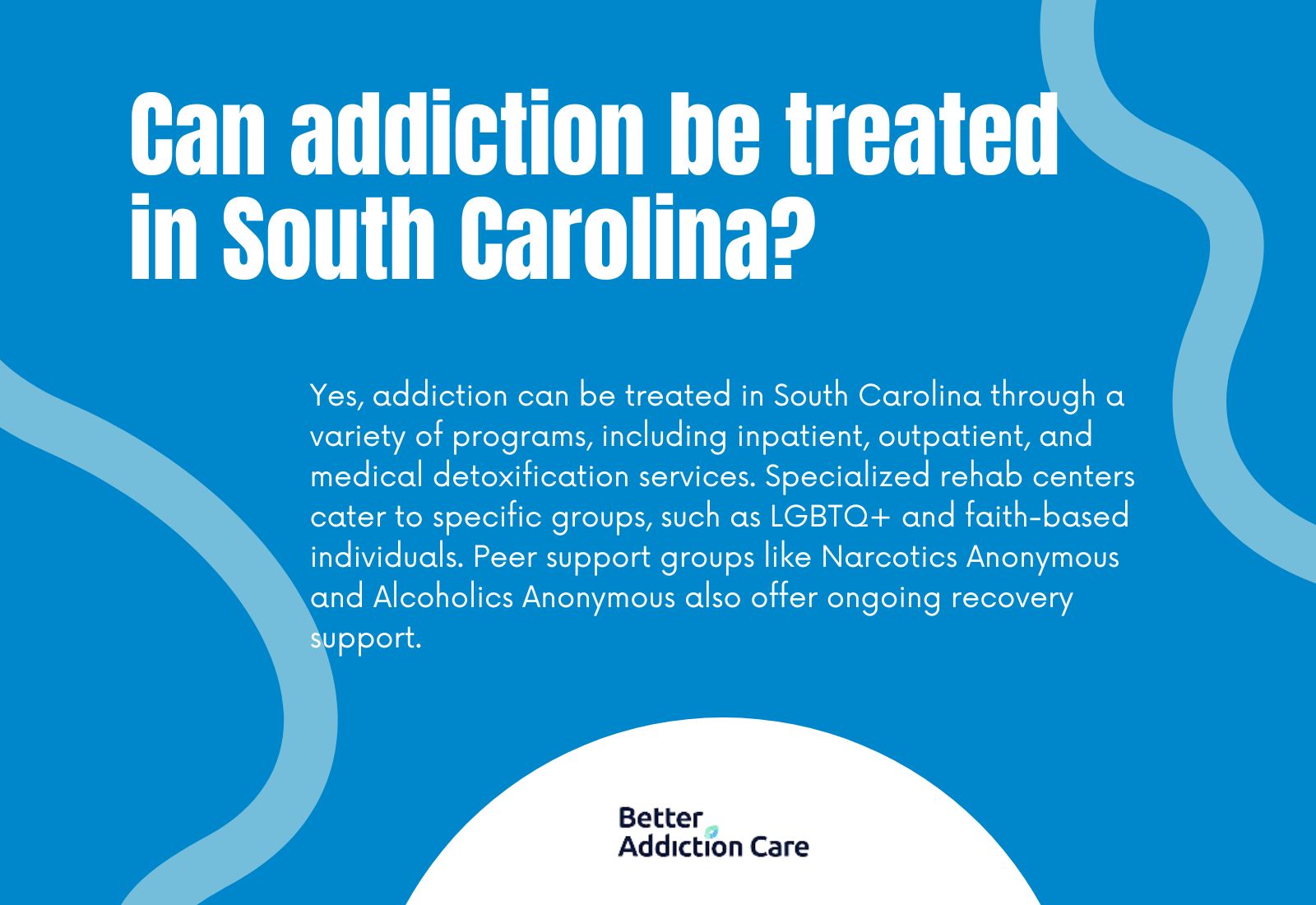
South Carolina is home to specialized facilities such as LGBTQ+ focused and faith-based rehab centers, ensuring that individuals receive care aligned with their unique needs and values. Additionally, community initiatives and support groups, such as Narcotics Anonymous and Alcoholics Anonymous, provide ongoing peer support, making recovery sustainable. These resources demonstrate that effective addiction treatment is accessible within the state of South Carolina.
What is the state of South Carolina?
The state of South Carolina is in the southeastern region of the United States, known for its historical landmarks, coastal beauty, and Southern charm. As of 2024, its population is 5.2 million, with 2.5 million males and 2.7 million females, reflecting a fairly balanced gender distribution. Geographically, South Carolina is bordered by North Carolina to the north, Georgia to the south and west, and the Atlantic Ocean to the east, providing it with a mix of inland and coastal regions.
Economically, South Carolina is considered a middle-income state with a median household income of $66,818, slightly below the national median. The state of South Carolina has a diverse economy supported by manufacturing, agriculture, tourism, and technology. While areas like Charleston and Greenville have seen significant economic growth, parts of the state, particularly in rural regions, face challenges such as higher poverty rates and limited access to resources, highlighting economic disparities within the state.
What is the population of South Carolina?
The population of South Carolina is 5,373,555 residents. The gender distribution is fairly balanced, with 48.5% males and 51.5% females, equating to 2,606,675 males and 2,766,880 females. Analyzing the age distribution, the largest age group is 60 to 64 years, comprising 6.76% of the total population, which translates to 363,000 individuals. Conversely, the smallest age group is 85 years and over, accounting for 1.79% of the population, or 96,000 individuals. When considering broader age cohorts, 21.47% of the population is under 18 years (1,153,000 individuals), 60.28% are between 18 and 64 years (3,239,000 individuals), and 18.25% are 65 years and older (981,000 individuals). These figures highlight a diverse age distribution, with a notable proportion of the population in the senior age brackets, which has implications for state of South Carolina services and infrastructure planning.
What is the income of people from South Carolina?
The income of people from South Carolina is $37,993, per capita income, indicating the average earnings per person. The median household income stands at $66,818, representing the midpoint where half of the households earn more and half earn less. Income distribution by age group shows that householders aged 45 to 64 years have the highest median income at $77,569, followed by those aged 25 to 44 years at $73,254. Householders under 25 years have a median income of $38,104, while those 65 years and over have a median income of $52,331. Gender disparities are evident in income levels. Male full-time, year-round workers have a median income of approximately $53,865, whereas their female counterparts earn $44,231, highlighting a gender wage gap. These figures provide insight into the economic landscape of South Carolina, reflecting variations in income across different demographics.