Alcoholism, Drug Abuse, Mental Health, and Treatment in West Virginia
What are the main addictions people in West Virginia suffer from?
The main addictions people in West Virginia people in suffer from;
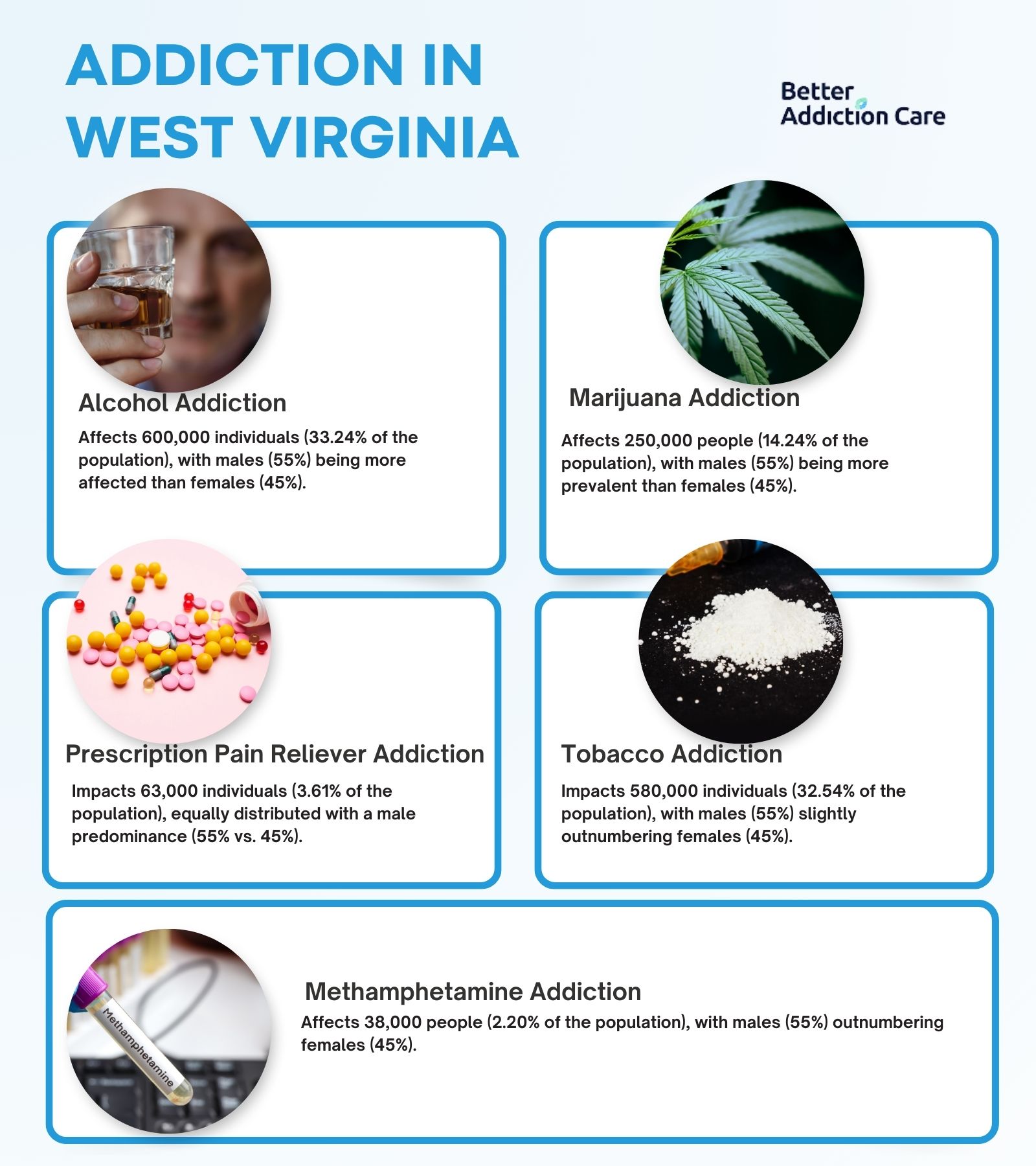
- Alcohol Addiction: 600,000 individuals aged 12 or older have alcohol addiction, equating to 33.24% of population. 330,000 (55%) males are higher in number as compared to 270,000 (45%) females.
- Tobacco Addiction: 580,000 individuals aged 12 or older have tobacco addiction, equating to 32.54% of population. 319,000 (55%) males are higher in number as compared to 261,000 (45%) females.
- Marijuana Addiction: 250,000 individuals aged 12 or older have marijuana addiction, equating to 14.24% of the population. 138,000 (55%) males are higher in number as compared to 112,000 (45%) females.
- Prescription Pain Reliever Addiction: 63,000 individuals aged 12 or older have prescription pain reliever addiction, equating to 3.61% of population. 35,000 (55%) males are higher in number as compared to 28,000 (45%) females.
- Methamphetamine Addiction: 38,000 individuals aged 12 or older have methamphetamine addiction, equating to 2.20% of population. 21,000 (55%) males are higher in number as compared to 17,000 (45%) females.
What is the cost of rehab centers in West Virginia?
The cost of rehab centers in West Virginia is $10,300. Inpatient rehab, which includes lodging, meals, and 24/7 medical support, averages $18,900 for 30 days. In contrast, outpatient rehab averages $1,700 for a 30-day program. The cost of rehab centers represents a general baseline, but costs vary significantly depending on the type of program. Inpatient rehab often incurs higher costs due to the comprehensive nature of care provided, particularly for individuals requiring detoxification or intensive medical attention. Outpatient rehab lower cost reflects the absence of residential services, as patients attend therapy sessions and counseling while living at home.
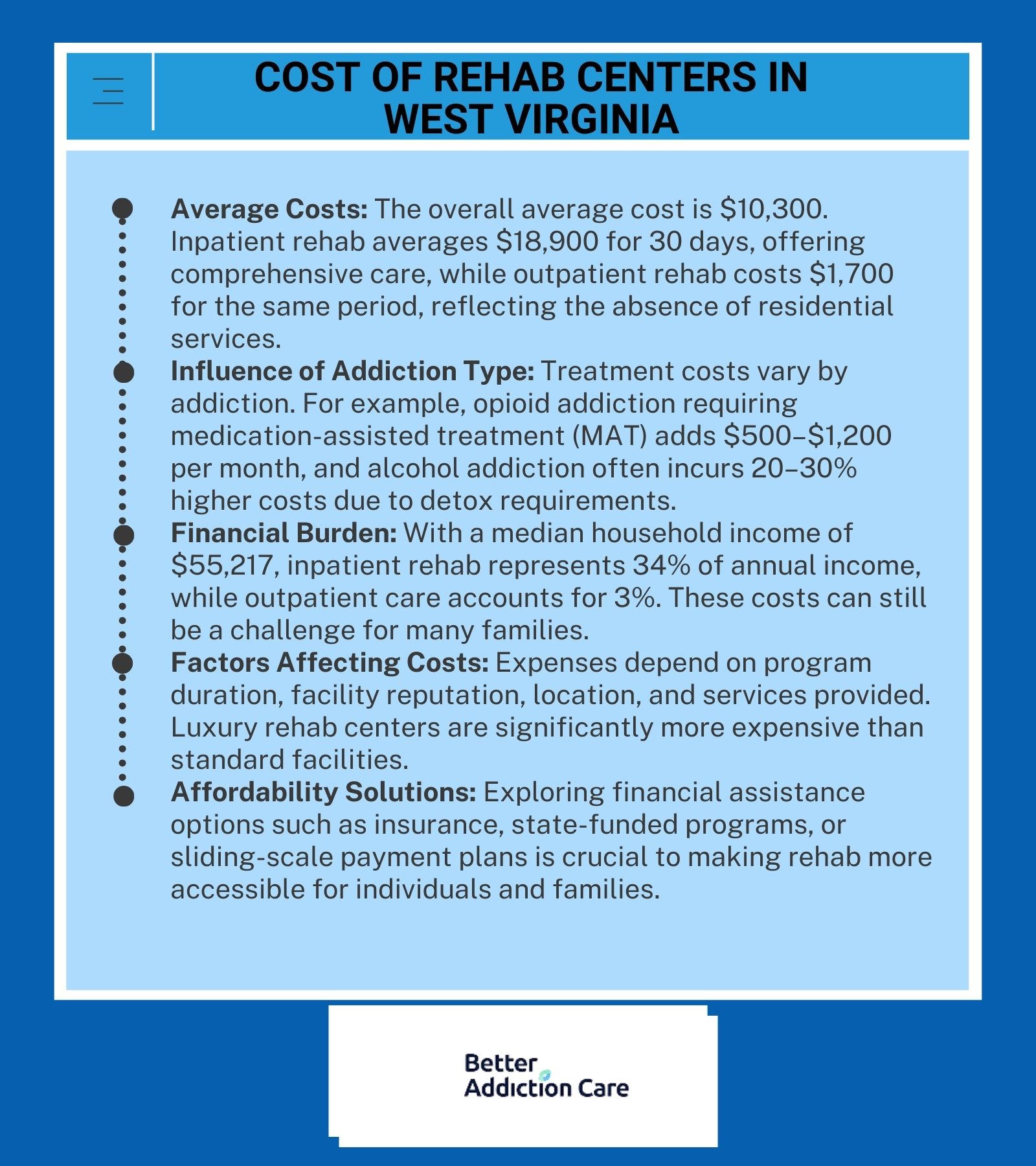
The cost of rehab centers also varies based on the type of addiction being treated. For example, opioid addiction, which often involves medication-assisted treatment (MAT), increases costs by $500 to $1,200 per month, depending on the medication used. Similarly, alcohol addiction, which frequently requires intensive detoxification, raises initial treatment costs by 20% to 30%. Other factors influencing expenses include the location and reputation of the facility, the duration of the program, and the inclusion of specialized therapies or amenities.
West Virginia's median household income of $55,217, the cost of rehab centers constitute 18.6%. Inpatient rehab costs represent a significant financial burden, equating to 34% of the annual income. Outpatient programs are more affordable, accounting for 3% of the median income, but still be challenging for some families. Additionally, the type of rehab facility—whether standard or luxury—dramatically impacts affordability, as does the availability of insurance coverage, which substantially reduces out-of-pocket expenses.
Outpatient programs offer a more cost-effective alternative, inpatient programs provide a higher level of care but come with significantly higher costs. It's crucial for individuals and families to explore all financial assistance options, including state-funded or sliding-scale facilities, to find a suitable program within their means.
What is the cost of LGBTQ+ rehab centers in West Virginia?
The cost of LGBTQ+ rehab centers in West Virginia is $11,000. Inpatient rehab, which includes lodging, meals, and 24/7 medical support, averages $18,900 for 30 days. In contrast, outpatient rehab averages $1,700 for a 30-day program. The cost of LGBTQ+ rehab centers represents a general baseline, but costs vary significantly depending on the type of program. Inpatient rehab often incurs higher costs due to the comprehensive nature of care provided, particularly for individuals requiring detoxification or intensive medical attention. Outpatient rehab lower cost reflects the absence of residential services, as patients attend therapy sessions and counseling while living at home.
The cost of LGBTQ+ rehab centers also varies based on the type of addiction being treated. For example, opioid addiction, which often involves medication-assisted treatment (MAT), increases costs by $500 to $1,200 per month, depending on the medication used. Similarly, alcohol addiction, which frequently requires intensive detoxification, raises initial treatment costs by 20% to 30%. Other factors influencing expenses include the location and reputation of the facility, the duration of the program, and the inclusion of specialized therapies or amenities.
West Virginia's median household income of $55,217, the cost of LGBTQ+ rehab centers constitute 19.9%. Inpatient rehab costs represent a significant financial burden, equating to 34% of the annual income. Outpatient programs are more affordable, accounting for 3% of the median income, but still be challenging for some families. Additionally, the type of LGBTQ+ rehab facility—whether standard or luxury—dramatically impacts affordability, as does the availability of insurance coverage, which substantially reduces out-of-pocket expenses.
Outpatient programs offer a more cost-effective alternative, inpatient programs provide a higher level of care but come with significantly higher costs. It's crucial for individuals and families to explore all financial assistance options, including state-funded or sliding-scale facilities, to find a suitable program within their means.
What is the cost of Faith-Based rehab centers in West Virginia?
The cost of Faith-Based rehab centers in West Virginia is $12,300. Inpatient rehab, which includes lodging, meals, and 24/7 medical support, averages $18,900 for 30 days. In contrast, outpatient rehab averages $1,700 for a 30-day program. The cost of Faith-Based rehab centers represents a general baseline, but costs vary significantly depending on the type of program. Inpatient rehab often incurs higher costs due to the comprehensive nature of care provided, particularly for individuals requiring detoxification or intensive medical attention. Outpatient rehab lower cost reflects the absence of residential services, as patients attend therapy sessions and counseling while living at home.
The cost of Faith-Based rehab centers also varies based on the type of addiction being treated. For example, opioid addiction, which often involves medication-assisted treatment (MAT), increases costs by $500 to $1,200 per month, depending on the medication used. Similarly, alcohol addiction, which frequently requires intensive detoxification, raises initial treatment costs by 20% to 30%. Other factors influencing expenses include the location and reputation of the facility, the duration of the program, and the inclusion of specialized therapies or amenities.
West Virginia's median household income of $55,217, the cost of Faith-Based rehab centers constitute 22%. Inpatient rehab costs represent a significant financial burden, equating to 34% of the annual income. Outpatient programs are more affordable, accounting for 3% of the median income, but still be challenging for some families. Additionally, the type of Faith-Based rehab facility—whether standard or luxury—dramatically impacts affordability, as does the availability of insurance coverage, which substantially reduces out-of-pocket expenses.
Outpatient programs offer a more cost-effective alternative, inpatient programs provide a higher level of care but come with significantly higher costs. It's crucial for individuals and families to explore all financial assistance options, including state-funded or sliding-scale facilities, to find a suitable program within their means.
What is the cost of Men-Only rehab centers in West Virginia?
The cost of Men-Only rehab centers in West Virginia is $10,900. Inpatient rehab, which includes lodging, meals, and 24/7 medical support, averages $18,900 for 30 days. In contrast, outpatient rehab averages $1,700 for a 30-day program. The cost of Men-Only rehab centers represents a general baseline, but costs vary significantly depending on the type of program. Inpatient rehab often incurs higher costs due to the comprehensive nature of care provided, particularly for individuals requiring detoxification or intensive medical attention. Outpatient rehab lower cost reflects the absence of residential services, as patients attend therapy sessions and counseling while living at home.
The cost of Men-Only rehab centers also varies based on the type of addiction being treated. For example, opioid addiction, which often involves medication-assisted treatment (MAT), increases costs by $500 to $1,200 per month, depending on the medication used. Similarly, alcohol addiction, which frequently requires intensive detoxification, raises initial treatment costs by 20% to 30%. Other factors influencing expenses include the location and reputation of the facility, the duration of the program, and the inclusion of specialized therapies or amenities.
West Virginia's median household income of $55,217, the cost of Men-Only rehab centers constitute 19.7%. Inpatient rehab costs represent a significant financial burden, equating to 34% of the annual income. Outpatient programs are more affordable, accounting for 3% of the median income, but still be challenging for some families. Additionally, the type of Men-Only rehab facility—whether standard or luxury—dramatically impacts affordability, as does the availability of insurance coverage, which substantially reduces out-of-pocket expenses.
Outpatient programs offer a more cost-effective alternative, inpatient programs provide a higher level of care but come with significantly higher costs. It's crucial for individuals and families to explore all financial assistance options, including state-funded or sliding-scale facilities, to find a suitable program within their means.
What is the cost of Women-Only rehab centers in West Virginia?
The cost of Women-Only rehab centers in West Virginia is $13,000. Inpatient rehab, which includes lodging, meals, and 24/7 medical support, averages $18,900 for 30 days. In contrast, outpatient rehab averages $1,700 for a 30-day program. The cost of Women-Only rehab centers represents a general baseline, but costs vary significantly depending on the type of program. Inpatient rehab often incurs higher costs due to the comprehensive nature of care provided, particularly for individuals requiring detoxification or intensive medical attention. Outpatient rehab lower cost reflects the absence of residential services, as patients attend therapy sessions and counseling while living at home.
The cost of Women-Only rehab centers also varies based on the type of addiction being treated. For example, opioid addiction, which often involves medication-assisted treatment (MAT), increases costs by $500 to $1,200 per month, depending on the medication used. Similarly, alcohol addiction, which frequently requires intensive detoxification, raises initial treatment costs by 20% to 30%. Other factors influencing expenses include the location and reputation of the facility, the duration of the program, and the inclusion of specialized therapies or amenities.
West Virginia's median household income of $55,217, the cost of Women-Only rehab centers constitute 23.5%. Inpatient rehab costs represent a significant financial burden, equating to 34% of the annual income. Outpatient programs are more affordable, accounting for 3% of the median income, but still be challenging for some families. Additionally, the type of Women-Only rehab facility—whether standard or luxury—dramatically impacts affordability, as does the availability of insurance coverage, which substantially reduces out-of-pocket expenses.
Outpatient programs offer a more cost-effective alternative, inpatient programs provide a higher level of care but come with significantly higher costs. It's crucial for individuals and families to explore all financial assistance options, including state-funded or sliding-scale facilities, to find a suitable program within their means.
What is the cost of Teen rehab centers in West Virginia?
The cost of Teen rehab centers in West Virginia is $12,900. Inpatient rehab, which includes lodging, meals, and 24/7 medical support, averages $18,900 for 30 days. In contrast, outpatient rehab averages $1,700 for a 30-day program. The cost of Teen rehab centers represents a general baseline, but costs vary significantly depending on the type of program. Inpatient rehab often incurs higher costs due to the comprehensive nature of care provided, particularly for individuals requiring detoxification or intensive medical attention. Outpatient rehab lower cost reflects the absence of residential services, as patients attend therapy sessions and counseling while living at home.
The cost of Teen rehab centers also varies based on the type of addiction being treated. For example, opioid addiction, which often involves medication-assisted treatment (MAT), increases costs by $500 to $1,200 per month, depending on the medication used. Similarly, alcohol addiction, which frequently requires intensive detoxification, raises initial treatment costs by 20% to 30%. Other factors influencing expenses include the location and reputation of the facility, the duration of the program, and the inclusion of specialized therapies or amenities.
West Virginia's median household income of $55,217, the cost of Teen rehab centers constitute 23%. Inpatient rehab costs represent a significant financial burden, equating to 34% of the annual income. Outpatient programs are more affordable, accounting for 3% of the median income, but still be challenging for some families. Additionally, the type of Teen rehab facility—whether standard or luxury—dramatically impacts affordability, as does the availability of insurance coverage, which substantially reduces out-of-pocket expenses.
Outpatient programs offer a more cost-effective alternative, inpatient programs provide a higher level of care but come with significantly higher costs. It's crucial for individuals and families to explore all financial assistance options, including state-funded or sliding-scale facilities, to find a suitable program within their means.
What is the cost of Young Adult rehab centers in West Virginia?
The cost of Young Adult rehab centers in West Virginia is $14,000. Inpatient rehab, which includes lodging, meals, and 24/7 medical support, averages $18,900 for 30 days. In contrast, outpatient rehab averages $1,700 for a 30-day program. The cost of Young Adult rehab centers represents a general baseline, but costs vary significantly depending on the type of program. Inpatient rehab often incurs higher costs due to the comprehensive nature of care provided, particularly for individuals requiring detoxification or intensive medical attention. Outpatient rehab lower cost reflects the absence of residential services, as patients attend therapy sessions and counseling while living at home.
The cost of Young Adult rehab centers also varies based on the type of addiction being treated. For example, opioid addiction, which often involves medication-assisted treatment (MAT), increases costs by $500 to $1,200 per month, depending on the medication used. Similarly, alcohol addiction, which frequently requires intensive detoxification, raises initial treatment costs by 20% to 30%. Other factors influencing expenses include the location and reputation of the facility, the duration of the program, and the inclusion of specialized therapies or amenities.
West Virginia's median household income of $55,217, the cost of Young Adult rehab centers constitute 25%. Inpatient rehab costs represent a significant financial burden, equating to 34% of the annual income. Outpatient programs are more affordable, accounting for 3% of the median income, but still be challenging for some families. Additionally, the type of Young Adult rehab facility—whether standard or luxury—dramatically impacts affordability, as does the availability of insurance coverage, which substantially reduces out-of-pocket expenses.
Outpatient programs offer a more cost-effective alternative, inpatient programs provide a higher level of care but come with significantly higher costs. It's crucial for individuals and families to explore all financial assistance options, including state-funded or sliding-scale facilities, to find a suitable program within their means.
What is the cost of Luxury Rehab centers in West Virginia?
The cost of Luxury rehab centers in West Virginia is $40,000. Inpatient rehab, which includes lodging, meals, and 24/7 medical support, ranges from $30,000 to $50,000 for 30 days. In contrast, outpatient rehab averages $1,700 for a 30-day program. The cost of Luxury rehab centers represents a general baseline, but costs vary significantly depending on the type of program. Inpatient rehab often incurs higher costs due to the comprehensive nature of care provided, particularly for individuals requiring detoxification or intensive medical attention. Outpatient rehab lower cost reflects the absence of residential services, as patients attend therapy sessions and counseling while living at home.
The cost of Luxury rehab centers also varies based on the type of addiction being treated. For example, opioid addiction, which often involves medication-assisted treatment (MAT), increases costs by $500 to $1,200 per month, depending on the medication used. Similarly, alcohol addiction, which frequently requires intensive detoxification, raises initial treatment costs by 20% to 30%. Other factors influencing expenses include the location and reputation of the facility, the duration of the program, and the inclusion of specialized therapies or amenities.
West Virginia's median household income of $55,217, the cost of Luxury rehab centers constitute 72%. A $30,000 program constitutes 54% of the median household income, while a $50,000 program represents approximately 90%. Outpatient programs are more affordable, accounting for 3% of the median income, but still be challenging for some families. Additionally, the type of Luxury rehab facility—whether standard or luxury—dramatically impacts affordability, as does the availability of insurance coverage, which substantially reduces out-of-pocket expenses.
Outpatient programs offer a more cost-effective alternative, inpatient programs provide a higher level of care but come with significantly higher costs. It's crucial for individuals and families to explore all financial assistance options, including state-funded or sliding-scale facilities, to find a suitable program within their means.
What is the cost of Dual Diagnosis rehab centers in West Virginia?
The cost of Dual Diagnosis rehab centers in West Virginia is $14,500. Inpatient rehab, which includes lodging, meals, and 24/7 medical support, averages $18,900 for 30 days. In contrast, outpatient rehab averages $1,700 for a 30-day program. The cost of Dual Diagnosis rehab centers represents a general baseline, but costs vary significantly depending on the type of program. Inpatient rehab often incurs higher costs due to the comprehensive nature of care provided, particularly for individuals requiring detoxification or intensive medical attention. Outpatient rehab lower cost reflects the absence of residential services, as patients attend therapy sessions and counseling while living at home.
The cost of Dual Diagnosis rehab centers also varies based on the type of addiction being treated. For example, opioid addiction, which often involves medication-assisted treatment (MAT), increases costs by $500 to $1,200 per month, depending on the medication used. Similarly, alcohol addiction, which frequently requires intensive detoxification, raises initial treatment costs by 20% to 30%. Other factors influencing expenses include the location and reputation of the facility, the duration of the program, and the inclusion of specialized therapies or amenities.
West Virginia's median household income of $55,217, the cost of Dual Diagnosis rehab centers constitute 26%. Inpatient rehab costs represent a significant financial burden, equating to 34% of the annual income. Outpatient programs are more affordable, accounting for 3% of the median income, but still be challenging for some families. Additionally, the type of Dual Diagnosis rehab facility—whether standard or luxury—dramatically impacts affordability, as does the availability of insurance coverage, which substantially reduces out-of-pocket expenses.
Outpatient programs offer a more cost-effective alternative, inpatient programs provide a higher level of care but come with significantly higher costs. It's crucial for individuals and families to explore all financial assistance options, including state-funded or sliding-scale facilities, to find a suitable program within their means.
Is drug abuse and addiction a problem in West Virginia?
Yes, drug abuse and addiction is a problem in West Virginia, posing challenges to public health, safety, and the economy. West Virginia has consistently ranked among the highest in the nation for overdose death rates, driven by the widespread availability of opioids. Over the years, synthetic opioids, such as fentanyl, have exacerbated the crisis, contributing to a 58% increase in overdose deaths between 2014 and 2024. Prescription drug misuse has also fueled addiction, with 5% of West Virginians aged 12 and older reporting misuse of pain relievers annually, according to recent surveys. Additionally, the economic hardship in many areas of West Virginia, coupled with limited access to mental health services, has created conditions that foster substance abuse. These issues have intensified over time, as evidenced by a sharp rise in hospitalizations and emergency room visits related to drug overdoses, which nearly doubled between 2014 and 2024. The persistent nature of the crisis underscores the need for comprehensive strategies to address prevention, treatment, and recovery across West Virginia.
Is alcoholism a problem in West Virginia?
Yes, alcoholism is a problem in West Virginia, affecting individuals and communities across West Virginia. High rates of alcohol use, particularly binge drinking, contribute to public health challenges, with 17% of adults reportedly engaging in excessive alcohol consumption annually. This pattern of use has led to an increase in alcohol-related hospitalizations and liver disease cases, which rose by over 20% between 2014 and 2024. Economic stress and cultural factors further exacerbate the issue, as West Virginia's rural areas often lack access to education and prevention programs. Additionally, alcohol-impaired driving remains a major concern, with 30% of all traffic fatalities in West Virginia involving alcohol, a figure that has shown little improvement over the past decade. The persistence of these trends highlights the widespread impact of alcoholism and the urgent need for targeted intervention and support services.
Is Mental Health a problem in West Virginia?
Yes, mental health is a problem in West Virginia, with significant implications for the well-being of its residents. West Virginia consistently reports some of the highest rates of depression and anxiety in the nation, with nearly 25% of adults experiencing a mental health condition annually. Economic challenges, including poverty and unemployment, are major contributing factors, as they increase stress and reduce access to quality care. Suicide rates in West Virginia have risen by over 35% since 2000, reflecting gaps in mental health support and prevention efforts. Additionally, the shortage of mental health professionals in rural areas limits treatment availability, leaving many individuals without necessary care. The growing prevalence of mental health issues, coupled with these barriers, underscores the urgent need for comprehensive mental health strategies to address this ongoing crisis.
Can you travel to West Virginia for rehab?
Yes, you can travel to West Virginia for rehab, and West Virginia offers several compelling reasons to consider it as a destination for recovery. Firstly, West Virginia is known for its serene and picturesque environment, with its mountains, forests, and rivers providing a peaceful setting that promotes healing and reflection. This natural tranquility is particularly beneficial for individuals seeking to escape the stresses of daily life and focus on their recovery. Secondly, West Virginia offers a range of specialized treatment centers, many of which are equipped to address specific addictions, including opioid use disorder, a significant focus given West Virginia’s history with the opioid crisis. These facilities often feature experienced professionals and evidence-based therapies. Thirdly, West Virginia is recognized for its affordability compared to other states, with lower average costs for both inpatient and outpatient programs, making quality care more accessible. Together, these factors make West Virginia a unique and advantageous option for those seeking comprehensive and supportive rehab services.
Can addiction be treated in West Virginia?
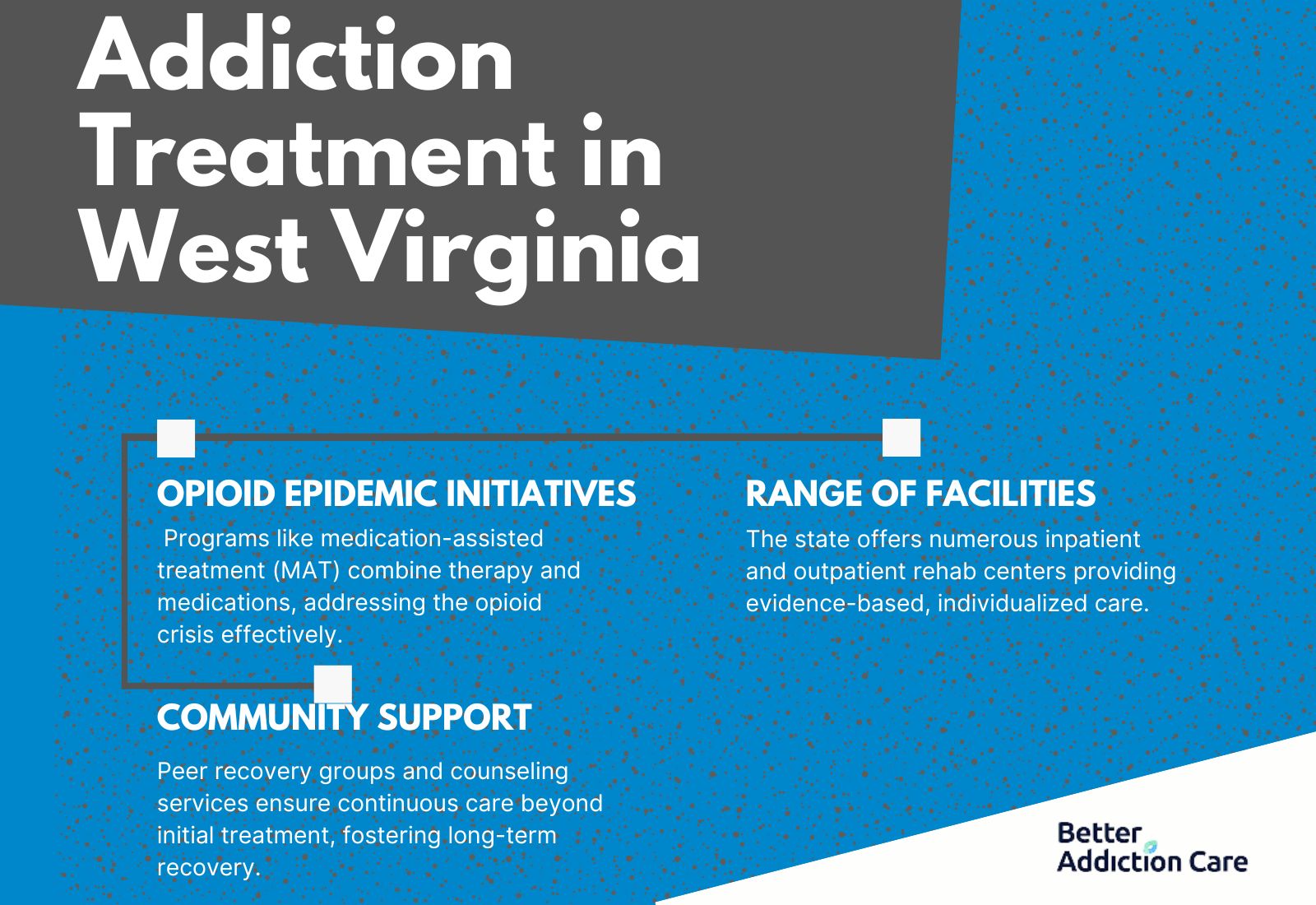
Yes, addiction can be treated in West Virginia due to several key factors. Firstly, West Virginia offers a wide range of treatment facilities, including inpatient and outpatient rehab centers, which provide evidence-based care tailored to individual needs. Secondly, West Virginia has implemented initiatives to combat the opioid epidemic, such as medication-assisted treatment (MAT) programs, which combine behavioral therapy with medications to support recovery. Thirdly, West Virginia has increasing access to community support services, including peer recovery programs and counseling, ensuring ongoing care beyond initial treatment. These resources demonstrate West Virginia's commitment to addressing addiction comprehensively and effectively.
What is the state of West Virginia?
The state of West Virginia is in the Appalachian region of the United States. It has a population of 1.78 million people, with a fairly even gender distribution of 880,000 males and 900,000 females. Situated in the eastern part of the country, it shares borders with Pennsylvania to the north, Maryland to the northeast, Virginia to the southeast, Kentucky to the southwest, and Ohio to the west, with the Ohio River forming part of its western boundary.
West Virginia is one of the poorer states in the U.S., with a median household income of $55,217, which is significantly lower than the national average. West Virginia's economy relies heavily on industries like coal mining, manufacturing, and agriculture, but it faces challenges such as high unemployment rates and limited access to economic opportunities, particularly in rural areas. Despite these struggles, West Virginia is rich in natural beauty and cultural heritage, which contributes to its unique identity within the nation.
What is the population of West Virginia?
The population of West Virginia is 1.78 million people, with 880,000 males and 900,000 females, representing 49% and 51% of the total population, respectively. The population distribution across age groups highlights that 20% are aged 0-18, 356,000 individuals, making up a fifth of West Virginia. Adults aged 19-64 constitute the largest group, accounting for 60%, or 1.07 million people. Seniors aged 65 and older make up the remaining 20%, 356,000 individuals. Compared to the general U.S. demographic distribution, West Virginia has a slightly higher percentage of older adults, reflecting an aging population and highlighting West Virginia's ongoing challenges with healthcare and economic support for its residents.
What is the income of people from West Virginia?
The income of people from West Virginia is $32,949, per capita income, while the median household income stands at $55,217, reflecting modest earnings compared to national averages. Income levels vary significantly by age group, with younger householders under 25 earning a median of $30,438, while those aged 25 to 44 and 45 to 64 report median incomes of $65,724 and $65,200, respectively. For seniors aged 65 and over, the median income drops to $43,429, indicating a decline in earnings during retirement years. Gender disparities are evident, as male full-time workers earn a median income of $51,000 compared to $40,000 for their female counterparts, meaning women earn 78% of what men earn. These figures highlight variations in income across demographics, with earnings peaking in middle age and showing a pronounced gender wage gap.