Why Is It Associated With Weight Gain?
It works by blocking α2-adrenergic receptors, which increases serotonin and norepinephrine availability. Because these neurotransmitters regulate mood, sleep, appetite, stress response, and emotional regulation, many people feel calmer and sleep more deeply within the first week.
How Common Is Weight Gain With Mirtazapine?
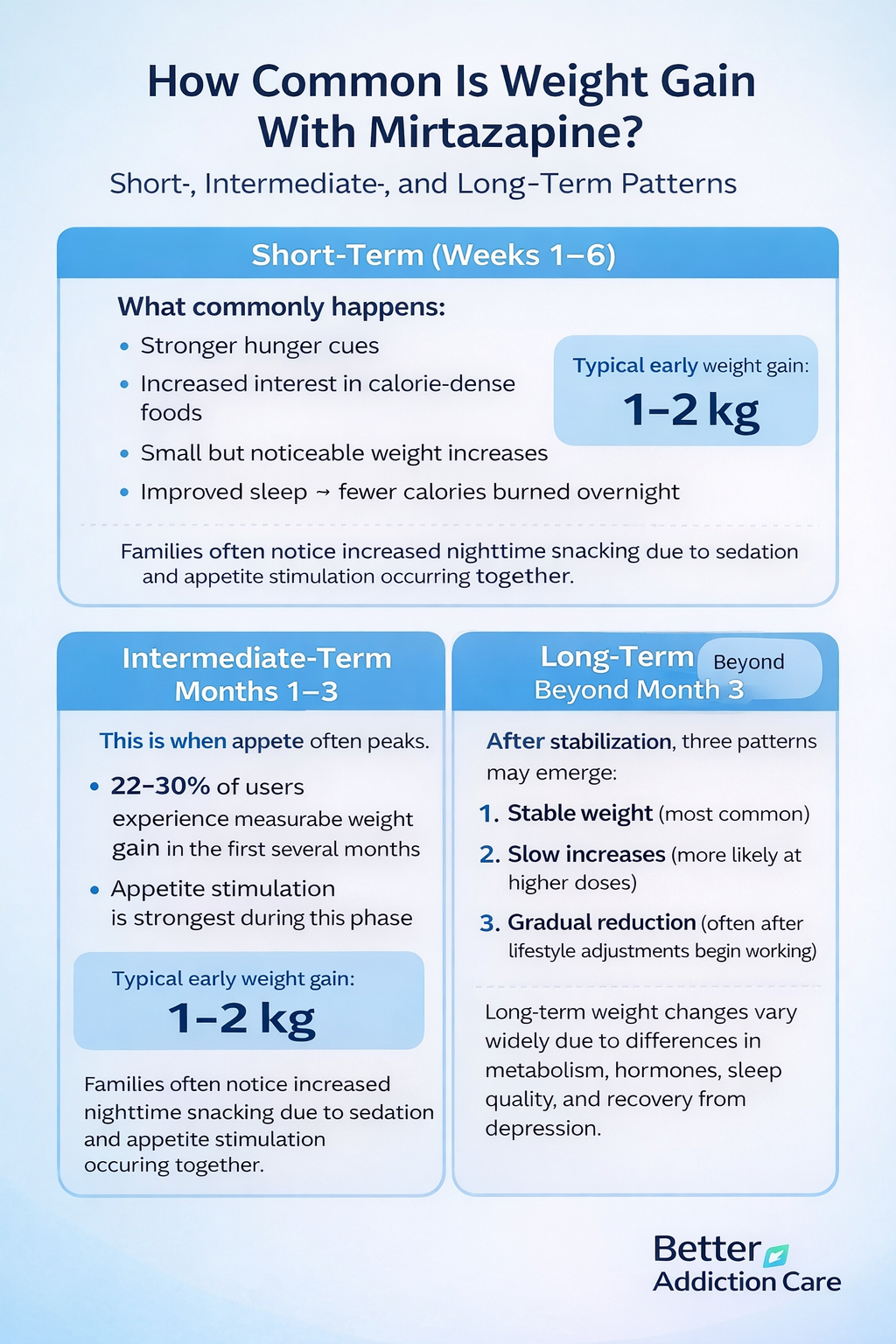
Short-Term (Weeks 1–6)
Most people experience:
stronger hunger cues
increased interest in calorie-dense foods
small but noticeable weight increases
improved sleep → fewer calories burned overnight
Typical early weight gain: 1–2 kg.
Families often notice increased nighttime snacking due to sedation and appetite stimulation occurring together.
Intermediate-Term (Months 1–3)
This is when appetite often peaks. Clinical studies report that 22–30% of mirtazapine users experience measurable weight gain during the first several months of treatment.” [1].
Average gain in this phase: 3–9 lbs.
However, many plateau naturally after the third month:
receptor sensitivity stabilizes
hunger hormones adjust
the body recalibrates from the initial appetite rebound
Long-Term (Beyond Month 3)
After stabilization, three patterns can emerge:
Stable weight (most common after month 3)
Slow increases (especially with higher doses)
Gradual reduction (often when lifestyle adjustments begin working)
Long-term weight gain varies widely because individual metabolism, hormone levels, sleep quality, and depression recovery differ dramatically.
Who Is Most at Risk?
Individuals recovering from appetite loss due to depression
Those with naturally slower metabolism
People with insulin resistance or pre-diabetic patterns
Individuals who experience emotional eating during stress
Young adults with strong dopamine-reward responses
People with irregular sleep schedules before treatment
Why do some people not Gain Weight?
A smaller group experiences little or no weight change.
This is often due to:
robust leptin sensitivity
regular pre-existing eating habits
high non-exercise activity (walking, fidgeting, pacing)
faster metabolic rate
structured meal patterns
supportive home environments
These individuals may not experience the same appetite rebound.
Why Does Mirtazapine Cause Weight Gain?
Weight gain from mirtazapine is not random. It comes from a combination of biological, hormonal, and behavioral mechanisms that build on one another over the first several weeks of treatment.
1. Appetite and Hunger Regulation
Histamine H1 Blockade: The “Hunger Switch”
The strongest appetite-stimulating effect of mirtazapine comes from histamine H1 receptor blockage, which directly influences how quickly hunger signals activate and how satisfied a person feels after eating.
Blocking these receptors:
increases hunger intensity throughout the day, making meals feel less filling and triggering earlier return of hunger between meals
reduces natural satiety signals, so the brain takes longer to register that the stomach is full, leading to larger portion sizes
enhances cravings for calorie-dense comfort foods, especially sugary or carb-heavy items that the body associates with quick energy and emotional relief
lowers internal “brakes” on appetite, making food cues (smells, visuals, memories of food) more powerful and harder to ignore
amplifies nighttime appetite, because the sedating effects of the medication overlap with hunger pathways that become more active in the evening
This mechanism is supported by clinical findings showing elevated appetite levels in the majority of new users[2].
Serotonin Receptors 5-HT2 and 5-HT3
Mirtazapine also blocks serotonin 5-HT2 and 5-HT3 receptors, which influence taste, digestion, reward processing, and fullness perception.
This leads to:
delayed feelings of fullness after meals, causing individuals to eat past their usual stopping point before recognizing they are satisfied
intensifying cravings during times of emotional stress, because serotonin influences how pleasurable food feels during recovery
increased preference for sweet, starchy, or high-carbohydrate foods, as these activate the brain’s quick reward pathways that become more reactive early in treatment
stronger interest in food even without emotional triggers, because serotonin shifts the balance between hunger and satisfaction
heightened response to the taste and smell of food, making certain foods feel unusually comforting or irresistible
2. Metabolic Rate Changes
Depression often elevates cortisol—the primary stress hormone—which accelerates muscle breakdown, disrupts sleep, and suppresses appetite.
When mirtazapine begins stabilizing the emotional system, several metabolic shifts occur.
When mirtazapine begins healing the emotional system:
cortisol levels start to normalize, reducing the body’s high-alert stress state and lowering the number of calories burned through tension and restlessness
sleep quality improves, which is good for emotional recovery, but slightly decreases overnight calorie burn because the brain and body move from hyperarousal to restorative patterns
the body shifts into a more energy-conserving mode, prioritizing repair, emotional regulation, and hormone stabilization over calorie expenditure
metabolism decreases slightly as the nervous system recovers, making the body more efficient at storing calories instead of burning them quickly
physical restlessness often decreases, leading to fewer unconscious movements (pacing, fidgeting), which normally burn more calories than people think
Even a 3–5% reduction in metabolic rate can contribute to gradual weight gain over several weeks, especially when depression recovery reduces stress-driven calorie burn. [3].
3. Hormonal Effects on Hunger and Fullness
Mirtazapine influences several appetite-related hormones. These hormonal shifts can be powerful enough to override logical eating patterns because they originate from biological signals—not emotional weakness.
Mirtazapine influences hormones such as:
Ghrelin — stimulates hunger, increasing the frequency and intensity of hunger waves, especially before bed or between meals
Leptin — signals fullness, but becomes temporarily less responsive, so it takes more food for the brain to register satisfaction
Neuropeptide Y — increases cravings for carbs, especially when the body is recovering from poor sleep, stress, or prior caloric restriction
Insulin — becomes more influential, especially in individuals with pre-existing insulin resistance, leading to stronger cravings for quick-energy foods
Cortisol — normalizes, which is beneficial for mental health, but can slow calorie burn and increase appetite during early recovery
This temporary hormonal mismatch makes hunger feel biological rather than emotional. Imagine the hunger dial being turned up to 8, while the fullness dial remains stuck at 4.
4. Behavioral and Lifestyle Factors
Depression disrupts routines—food patterns, sleep cycles, activity levels, and emotional coping behaviors shift dramatically during prolonged emotional distress.
Mirtazapine restores these systems, but recovery itself brings new exposures and behaviors that can influence weight.
Mirtazapine restores them, but recovery itself increases exposure to:
social meals that feel enjoyable again, often increasing calorie intake because shared eating feels comforting and reconnects individuals to daily life
comfort eating as emotional pain lessens, since food begins to taste more rewarding after months of numbness or appetite loss
late-night snacking triggered by medication timing, especially when mirtazapine is taken in the evening and overlaps with sedation-driven appetite
less stress-induced pacing or restlessness, which reduces unconscious calorie burn that was previously elevated during high-anxiety states
return of normal eating habits after long appetite suppression, which can feel like overeating but is often the body’s attempt to replenish nutritional deficits
Families often observe that their loved one begins:
finishing meals faster than before, because appetite signals feel stronger and more urgent
seeking snacks between meals or late in the evening, driven by a combination of biological signals and restored enjoyment of food
craving sweets or high-carbohydrate foods after dinner, which are more appealing when serotonin receptors shift and histamine pathways are blocked
eating larger portions or seconds, especially at night when the medication’s appetite-stimulating effects peak
showing enthusiasm for foods they previously avoided, because taste, texture, and reward processing become more satisfying during emotional recovery
These behaviors are common, predictable responses to biological changes—not failures of discipline, motivation, or self-control.
Is Weight Gain From Mirtazapine Permanent?
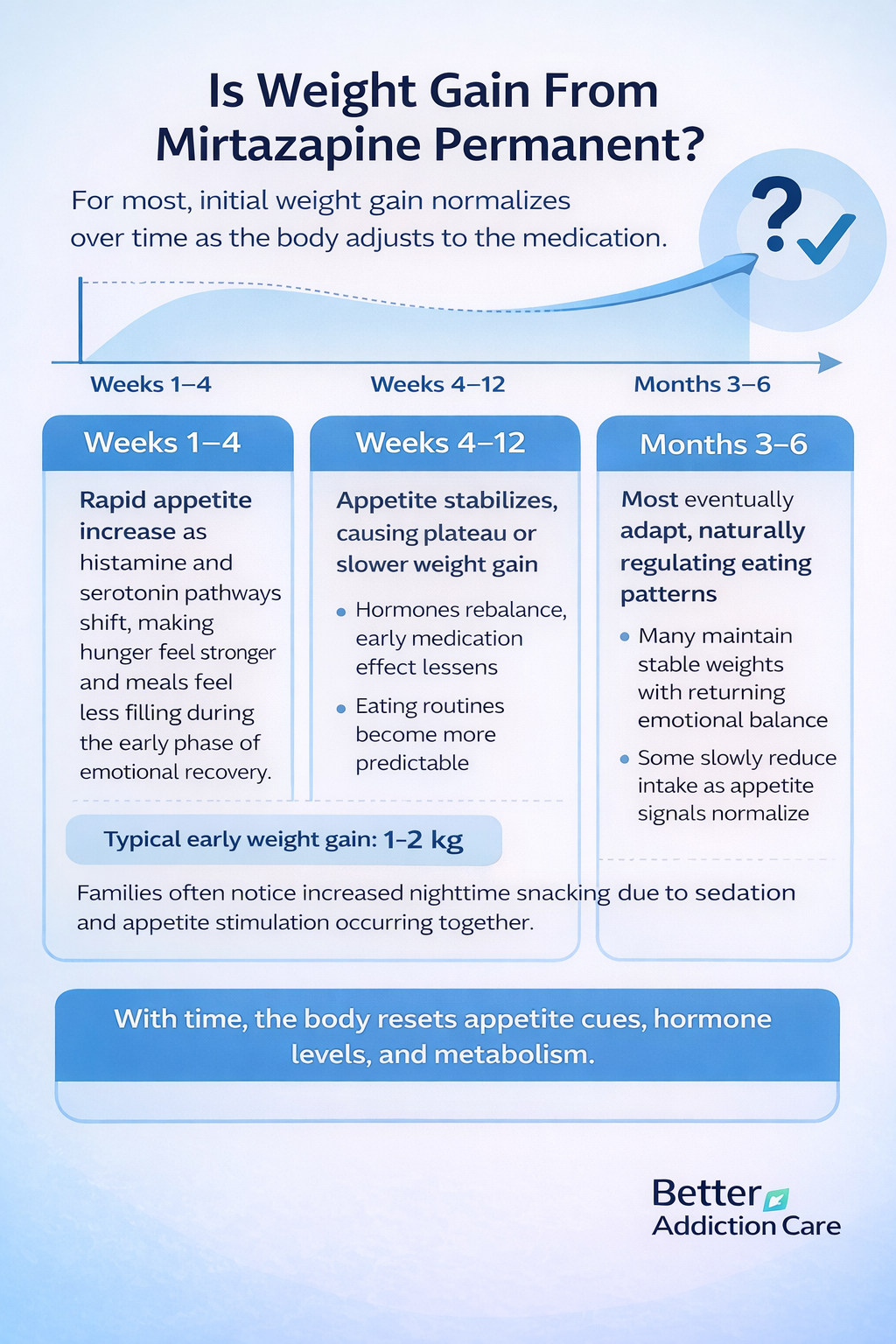
Not necessarily. The body adapts to receptor changes over time, and many of the appetite-driven shifts that appear early in treatment naturally settle as hormonal pathways stabilize and the nervous system adjusts to the medication.
Typical Pattern
Weeks 1–4
Rapid appetite increase as histamine and serotonin pathways shift, making hunger feel stronger and meals feel less filling during the early phase of emotional recovery.
Initial weight gain driven by stronger cravings, nighttime eating, and improved sleep, which together create a temporary imbalance in energy intake and expenditure.
Weeks 4–12
Appetite stabilizes as hunger hormones begin to rebalance, allowing individuals to regain a more predictable rhythm with meals and snacks.
Weight plateaus as the body adjusts to the medication, slowing down the early rapid changes once receptor sensitivity begins to normalize.
Months 3–6
Some individuals continue gradual increases, especially if appetite remains elevated or if lifestyle factors such as sleep and stress are still stabilizing.
Many stabilize naturally once emotional functioning improves, making it easier to maintain consistent eating habits and structured routines.
Some naturally reduce intake as appetite signals settle, leading to slow, steady normalization of eating patterns without intentional dieting.
Most people lose 50–80% of the weight gained on mirtazapine within 3–6 months after supervised tapering, as appetite and hormone sensitivity gradually normalize[4].
When Weight Does Not Decrease Easily?
A small percentage experience persistent changes due to:
long-term receptor adaptations
pre-existing metabolic vulnerability
chronic stress
irregular sleep cycles
emotional eating
sedentary routines
How Can Weight Gain Be Managed While Taking Mirtazapine?
Weight gain doesn’t mean treatment must stop. Combining medical guidance with realistic lifestyle strategies can help balance the benefits of Mirtazapine with healthy weight maintenance.
1. Monitor Weight and Appetite Early
Families can help by:
tracking weekly weight
noting sudden appetite spikes
watching for emotional hunger
using gentle, supportive language
observing nighttime snacking patterns
Early awareness prevents larger fluctuations.
2. Optimize Nutrition (Without Harsh Restriction)
Harsh dieting worsens depression and increases binge eating.
Structured but flexible eating promotes stability.
Core strategies:
include fiber at every meal
add proteins that slow digestion
maintain hydration (6–8 cups daily)
eat every 3–4 hours
balance meals with protein + fiber + complex carbs
Families can meal-prep or plan grocery lists together.
3. Increase Physical Activity (Realistic, Not Intensive)
The goal is consistency, not intensity.
Effective routine:
3 times per week structured exercise
daily movement such as walking or chores
stretching and light strengthening
10-minute “movement snacks” throughout the day
These routines help rebalance hunger hormones and reduce cravings.
4. Support Sleep and Stress Management
Improving sleep quality improves leptin and ghrelin sensitivity.
Strategies include:
consistent bedtime
low-light evenings
reduced screens
relaxation practices
calming pre-sleep environment
Families can support by maintaining quiet, predictable routines at home.
5. Discuss Medical Options
Weight gain alone is not a sign that the medication is harmful.
Doctors may:
lower the dose
switch dosing time
change medication
add supportive medications (rarely)
Never stop abruptly; withdrawal can destabilize mood.
When Should I Talk to My Doctor About Weight Gain?
Seek help if your loved one:
gains more than 5% body weight in 30 days
has constant hunger interfering with daily life
experiences sudden emotional eating
develops fatigue despite initial improvement
shows rapid changes in sleep cycles
Your doctor can assess:
metabolic changes
depression progress
medication adjustments
lab values
possible interactions
Can Weight Gain Be Prevented When Starting Mirtazapine?
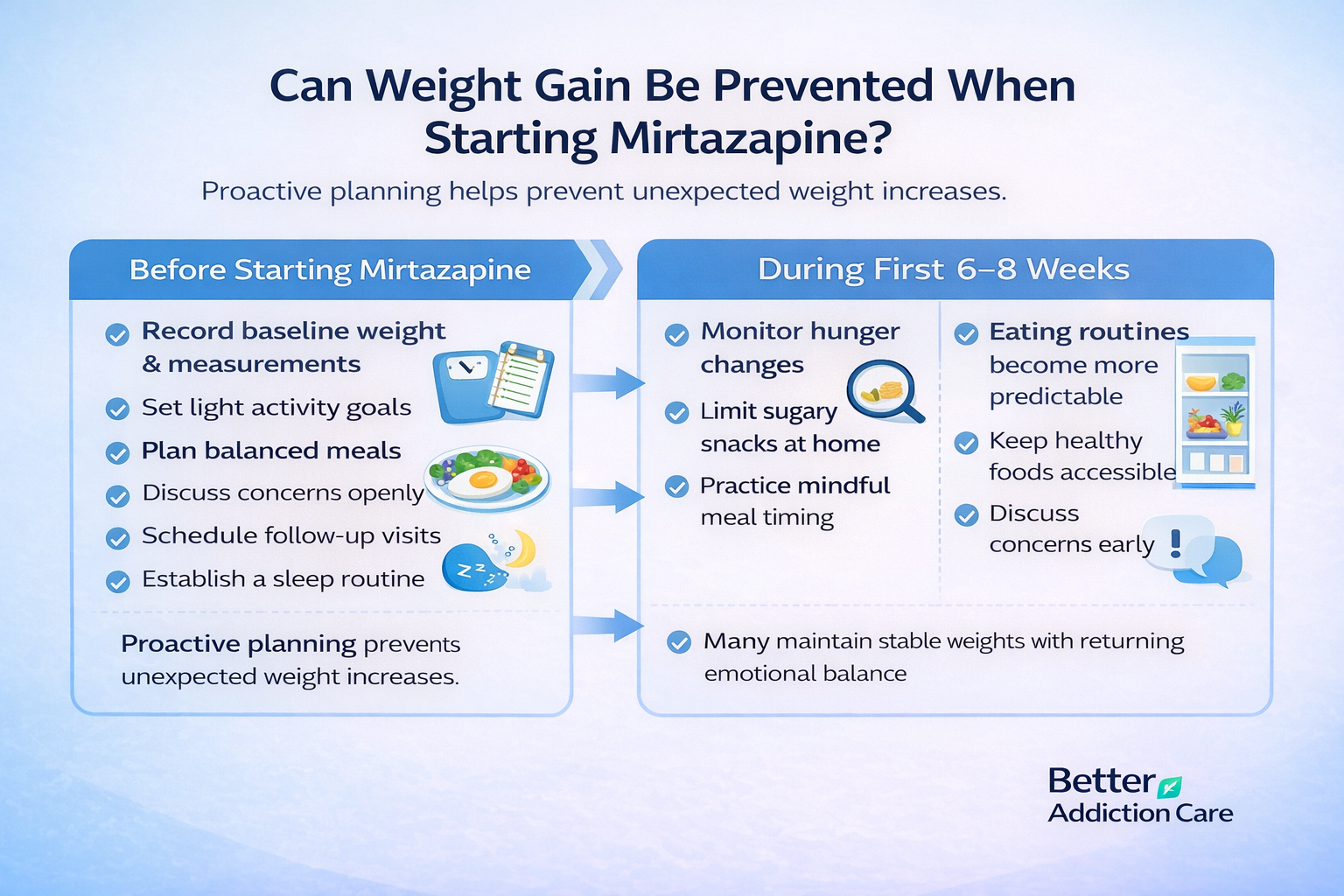
Before starting:
record baseline weight and measurements
set light activity goals
plan balanced meals
discuss concerns openly
schedule follow-up visits
establish a predictable sleep routine
During the first 6–8 weeks:
monitor hunger changes
avoid large stockpiles of sugary snacks
practice mindful meal timing
adjust environment (healthy foods accessible)
communicate changes early
Proactive planning prevents unexpected weight increases.
Conclusion
Weight gain from mirtazapine is understandable, manageable, and often reversible.
It reflects biological healing—not personal failure. With supportive structure, open communication, and early monitoring, individuals can maintain emotional stability while preventing major weight changes.
Families play a crucial role. Their involvement stabilizes routines, supports recovery, and ensures early symptom recognition. Most importantly, they help their loved one stay grounded in hope—even when the process feels overwhelming.
If weight gain becomes distressing or rapid, medical guidance can reshape treatment safely.
No one needs to choose between mental health and physical well-being; both can be protected with the right plan.