Alcoholism, Drug Abuse, Mental Health, and Treatment in Georgia
What are the main addictions people in Georgia suffer from?
The main addictions people in Georgia suffer from includes:
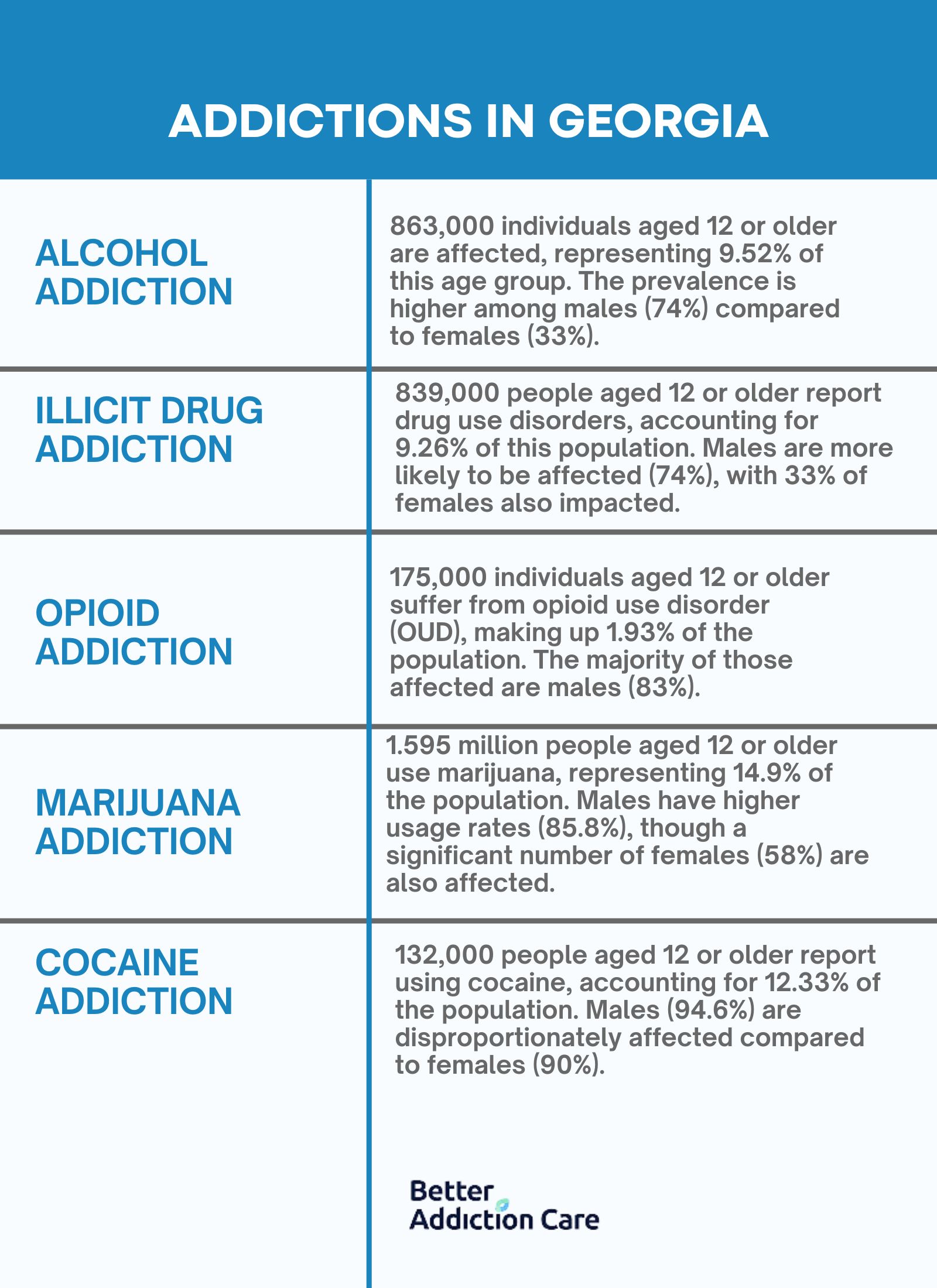
- Alcohol Addiction: 863,000 individuals aged 12 or older experienced AUD in the past year, representing 9.52% of this age group. Data indicates a higher prevalence among males with 640,900 representing 74%, while females are also affected with 289,000 representing 33%.
- Illicit Drug Addiction: 839,000 individuals aged 12 or older had a drug use disorder in the past year, accounting for 9.26% of this demographic. Males tend to have higher rates of illicit drug use with 640,900 representing 74%. 289,000 representing 33% females are also affected.
- Opioid Addiction: 175,000 individuals aged 12 or older experienced OUD in the past year, which is 1.93% of this age group. Males have higher prevalence observed with 145,900 representing 83%, while females affected as well with 139,000 representing 79%.
- Marijuana Addiction: 1,595,000 individuals aged 12 or older reported marijuana use in the past year, which is 14.9%, indicating potential for misuse. Males have generally higher usage rates with 1,369,000 representing 85.8%, while females affected as well with 939,000 representing 58%.
- Cocaine Addiction: 132,000 individuals aged 12 or older reported cocaine use in the past year which is 12.33%. Males have higher usage rates with 125,000 representing 94.6%. 119,900 females usage occurs at lower rates representing 90%.
What is the cost of rehab centers in Georgia?
The cost of rehab centers in Georgia is $55,475 without insurance coverage, equating to 77.7%. Long-term inpatient treatment costs $48,953, 11.8% less than the average, while outpatient treatment is more affordable at $8,134, representing an 85.3% reduction compared to the average. Outpatient methadone treatment is the least expensive option, averaging $7,227, which is 87% below the average rehab cost. However, the cost varies based on the type of addiction and treatment required. Medical detoxification is the most expensive, averaging $136,766, which is 146.5% higher than the overall average.
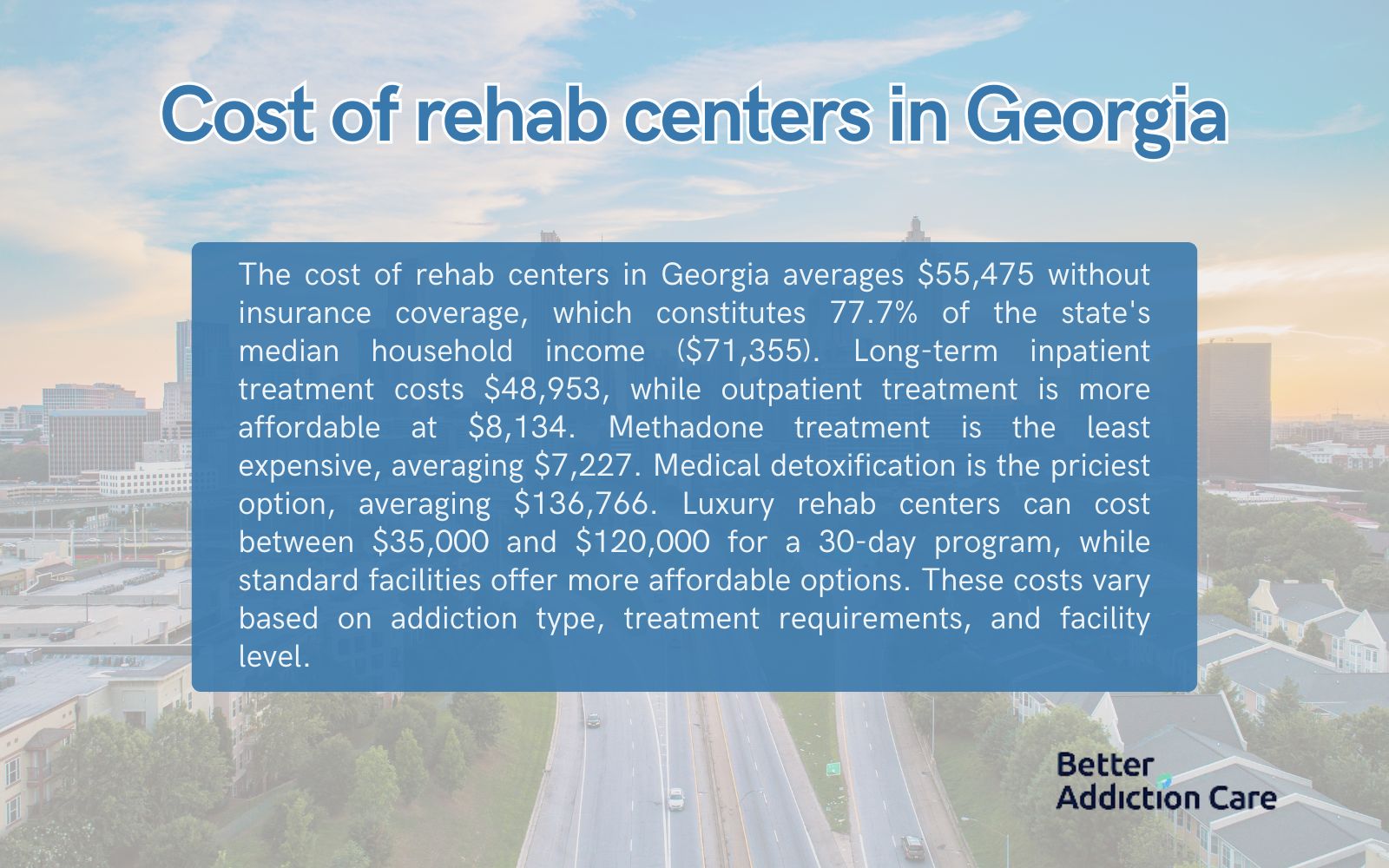
Georgia's median household income is $71,355, the average rehab cost accounts for 77.7% of annual earnings, making it a financial burden for many families. Luxury rehab centers, offering premium amenities, cost between $35,000 and $120,000 for a 30-day program, whereas standard facilities provide essential services at lower costs, making them more accessible. These cost variations highlight the importance of considering both the type of addiction and the facility when evaluating the affordability and options for rehab centers in Georgia.
What is the cost of LGBTQ+ rehab centers in Georgia?
The cost of LGBTQ+ rehab in Georgia is $35,475, equating to 49.9%. The cost of LGBTQ+ rehab centers ranges from $10,000 to $50,000 for a 30-day inpatient program that is 84.5%, with outpatient programs costing between $1,500 and $15,000 which is 23.2%, depending on the intensity and duration of treatment. These costs are influenced by factors such as the type of addiction, treatment modality, and facility amenities. For instance, medical detoxification, which is the most expensive treatment, averages $136,766—146.5% higher than the overall average rehab cost. In contrast, outpatient methadone treatment is among the least expensive and provides specialized services tailored to the unique needs of the LGBTQ+ community. The affordability of LGBTQ+ rehab services is a challenge for many households in Georgia.
The median household income of Georgia is $71,355, the LGBTQ+ rehab cost represents 49.9% of annual earnings, depending on the program chosen. While luxury LGBTQ+ rehab centers, offering premium amenities, cost between $35,000 and $120,000 for a 30-day program, standard facilities provide essential services at more affordable rates, making them more accessible to a broader population. The cost also varies based on whether the program is inpatient, outpatient, or focused on specific addictions, emphasizing the need for careful evaluation of options to ensure both effectiveness and affordability.
What is the cost of Faith-Based rehab centers in Georgia?
The cost of Faith-Based rehab centers in Georgia is $52,890, equating to 74%. The cost of these programs varies, with standard 30-day inpatient programs ranging from $5,000 to $20,000 (25%). Luxury Faith-Based facilities, offering premium amenities, cost between $35,000 and $120,000 for a 30-day program equates to 60%. Factors influencing costs include the type of addiction and the required treatment. For example, medical detoxification, the most expensive treatment, averages $136,766, which is 146.5% higher than the overall average rehab cost in Georgia. In contrast, outpatient methadone treatment is among the most affordable options, averaging $7,227, or 87% below the state average. Faith-based rehab centers in Georgia provide addiction treatment programs that combine spiritual guidance with traditional therapies.
The affordability of Faith-Based rehab centers depends significantly on the household income. The median household income is $71,355 in Georgia, the Faith-Based rehab cost of $52,890 represents 74% of annual earnings, posing a considerable financial challenge for many families. Longer program durations and facilities with additional holistic therapies or luxury accommodations further increase costs. Despite these challenges, Faith-Based rehab centers remain a valuable option for those seeking spiritually integrated care, with costs varying based on the type of facility and treatment program.
What is the cost of Men-Only rehab centers in Georgia?
The cost of Men-Only rehab centers in Georgia is $55,475 without insurance coverage, equating to 77.7%. Standard inpatient programs for men range from $5,000 to $20,000 for 30 days, while outpatient treatment costs between $1,000 and $10,000 depending on intensity and duration. Luxury Men-Only rehab facilities, offering premium services and accommodations, cost between $35,000 and $120,000 for a 30-day program.
Men-Only rehab centers in Georgia provide gender-specific treatment tailored to the unique needs of men facing substance use disorders. The cost of these programs varies based on treatment type, facility amenities, and program duration. The cost also depends on the type of addiction and treatment. For example, medical detoxification, often required for severe cases, averages $136,766, which is 146.5% higher than the average rehab cost in Georgia. In contrast, outpatient methadone treatment is more affordable, averaging $7,227, or 87% below the state average.
Georgia's median household income is $71,355, the Men-Only rehab cost of $55,475 represents 77.7% of annual earnings, highlighting the financial challenge for many families. Longer program durations and centers with additional holistic therapies or luxury accommodations further increase costs. Men-Only rehab centers offer tailored support, but affordability remains a significant factor, with options varying widely based on the facility and treatment program.
What is the cost of Women-Only rehab centers in Georgia?
The cost of Women-Only rehab centers in Georgia is $52,890, equating to 74%. The cost of these programs varies, with standard 30-day inpatient programs ranging from $5,000 to $20,000 (25%). Luxury Women-Only facilities, offering premium amenities, cost between $35,000 and $120,000 for a 30-day program equates to 60%. Factors influencing costs include the type of addiction and the required treatment. For example, medical detoxification, the most expensive treatment, averages $136,766, which is 146.5% higher than the overall average rehab cost in Georgia. In contrast, outpatient methadone treatment is among the most affordable options, averaging $7,227, or 87% below the state average. Women-Only rehab centers offer specialized treatment programs tailored to the unique needs of women facing substance use disorders.
The affordability of Women-Only rehab centers depends significantly on the household income. The median household income is $71,355 in Georgia, the Women-Only rehab cost of $52,890 represents 74% of annual earnings, posing a considerable financial challenge for many families. Longer program durations and facilities with additional holistic therapies or luxury accommodations further increase costs. Despite these challenges, Women-Only rehab centers remain a valuable option for those seeking care, with costs varying based on the type of facility and treatment program.
What is the cost of Teen rehab centers in Georgia?
The cost of Teen rehab in Georgia is $35,475, equating to 49.9%. The cost of Teen rehab centers ranges from $10,000 to $50,000 for a 30-day inpatient program that is 84.5%, with outpatient programs costing between $1,500 and $15,000 which is 23.2%, depending on the intensity and duration of treatment. These costs are influenced by factors such as the type of addiction, treatment modality, and facility amenities. For instance, medical detoxification, which is the most expensive treatment, averages $136,766, 146.5% higher than the overall average rehab cost. In contrast, outpatient methadone treatment is among the least expensive and provides specialized services tailored to the unique needs of the Teens. Teen rehab centers in Georgia focus on addressing substance abuse and behavioral challenges unique to adolescents.
The affordability of Teen rehab services is a challenge for many households in Georgia. The median household income of Georgia is $71,355, the Teen rehab cost represents 49.9% of annual earnings, depending on the program chosen. While luxury Teen rehab centers, offering premium amenities, cost between $35,000 and $120,000 for a 30-day program, standard facilities provide essential services at more affordable rates, making them more accessible to a broader population. The cost also varies based on whether the program is inpatient, outpatient, or focused on specific addictions, emphasizing the need for careful evaluation of options to ensure both effectiveness and affordability.
What is the cost of Young Adult rehab centers in Georgia?
The cost of Young Adult rehab centers in Georgia is $50,890, equating to 70%. The cost of these programs ranges from $5,000 to $20,000 (25%) for a standard 30-day inpatient treatment. Outpatient programs are more affordable, costing between $1,000 and $10,000 depending on the intensity and duration. Luxury rehab centers offering premium amenities and holistic therapies charge significantly higher, with costs ranging from $35,000 to $120,000 for a 30-day program, equating to 60%. Young adult rehab centers in Georgia cater to individuals transitioning from adolescence to adulthood, addressing unique challenges such as substance use and behavioral issues.
The type of addiction heavily influences treatment costs. Medical detoxification, often necessary for severe substance abuse cases, averages $136,766, which is 146.5% higher than Georgia’s average rehab cost of $55,475. In comparison, long-term inpatient treatment costs $48,953, or 11.8% less than the Georgia average, while outpatient treatment averages $8,134, representing a reduction of 85.3%.
The median household income is $71,355 in Georgia, the Young Adult rehab cost represents 70% of annual earnings, making it a significant financial burden for many families. Costs of Young Adult rehab centers also vary further based on the program duration and the type of rehab center, emphasizing the importance of evaluating different options to ensure affordability and accessibility for young adults seeking recovery.
What is the cost of Luxury Rehab centers in Georgia?
The cost of Luxury rehab centers in Georgia is $65,000, equating to 91%. The average cost of a 30-day program at a luxury rehab ranges from $35,000 to $120,000, depending on the services offered. While outpatient treatment is much more affordable, averaging $8,134 (12.5%). Luxury rehab centers in Georgia provide high-end amenities and tailored treatment programs, making them significantly more expensive than standard facilities.
Medical detoxification, often required for severe cases, is the costliest treatment, averaging $136,766, which is 146.5% higher than Georgia's average rehab cost of $55,475. In contrast, long-term inpatient treatment costs $48,953, 11.8% lower than the Georgia average, while outpatient treatment is much more affordable, averaging $8,134—a reduction of 85.3%. Program duration and facility amenities also impact costs, with extended stays (60-90 days) and additional services such as holistic therapies and luxury accommodations further increasing expenses.
Georgia’s median household income is $71,355, the Luxury rehab cost constitutes 91% of annual earnings. The wide range of costs highlights the importance of evaluating options to balance affordability and the desired level of care.
What is the cost of Dual Diagnosis rehab centers in Georgia?
The cost of Dual Diagnosis rehab centers in Georgia is $50,890, equating to 70%. The cost of these programs ranges from $5,000 to $20,000 (25%) for a standard 30-day inpatient treatment. Outpatient programs are more affordable, costing between $1,000 and $10,000 depending on the intensity and duration. Luxury rehab centers offering premium amenities and holistic therapies charge significantly higher, with costs ranging from $35,000 to $120,000 for a 30-day program, equating to 60%. Dual Diagnosis rehab centers in Georgia, which address both substance use disorders and co-occurring mental health conditions, offer various treatment options tailored to individual needs.
The type of addiction heavily influences treatment costs. Medical detoxification, often necessary for severe substance abuse cases, averages $136,766, which is 146.5% higher than Georgia’s average rehab cost of $55,475. In comparison, long-term inpatient treatment costs $48,953, or 11.8% less than the state average, while outpatient treatment averages $8,134, representing a reduction of 85.3%.
The median household income is $71,355 in Georgia, the Dual Diagnosis rehab cost represents 70% of annual earnings, making it a significant financial burden for many families. Costs of Dual Diagnosis rehab centers also vary further based on the program duration and the type of rehab center, emphasizing the importance of evaluating different options to ensure affordability and accessibility for young adults seeking recovery.
Is drug abuse and addiction a problem in Georgia?
Yes, drug abuse and addiction is a problem in Georgia. Firstly, Georgia has experienced a sharp increase in opioid-related deaths, with fatalities rising from 1,014 in 2023 to 1,663 in 2024—a 64% increase, primarily driven by synthetic opioids like fentanyl. Secondly, heroin deaths increased dramatically between 2022 and 2024, climbing from 40 to 263, indicating a growing dependency on illicit opioids. Thirdly, cocaine and methamphetamine abuse remain critical concerns, with over 100 cocaine-related overdose deaths and rising methamphetamine-related deaths in recent years. These trends underscore an escalating public health crisis. Treatment facility admissions for substance use disorders have surged, reflecting the increasing prevalence of addiction across the state of Georgia. Statistical evidence highlights the shifting landscape of substance abuse, demanding comprehensive intervention and prevention strategies.
Is alcoholism a problem in Georgia?
Yes, alcoholism is a problem in Georgia. Excessive alcohol consumption leads to 2,555 deaths annually in Georgia and accounts for 79,183 years of potential life lost, demonstrating its profound public health impact. In 2024, 16.6% of adults in Georgia reported binge drinking, highlighting widespread excessive alcohol use. Alcohol-related behaviors also impact younger populations, for instance, 7.7% of Georgia’s youth admitted to drinking alcohol within the past month. Over the years, per capita alcohol consumption among individuals aged 14 and older rose to 2.3 gallons in 2024, reflecting a steady pattern of high alcohol use. This persistent issue contributes to health complications, economic burdens, and social challenges across the state of Georgia.
Is Mental Health a problem in Georgia?
Yes, mental health is a problem in Georgia. In 2024, 1,405,000 adults in the state of Georgia experienced a mental health condition, surpassing twice the population of Atlanta. The COVID-19 pandemic exacerbated these issues, by February 2024, 44.3% of adults reported symptoms of anxiety or depression, with 29.4% unable to access necessary counseling or therapy. Georgia faces a shortage of mental health professionals, leaving over 4.9 million residents in areas lacking adequate services. These statistics highlight the escalating mental health challenges in Georgia over recent years.
Can you travel to Georgia for rehab?
Yes, you can travel to Georgia for rehab, and the state of Georgia offers unique advantages that make it an appealing destination for recovery. Firstly, Georgia has a diverse range of rehab centers, including luxury facilities, faith-based programs, and dual diagnosis treatment options, catering to various needs and preferences. Secondly, the state of Georgia’s serene environment, featuring picturesque mountains, lakes, and coastal regions, provides a tranquil backdrop for recovery, which positively impacts mental well-being. Thirdly, Georgia’s relatively lower cost of living compared to other states allows for more affordable treatment options without compromising quality. These factors, combined with access to experienced professionals and comprehensive care, set Georgia apart as a prime destination for rehab.
Can addiction be treated in Georgia?
Yes, addiction can be treated in Georgia for several reasons. Firstly, Georgia offers a wide range of treatment facilities, including inpatient and outpatient programs, luxury rehab centers, and specialized services like dual diagnosis care, ensuring that individuals receive tailored support.
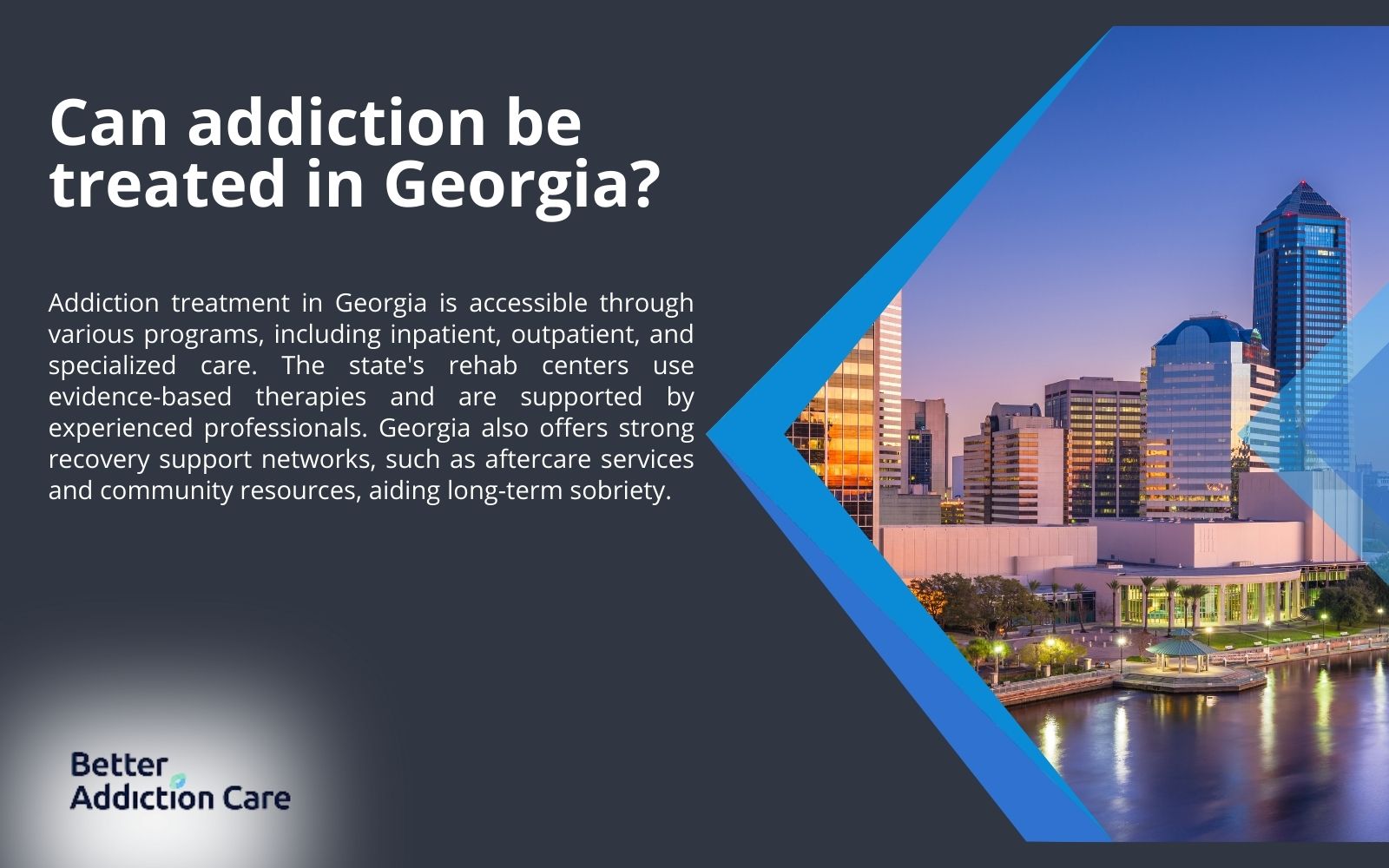
Secondly, Georgia’s treatment centers provide access to experienced professionals, including licensed therapists, medical staff, and counselors, who use evidence-based approaches such as cognitive-behavioral therapy and medication-assisted treatment. Thirdly, Georgia has robust support networks, including aftercare programs, support groups like Alcoholics Anonymous (AA) and Narcotics Anonymous (NA), and community-based resources that help individuals maintain long-term sobriety. These factors make Georgia a viable option for comprehensive addiction recovery.
What is the state of Georgia?
The state of Georgia is a state in the southeastern United States, known for its diverse culture, history, and geography. As of the most recent data, Georgia has a population of 10.7 million people, with a fairly balanced gender distribution: around 5.2 million males and 5.5 million females. Georgia is bordered by Tennessee and North Carolina to the north, South Carolina and the Atlantic Ocean to the east, Florida to the south, and Alabama to the west. Its capital, Atlanta, serves as a major cultural and economic hub.
Georgia ranks among the wealthier states in the U.S. due to its robust economy driven by sectors like agriculture, manufacturing, transportation, and technology. Georgia’s gross domestic product (GDP) exceeds $800 billion, making it one of the top contributors to the national economy. However, like many states, it also faces income inequality, with pockets of poverty in rural and underserved areas.
What is the population of Georgia?
The population of Georgia is 10.7 million people, with a fairly balanced gender distribution, 5.2 million males (48.91%) and 5.5 million females (51.09%). The population is distributed across various age groups, reflecting significant diversity. Children under 5 years old account for about 635,299 individuals (5.94%), while those aged 5 to 19 years make up 2.18 million people (20.42%). The young adult category (20 to 34 years) includes 2.22 million individuals, representing about 20.71% of the population. Middle-aged adults, from 35 to 54 years, comprise 2.83 million individuals, equating to 26.44%. Seniors aged 65 and over account for 1.54 million individuals (14.39%), with the largest senior group between 65 and 69 years at 527,294 people (4.92%). These figures highlight the demographic range in Georgia and provide insight into its population structure.
What is the income of people from Georgia?
The income of people from Georgia is $39,685, per capita income, which is 90% of the national average of $43,313. The median household income in Georgia is $71,632, slightly below the national median of $77,719. National trends indicate that income typically increases with age, peaking in the 45-54 age range, and then declines as individuals approach retirement. In Georgia, there is a notable income disparity between genders. Males have a median income of $44,231, while females earn a median of $36,093, highlighting a gender pay gap. These figures provide an overview of income distribution in Georgia, reflecting variations across different demographics.