Alcoholism, Drug Abuse, Mental Health, and Treatment in Hawaii
What are the main addictions people in Hawaii suffer from?
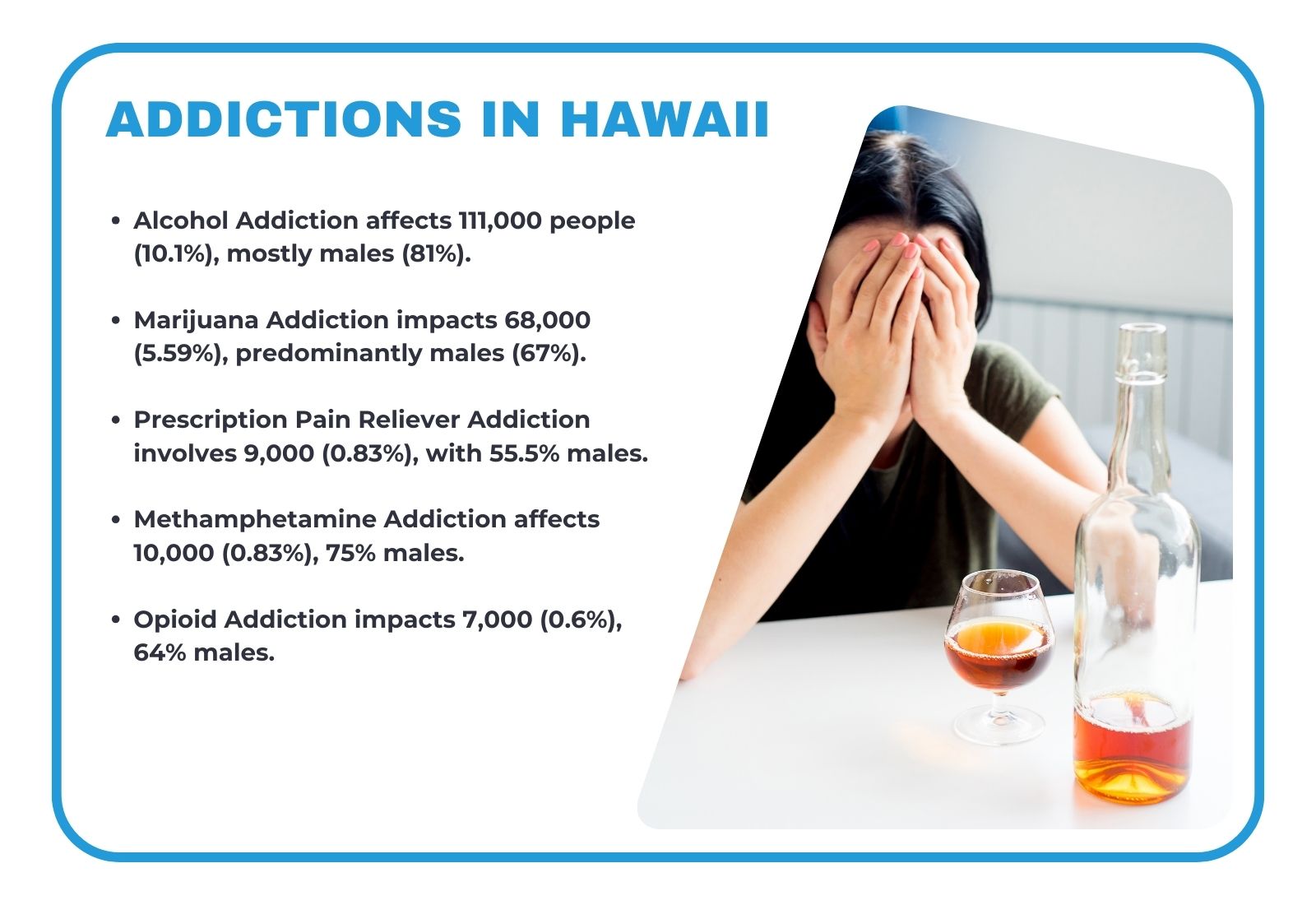
The main addictions people in Hawaii suffer from includes:
- Alcohol Addiction: 111,000 individuals aged 12 or older experienced AUD in the past year, representing 10.10% of this age group. 90,000 males which is 81% and 70,000 females which is 63% affected from alcohol addiction.
- Marijuana Addiction: 68,000 individuals aged 12 or older had a marijuana addiction in the past year, accounting for 5.59% of this population. 46,000 representing 67% males and 22,000 representing 32.5% females use marijuana.
- Prescription Pain Reliever Addiction: 9,000 individuals aged 12 or older suffered from Prescription Pain Reliever Addiction in the past year, which is 0.83% of the population. 5000 males which is 55.5% and 4000 females which is 44% use prescription pain relievers.
- Methamphetamine Addiction: 10,000 individuals aged 12 or older had a methamphetamine addiction in the past year, representing 0.83% of this age group. 7,500 men representing 75% and 3000 women representing 30% affected from methamphetamine addiction.
- Opioid Addiction: 7,000 individuals aged 12 or older experienced an opioid addiction in the past year, accounting for 0.6% of the population. 4500 men representing 64% and 2000 women representing 28% females affected from opioid addiction.
What is the cost of rehab centers in Hawaii?
The cost of rehab centers in Hawaii is $58,810. Long-term inpatient rehab costs $51,896, which is $6,914 less than the average, reflecting a decrease of 11.8%. Outpatient treatment is the least expensive option, averaging $8,623, which is $50,187, or 85.3%, lower than the average treatment cost.
Though this figure varies significantly based on the type of addiction and the specific treatment program. For instance, medical detoxification is the most expensive option, with an average cost of $144,988. The cost for medical detoxification in rehab centers of Hawaii represents an increase of $86,178, or 146.5%, above the overall average treatment cost.
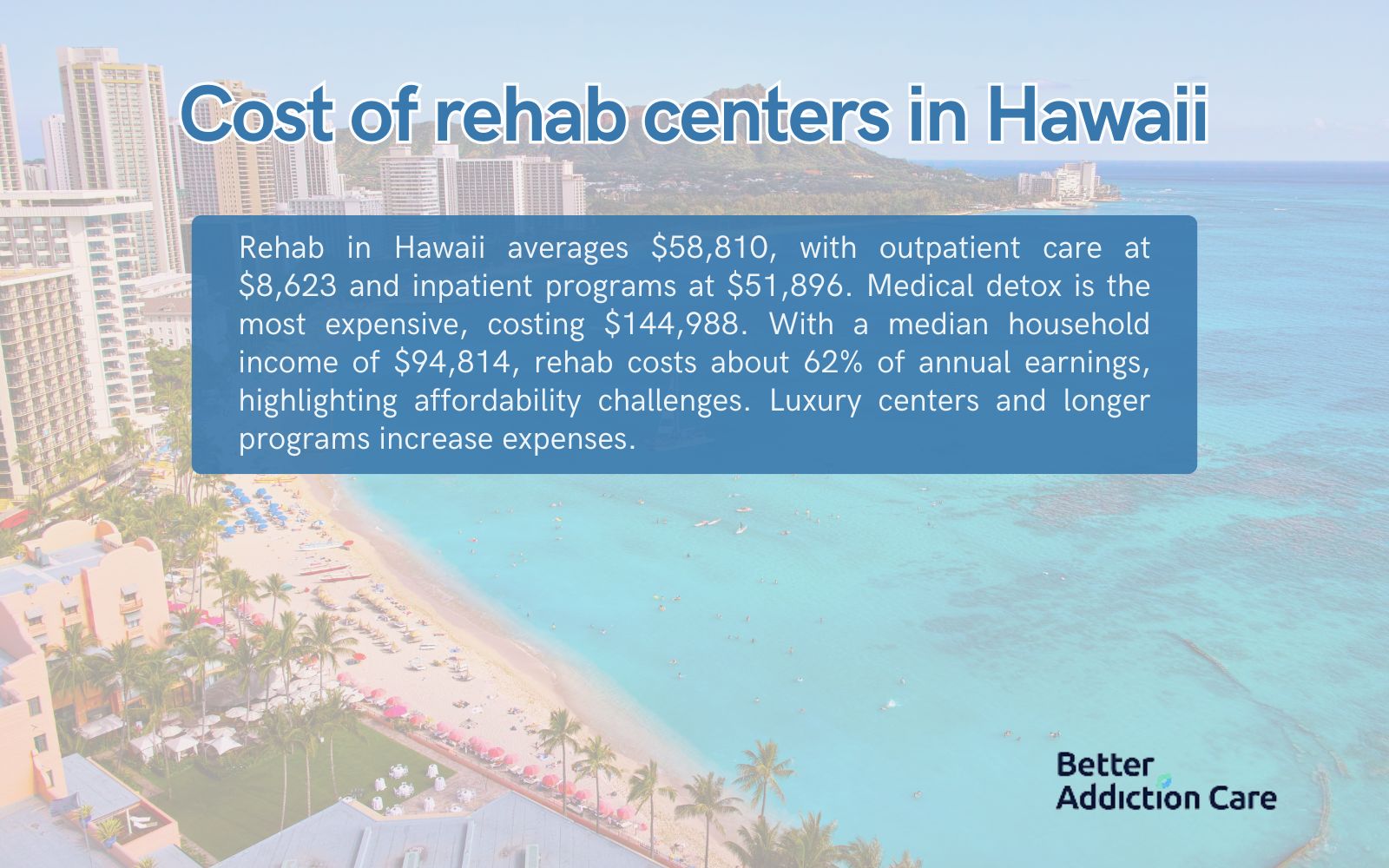
The median household income in Hawaii is $94,814, the cost of rehab centers in Hawaii at $58,810, constituting 62% of this median income. When considering affordability, the cost highlights the substantial financial burden such treatment places on households. Additional factors that influence the cost of rehab centers include the type of rehab center. Luxury or private facilities charge significantly more than standard centers, and the duration of the program further impacts the overall expenses.
What is the cost of LGBTQ+ rehab centers in Hawaii?
The cost of LGBTQ+ rehab centers in Hawaii is $56,810 that equates to 59%. Long-term inpatient rehab costs $51,896 (91%), which is $6,914, or 11.8%, less than the average, while outpatient treatment programs are the most affordable, averaging $8,623(16%)—$50,187, or 85.3%. LGBTQ+ rehab centers in Hawaii designed to address the unique needs of the LGBTQ+ community. Factors such as the type of addiction and the structure of the treatment program impact these costs. For instance, medical detoxification, one of the most expensive forms of treatment, averages $144,988—$86,178 higher than the overall average, representing an increase of 146.5%.
Hawaii’s median household income is $94,814.The affordability of LGBTQ+ rehab centers in Hawaii must also be assessed against treatment costs that equates to 59% of the median income, the financial burden for many households. The type of rehab center influences costs, as luxury or private facilities charge more than standard centers, and the length of the treatment program further affects the overall expense.
What is the cost of Faith-Based rehab centers in Hawaii?
The cost of Faith-Based rehab centers in Hawaii is $50,810 that equates to 53.5%. Long-term inpatient rehab costs $51,896 (102%), representing an increase of $1,914 (11.8%), while outpatient treatment programs are the most affordable, averaging $8,623 (16%)—$50,187 (95.3%). Faith-based rehab centers in Hawaii provide substance abuse treatment that integrates spiritual principles, offering a unique approach to recovery. The cost of Faith-Based rehab centers vary significantly based on factors such as addiction type and program structure. For instance, medical detoxification, which is among the most expensive treatments, averages $144,988—an increase of $86,178, or 146.5%.
Hawaii’s median household income is $94,814. The affordability of faith-based rehab centers is influenced by cost of treatment which is $50,810, accounting for 53.5% of the median annual income, posing a significant financial challenge for many households. Costs of Faith-Based rehab centers vary based on the type of rehab center, as luxury or private facilities charge higher fees, and the duration of the program also plays a crucial role in determining the total expense.
What is the cost of Men-Only rehab centers in Hawaii?
The cost of Men-Only rehab centers in Hawaii is $57,810 that equates to 61%. Long-term inpatient rehab is moderately priced at $51,896, representing a reduction of $6,914 (11.8%) compared to the average, while outpatient programs are the most affordable, averaging $8,623, a decrease of $50,187 (85.3%) from the average cost.
Men-only rehab centers in Hawaii provide specialized substance abuse treatment tailored to the unique needs of men. The cost of Men-Only rehab centers in Hawaii vary significantly based on factors such as addiction type and program structure. For instance, medical detoxification, one of the most expensive treatment options, averages $144,988, which is $86,178, or 146.5%, higher than the average cost.
Hawaii’s median household income is $94,814, the average cost of men-only rehab accounts for 61% of annual income, posing a significant financial challenge for many households. The type of rehab center influences overall costs of Men-Only rehab centers in Hawaii. Luxury or private men-only facilities often charge higher fees, while the duration and intensity of the program further impact the total expenses. These factors highlight the importance of choosing the right program to balance cost and treatment effectiveness.
What is the cost of Women-Only rehab centers in Hawaii?
The cost of Women-Only rehab centers in Hawaii is $56,000 that equates to 59%. Long-term inpatient rehab is priced at $51,896, representing a reduction of $6,914 (11.8%) compared to the average, while outpatient programs are the most affordable, averaging $8,623, a decrease of $50,187 (85.3%) from the average cost. Women-only rehab centers in Hawaii provide specialized substance abuse treatment tailored to meet the unique needs of women. The cost of Women-Only rehab centers vary significantly based on factors such as the type of addiction and the structure of the program. For example, medical detoxification, one of the most expensive treatment options, averages $144,988, an increase of $86,178, or 146.5%, above the average cost.
Hawaii’s median household income is $94,814. With the average cost of treatment accounting for 59% of annual income. Affordability is a key concern for women-only rehab centers as these programs pose a financial burden for many households. Costs also vary depending on the type of facility, as luxury or private women-only centers charge higher fees, while the duration and intensity of the program further influence the total expenses. These factors emphasize the importance of selecting the right program to balance affordability and effective care.
What is the cost of Teen Rehab centers in Hawaii?
The cost of Teen rehab centers in Hawaii is $50,810 that equates to 53.5%. Long-term inpatient rehab costs $51,896 (102%), representing an increase of $1,914 (11.8%), while outpatient treatment programs are the most affordable, averaging $8,623 (16%), $50,187 (95.3%).
Teen rehab centers in Hawaii provide specialized treatment programs tailored to address substance use disorders among adolescents. The cost of Teen rehab centers in Hawaii vary depending on factors such as the type of addiction and the structure of the treatment program. For instance, medical detoxification, one of the most expensive options, averages $144,988—an increase of $86,178, or 146.5%, compared to the average cost.
Hawaii’s median household income is $94,814. The affordability of Teen rehab centers is influenced by cost of treatment which is $50,810, accounting for 53.5% of the median annual income, posing a significant financial challenge for many households. Costs vary based on the type of rehab center, as luxury or private facilities charge higher fees, and the duration of the program also plays a crucial role in determining the total expense. These factors underscore the need for accessible, cost-effective treatment options for teens in Hawaii.
What is the cost of Young Adult rehab centers in Hawaii?
The cost of Young Adult rehab centers in Hawaii is $56,810 that equates to 59%. Long-term inpatient rehab costs $51,896 (91%), which is $6,914, or 11.8%, less than the average, while outpatient treatment programs are the most affordable, averaging $8,623(16%)—$50,187, or 85.3%. Young adult rehab centers in Hawaii cater specifically to individuals in their late teens and twenties, addressing substance use disorders with programs tailored to their unique needs. The cost of Young Adult rehab centers in Hawaii vary significantly based on factors such as addiction type and program structure. For example, medical detoxification, one of the most expensive treatments, averages $144,988—$86,178, or 146.5%, higher than the overall average.
Hawaii’s median household income is $94,814. The affordability of LGBTQ+ rehab centers in Hawaii must also be assessed against treatment costs that equate to 59% of the median income, the financial burden for many households. Costs of Young Adult rehab centers are also influenced by the type of facility, with luxury or private centers typically charging higher fees, and the duration and intensity of the program further impacting expenses. These factors highlight the importance of affordable, effective treatment options for young adults in Hawaii.
What is the cost of Luxury Rehab centers in Hawaii?
The cost of Luxury rehab centers in Hawaii is $60,810 that equates to 65%. Long-term inpatient rehab is moderately priced at $53,896, representing a reduction of $6,914 (11.8%) compared to the average, while outpatient programs are the most affordable, averaging $9,623—a decrease of $50,187 (85.3%) from the average cost. Luxury rehab centers in Hawaii provide premium care and upscale amenities, catering to individuals seeking a more exclusive treatment experience. These facilities charge significantly more than the state average for standard substance abuse treatment. Factors such as addiction type and program structure greatly influence the overall costs. For instance, medical detoxification is one of the most expensive options, averaging $144,988, an increase of $86,178, or 146.5%, compared to the average cost.
Hawaii’s median household income is $94,814, the average cost of Luxury rehab accounts for 65% of annual income. Costs of Luxury rehab centers are also influenced by the duration of the program and the level of services provided, with luxury facilities often offering private accommodations, holistic therapies, and personalized treatment plans that increase overall expenses. These factors highlight the premium nature of luxury rehab centers and their tailored approach to substance abuse recovery.
What is the cost of Dual Diagnosis rehab centers in Hawaii?
The cost of Dual diagnosis rehab centers in Hawaii is $57,810 that equates to 61%. Long-term inpatient rehab is moderately priced at $51,896, representing a reduction of $6,914 (11.8%) compared to the average, while outpatient programs are the most affordable, averaging $8,623—a decrease of $50,187 (85.3%) from the average cost. Dual diagnosis rehab centers in Hawaii provide specialized treatment for individuals managing both substance use disorders and co-occurring mental health conditions. The cost of Dual diagnosis rehab centers in Hawaii vary significantly depending on factors such as addiction type and treatment structure. For example, medical detoxification, one of the most expensive services, averages $144,988—an increase of $86,178, or 146.5%, compared to the average cost of standard substance abuse treatment.
Hawaii’s median household income is $94,814, the average cost of men-only rehab accounts for 61% of annual income, posing a significant financial challenge for many households. Costs of Dual diagnosis rehab centers also vary based on the type of facility, with luxury or private dual diagnosis centers charging higher fees, and the duration and intensity of the program further influencing overall expenses. These factors emphasize the need for accessible and cost-effective dual diagnosis treatment options in Hawaii.
Is drug abuse and addiction a problem in Hawaii?
Yes, drug abuse and addiction is a problem in Hawaii, with evidence pointing to a growing crisis. Between 2023 and 2024, 5.59% of individuals aged 12 or older in Hawaii experienced illicit drug addiction annually. By 2024, this rate had increased to 14.7%, illustrating the expanding scope of the problem. Overdose deaths have also risen sharply, with 53 opioid-related fatalities recorded in 2022 compared to a total of 274 overdose deaths in 2024, highlighting the deadly consequences of substance addiction. 10% of Hawaii’s residents reported past-month use of illicit drugs, reflecting the pervasive nature of substance use issues, particularly among the youth. These trends demonstrate the escalating challenge of drug abuse and addiction in the state of Hawaii.
Is alcoholism a problem in Hawaii?
Yes, alcoholism is a problem in Hawaii. Between 2022 and 2024, 10.10% of individuals aged 12 or older in Hawaii experienced alcohol addiction annually. By 2024, this rate had increased to 14.7%, indicating a worsening issue. Alcohol-related deaths also remain alarmingly high, with an average of 466 fatalities per year attributable to excessive alcohol consumption between 2022 and 2024. Youth alcohol consumption further underscores the problem, with 20.4% of high school students and 7.0% of middle school students reporting past-month alcohol use during 2022-2024. 10.9% of high school students admitted to binge drinking during this period. These trends highlight the persistent and growing challenges associated with alcoholism in Hawaii.
Is Mental Health a problem in Hawaii?
Yes, mental health is a problem in Hawaii. In 2024, 31% of adults aged 18 to 25 and 16% of adults aged 26 or older in Hawaii reported experiencing any mental illness in the past year, highlighting the widespread impact of mental health issues. Access to mental health services remains a challenge, with 37.6% of adults reporting symptoms of anxiety or depression in February 2024, yet 17.9% were unable to access necessary counseling or therapy. Youth mental health struggles are also prevalent, with 34.8% of high school students in Hawaii reporting symptoms of depression lasting two or more weeks in 2024. These statistics underscore the growing mental health challenges in Hawaii and the need for improved access to care and support services.
Can you travel to Hawaii for rehab?
Yes, you can travel to Hawaii for rehab, and Hawaii offers several unique advantages that make it an ideal destination for recovery. Hawaii’s serene and picturesque natural environment, featuring tranquil beaches, lush landscapes, and a warm climate, provides a soothing backdrop that promotes mental and emotional healing. Many rehab centers in Hawaii incorporate holistic and culturally enriching therapies, such as traditional Hawaiian healing practices, yoga, meditation, and outdoor treatments, creating a comprehensive and unique recovery experience. Hawaii’s geographical location and smaller population ensure privacy and exclusivity, making it a sought-after destination for individuals seeking a discreet and secluded recovery process. These factors make Hawaii a standout option for rehab.
Can addiction be treated in Hawaii?
Yes, addiction can be treated in Hawaii due to Hawaii's comprehensive and well-rounded approach to recovery. Hawaii offers diverse treatment programs, including inpatient and outpatient rehab, detoxification, dual diagnosis care, and aftercare support, ensuring individuals access services tailored to their specific needs. Hawaii is home to accredited facilities staffed with licensed professionals, including therapists, counselors, and medical personnel specializing in addiction treatment, which enhances the quality and effectiveness of care.
Hawaii’s rehab centers integrate holistic therapies and cultural practices, such as traditional Hawaiian healing, outdoor therapy, and meditation, complementing evidence-based methods to address physical, emotional, and spiritual aspects of recovery. These factors make Hawaii an excellent location for treating addiction.
What is the state of Hawaii?
The state of Hawaii is a U.S. state located in the Pacific Ocean, 2,400 miles from the mainland United States. Hawaii is the only state composed entirely of islands, with the eight main islands being Oahu, Maui, Kauai, Hawaii (the Big Island), Molokai, Lanai, Niihau, and Kahoolawe. Hawaii is bordered by the Pacific Ocean on all sides, with no direct land borders.
Hawaii has a population of 1.44 million people. The male population is 49.5%, while the female population makes up 50.5%. Economically, Hawaii is considered a relatively affluent state, with a median household income of $94,814 as of recent data, ranking it among the higher-income states in the U.S. However, Hawaii also has a high cost of living due to its geographic isolation and reliance on imports for many goods, which pose financial challenges for residents. These factors contribute to a mix of affluence and economic pressure, making Hawaii unique in its economic landscape.
What is the population of Hawaii?
The population of Hawaii is 1,440,000, with a nearly equal gender distribution, males making up 50.2% and females 49.8%. The population is divided among key age groups, with 20.5% (295,200 individuals) under 18 years old, 58.5% (842,400 people) between 18 and 64 years, and 21.1% (302,400 residents) aged 65 and older. These figures highlight a balanced demographic with a significant proportion in the working-age and senior categories.
What is the income of people from Hawaii?
The income of people from Hawaii is $42,683, per capita income. The median household income is $94,814. Income varies across age groups, with householders aged 25 to 44 earning a median of $100,555, those aged 45 to 64 earning $115,158, and householders aged 65 and older earning $85,024. National trends suggest males generally earn higher median incomes than females. In 2024, the U.S. median income for male full-time workers was $61,180, compared to $50,982 for female full-time workers. These figures illustrate the income distribution in Hawaii, reflecting differences across age groups and likely gender trends.