Alcoholism, Drug Abuse, Mental Health, and Treatment in Texas
What are the main addictions people in Texas suffer from?
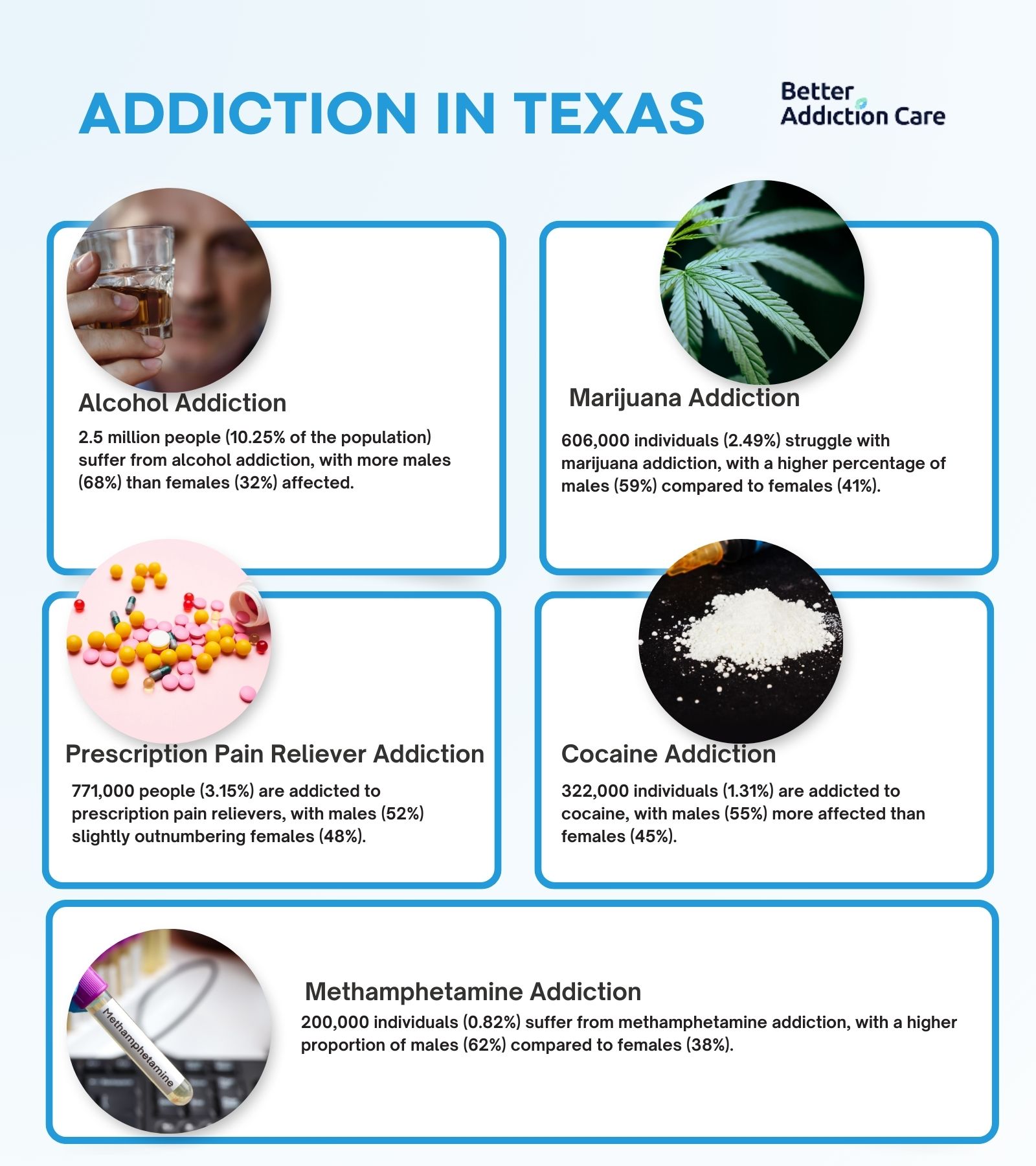
- Alcohol Addiction: 2,512,000 individuals aged 12 or older have alcohol addiction, equating to 10.25% of individuals. 1,708,160 (68%) males are higher in number as compared to 803,840 (32%) females.
- Marijuana Addiction: 606,000 individuals aged 12 or older reported past-month use, equating to 2.49% of individuals have marijuana addiction. 357,540 (59%) males are higher in number as compared to 248,460 (41%) females.
- Prescription Pain Reliever Addiction: 771,000 individuals aged 12 or older reported past-year misuse, equates to 3.15% of individuals have prescription pain reliever addiction. 400,920 (52%) males are higher in number as compared to 370,080 (48%) females.
- Cocaine Addiction: 322,000 individuals aged 12 or older reported past-year use, equates to 1.31% of individuals have cocaine addiction. 177,100 (55%) males are higher in number as compared to 144,900 (45%) females.
- Methamphetamine Addiction: 200,000 individuals aged 12 or older reported past-year use, equating to 0.82% of individuals have methamphetamine addiction. 124,000 (62%) males are higher in number as compared to 76,000 (38%) females.
What is the cost of rehab centers in Texas?
The cost of rehab centers in Texas is $56,623. The cost for inpatient rehab in a 30-day program is $56,000 per patient, while outpatient rehab costs $1,698 for the same duration. The cost of rehab centers vary significantly based on treatment type, duration, and facility amenities. These figures are influenced by the type of substance addiction being treated. For instance, medical detoxification, often required for alcohol or opioid addiction, substantially increases costs due to the need for specialized medical care. Although specific cost differences by addiction type are not readily detailed, medical detox is among the most expensive components of treatment.
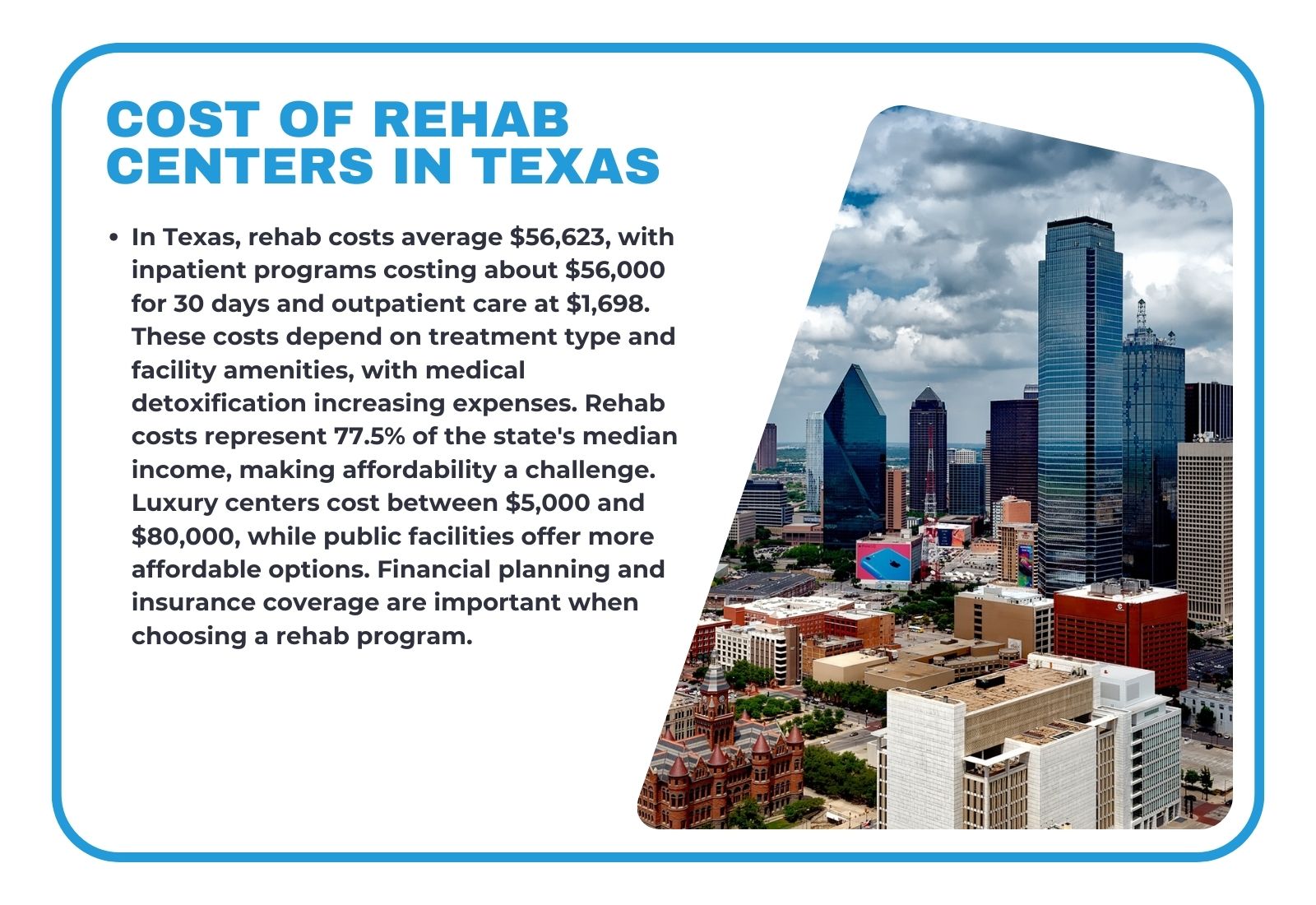
The median household income in Texas is $73,035, affordability becoming a significant concern. The costs of rehab centers represent 77.5% of the median household income, making it a considerable financial burden for most families. Outpatient rehab is more accessible, constituting only 2.3% of the median household income. These disparities highlight the importance of financial planning and exploring insurance coverage or state-funded programs to make treatment more affordable.
The cost of rehab centers also depends on the type of facility. Luxury or private centers, known for high-end amenities, charge between $5,000 and $80,000, whereas publicly funded or standard facilities offer more economical options. It is essential for individuals seeking treatment to assess their specific needs and financial capabilities to choose a program that provides effective care within their budget.
What is the cost of LGBTQ+ rehab centers in Texas?
The cost of LGBTQ+ rehab centers in Texas is $56,200. The cost for inpatient rehab in a 30-day program is $56,000 per patient, while outpatient rehab costs $1,698 for the same duration. The cost of LGBTQ+ rehab centers vary significantly based on treatment type, duration, and facility amenities. These figures are influenced by the type of substance addiction being treated. For instance, medical detoxification, often required for alcohol or opioid addiction, substantially increases costs due to the need for specialized medical care. Although specific cost differences by addiction type are not readily detailed, medical detox is among the most expensive components of treatment.
The median household income in Texas is $73,035, affordability becoming a significant concern. The costs of LGBTQ+ rehab centers represent 76.9% of the median household income, making it a considerable financial burden for most families. Outpatient rehab is more accessible, constituting only 2.3% of the median household income. These disparities highlight the importance of financial planning and exploring insurance coverage or state-funded programs to make treatment more affordable.
The cost of LGBTQ+ rehab centers also depends on the type of facility. Luxury or private centers, known for high-end amenities, charge between $5,000 and $80,000, whereas publicly funded or standard facilities offer more economical options. It is essential for individuals seeking treatment to assess their specific needs and financial capabilities to choose a program that provides effective care within their budget.
What is the cost of Faith-Based rehab centers in Texas?
The cost of Faith-Based rehab centers in Texas is $56,000. The cost for inpatient rehab in a 30-day program is $56,000 per patient, while outpatient rehab costs $1,698 for the same duration. The cost of Faith-Based rehab centers vary significantly based on treatment type, duration, and facility amenities. These figures are influenced by the type of substance addiction being treated. For instance, medical detoxification, often required for alcohol or opioid addiction, substantially increases costs due to the need for specialized medical care. Although specific cost differences by addiction type are not readily detailed, medical detox is among the most expensive components of treatment.
The median household income in Texas is $73,035, affordability becoming a significant concern. The costs of Faith-Based rehab centers represent 76.6% of the median household income, making it a considerable financial burden for most families. Outpatient rehab is more accessible, constituting only 2.3% of the median household income. These disparities highlight the importance of financial planning and exploring insurance coverage or state-funded programs to make treatment more affordable.
The cost of Faith-Based rehab centers also depends on the type of facility. Luxury or private centers, known for high-end amenities, charge between $5,000 and $80,000, whereas publicly funded or standard facilities offer more economical options. It is essential for individuals seeking treatment to assess their specific needs and financial capabilities to choose a program that provides effective care within their budget.
What is the cost of Men-Only rehab centers in Texas?
The cost of Men-Only rehab centers in Texas is $55,900. The cost for inpatient rehab in a 30-day program is $56,000 per patient, while outpatient rehab costs $1,698 for the same duration. The cost of Men-Only rehab centers vary significantly based on treatment type, duration, and facility amenities. These figures are influenced by the type of substance addiction being treated. For instance, medical detoxification, often required for alcohol or opioid addiction, substantially increases costs due to the need for specialized medical care. Although specific cost differences by addiction type are not readily detailed, medical detox is among the most expensive components of treatment.
The median household income in Texas is $73,035, affordability becoming a significant concern. The costs of Men-Only rehab centers represent 76.5% of the median household income, making it a considerable financial burden for most families. Outpatient rehab is more accessible, constituting only 2.3% of the median household income. These disparities highlight the importance of financial planning and exploring insurance coverage or state-funded programs to make treatment more affordable.
The cost of Men-Only rehab centers also depends on the type of facility. Luxury or private centers, known for high-end amenities, charge between $5,000 and $80,000, whereas publicly funded or standard facilities offer more economical options. It is essential for individuals seeking treatment to assess their specific needs and financial capabilities to choose a program that provides effective care within their budget.
What is the cost of Women-Only rehab centers in Texas?
The cost of Women-Only rehab centers in Texas is $55,500. The cost for inpatient rehab in a 30-day program is $56,000 per patient, while outpatient rehab costs $1,698 for the same duration. The cost of Women-Only rehab centers vary significantly based on treatment type, duration, and facility amenities. These figures are influenced by the type of substance addiction being treated. For instance, medical detoxification, often required for alcohol or opioid addiction, substantially increases costs due to the need for specialized medical care. Although specific cost differences by addiction type are not readily detailed, medical detox is among the most expensive components of treatment.
The median household income in Texas is $73,035, affordability becoming a significant concern. The costs of Women-Only rehab centers represent 75.9% of the median household income, making it a considerable financial burden for most families. Outpatient rehab is more accessible, constituting only 2.3% of the median household income. These disparities highlight the importance of financial planning and exploring insurance coverage or state-funded programs to make treatment more affordable.
The cost of Women-Only rehab centers also depends on the type of facility. Luxury or private centers, known for high-end amenities, charge between $5,000 and $80,000, whereas publicly funded or standard facilities offer more economical options. It is essential for individuals seeking treatment to assess their specific needs and financial capabilities to choose a program that provides effective care within their budget.
What is the cost of Teen rehab centers in Texas?
The cost of Teen rehab centers in Texas is $54,000. The cost for inpatient rehab in a 30-day program is $56,000 per patient, while outpatient rehab costs $1,698 for the same duration. The cost of Teen rehab centers vary significantly based on treatment type, duration, and facility amenities. These figures are influenced by the type of substance addiction being treated. For instance, medical detoxification, often required for alcohol or opioid addiction, substantially increases costs due to the need for specialized medical care. Although specific cost differences by addiction type are not readily detailed, medical detox is among the most expensive components of treatment.
The median household income in Texas is $73,035, affordability becoming a significant concern. The costs of Teen rehab centers represent 73.9% of the median household income, making it a considerable financial burden for most families. Outpatient rehab is more accessible, constituting only 2.3% of the median household income. These disparities highlight the importance of financial planning and exploring insurance coverage or state-funded programs to make treatment more affordable.
The cost of Teen rehab centers also depends on the type of facility. Luxury or private centers, known for high-end amenities, charge between $5,000 and $80,000, whereas publicly funded or standard facilities offer more economical options. It is essential for individuals seeking treatment to assess their specific needs and financial capabilities to choose a program that provides effective care within their budget.
What is the cost of Young Adult rehab centers in Texas?
The cost of Young Adult rehab centers in Texas is $54,500. The cost for inpatient rehab in a 30-day program is $56,000 per patient, while outpatient rehab costs $1,698 for the same duration. The cost of Young Adult rehab centers vary significantly based on treatment type, duration, and facility amenities. These figures are influenced by the type of substance addiction being treated. For instance, medical detoxification, often required for alcohol or opioid addiction, substantially increases costs due to the need for specialized medical care. Although specific cost differences by addiction type are not readily detailed, medical detox is among the most expensive components of treatment.
The median household income in Texas is $73,035, affordability becoming a significant concern. The costs of Young Adult rehab centers represent 74.6% of the median household income, making it a considerable financial burden for most families. Outpatient rehab is more accessible, constituting only 2.3% of the median household income. These disparities highlight the importance of financial planning and exploring insurance coverage or state-funded programs to make treatment more affordable.
The cost of Young Adult rehab centers also depends on the type of facility. Luxury or private centers, known for high-end amenities, charge between $5,000 and $80,000, whereas publicly funded or standard facilities offer more economical options. It is essential for individuals seeking treatment to assess their specific needs and financial capabilities to choose a program that provides effective care within their budget.
What is the cost of Luxury Rehab centers in Texas?
The cost of Luxury rehab centers in Texas is $58,000. The cost for inpatient rehab in a 30-day program is $56,000 per patient, while outpatient rehab costs $1,698 for the same duration. The cost of Luxury rehab centers vary significantly based on treatment type, duration, and facility amenities. These figures are influenced by the type of substance addiction being treated. For instance, medical detoxification, often required for alcohol or opioid addiction, substantially increases costs due to the need for specialized medical care. Although specific cost differences by addiction type are not readily detailed, medical detox is among the most expensive components of treatment.
The median household income in Texas is $73,035. The costs of Luxury rehab centers represent 79.5% of the median household income. Outpatient rehab is more accessible, constituting only 2.3% of the median household income. These disparities highlight the importance of financial planning and exploring insurance coverage or state-funded programs to make treatment more affordable.
The cost of Luxury rehab centers also depends on the type of facility. Luxury or private centers, known for high-end amenities, charge between $5,000 and $80,000, whereas publicly funded or standard facilities offer more economical options. It is essential for individuals seeking treatment to assess their specific needs and financial capabilities to choose a program that provides effective care within their budget.
What is the cost of Dual Diagnosis rehab centers in Texas?
The cost of Dual Diagnosis rehab centers in Texas is $53,000. The cost for inpatient rehab in a 30-day program is $56,000 per patient, while outpatient rehab costs $1,698 for the same duration. The cost of Dual Diagnosis rehab centers vary significantly based on treatment type, duration, and facility amenities. These figures are influenced by the type of substance addiction being treated. For instance, medical detoxification, often required for alcohol or opioid addiction, substantially increases costs due to the need for specialized medical care. Although specific cost differences by addiction type are not readily detailed, medical detox is among the most expensive components of treatment.
The median household income in Texas is $73,035, affordability becoming a significant concern. The costs of Dual Diagnosis rehab centers represent 72.5% of the median household income, making it a considerable financial burden for most families. Outpatient rehab is more accessible, constituting only 2.3% of the median household income. These disparities highlight the importance of financial planning and exploring insurance coverage or state-funded programs to make treatment more affordable.
The cost of Dual Diagnosis rehab centers also depends on the type of facility. Luxury or private centers, known for high-end amenities, charge between $5,000 and $80,000, whereas publicly funded or standard facilities offer more economical options. It is essential for individuals seeking treatment to assess their specific needs and financial capabilities to choose a program that provides effective care within their budget.
Is drug abuse and addiction a problem in Texas?
Yes, drug abuse and addiction is a problem in Texas. One reason is Texas's extensive border with Mexico, which facilitates the trafficking of illicit substances such as methamphetamine, heroin, and cocaine, increasing their availability and contributing to higher rates of substance use. Another factor is the prevalence of prescription drug misuse, particularly opioids like hydrocodone and oxycodone, leading to increased addiction rates and associated health issues. Additionally, socioeconomic challenges, including poverty and limited access to healthcare in certain regions, exacerbate substance abuse as individuals turn to drugs as a coping mechanism. Statistical evidence indicates that the drug poisoning death rate in Texas has nearly doubled over recent years, rising from 9.4 deaths per 100,000 residents in 2019 to 15.8 deaths per 100,000 residents in 2024, reflecting a more than 75% increase. Furthermore, Texas has experienced significant quantities of illegal drug seizures, including 125,340 pounds of marijuana and 1,565 pounds of heroin in 2020, underscoring the persistent challenges in combating drug trafficking and abuse. These trends highlight the escalating nature of drug abuse and addiction in Texas, necessitating comprehensive public health interventions.
Is alcoholism a problem in Texas?
Yes, alcoholism is a problem in Texas. One contributing factor is the high prevalence of binge drinking among adults; 17.6% of Texans aged 18 and older engage in binge drinking at least once per month, with the top 25% of these individuals consuming a median of nine drinks per binge. Another concern is the substantial number of individuals requiring, but not receiving, treatment for alcohol addiction; between 2019 and 2022, over a million Texans aged 12 and up needed alcohol use treatment but did not receive it.
Texas has been identified as having the highest risk of alcoholism in the United States, linked to public health challenges and socioeconomic factors, including a significant portion of the population lacking health insurance. Over recent years, Texas has experienced a notable increase in alcohol-induced deaths; from 2020 to 2024, there was a 10% rise in the age-adjusted rate of deaths from alcohol-induced causes. These trends underscore the escalating nature of alcohol-related issues in Texas, necessitating comprehensive public health interventions.
Is Mental Health a problem in Texas?
Yes, mental health is a problem in Texas. One contributing factor is the high prevalence of mental health conditions among both adults and youth; one in five adults experience a mental health condition annually, and 35% of children aged 6-17 had a mental health need in 2024.
Another issue is the substantial treatment gap; in February 2022, 43.4% of adults reported symptoms of anxiety or depression, yet 26.4% were unable to access needed counseling or therapy. Texas faces a shortage of mental health professionals, with 80% of Texas counties designated as Mental Health Professional Shortage areas. Over the past decade, reports of poor mental health have increased by 25% from 2014 to 2024 in Travis County, reflecting a growing concern statewide. These trends underscore the escalating mental health challenges in Texas, highlighting the need for comprehensive public health interventions.
Can you travel to Texas for rehab?
Yes, you can travel to Texas for rehab, and there are compelling reasons why Texas stands out as an ideal destination. Texas offers a diverse range of rehab centers, including luxury facilities and specialized programs tailored to unique needs such as LGBTQ+ and dual-diagnosis treatments. This variety ensures that individuals find personalized care that aligns with their specific circumstances. Texas boasts a lower cost of living compared to other states, making high-quality treatment more accessible and affordable for many people. Finally, Texas's natural environment, with its serene landscapes and warm climate, provides a therapeutic setting that promotes healing and recovery. These factors make Texas a distinctive and appealing option for those seeking effective rehabilitation.
Can addiction be treated in Texas?
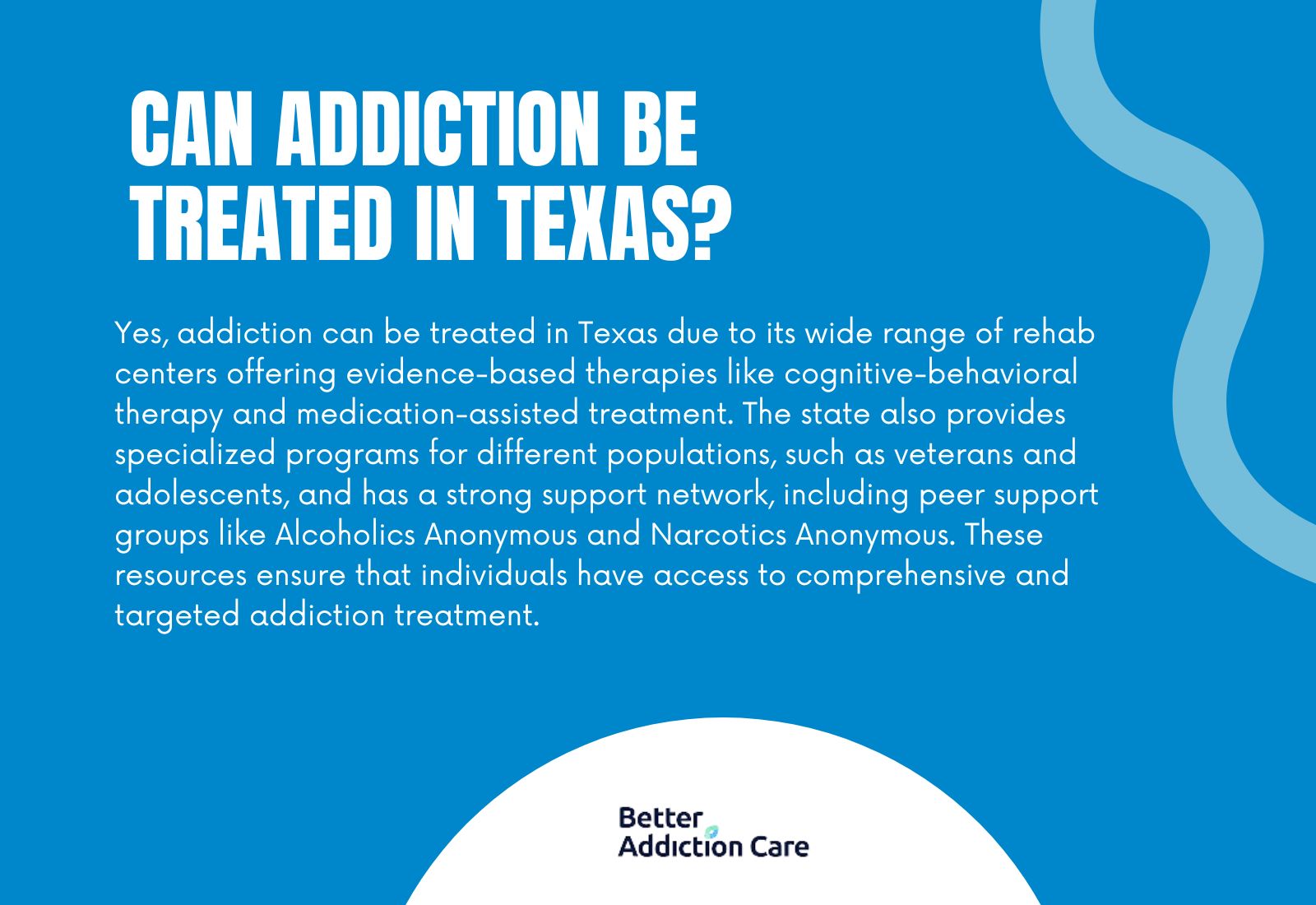
Yes, addiction can be treated in Texas for several reasons. Firstly, Texas is home to a wide range of rehab centers that provide evidence-based treatments, including cognitive-behavioral therapy, medication-assisted treatment, and holistic approaches, ensuring comprehensive care for various types of addiction. Secondly, Texas offers specialized programs tailored to different populations, such as veterans, adolescents, and individuals with co-occurring mental health disorders, enabling targeted and effective interventions. Thirdly, Texas has a robust support network, including peer support groups like Alcoholics Anonymous and Narcotics Anonymous, which are widely available and play a crucial role in sustaining long-term recovery. These resources collectively make Texas a viable place for addiction treatment.
What is the state of Texas?
The state of Texas is in the United States, located in the South-Central region. It is the second-largest state by both area and population, with a population of 30 million people as of 2024. The gender distribution is equal, with 14.9 million males and 15.1 million females.
Texas shares borders with New Mexico to the west, Oklahoma to the north, Arkansas to the northeast, Louisiana to the east, and the Mexican states of Chihuahua, Coahuila, Nuevo León, and Tamaulipas to the south. It also has a coastline along the Gulf of Mexico to the southeast.
Economically, Texas is one of the wealthiest states in the U.S., boasting a gross state product (GSP) of over $2 trillion, making it comparable to the economy of many countries. The state of Texas benefits from diverse industries, including energy, technology, agriculture, and manufacturing. However, despite its economic strength, Texas faces income disparities and pockets of poverty, particularly in rural areas and among underserved communities.
What is the population of Texas?
The population of Texas is 30,503,300 residents. The gender distribution is nearly even, with 15,122,000 males, making up 49.6% of the population, and 15,381,300 females, constituting 50.4%. Age group demographics reveal a diverse population spread, with 6.3% (1,921,700) under five years old, 14.4% (4,392,500) between 25 and 34 years, and 8.4% (2,562,300) aged 65 to 74 years. Younger age groups, such as those 10 to 14 years and 15 to 19 years, each account for 7.2% (2,196,200) of the population. Older age brackets, like 75 to 84 years and 85 years and over, represent 4.1% (1,250,600) and 1.3% (396,500), respectively. These figures illustrate Texas's balanced demographic composition, with a significant proportion of its population in working-age groups, reflecting its dynamic and economically active society.
What is the income of people from Texas?
The income of people from Texas is $39,446, per capita income. The median household income stands at $76,292. Income levels in Texas vary across different age groups. Households headed by individuals aged 25 to 44 years have a median income of $80,000, while those headed by individuals aged 45 to 64 years earn $90,000. Households with a head aged 65 years and over have a median income of $50,000. Gender disparities in income are also evident. Males working full-time, year-round have a median income of $50,000, whereas females in the same employment category earn a median income of $40,000. These figures highlight the variations in income distribution across different demographics within Texas.