Alcoholism, Drug Abuse, Mental Health, and Treatment in Wisconsin
What are the main addictions people in Wisconsin suffer from?
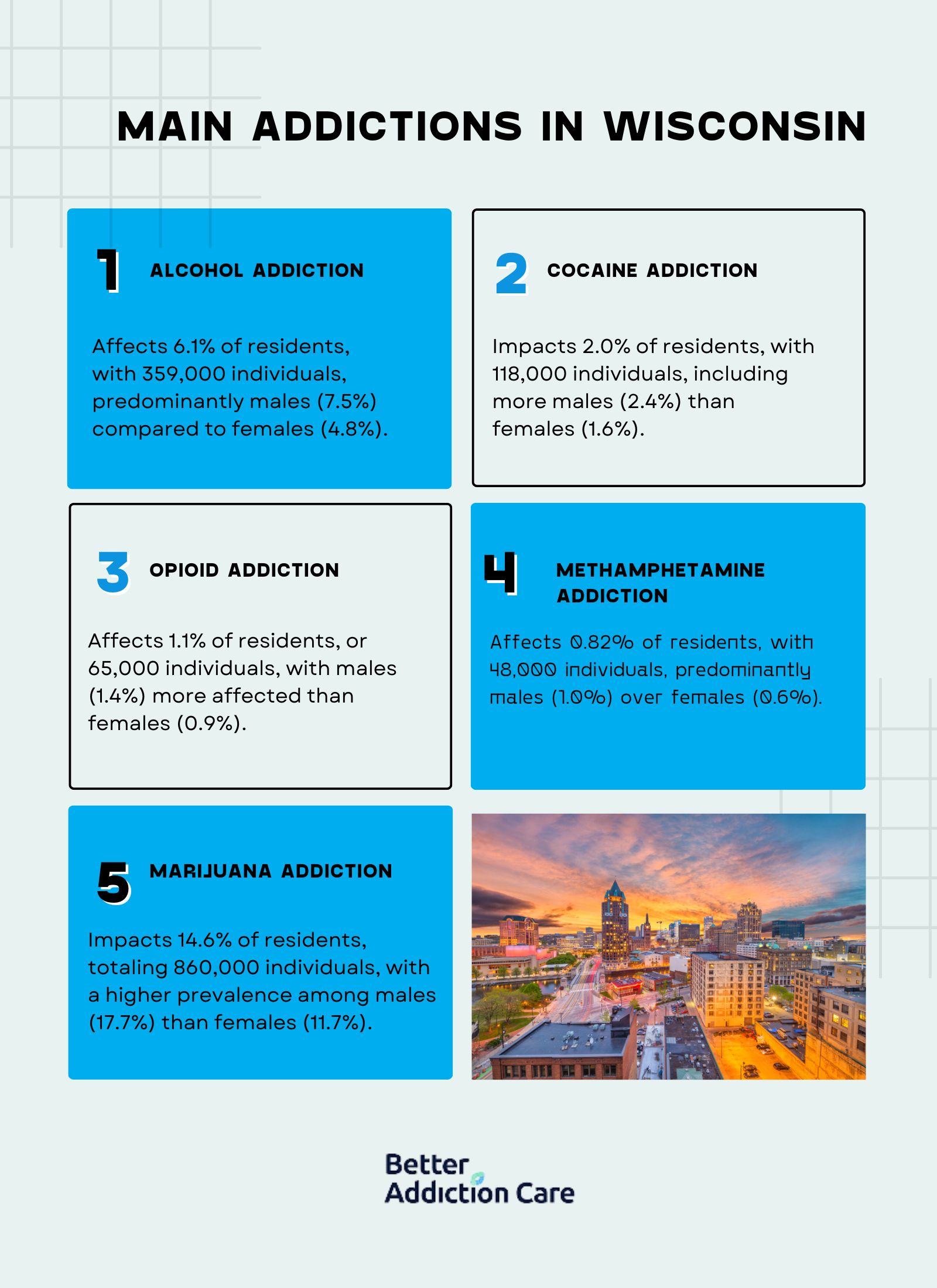
The main addictions people in Wisconsin suffer from include;
- Alcohol Addiction: 359,000 individuals aged 12 and older have alcohol addiction, equating to 6.1% of residents. 220,000 (7.5%) males are higher in number as compared to 139,000 (4.8%) females.
- Marijuana Addiction: 860,000 individuals aged 12 and older have marijuana addiction, equating to 14.6% of residents. 520,000 (17.7%) males are higher in number as compared to 340,000 (11.7%) females.
- Opioid Addiction: 65,000 individuals aged 12 and older have opioid addiction, equating to 1.1% of residents. 40,000 (1.4%) males are higher in number as compared to 25,000 (0.9%) females.
- Cocaine Addiction: 118,000 individuals aged 12 and older have cocaine addiction, equating to 2.0% of residents. 70,000 (2.4%) males are higher in number as compared to 48,000 (1.6%) females.
- Methamphetamine Addiction: 48,000 individuals aged 12 and older, equating to 0.82% of residents. 30,000 (1.0%) males are higher in number as compared to 18,000 (0.6%) females.
What is the cost of rehab centers in Wisconsin?
The cost of rehab centers in Wisconsin is $56,625. Inpatient rehab programs, offering 24/7 care, range from $12,000 to $60,000 for 60 to 90-day programs, while outpatient programs are generally more affordable, starting at $1,700, though costs increase with program length and frequency.
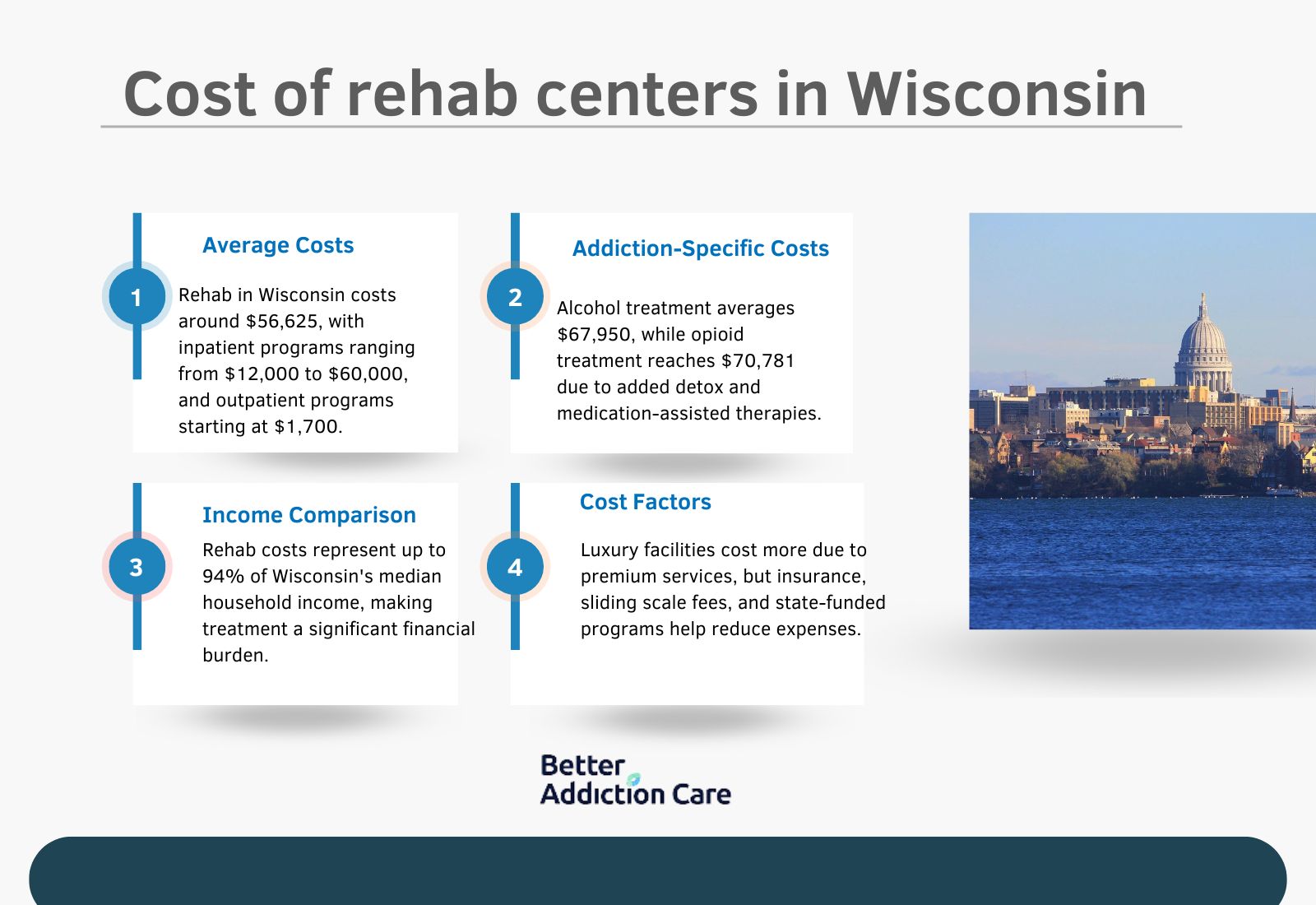
The cost of rehab centers vary significantly depending on the type of addiction and the treatment program. For example, alcohol addiction treatment, often requiring medical detox and comprehensive therapy, increases costs by up to 20%, adding $11,325 to the average. Similarly, opioid addiction treatment, which frequently involves medication-assisted treatment (MAT), raises expenses by 25%, resulting in an additional $14,156.
The median household income in Wisconsin is $75,670, which means the cost of rehab centers equates to 75% of the median income. Alcohol addiction treatment costs $67,950, or 90% of the median income, while opioid addiction treatment averages $70,781, consuming 94% of the median income. These figures highlight the financial burden rehab poses, potentially making it unaffordable for many households.
The cost of rehab centers varies by facility type. Luxury or private rehab centers typically charge more due to enhanced amenities and personalized services, whereas standard facilities offer more economical options. Insurance coverage, sliding scale fees, and financial assistance programs help reduce the financial strain for individuals seeking treatment.
What is the cost of LGBTQ+ rehab centers in Wisconsin?
The cost of LGBTQ+ rehab centers in Wisconsin is $56,000. Inpatient rehab programs, offering 24/7 care, range from $12,000 to $60,000 for 60 to 90-day programs, while outpatient programs are generally more affordable, starting at $1,700, though costs increase with program length and frequency.
The cost of LGBTQ+ rehab centers vary significantly depending on the type of addiction and the treatment program. For example, alcohol addiction treatment, often requiring medical detox and comprehensive therapy, increases costs by up to 20%, adding $11,325 to the average. Similarly, opioid addiction treatment, which frequently involves medication-assisted treatment (MAT), raises expenses by 25%, resulting in an additional $14,156.
The median household income in Wisconsin is $75,670, which means the cost of LGBTQ+ rehab centers equates to 74% of the median income. Alcohol addiction treatment costs $67,950, or 90% of the median income, while opioid addiction treatment averages $70,781, consuming 94% of the median income. These figures highlight the financial burden LGBTQ+ rehab poses, potentially making it unaffordable for many households.
The cost of LGBTQ+ rehab centers varies by facility type. Luxury or private rehab centers typically charge more due to enhanced amenities and personalized services, whereas standard facilities offer more economical options. Insurance coverage, sliding scale fees, and financial assistance programs help reduce the financial strain for individuals seeking treatment.
What is the cost of Faith-Based rehab centers in Wisconsin?
The cost of Faith-Based rehab centers in Wisconsin is $55,900. Inpatient rehab programs, offering 24/7 care, range from $12,000 to $60,000 for 60 to 90-day programs, while outpatient programs are generally more affordable, starting at $1,700, though costs increase with program length and frequency.
The cost of Faith-Based rehab centers vary significantly depending on the type of addiction and the treatment program. For example, alcohol addiction treatment, often requiring medical detox and comprehensive therapy, increases costs by up to 20%, adding $11,325 to the average. Similarly, opioid addiction treatment, which frequently involves medication-assisted treatment (MAT), raises expenses by 25%, resulting in an additional $14,156.
The median household income in Wisconsin is $75,670, which means the cost of Faith-Based rehab centers equates to 73.8% of the median income. Alcohol addiction treatment costs $67,950, or 90% of the median income, while opioid addiction treatment averages $70,781, consuming 94% of the median income. These figures highlight the financial burden Faith-Based rehab poses, potentially making it unaffordable for many households.
The cost of Faith-Based rehab centers varies by facility type. Luxury or private rehab centers typically charge more due to enhanced amenities and personalized services, whereas standard facilities offer more economical options. Insurance coverage, sliding scale fees, and financial assistance programs help reduce the financial strain for individuals seeking treatment.
What is the cost of Men-Only rehab centers in Wisconsin?
The cost of Men-Only rehab centers in Wisconsin is $55,500. Inpatient rehab programs, offering 24/7 care, range from $12,000 to $60,000 for 60 to 90-day programs, while outpatient programs are generally more affordable, starting at $1,700, though costs increase with program length and frequency.
The cost of Men-Only rehab centers vary significantly depending on the type of addiction and the treatment program. For example, alcohol addiction treatment, often requiring medical detox and comprehensive therapy, increases costs by up to 20%, adding $11,325 to the average. Similarly, opioid addiction treatment, which frequently involves medication-assisted treatment (MAT), raises expenses by 25%, resulting in an additional $14,156.
The median household income in Wisconsin is $75,670, which means the cost of Men-Only rehab centers equates to 73% of the median income. Alcohol addiction treatment costs $67,950, or 90% of the median income, while opioid addiction treatment averages $70,781, consuming 94% of the median income. These figures highlight the financial burden Men-Only rehab poses, potentially making it unaffordable for many households.
The cost of Men-Only rehab centers varies by facility type. Luxury or private rehab centers typically charge more due to enhanced amenities and personalized services, whereas standard facilities offer more economical options. Insurance coverage, sliding scale fees, and financial assistance programs help reduce the financial strain for individuals seeking treatment.
What is the cost of Women-Only rehab centers in Wisconsin?
The cost of Women-Only rehab centers in Wisconsin is $55,000. Inpatient rehab programs, offering 24/7 care, range from $12,000 to $60,000 for 60 to 90-day programs, while outpatient programs are generally more affordable, starting at $1,700, though costs increase with program length and frequency.
The cost of Women-Only rehab centers vary significantly depending on the type of addiction and the treatment program. For example, alcohol addiction treatment, often requiring medical detox and comprehensive therapy, increases costs by up to 20%, adding $11,325 to the average. Similarly, opioid addiction treatment, which frequently involves medication-assisted treatment (MAT), raises expenses by 25%, resulting in an additional $14,156.
The median household income in Wisconsin is $75,670, which means the cost of Women-Only rehab centers equates to 72% of the median income. Alcohol addiction treatment costs $67,950, or 90% of the median income, while opioid addiction treatment averages $70,781, consuming 94% of the median income. These figures highlight the financial burden Women-Only rehab poses, potentially making it unaffordable for many households.
The cost of Women-Only rehab centers varies by facility type. Luxury or private rehab centers charge more due to enhanced amenities and personalized services, whereas standard facilities offer more economical options. Insurance coverage, sliding scale fees, and financial assistance programs help reduce the financial strain for individuals seeking treatment.
What is the cost of Teen rehab centers in Wisconsin?
The cost of Teen rehab centers in Wisconsin is $54,389. Inpatient rehab programs, offering 24/7 care, range from $12,000 to $60,000 for 60 to 90-day programs, while outpatient programs are generally more affordable, starting at $1,700, though costs increase with program length and frequency.
The cost of Teen rehab centers vary significantly depending on the type of addiction and the treatment program. For example, alcohol addiction treatment, often requiring medical detox and comprehensive therapy, increases costs by up to 20%, adding $11,325 to the average. Similarly, opioid addiction treatment, which frequently involves medication-assisted treatment (MAT), raises expenses by 25%, resulting in an additional $14,156.
The median household income in Wisconsin is $75,670, which means the cost of Teen rehab centers equates to 71.8% of the median income. Alcohol addiction treatment costs $67,950, or 90% of the median income, while opioid addiction treatment averages $70,781, consuming 94% of the median income. These figures highlight the financial burden Teen rehab poses, potentially making it unaffordable for many households.
The cost of Teen rehab centers varies by facility type. Luxury or private rehab centers typically charge more due to enhanced amenities and personalized services, whereas standard facilities offer more economical options. Insurance coverage, sliding scale fees, and financial assistance programs help reduce the financial strain for individuals seeking treatment.
What is the cost of Young Adult rehab centers in Wisconsin?
The cost of Young Adult rehab centers in Wisconsin is $53,625. Inpatient rehab programs, offering 24/7 care, range from $12,000 to $60,000 for 60 to 90-day programs, while outpatient programs are generally more affordable, starting at $1,700, though costs increase with program length and frequency.
The cost of Young Adult rehab centers vary significantly depending on the type of addiction and the treatment program. For example, alcohol addiction treatment, often requiring medical detox and comprehensive therapy, increases costs by up to 20%, adding $11,325 to the average. Similarly, opioid addiction treatment, which frequently involves medication-assisted treatment (MAT), raises expenses by 25%, resulting in an additional $14,156.
The median household income in Wisconsin is $75,670, which means the cost of Young Adult rehab centers equates to 70.8% of the median income. Alcohol addiction treatment costs $67,950, or 90% of the median income, while opioid addiction treatment averages $70,781, consuming 94% of the median income. These figures highlight the financial burden Young Adult rehab poses, potentially making it unaffordable for many households.
The cost of Young Adult rehab centers varies by facility type. Luxury or private rehab centers typically charge more due to enhanced amenities and personalized services, whereas standard facilities offer more economical options. Insurance coverage, sliding scale fees, and financial assistance programs help reduce the financial strain for individuals seeking treatment.
What is the cost of Luxury Rehab centers in Wisconsin?
The cost of Luxury rehab centers in Wisconsin is $60,000. Inpatient rehab programs, offering 24/7 care, range from $12,000 to $60,000 for 60 to 90-day programs, while outpatient programs are generally more affordable, starting at $1,700, though costs increase with program length and frequency.
The cost of Luxury rehab centers vary significantly depending on the type of addiction and the treatment program. For example, alcohol addiction treatment, often requiring medical detox and comprehensive therapy, increases costs by up to 20%, adding $11,325 to the average. Similarly, opioid addiction treatment, which frequently involves medication-assisted treatment (MAT), raises expenses by 25%, resulting in an additional $14,156.
The median household income in Wisconsin is $75,670, which means the cost of Luxury rehab centers equates to 79% of the median income. Alcohol addiction treatment costs $67,950, or 90% of the median income, while opioid addiction treatment averages $70,781, consuming 94% of the median income.
What is the cost of Dual Diagnosis rehab centers in Wisconsin?
The cost of Dual Diagnosis rehab centers in Wisconsin is $53,000. Inpatient rehab programs, offering 24/7 care, range from $12,000 to $60,000 for 60 to 90-day programs, while outpatient programs are generally more affordable, starting at $1,700, though costs increase with program length and frequency.
The cost of Dual Diagnosis rehab centers vary significantly depending on the type of addiction and the treatment program. For example, alcohol addiction treatment, often requiring medical detox and comprehensive therapy, increases costs by up to 20%, adding $11,325 to the average. Similarly, opioid addiction treatment, which frequently involves medication-assisted treatment (MAT), raises expenses by 25%, resulting in an additional $14,156.
The median household income in Wisconsin is $75,670, which means the cost of Dual Diagnosis rehab centers equates to 70% of the median income. Alcohol addiction treatment costs $67,950, or 90% of the median income, while opioid addiction treatment averages $70,781, consuming 94% of the median income. These figures highlight the financial burden Dual Diagnosis rehab poses, potentially making it unaffordable for many households.
The cost of Dual Diagnosis rehab centers varies by facility type. Luxury or private rehab centers typically charge more due to enhanced amenities and personalized services, whereas standard facilities offer more economical options. Insurance coverage, sliding scale fees, and financial assistance programs help reduce the financial strain for individuals seeking treatment.
Is drug abuse and addiction a problem in Wisconsin?
Yes, drug abuse and addiction is a problem in Wisconsin. Wisconsin has experienced a substantial increase in drug-related deaths over the past decade, with the age-adjusted mortality rate rising from 10.9 deaths per 100,000 population in 2014 to 29.4 deaths per 100,000 in 2024. This escalation indicates a worsening public health crisis. Additionally, Wisconsin has one of the highest rates of excessive drinking in the nation, with 25.2% of residents engaging in such behavior, contributing to the overall substance abuse issue.
Wisconsin has seen a significant increase in opioid-related deaths, with 1,427 reported in 2024, marking a 16% rise from 2022 and a 70% increase since 2019. These statistics underscore the growing challenges Wisconsin faces in combating drug abuse and addiction.
Is alcoholism a problem in Wisconsin?
Yes, alcoholism is a problem in Wisconsin. Wisconsin consistently ranks among the highest in the nation for alcohol consumption per capita, with residents consuming 3.11 gallons per person aged 14 and older, compared to the national average of 2.45 gallons. This high level of consumption correlates with a substantial increase in alcohol-induced deaths, which rose nearly 25% in 2024, marking the largest one-year increase in over two decades. Wisconsin has experienced a rise in alcohol-related hospitalizations, with a 4% increase from 2022 to 2024, indicating a growing strain on healthcare resources. These trends highlight the escalating public health challenges posed by alcohol misuse in Wisconsin.
Is Mental Health a problem in Wisconsin?
Yes, mental health is a problem in Wisconsin. Over 63,000 additional residents sought treatment for mild to moderate depression and anxiety between 2022 and 2024, indicating a growing demand for mental health services. Despite this increased demand, access to care remains uneven, with individuals in urban advantaged areas more likely to receive treatment compared to those in rural underserved regions. Wisconsin has experienced a 40% rise in telehealth visits for mental health concerns during the same period, primarily benefiting urban populations, while rural areas continue to face challenges in accessing these services. These trends highlight the escalating mental health challenges in Wisconsin and underscore the disparities in access to care across different communities.
Can you travel to Wisconsin for rehab?
Yes, you can travel to Wisconsin for rehab, and there are several compelling reasons to do so. Wisconsin is home to a range of highly specialized rehab centers that offer personalized care tailored to diverse needs, including addiction treatment programs for alcohol, opioids, and other substances. Wisconsin’s serene natural environment, featuring picturesque lakes, forests, and rural landscapes, provides a peaceful setting conducive to recovery and reflection. Wisconsin stands out for its affordability compared to other states, making high-quality care accessible without the prohibitive costs often associated with rehab in larger metropolitan areas. These factors combine to make Wisconsin a unique and effective destination for individuals seeking rehab and recovery.
Can addiction be treated in Wisconsin?
Yes, addiction can be treated in Wisconsin due to Wisconsin’s robust healthcare infrastructure and comprehensive treatment options. Wisconsin offers a wide range of rehab centers specializing in diverse treatment modalities, including medical detox, therapy, and medication-assisted treatment for opioid and alcohol addiction. Wisconsin has a network of experienced healthcare professionals and support services, ensuring that individuals receive personalized care tailored to their specific needs. Additionally, Wisconsin’s natural surroundings and focus on holistic recovery programs create a supportive environment for long-term healing and rehab. These elements make Wisconsin a viable and effective location for treating addiction.
What is the state of Wisconsin?
The state of Wisconsin is in the United States, located in the Midwest region. It has a population of 5.9 million residents, with 2.9 million males and 3.0 million females. Geographically, Wisconsin is bordered by Minnesota to the west, Iowa to the southwest, Illinois to the south, Lake Michigan to the east, and Michigan to the north.
Economically, Wisconsin has a diverse economy centered on manufacturing, agriculture, and healthcare. Wisconsin’s median household income is $75,670, slightly below the national median, reflecting a moderately prosperous but not exceptionally wealthy economy. It is known for its significant contributions to the dairy industry, earning the nickname "America's Dairyland."
What is the population of Wisconsin?
The population of Wisconsin is 5,910,955. The gender distribution is nearly even, with 2,940,000 males (49.7%) and 2,970,000 females (50.3%). The population is also diverse across age groups, with 1,218,000 individuals under 18 years old, representing 21.2% of the total. Adults aged 18 to 44 make up the largest group at 1,946,000, or 33.9% of the population. Those aged 45 to 64 constitute 1,504,000 people, accounting for 26.2%, while the senior population, 65 years and older, comprises 1,043,000 individuals, or 17.7%. These figures reflect a balanced demographic structure in Wisconsin, with a slightly higher proportion of working-age adults.
What is the income of people from Wisconsin?
The income of people from Wisconsin is $42,019, per capita income. The median household income is $75,447. Income levels vary significantly across age groups, with householders under 25 years earning a median income of $42,103, those aged 25 to 44 earning $83,689, and those aged 45 to 64 earning $86,861, while householders aged 65 and older have a median income of $50,167. Gender also influences income, with males earning a median income of $47,188 compared to $31,764 for females among all workers aged 15 and older. For full-time, year-round workers, males earn a median income of $62,608, while females earn $50,715. These figures illustrate both age and gender disparities in income distribution across Wisconsin.