Alcoholism, Drug Abuse, Mental Health, and Treatment in Tennessee

What are the main addictions people in Tennessee suffer from?
The main addictions people in Tennessee suffer from include;
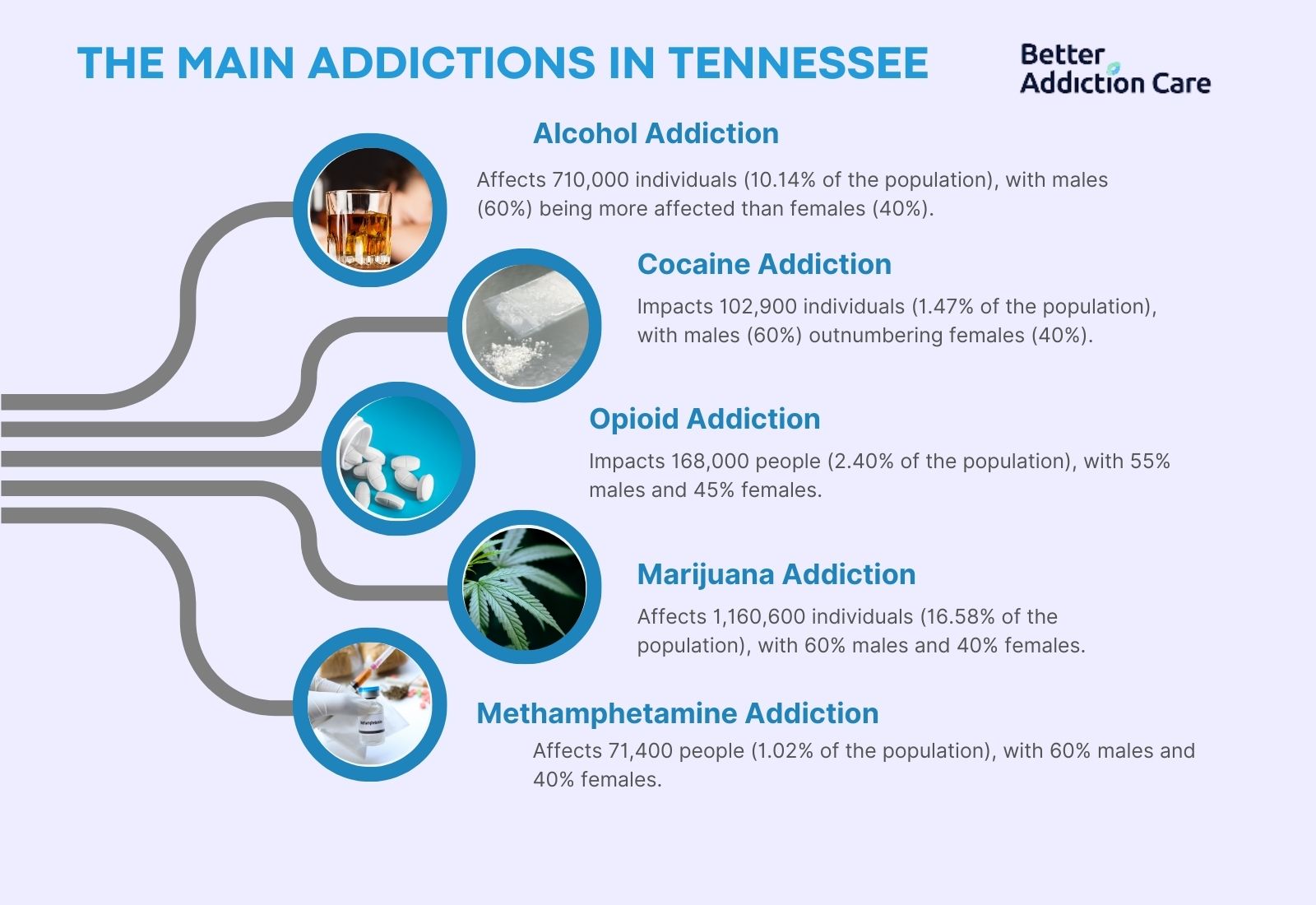
- Alcohol Addiction; 710,000 individuals aged 12 or older have alcohol addiction, equates to 10.14% of the population. 427,000 (60%) males are higher in number as compared to 283,000 (40%) females.
- Opioid Addiction; 168,000 individuals aged 12 or older have opioid addiction, equates to 2.40% of the population. 92,400 (55%) males are higher in number as compared to 75,600 (45%) females.
- Marijuana Addiction; 1,160,600 individuals aged 12 or older have marijuana addiction, equates to 16.58% of the population. 696,360 (60%) males are higher in number as compared to 464,240 (40%) females.
- Cocaine Addiction; 102,900 individuals aged 12 or older have cocaine addiction, equates to 1.47% of the population. 61,740 (60%) males are higher in number as compared to 41,160 (40%) females.
- Methamphetamine Addiction; 71,400 individuals aged 12 or older have methamphetamine addiction, equates to 1.02% of the population. 42,840 (60%) males are higher in number as compared to 28,560 (40%) females.
What is the cost of rehab centers in Tennessee?
The cost of rehab centers in Tennessee is $56,600. Outpatient programs range from $2,000 to $10,000, while inpatient programs for a 30-day stay cost between $6,000 and $30,000. Residential treatment expenses span from $5,000 to $80,000, averaging $42,500. The cost of rehab centers varies significantly depending on the type of treatment, program length, and facility amenities.
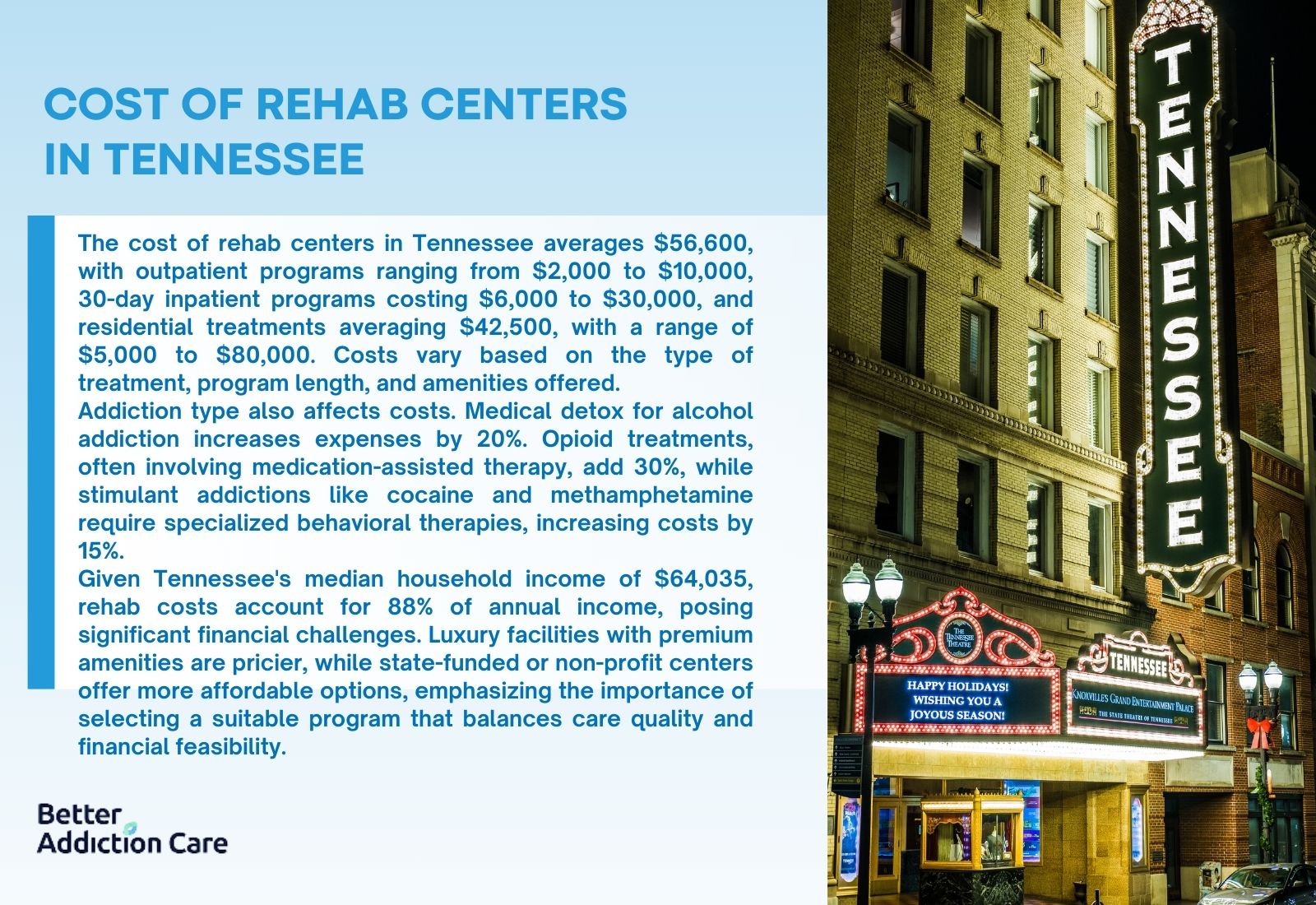
The type of addiction also influences costs. Treatment for alcohol addiction often requires medical detoxification, increasing costs by 20%. Opioid addiction frequently involves medication-assisted treatment, raising costs by 30%, while stimulant addictions like cocaine and methamphetamine addiction necessitate specialized behavioral therapies, increasing costs by 15%.
The median household income in Tennessee is $64,035. The cost of rehab centers constitutes 88% of the median household income, presenting a substantial financial challenge for many families. The type of rehab center impacts costs. Luxury or private facilities with premium amenities are more expensive, whereas state-funded or non-profit centers offer more affordable or sliding scale options. These variations highlight the importance of choosing the right type of facility and program to balance effectiveness with financial considerations.
What is the cost of LGBTQ+ rehab centers in Tennessee?
The cost of LGBTQ+ rehab centers in Tennessee is $56,000. Outpatient programs range from $2,000 to $10,000, while inpatient programs for a 30-day stay cost between $6,000 and $30,000. Residential treatment expenses span from $5,000 to $80,000, averaging $42,500. The cost of LGBTQ+ rehab centers varies significantly depending on the type of treatment, program length, and facility amenities.
The type of addiction also influences costs of LGBTQ+ rehab centers. Treatment for alcohol addiction often requires medical detoxification, increasing costs by 20%. Opioid addiction frequently involves medication-assisted treatment, raising costs by 30%, while stimulant addictions like cocaine and methamphetamine addiction necessitate specialized behavioral therapies, increasing costs by 15%.
The median household income in Tennessee is $64,035. The cost of LGBTQ+ rehab centers constitutes 87% of the median household income, presenting a substantial financial challenge for many families. The type of rehab center impacts costs of LGBTQ+ rehab centers. Luxury or private facilities with premium amenities are more expensive, whereas state-funded or non-profit centers offer more affordable or sliding scale options. These variations highlight the importance of choosing the right type of facility and program to balance effectiveness with financial considerations.
What is the cost of Faith-Based rehab centers in Tennessee?
The cost of Faith-Based rehab centers in Tennessee is $55,900. Outpatient programs range from $2,000 to $10,000, while inpatient programs for a 30-day stay cost between $6,000 and $30,000. Residential treatment expenses span from $5,000 to $80,000, averaging $42,500. The cost of Faith-Based rehab centers varies significantly depending on the type of treatment, program length, and facility amenities.
The type of addiction also influences costs of Faith-Based rehab centers. Treatment for alcohol addiction often requires medical detoxification, increasing costs by 20%. Opioid addiction frequently involves medication-assisted treatment, raising costs by 30%, while stimulant addictions like cocaine and methamphetamine addiction necessitate specialized behavioral therapies, increasing costs by 15%.
The median household income in Tennessee is $64,035. The cost of Faith-Based rehab centers constitutes 87.2% of the median household income, presenting a substantial financial challenge for many families. The type of rehab center impacts costs of Faith-Based rehab centers. Luxury or private facilities with premium amenities are more expensive, whereas state-funded or non-profit centers offer more affordable or sliding scale options. These variations highlight the importance of choosing the right type of facility and program to balance effectiveness with financial considerations.
What is the cost of Men-Only rehab centers in Tennessee?
The cost of Men-Only rehab centers in Tennessee is $55,500. Outpatient programs range from $2,000 to $10,000, while inpatient programs for a 30-day stay cost between $6,000 and $30,000. Residential treatment expenses span from $5,000 to $80,000, averaging $42,500. The cost of Men-Only rehab centers varies significantly depending on the type of treatment, program length, and facility amenities.
The type of addiction also influences costs of Men-Only rehab centers. Treatment for alcohol addiction often requires medical detoxification, increasing costs by 20%. Opioid addiction frequently involves medication-assisted treatment, raising costs by 30%, while stimulant addictions like cocaine and methamphetamine addiction necessitate specialized behavioral therapies, increasing costs by 15%.
The median household income in Tennessee is $64,035. The cost of Men-Only rehab centers constitutes 86.6% of the median household income, presenting a substantial financial challenge for many families. The type of rehab center impacts costs of Men-Only rehab centers. Luxury or private facilities with premium amenities are more expensive, whereas state-funded or non-profit centers offer more affordable or sliding scale options. These variations highlight the importance of choosing the right type of facility and program to balance effectiveness with financial considerations.
What is the cost of Women-Only rehab centers in Tennessee?
The cost of Women-Only rehab centers in Tennessee is $55,000. Outpatient programs range from $2,000 to $10,000, while inpatient programs for a 30-day stay cost between $6,000 and $30,000. Residential treatment expenses span from $5,000 to $80,000, averaging $42,500. The cost of Women-Only rehab centers varies significantly depending on the type of treatment, program length, and facility amenities.
The type of addiction also influences costs of Women-Only rehab centers. Treatment for alcohol addiction often requires medical detoxification, increasing costs by 20%. Opioid addiction frequently involves medication-assisted treatment, raising costs by 30%, while stimulant addictions like cocaine and methamphetamine addiction necessitate specialized behavioral therapies, increasing costs by 15%.
The median household income in Tennessee is $64,035. The cost of Women-Only rehab centers constitutes 85.8% of the median household income, presenting a substantial financial challenge for many families. The type of rehab center impacts costs of Women-Only rehab centers. Luxury or private facilities with premium amenities are more expensive, whereas state-funded or non-profit centers offer more affordable or sliding scale options. These variations highlight the importance of choosing the right type of facility and program to balance effectiveness with financial considerations.
What is the cost of Teen rehab centers in Tennessee?
The cost of Teen rehab centers in Tennessee is $54,000. Outpatient programs range from $2,000 to $10,000, while inpatient programs for a 30-day stay cost between $6,000 and $30,000. Residential treatment expenses span from $5,000 to $80,000, averaging $42,500. The cost of Teen rehab centers varies significantly depending on the type of treatment, program length, and facility amenities.
The type of addiction also influences costs of Teen rehab centers. Treatment for alcohol addiction often requires medical detoxification, increasing costs by 20%. Opioid addiction frequently involves medication-assisted treatment, raising costs by 30%, while stimulant addictions like cocaine and methamphetamine addiction necessitate specialized behavioral therapies, increasing costs by 15%.
The median household income in Tennessee is $64,035. The cost of Teen rehab centers constitutes 84% of the median household income, presenting a substantial financial challenge for many families. The type of rehab center impacts costs of Teen rehab centers. Luxury or private facilities with premium amenities are more expensive, whereas state-funded or non-profit centers offer more affordable or sliding scale options. These variations highlight the importance of choosing the right type of facility and program to balance effectiveness with financial considerations.
What is the cost of Young Adult rehab centers in Tennessee?
The cost of Young Adult rehab centers in Tennessee is $53,500. Outpatient programs range from $2,000 to $10,000, while inpatient programs for a 30-day stay cost between $6,000 and $30,000. Residential treatment expenses span from $5,000 to $80,000, averaging $42,500. The cost of Young Adult rehab centers varies significantly depending on the type of treatment, program length, and facility amenities.
The type of addiction also influences costs of Young Adult rehab centers. Treatment for alcohol addiction often requires medical detoxification, increasing costs by 20%. Opioid addiction frequently involves medication-assisted treatment, raising costs by 30%, while stimulant addictions like cocaine and methamphetamine addiction necessitate specialized behavioral therapies, increasing costs by 15%.
The median household income in Tennessee is $64,035. The cost of Young Adult rehab centers constitutes 83.5% of the median household income, presenting a substantial financial challenge for many families. The type of rehab center impacts costs of Young Adult rehab centers. Luxury or private facilities with premium amenities are more expensive, whereas state-funded or non-profit centers offer more affordable or sliding scale options. These variations highlight the importance of choosing the right type of facility and program to balance effectiveness with financial considerations.
What is the cost of Luxury Rehab centers in Tennessee?
The cost of Luxury rehab centers in Tennessee is $60,000. Outpatient programs range from $2,000 to $10,000, while inpatient programs for a 30-day stay cost between $6,000 and $30,000. Residential treatment expenses span from $5,000 to $80,000, averaging $42,500. The cost of Luxury rehab centers varies significantly depending on the type of treatment, program length, and facility amenities.
The type of addiction also influences costs of Luxury rehab centers. Treatment for alcohol addiction often requires medical detoxification, increasing costs by 20%. Opioid addiction frequently involves medication-assisted treatment, raising costs by 30%, while stimulant addictions like cocaine and methamphetamine addiction necessitate specialized behavioral therapies, increasing costs by 15%.
The median household income in Tennessee is $64,035. The cost of Luxury rehab centers constitutes 93% of the median household income, presenting a substantial financial challenge for many families. The type of rehab center impacts the costs of Luxury rehab centers. Luxury or private facilities with premium amenities are more expensive, whereas state-funded or non-profit centers offer more affordable or sliding scale options. These variations highlight the importance of choosing the right type of facility and program to balance effectiveness with financial considerations.
What is the cost of Dual Diagnosis rehab centers in Tennessee?
The cost of Dual Diagnosis rehab centers in Tennessee is $53,000. Outpatient programs range from $2,000 to $10,000, while inpatient programs for a 30-day stay cost between $6,000 and $30,000. Residential treatment expenses span from $5,000 to $80,000, averaging $42,500. The cost of Dual Diagnosis rehab centers varies significantly depending on the type of treatment, program length, and facility amenities.
The type of addiction also influences costs of Dual Diagnosis rehab centers. Treatment for alcohol addiction often requires medical detoxification, increasing costs by 20%. Opioid addiction frequently involves medication-assisted treatment, raising costs by 30%, while stimulant addictions like cocaine and methamphetamine addiction necessitate specialized behavioral therapies, increasing costs by 15%.
The median household income in Tennessee is $64,035. The cost of Dual Diagnosis rehab centers constitutes 82.7% of the median household income, presenting a substantial financial challenge for many families. The type of rehab center impacts costs of Dual Diagnosis. Luxury or private facilities with premium amenities are more expensive, whereas state-funded or non-profit centers offer more affordable or sliding scale options. These variations highlight the importance of choosing the right type of facility and program to balance effectiveness with financial considerations.
Is drug abuse and addiction a problem in Tennessee?
Yes, drug abuse and addiction is a problem in Tennessee, driven by several factors. Firstly, the state of Tennessee faces a widespread opioid crisis, with over 1,300 opioid-related overdose deaths reported annually, representing a sharp increase from fewer than 500 deaths a decade ago. Secondly, the misuse of methamphetamine remains prevalent, with methamphetamine-related treatment admissions rising by nearly 300% over the past 15 years, indicating a growing dependence on stimulants. Thirdly, Tennessee ranks among the top states for prescription drug misuse, with 5.4% of residents misusing pain relievers annually. These issues are compounded by the availability of illicit substances and insufficient access to treatment in rural areas. The overall drug overdose death rate in Tennessee more than doubled between 2014 and 2024, highlighting the escalating severity of substance abuse in the state of Tennessee.
Is alcoholism a problem in Tennessee?
Yes, alcoholism is a problem in Tennessee, affecting individuals and communities across the state of Tennessee. 10.14% of Tennesseans aged 12 and older are reported to have alcohol use disorder, a rate that has remained consistently high over the past decade. One reason for this is the widespread cultural acceptance of alcohol, contributing to its pervasive use and misuse. Additionally, binge drinking rates have risen in urban areas, with 15% of adults reporting heavy or binge drinking, up from 12% a decade ago. Another factor is the limited access to affordable alcohol treatment programs, particularly in rural regions, which prevents many from seeking help. The number of alcohol-related traffic fatalities in Tennessee has also increased by over 25% in the last 15 years, reflecting the broader public safety risks associated with alcoholism. These trends highlight the persistent and growing challenge of alcohol misuse in the state of Tennessee.
Is Mental Health a problem in Tennessee?
Yes, mental health is a problem in Tennessee, with increasing prevalence and challenges in access to care. 20% of adults in Tennessee experience some form of mental illness each year, a rate that has steadily risen over the past decade. One reason for this is the limited availability of mental health professionals, with many rural areas facing severe shortages, leaving nearly 50% of those with mental health needs untreated. Another factor is the high correlation between mental health issues and substance use disorders, which affect a substantial portion of the population, further complicating treatment and recovery efforts. Suicide rates in Tennessee have also increased by nearly 35% over the last two decades, underscoring the urgent need for comprehensive mental health support and intervention strategies. These statistics reflect a growing crisis that demands systemic improvements in care access and prevention efforts.
Can you travel to Tennessee for rehab?
Yes, you can travel to Tennessee for rehab, and the state of Tennessee offers several unique advantages for those seeking treatment. Firstly, Tennessee is known for its diverse range of treatment facilities, including luxury centers, holistic programs, and specialized care for specific addictions, ensuring a personalized recovery experience. Secondly, the state of Tennessee’s serene natural environment, with its rolling hills, lush forests, and tranquil rivers, provides an ideal setting for healing and reflection, enhancing the therapeutic process. Thirdly, Tennessee has a lower cost of living compared to many other states, which often translates into more affordable treatment options without compromising the quality of care. These factors make Tennessee a compelling destination for individuals seeking effective and supportive rehab.
Can addiction be treated in Tennessee?
Yes, addiction can be treated in Tennessee due to the state of Tennessee’s comprehensive resources and specialized care options. Tennessee offers a wide variety of treatment facilities, ranging from outpatient programs to residential care, ensuring that individuals find programs tailored to their specific needs. Tennessee is also home to skilled professionals who provide evidence-based therapies such as cognitive-behavioral therapy and medication-assisted treatment, addressing both the physical and psychological aspects of addiction. Tennessee’s commitment to expanding access to care, including state-funded programs and initiatives aimed at underserved populations, makes treatment more accessible to those in need. These factors contribute to Tennessee's ability to support individuals on their journey to recovery.
What is the state of Tennessee?
The state of Tennessee is in the southeastern United States, known for its rich cultural heritage and diverse geography. It has a population of 7 million people, with 3.4 million males and 3.6 million females. Located centrally in the region, Tennessee is bordered by eight states: Kentucky and Virginia to the north, North Carolina to the east, Georgia, Alabama, and Mississippi to the south, and Arkansas and Missouri to the west. Economically, Tennessee has a median household income of $64,035, placing it slightly below the national average, with some areas experiencing higher levels of poverty, particularly in rural regions. Despite economic disparities, Tennessee benefits from a growing economy driven by industries like healthcare, automotive manufacturing, and tourism.
What is the population of Tennessee?
The population of Tennessee is 7 million people, with 3.4 million males (48.6%) and 3.6 million females (51.4%). The population is distributed across various age groups, with 22% under the age of 18, 61% between 18 and 64, and 17% aged 65 and older. This means 1.54 million individuals are minors, 4.27 million are working-age adults, and 1.19 million are seniors. Compared to the national averages, Tennessee has a slightly higher proportion of seniors and a slightly lower percentage of individuals under 18. This demographic composition highlights Tennessee's aging population and its potential implications for healthcare and economic planning.
What is the income of people from Tennessee?
The income of people from Tennessee is $36,040, per capita income. The median household income stands at $64,035. Householders under 25 years have a median income of $39,907, those aged 25 to 44 years earn $71,043, individuals between 45 to 64 years have a median income of $75,932, and those 65 years and over earn $48,198. Gender disparities are evident, with males aged 15 and over having a median income of $42,129, while females in the same age group earn $28,900. These figures highlight the variations in income across different demographics within the state of Tennessee.