Each strength has a distinct look—0.5 mg (orange, “K/5”), 1 mg (blue, “K/7”), and 2 mg (white, “K/9”)—making imprint verification the most important step for safe use[1].
Recognizing these details matters not just for patients but also for families who often play a role in ensuring their loved one takes the right dose and avoids dangerous substitutes.
Klonopin Tablet Guide (Colors, Shapes, and Imprints by Dosage)
Accurately identifying Klonopin (clonazepam) tablets is essential to prevent medication errors, ensure proper dosing, and avoid potentially dangerous counterfeit products.
The U.S. National Library of Medicine (DailyMed) provides detailed, FDA-approved descriptions of each tablet strength, including color, shape, and imprint[1].
Your Pill May Look Different from Last Time
Even when you continue taking the same prescription, a Klonopin tablet might look slightly different between refills. Understanding these changes can prevent unnecessary worry, reduce the risk of accidental misuse, and ensure safe, consistent dosing.
Sometimes, the same pharmacy may dispense a different manufacturer’s batch due to inventory or supply changes.
Even brand-name Klonopin can look slightly different if sourced from a different production lot.
Families and patients should check the pill label, color, and imprint each time they receive a refill.
FDA-Backed Visual Descriptions
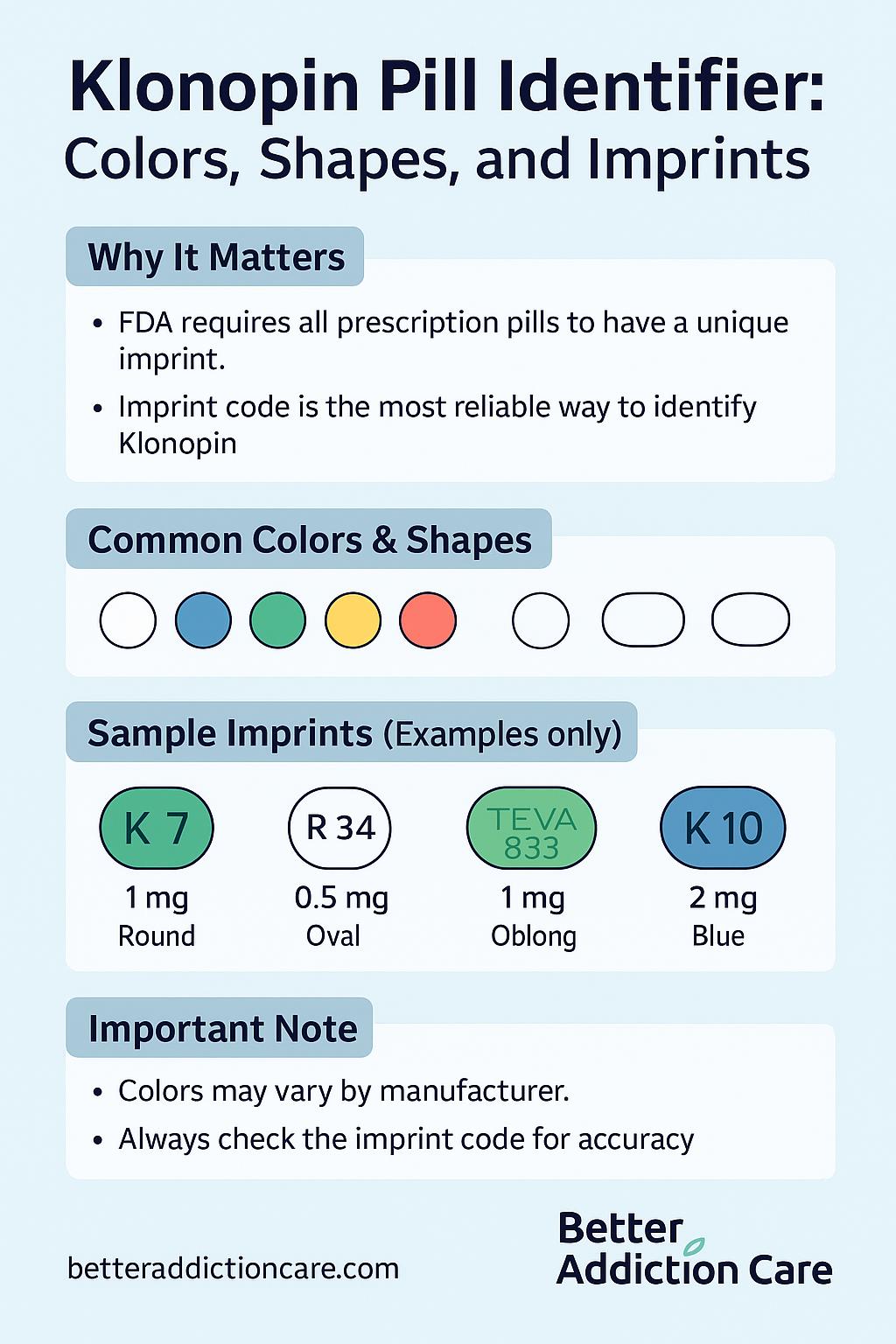
|
Strength |
Color |
Shape |
Imprint / Score |
Additional Notes |
|
0.5 mg |
Orange |
Round |
“K” over “5”, scored |
Lowest dose; often used for gradual titration. Verify color and imprint for each dose. |
|
1 mg |
Blue |
Round |
“K” over “7”, scored |
Common starting or maintenance dose; distinguishable from 0.5 mg and 2 mg tablets. |
|
2 mg |
White |
Round |
“K” over “9”, scored |
Highest typical dose; confirm appearance carefully, particularly when switching pharmacies or brands. |
- Scored tablets: All strengths include a score line to allow splitting when prescribed. Careful splitting is important to maintain accurate dosing.
-
Imprint verification: The imprint is the most reliable indicator of authenticity, particularly for generic versions that may differ slightly in color or size[3].
-
Storage: Always store tablets in the original pharmacy-labeled container to reduce the risk of confusion or accidental ingestion.
Brand vs. Generic Differences
While the brand-name Klonopin tablets maintain a consistent color, size, and shape, generic versions may vary depending on the manufacturer. Differences can include:
-
Slightly different shades of color.
-
Minor variations in tablet diameter or thickness.
-
Font or positioning of the imprint.
Despite these variations, the imprint remains the key factor in confirming a pill’s identity. When a tablet looks unusual, it is advisable to check the prescription label and consult a pharmacist before use[3].
A simple reference chart helps quickly identify Klonopin tablets and supports safe use:
|
Strength |
Color (typical) |
Imprint |
Notes |
|
0.5 mg |
Orange |
K/5 |
Verify before each dose; often used in titration. |
|
1 mg |
Blue |
K/7 |
Check against the label each refill; distinguishable from other strengths. |
|
2 mg |
White |
K/9 |
Highest typical dose; confirm authenticity if effects differ. |
How to Avoid Confusion?
To minimize the risk of mistakes, it is helpful to:
-
Compare each refill visually with previous pills to spot any significant changes.
-
Use FDA-approved pill identification tools or online databases if unsure about the tablet.
-
Contact the pharmacist if the tablet looks significantly different or if the imprint is unclear.
These steps are especially important because counterfeit or misbranded benzodiazepines are increasingly common in the United States, with some pills containing dangerous substances such as fentanyl[2].
Recognizing official pill characteristics and understanding why variations occur helps maintain safe and effective use of your medication.
Simple Steps to Verify a Klonopin Pill
Checking a Klonopin tablet doesn’t have to be complicated. Following a few simple steps ensures safety and prevents accidental misuse:
-
Check the imprint first – Each strength has a unique code: 0.5 mg (K/5, orange), 1 mg (K/7, blue), and 2 mg (K/9, white). The imprint is the most reliable identifier.
-
Compare color and shape – Confirm the tablet matches FDA-approved descriptions for that dose.
-
Keep medication in original packaging – Pharmacy containers list strength, manufacturer, and lot number, which helps confirm authenticity.
-
Use FDA pill identifiers – Online tools from the FDA and National Library of Medicine allow you to cross-check color, shape, and imprint quickly.
-
Ask a pharmacist if unsure – If a tablet looks different or unclear, get professional confirmation before taking it.
These quick steps provide peace of mind and protect against counterfeit or misidentified pills.
Counterfeit Klonopin: Red Flags to Watch For
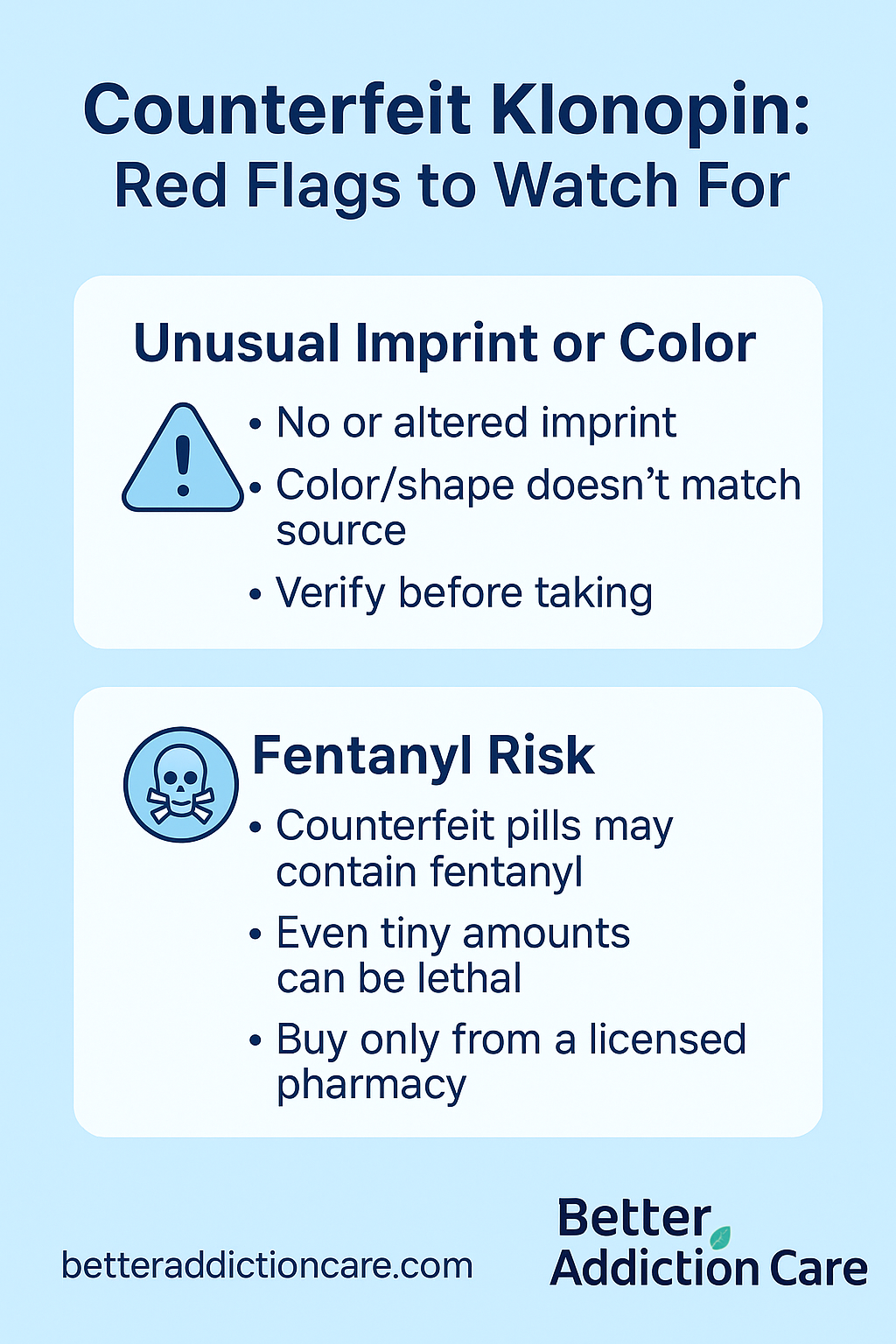
Counterfeit or misbranded Klonopin pills have become an increasing concern in the United States. Some counterfeit tablets may contain dangerous substances, such as fentanyl, which can be lethal even in tiny amounts[2].
-
Missing or Unusual Imprints and Off-Color Pills
The imprint on a Klonopin tablet—letters, numbers, or scoring—is the most reliable indicator of authenticity. Pills with missing, altered, or unfamiliar imprints should never be taken.
Similarly, tablets that appear significantly different in color or shape from the FDA-approved description are red flags.
Minor variations can occur between generic manufacturers, but drastic differences require verification before consumption[3].
-
Rising Danger of Fentanyl-Laced Counterfeit Benzodiazepines
Recent data from the National Institute on Drug Abuse highlight a sharp increase in counterfeit pills containing fentanyl.
In 2023 alone, over 115 million illicit pills were seized by law enforcement, some mimicking prescription benzodiazepines like Klonopin[2]. Even one counterfeit pill can pose a severe risk, reinforcing the need for vigilance and careful verification.
What to Do if You Suspect a Counterfeit?
If a pill appears unusual or if a counterfeit is suspected:
-
Do not take the tablet. Setting it aside prevents accidental ingestion.
-
Contact a pharmacist or healthcare provider immediately. Professional verification ensures you are taking legitimate medication.
-
Avoid relying solely on appearance. Counterfeit pills may mimic legitimate colors and shapes but contain dangerous substances.
Being aware of these warning signs and taking verification seriously helps prevent accidental overdose and ensures medication remains both safe and effective.
Getting Professional Verification for Klonopin?
Certain situations require urgent professional attention to ensure safety when taking Klonopin. Prompt action can prevent serious complications, including accidental overdose or ingestion of counterfeit pills.
-
If a tablet looks different in color, shape, or imprint than expected, or if there is any doubt about its authenticity, stop taking it immediately.
-
Contact a pharmacist or prescribing doctor to verify the medication before consuming it. Relying solely on visual inspection can be risky, as counterfeit pills may closely mimic legitimate tablets[3].
Maintain a list of reliable contacts who can guide in urgent situations:
-
Pharmacist – for verification of questionable pills
-
Prescribing doctor – for dosage or medication concerns
-
Poison control center – for immediate advice in case of suspected overdose
Having these contacts readily available ensures that quick and informed decisions can be made when safety is at risk.
Timely professional consultation protects against serious harm from counterfeit or misused medications. It ensures that proper verification and medical guidance are applied, maintaining both the safety and effectiveness of treatment.
Conclusion
Accurately identifying Klonopin tablets is essential for safe and effective medication use. Differences in color, shape, or imprint can occur due to manufacturer or production variations, but understanding these changes and verifying each tablet ensures proper dosing and reduces the risk of accidental misuse.
Counterfeit and misbranded pills, particularly those containing fentanyl, pose a serious health threat, making vigilance critical. Using FDA-approved pill identifiers, keeping medication in original packaging, and consulting pharmacists when in doubt are simple but powerful steps to protect yourself and your loved ones.
Families can play a supportive role by helping track doses, checking pills, and maintaining open communication, creating a safe environment for treatment without judgment or stress. Prompt action when pills appear suspicious or when overdose symptoms occur can prevent serious harm and preserve the effectiveness of prescribed treatment.
With careful attention, verification, and professional guidance, both individuals and families can manage Klonopin safely, maintain adherence, and reduce the risk of errors or counterfeit exposure. These steps ensure that prescribed medication achieves its intended therapeutic benefit while keeping everyone protected.