Alcoholism, Drug Abuse, Mental Health, and Treatment in North Carolina
What are the main addictions people in North Carolina suffer from?
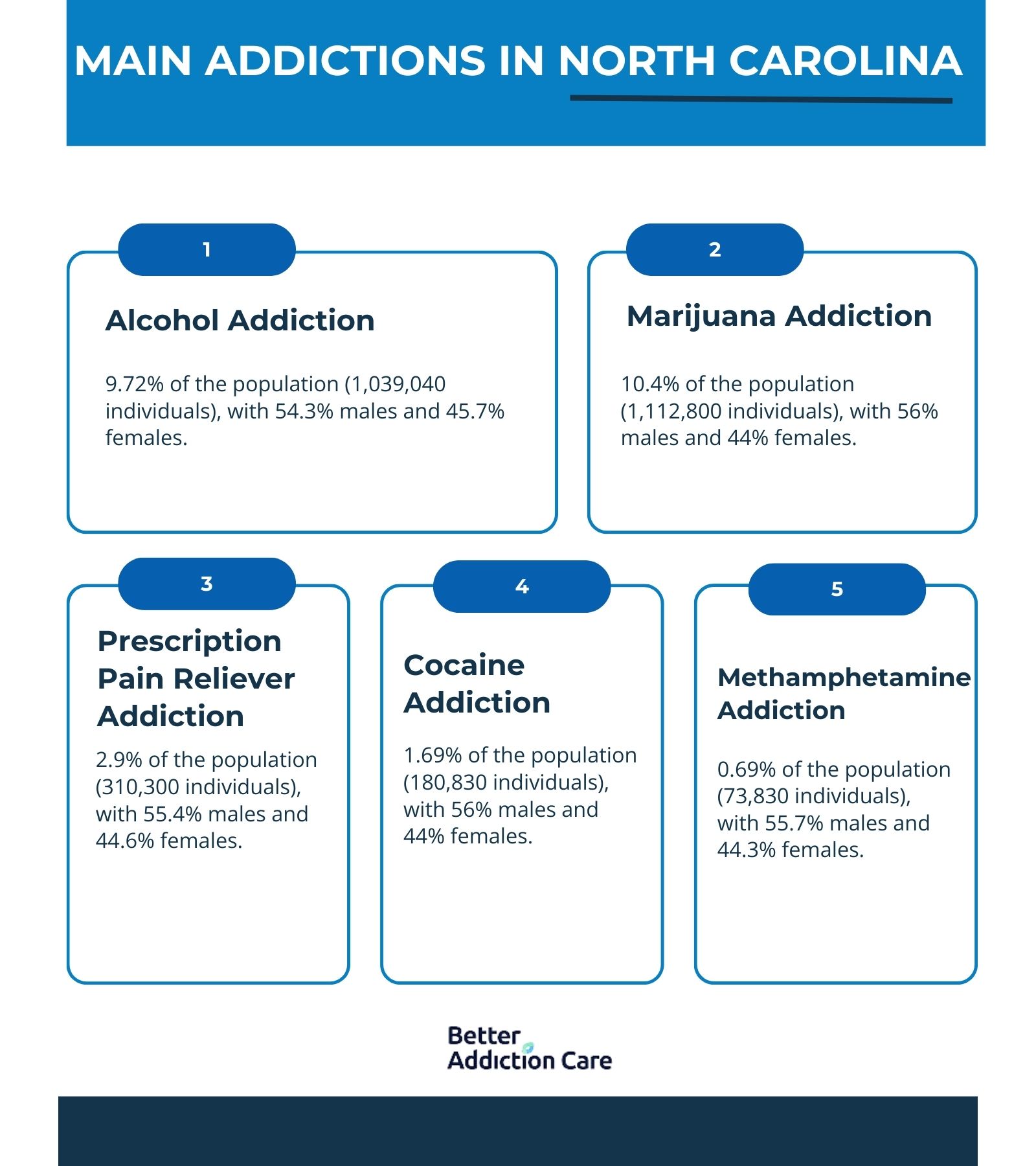
The main addictions people in North Carolina suffer from include:
- Alcohol Addiction: 1,039,040 individuals (9.72% of the population) have been affected with alcohol addiction. 563,682 males (54.3%) are higher in number as compared to 475,358 females (45.7%) facing alcohol addiction.
- Marijuana Addiction: 1,112,800 individuals (10.4% of the population) have used marijuana in the past year. 622,854 males (56%) as compared to 489,946 (44%) females affected from marijuana addiction.
- Prescription Pain Reliever Addiction: 310,300 individuals (2.9% of the population) misuse Prescription Pain Relievers. 171,873 (55.4%) males are affected from Pain reliever addiction, while females are 138,427 (44.6%).
- Cocaine Addiction: 180,830 individuals (1.69% of the population) used cocaine in the past year. 101,248 (56%) males as compared to 79,582 (44%) females facing Cocaine Addiction.
- Methamphetamine Addiction: 73,830 individuals (0.69% of the population) misuse methamphetamine. 41,171 (55.7%) males as compared to 32,659 (44.3%) females facing methamphetamine addiction.
What is the cost of rehab centers in North Carolina?
The cost of rehab centers in North Carolina is $56,759. Inpatient rehab programs cost $50,000 for a standard 30-day treatment, while outpatient programs are more affordable, averaging around $1,764 per admission. In North Carolina, the cost of rehab for substance addictions varies significantly depending on the type of treatment program and the addiction being addressed.
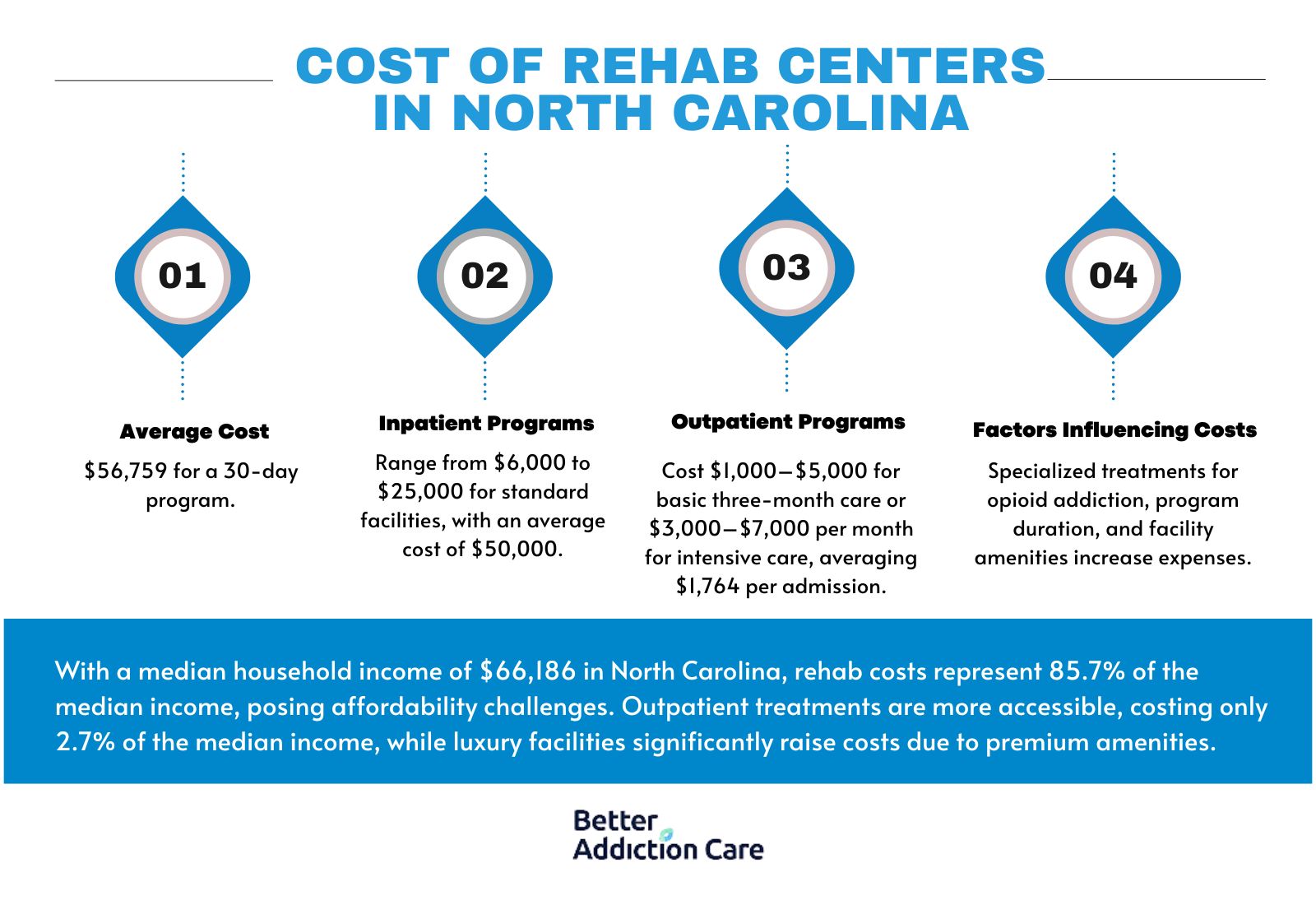
Factors influencing these costs of rehab centers in North Carolina include the type of addiction, with treatments for substances like opioids requiring specialized medications and therapies, and the program’s intensity and duration, as more intensive or longer programs increase expenses. Inpatient treatments range from $6,000 to $25,000 depending on the facility’s amenities, while outpatient programs cost $1,000 to $5,000 for basic three-month programs or $3,000 to $7,000 per month for intensive outpatient care.
North Carolina's median household income is $66,186. The cost of rehab centers constitutes 85.7% of the median income, making it a significant financial burden for many families. The affordability of these treatments varies greatly, outpatient treatment at $1,764 per admission is accessible, representing only 2.7% of the median household income. Costs of rehab centers increase depending on the type of rehab center chosen, with luxury or private facilities charging substantially more due to enhanced amenities and personalized care. These factors underscore the importance of carefully evaluating treatment options to balance cost with the necessary level of care.
What is the cost of LGBTQ+ rehab centers in North Carolina?
The cost of LGBTQ+ rehab centers in North Carolina is $56,000. Inpatient rehab programs cost $50,000 for a standard 30-day treatment, while outpatient programs are more affordable, averaging $1,764 per admission. In North Carolina, the cost of LGBTQ+ rehab for substance addictions varies significantly depending on the type of treatment program and the addiction being addressed.
Factors influencing these costs of LGBTQ+ rehab centers in North Carolina include the type of addiction, with treatments for substances like opioids requiring specialized medications and therapies, and the program’s intensity and duration, as more intensive or longer programs increase expenses. Inpatient treatments range from $6,000 to $25,000 depending on the facility’s amenities, while outpatient programs cost $1,000 to $5,000 for basic three-month programs or $3,000 to $7,000 per month for intensive outpatient care.
North Carolina's median household income is $66,186. The cost of LGBTQ+ rehab centers constitutes 84.6% of the median income, making it a significant financial burden for many families. The affordability of these treatments varies greatly, outpatient treatment at $1,764 per admission is accessible, representing only 2.7% of the median household income. Costs of LGBTQ+ rehab centers increase depending on the type of rehab center chosen, with luxury or private facilities charging substantially more due to enhanced amenities and personalized care. These factors underscore the importance of carefully evaluating treatment options to balance cost with the necessary level of care.
What is the cost of Faith-Based rehab centers in North Carolina?
The cost of Faith-Based rehab centers in North Carolina is $55,490. Inpatient rehab programs cost $50,000 for a standard 30-day treatment, while outpatient programs are more affordable, averaging $1,764 per admission. In North Carolina, the cost of Faith-Based rehab for substance addictions varies significantly depending on the type of treatment program and the addiction being addressed.
Factors influencing these costs of Faith-Based rehab centers in North Carolina include the type of addiction, with treatments for substances like opioids requiring specialized medications and therapies, and the program’s intensity and duration, as more intensive or longer programs increase expenses. Inpatient treatments range from $6,000 to $25,000 depending on the facility’s amenities, while outpatient programs cost $1,000 to $5,000 for basic three-month programs or $3,000 to $7,000 per month for intensive outpatient care.
North Carolina's median household income is $66,186. The cost of Faith-Based rehab centers constitutes 83.8% of the median income, making it a significant financial burden for many families. The affordability of these treatments varies greatly, outpatient treatment at $1,764 per admission is accessible, representing only 2.7% of the median household income. Costs of Faith-Based rehab centers increase depending on the type of rehab center chosen, with luxury or private facilities charging substantially more due to enhanced amenities and personalized care. These factors underscore the importance of carefully evaluating treatment options to balance cost with the necessary level of care.