Alcoholism, Drug Abuse, Mental Health, and Treatment in South Dakota
What are the main addictions people in South Dakota suffer from?
The main addictions people in South Dakota suffer from include;
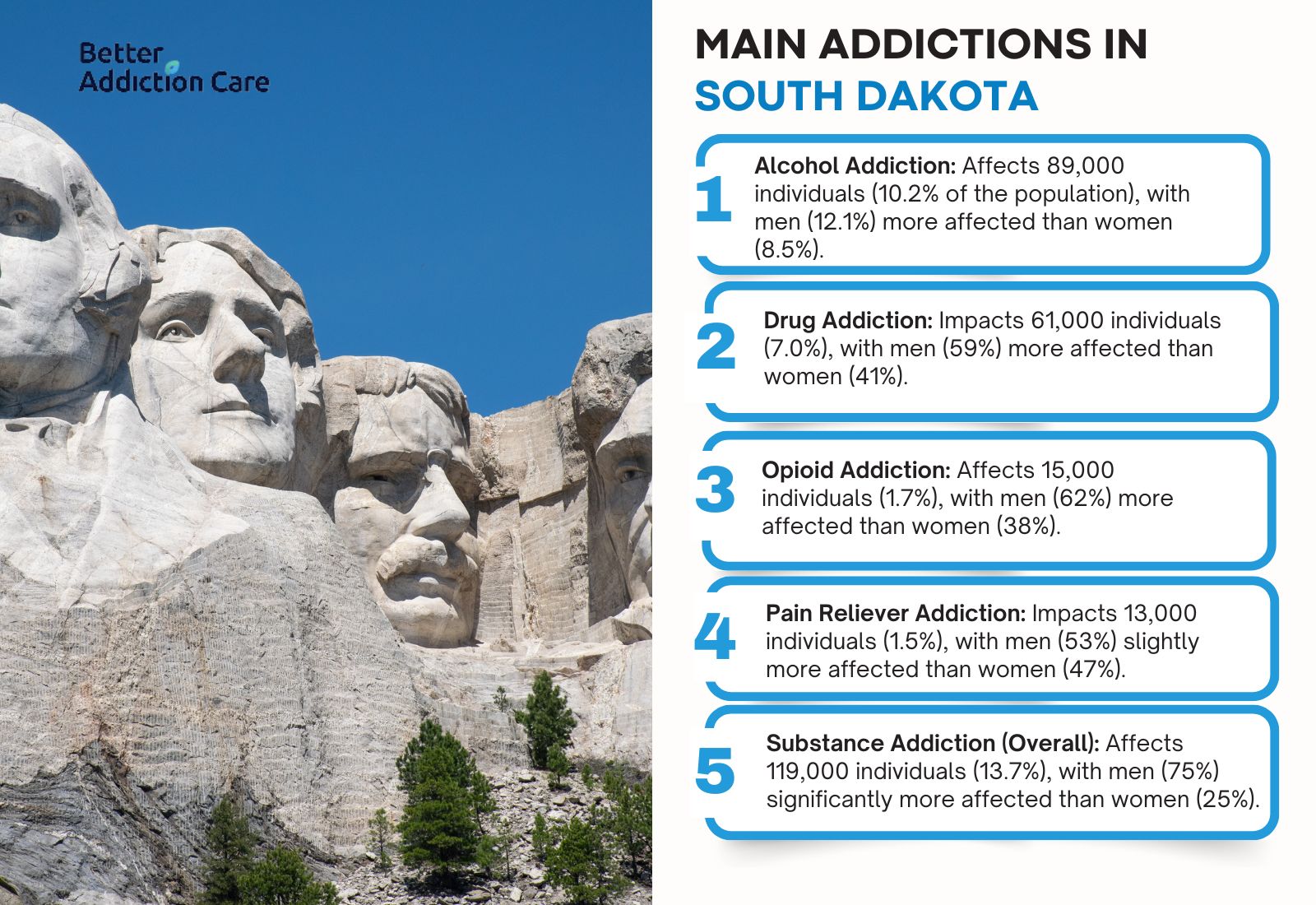
- Alcohol Addiction: 89,000 individuals aged 12 or older have Alcohol addiction, which is 10.2% of South Dakota's population. 10,769 (12.1%) of men are higher in number as compared to 7,565 (8.5%) of women.
- Drug Addiction: 61,000 individuals aged 12 or older have Drug addiction, which is 7.0% of the population. 35,990 (59%) of men are higher in number as compared to 25,010 (41%) of women.
- Opioid Addiction: 15,000 individuals aged 12 or older have Opioid addiction, which is 1.7% of the population. 9,300 (62%) of men are higher in number as compared to 5,700 (38%) of women.
- Pain Reliever Addiction: 13,000 individuals aged 12 or older have Pain Reliever addiction, 1.5% of the population. 6,890 (53%) of men are higher in number as compared to 6,110 (47%) of women.
- Substance Addiction: 119,000 individuals aged 12 or older have Substance addiction, which is 13.7% of the population. 89,250 (75%) of men are higher in number as compared to 29,750 (25%) of women.
What is the cost of rehab centers in South Dakota?
The cost of rehab centers in South Dakota is $56,108. Inpatient rehab, which includes intensive care and a structured environment, averages $49,512—$6,596 (11.8%) lower than the overall state average. Outpatient treatment, often preferred for its flexibility, is markedly more affordable at $8,227, which is $47,881 (85.4%) less than the average. The cost of rehab centers vary significantly depending on the type of treatment program.
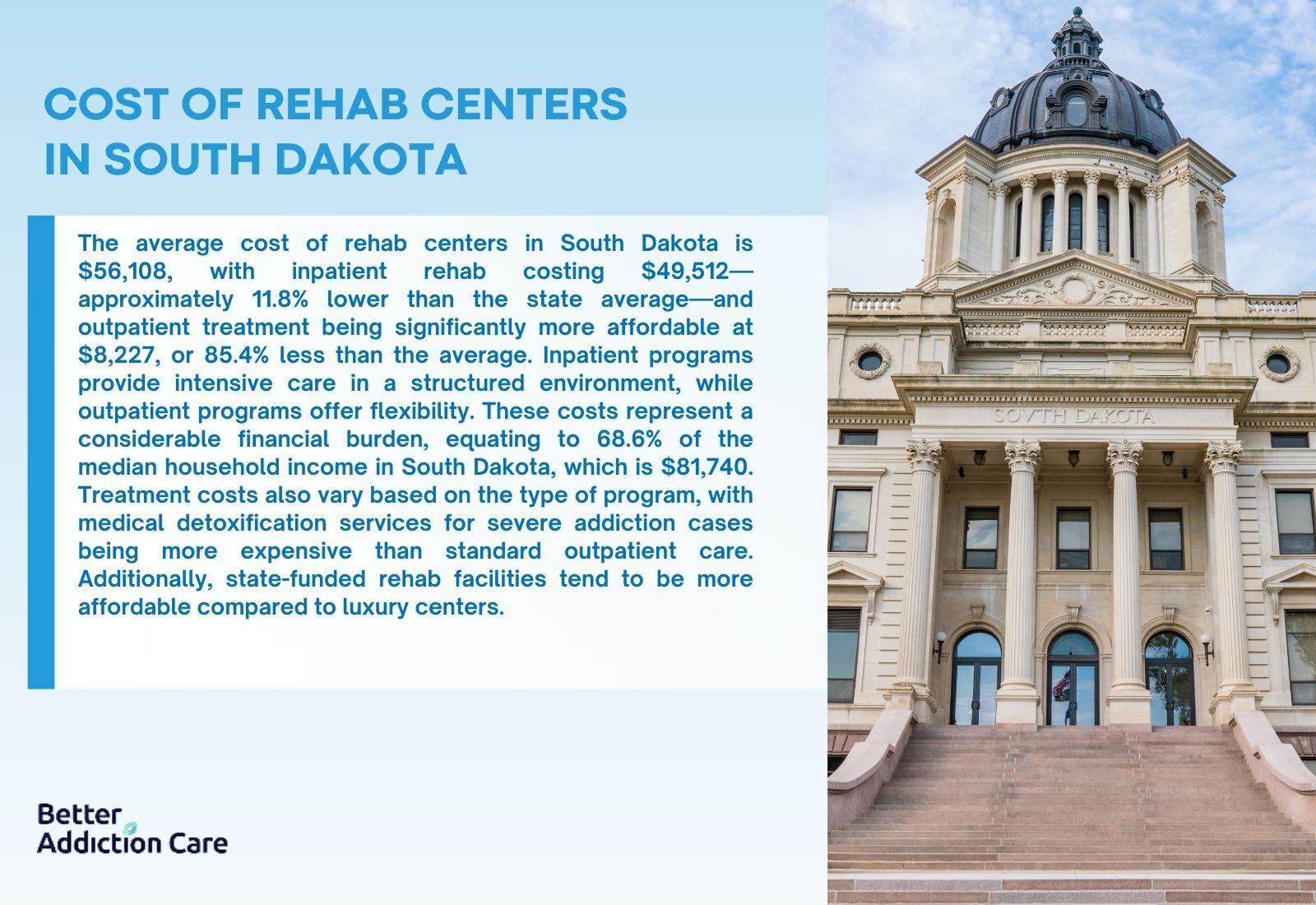
The median household income in South Dakota is $81,740. The cost of rehab centers in South Dakota equates to 68.6% of annual household income, presenting a considerable expense for many families. Costs of rehab centers also fluctuate based on the specific addiction being treated; for instance, medical detoxification services, often required for severe addiction cases, are significantly more expensive than standard outpatient programs. The type of rehab center—such as state-funded facilities versus luxury centers further influence the overall cost of treatment.
What is the cost of LGBTQ+ rehab centers in South Dakota?
The cost of LGBTQ+ rehab centers in South Dakota is $56,000. Inpatient rehab, which includes intensive care and a structured environment, averages $49,512—$6,596 (11.8%) lower than the overall state average. Outpatient treatment, often preferred for its flexibility, is markedly more affordable at $8,227, which is $47,881 (85.4%) less than the average. The cost of LGBTQ+ rehab centers vary significantly depending on the type of treatment program.
The median household income in South Dakota is $81,740. The cost of LGBTQ+ rehab centers in South Dakota equates to 68.5% of annual household income, presenting a considerable expense for many families. Costs of LGBTQ+ rehab centers also fluctuate based on the specific addiction being treated; for instance, medical detoxification services, often required for severe addiction cases, are significantly more expensive than standard outpatient programs. The type of LGBTQ+ rehab center—such as state-funded facilities versus luxury centers further influence the overall cost of treatment.
What is the cost of Faith-Based rehab centers in South Dakota?
The cost of Faith-Based rehab centers in South Dakota is $55,000. Inpatient rehab, which includes intensive care and a structured environment, averages $49,512—$6,596 (11.8%) lower than the overall state average. Outpatient treatment, often preferred for its flexibility, is markedly more affordable at $8,227, which is $47,881 (85.4%) less than the average. The cost of Faith-Based rehab centers vary significantly depending on the type of treatment program.
The median household income in South Dakota is $81,740. The cost of Faith-Based rehab centers in South Dakota equates to 67% of annual household income, presenting a considerable expense for many families. Costs of Faith-Based rehab centers also fluctuate based on the specific addiction being treated; for instance, medical detoxification services, often required for severe addiction cases, are significantly more expensive than standard outpatient programs. The type of Faith-Based rehab center—such as state-funded facilities versus luxury centers further influence the overall cost of treatment.
What is the cost of Men-Only rehab centers in South Dakota?
The cost of Men-Only rehab centers in South Dakota is $55,500. Inpatient rehab, which includes intensive care and a structured environment, averages $49,512—$6,596 (11.8%) lower than the overall state average. Outpatient treatment, often preferred for its flexibility, is markedly more affordable at $8,227, which is $47,881 (85.4%) less than the average. The cost of Men-Only rehab centers vary significantly depending on the type of treatment program.
The median household income in South Dakota is $81,740. The cost of Men-Only rehab centers in South Dakota equates to 67.8% of annual household income, presenting a considerable expense for many families. Costs of Men-Only rehab centers also fluctuate based on the specific addiction being treated; for instance, medical detoxification services, often required for severe addiction cases, are significantly more expensive than standard outpatient programs. The type of Men-Only rehab center—such as state-funded facilities versus luxury centers further influence the overall cost of treatment.
What is the cost of Women-Only rehab centers in South Dakota?
The cost of Women-Only rehab centers in South Dakota is $54,500. Inpatient rehab, which includes intensive care and a structured environment, averages $49,512—$6,596 (11.8%) lower than the overall state average. Outpatient treatment, often preferred for its flexibility, is markedly more affordable at $8,227, which is $47,881 (85.4%) less than the average. The cost of Women-Only rehab centers vary significantly depending on the type of treatment program.
The median household income in South Dakota is $81,740. The cost of Women-Only rehab centers in South Dakota equates to 66.6% of annual household income, presenting a considerable expense for many families. Costs of Women-Only rehab centers also fluctuate based on the specific addiction being treated; for instance, medical detoxification services, often required for severe addiction cases, are significantly more expensive than standard outpatient programs. The type of Women-Only rehab center—such as state-funded facilities versus luxury centers further influence the overall cost of treatment.
What is the cost of Teen rehab centers in South Dakota?
The cost of Teen rehab centers in South Dakota is $54,000. Inpatient rehab, which includes intensive care and a structured environment, averages $49,512—$6,596 (11.8%) lower than the overall state average. Outpatient treatment, often preferred for its flexibility, is markedly more affordable at $8,227, which is $47,881 (85.4%) less than the average. The cost of Teen rehab centers vary significantly depending on the type of treatment program.
The median household income in South Dakota is $81,740. The cost of Teen rehab centers in South Dakota equates to 66% of annual household income, presenting a considerable expense for many families. Costs of Teen rehab centers also fluctuate based on the specific addiction being treated; for instance, medical detoxification services, often required for severe addiction cases, are significantly more expensive than standard outpatient programs. The type of Teen rehab center—such as state-funded facilities versus luxury centers further influence the overall cost of treatment.
What is the cost of Young Adult rehab centers in South Dakota?
The cost of Young Adult rehab centers in South Dakota is $53,500. Inpatient rehab, which includes intensive care and a structured environment, averages $49,512—$6,596 (11.8%) lower than the overall state average. Outpatient treatment, often preferred for its flexibility, is markedly more affordable at $8,227, which is $47,881 (85.4%) less than the average. The cost of Young Adult rehab centers vary significantly depending on the type of treatment program.
The median household income in South Dakota is $81,740. The cost of Young Adult rehab centers in South Dakota equates to 65.4% of annual household income, presenting a considerable expense for many families. Costs of Young Adult rehab centers also fluctuate based on the specific addiction being treated; for instance, medical detoxification services, often required for severe addiction cases, are significantly more expensive than standard outpatient programs. The type of Young Adult rehab center—such as state-funded facilities versus luxury centers further influence the overall cost of treatment.
What is the cost of Luxury Rehab centers in South Dakota?
The cost of Luxury rehab centers in South Dakota is $58,000. Inpatient rehab, which includes intensive care and a structured environment, averages $49,512—$6,596 (11.8%) lower than the overall state average. Outpatient treatment, often preferred for its flexibility, is markedly more affordable at $8,227, which is $47,881 (85.4%) less than the average. The cost of Luxury rehab centers vary significantly depending on the type of treatment program.
The median household income in South Dakota is $81,740. The cost of Luxury rehab centers in South Dakota equates to 70.9% of annual household income, presenting a considerable expense for many families. Costs of Luxury rehab centers also fluctuate based on the specific addiction being treated; for instance, medical detoxification services, often required for severe addiction cases, are significantly more expensive than standard outpatient programs. The type of Luxury rehab center—such as state-funded facilities versus luxury centers further influence the overall cost of treatment.
What is the cost of Dual Diagnosis rehab centers in South Dakota?
The cost of Dual Diagnosis rehab centers in South Dakota is $53,000. Inpatient rehab, which includes intensive care and a structured environment, averages $49,512—$6,596 (11.8%) lower than the overall state average. Outpatient treatment, often preferred for its flexibility, is markedly more affordable at $8,227, which is $47,881 (85.4%) less than the average. The cost of Dual Diagnosis rehab centers vary significantly depending on the type of treatment program.
The median household income in South Dakota is $81,740. The cost of Dual Diagnosis rehab centers in South Dakota equates to 64.8% of annual household income, presenting a considerable expense for many families. Costs of Dual Diagnosis rehab centers also fluctuate based on the specific addiction being treated; for instance, medical detoxification services, often required for severe addiction cases, are significantly more expensive than standard outpatient programs. The type of Dual Diagnosis rehab center—such as state-funded facilities versus luxury centers further influence the overall cost of treatment.
Is drug abuse and addiction a problem in South Dakota?
Yes, drug abuse and addiction is a problem in South Dakota. One reason is the increasing prevalence of methamphetamine use, with methamphetamine-related arrests rising steadily over the years, contributing to 45% of drug-related offenses in the state of South Dakota. Another reason is the growing opioid crisis; opioid-related overdoses have become a public health concern, with opioid misuse accounting for 13,000 individuals seeking treatment annually. Additionally, alcohol abuse remains a persistent issue, with nearly 24.4% of adults reporting binge or heavy drinking, a rate higher than the national average. Over the years, data shows a marked increase in substance abuse-related incidents; for example, methamphetamine arrests doubled between 2017 and 2024, highlighting the state of South Dakota's struggle to control this epidemic. Despite efforts to combat these issues through prevention programs and stricter law enforcement, the trends underline the urgent need for expanded treatment and community support initiatives.
Is alcoholism a problem in South Dakota?
Yes, alcoholism is a problem in South Dakota. One reason is the high rate of excessive drinking, with 24.4% of adults engaging in binge or heavy drinking, which is above the national average. Another reason is the impact of alcohol on public health and safety, as alcohol-related deaths and DUI arrests have consistently remained a concern, contributing to over 30% of traffic fatalities annually in the state of South Dakota. Additionally, the economic burden of alcoholism is substantial, with healthcare costs and lost productivity associated with alcohol misuse exceeding millions of dollars each year. Over time, the rate of excessive drinking has shown a gradual increase, particularly in younger demographics, highlighting the growing challenge of addressing alcohol abuse. Efforts to combat alcoholism, such as community programs and stricter DUI laws, have been implemented, yet the persistent statistics emphasize the need for continued and enhanced interventions.
Is Mental Health a problem in South Dakota?
Yes, mental health is a problem in South Dakota. One reason is the limited access to mental health care, with over 60% of adults with mental illness not receiving treatment due to a shortage of mental health professionals in the state of South Dakota. Another reason is the high prevalence of mental health conditions; 19.2% of adults experience mental illness annually, which aligns with national averages but represents a substantial portion of the population. Additionally, suicide rates in South Dakota are among the highest in the nation, with 19.8 deaths per 100,000 people, well above the national average of 13.9. Over the years, the state of South Dakota has seen a steady increase in mental health challenges, particularly among young adults and rural communities, as reported by state health surveys. Despite efforts to expand mental health services and promote awareness, these trends underline the critical need for improved access to care and prevention programs statewide.
Can you travel to South Dakota for rehab?
Yes, you can travel to South Dakota for rehab, and there are several compelling reasons to consider South Dakota for treatment. Firstly, South Dakota offers a serene and rural environment, which is ideal for individuals seeking peace and focus during their recovery journey. The tranquil setting, away from the hustle of urban life, provides a calming backdrop that promotes mental and emotional healing. Secondly, the state of South Dakota is known for its affordable rehab programs compared to many other states, making it an accessible option for individuals and families with varying financial circumstances. Thirdly, South Dakota's rehab centers often incorporate culturally sensitive programs, particularly those tailored for Native American populations, offering a unique approach to treatment that respects and integrates diverse cultural traditions. These factors, combined with South Dakota’s commitment to high-quality care and specialized services, make South Dakota a distinctive and attractive destination for rehab.
Can addiction be treated in South Dakota?
Yes, addiction can be treated in South Dakota for several reasons. Firstly, South Dakota is home to a range of rehab centers offering diverse treatment options, including inpatient, outpatient, and medically assisted detox programs, ensuring care tailored to individual needs. Secondly, South Dakota has implemented state-funded initiatives and community-based programs to make treatment more accessible, especially in rural areas where access has traditionally been limited. Thirdly, many centers in the state of South Dakota Integrated holistic and culturally sensitive approaches, such as incorporating Native American traditions, which enhance the effectiveness of recovery by addressing both physical and emotional aspects of addiction. These factors contribute to South Dakota being a viable option for those seeking comprehensive addiction treatment.
What is the state of South Dakota?
The state of South Dakota is in the United States located in the Midwest region. It has a population of 909,000, with 50.2% female and 49.8% male. South Dakota is bordered by North Dakota to the north, Minnesota to the east, Iowa to the southeast, Nebraska to the south, Wyoming to the west, and Montana to the northwest. Economically, South Dakota is a predominantly rural state with a strong emphasis on agriculture, tourism, and manufacturing. The median household income is $81,740, which is slightly below the national average, and the poverty rate stands at 11.6%, reflecting a mix of economic stability and challenges. Overall, the state of South Dakota is moderately prosperous with a reliance on industries that support its largely rural and small-town communities.
What is the population of South Dakota?
The population of South Dakota is 909,824, with 458,050 males comprising 50.3% and 451,774 females accounting for 49.7%. The population is distributed across age groups, with 59,138 individuals under the age of 5, representing 6.5% of the total. Those under 18 year’s total 222,906, making up 24.5% of the population, while 161,646 individuals are 65 years or older, constituting 17.7%. These figures illustrate the state's balanced gender ratio and significant representation of both young and elderly residents.
What is the income of people from South Dakota?
The income of people from South Dakota is $38,880, per capita income, while the median household income stands at $72,421. Income levels vary significantly across age groups, with householders under 25 years earning a median income of $39,841, those aged 25 to 44 earning $78,360, and householders aged 45 to 64 earning the highest at $84,713. For individuals aged 65 and over, the median income is $51,181. Gender disparities are notable, with male full-time, year-round workers earning a median income of $56,051 compared to $44,027 for their female counterparts. These figures reflect variations in earnings based on age and gender across the state of South Dakota.