Alcoholism, Drug Abuse, Mental Health, and Treatment in Delaware
What are the main addictions people in Delaware suffer from?
The main addictions people in Delaware affecting include:
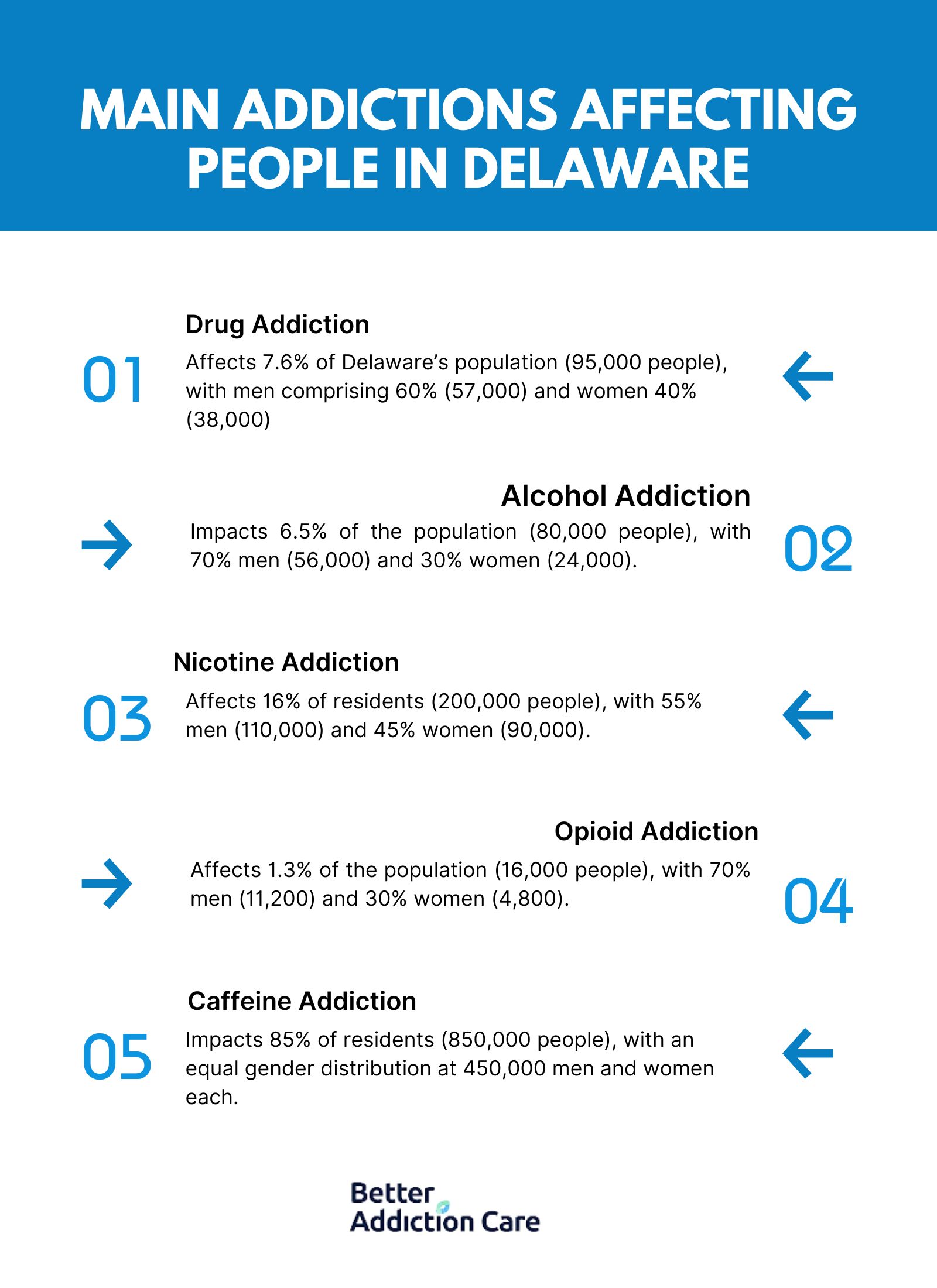
- Drug Addiction: 95,000 people of Delaware's population, or 7.6%, are affected by drug addiction. Men make up a larger proportion of those affected at 57,000 (60%), with women at 38,000 (40%).
- Alcohol Addiction: 80,000 people, or 6.5% of the population, are affected by alcohol addiction in Delaware. Alcohol addiction is more common in men, with 56,000 (70%) of cases being male, compared to 24,000 (30%) in women.
- Nicotine Addiction: 200,000 people, or 16% of Delaware’s population, are smokers or struggle with Nicotine Addiction. Nicotine Addiction is more common in men, with 110,000 (55%) of smokers being male and 90,000 (45%) female.
- Opioid Addiction: Opioid Addiction has become a significant issue in Delaware, with 16,000 people, or 1.3% of the population, affected by Opioid Addiction. 11,200 men are disproportionately affected, comprising 70% of those suffering from opioid addiction, while women are 4,800 (30%).
- Caffeine Addiction: Caffeine is a lesser-form of addiction but still impacts a large portion of the population, with 850,000 (85%) of Delaware residents consuming caffeine regularly. Both men and women consume caffeine at similar rates, with 450,000 (45%) of each.
What is the cost of rehab centers in Delaware?
The cost of rehab centers in Delaware is $53,000. On average, inpatient rehab costs range from $5,000 to $20,000 per month, while outpatient treatment is priced between $1,000 and $10,000 per month. The cost of rehab centers in Delaware varies significantly based on factors like addiction type, treatment duration, and whether the treatment is inpatient or outpatient. For instance, treatment for opioid addiction often requires more intensive care, which increases the cost by 20% to 50%, with expenses ranging from $6,000 to $30,000 per month.
Alcohol addiction treatment tends to be on the lower end, generally costing between $5,000 and $15,000 per month. Dual diagnosis treatment, addressing both substance abuse and mental health issues, increase costs by 30% to 40%, with monthly fees ranging from $8,000 to $28,000. The duration of treatment also affects costs; shorter programs (30 days) are cheaper, while longer programs (90 days or more) cost up to 50% more.
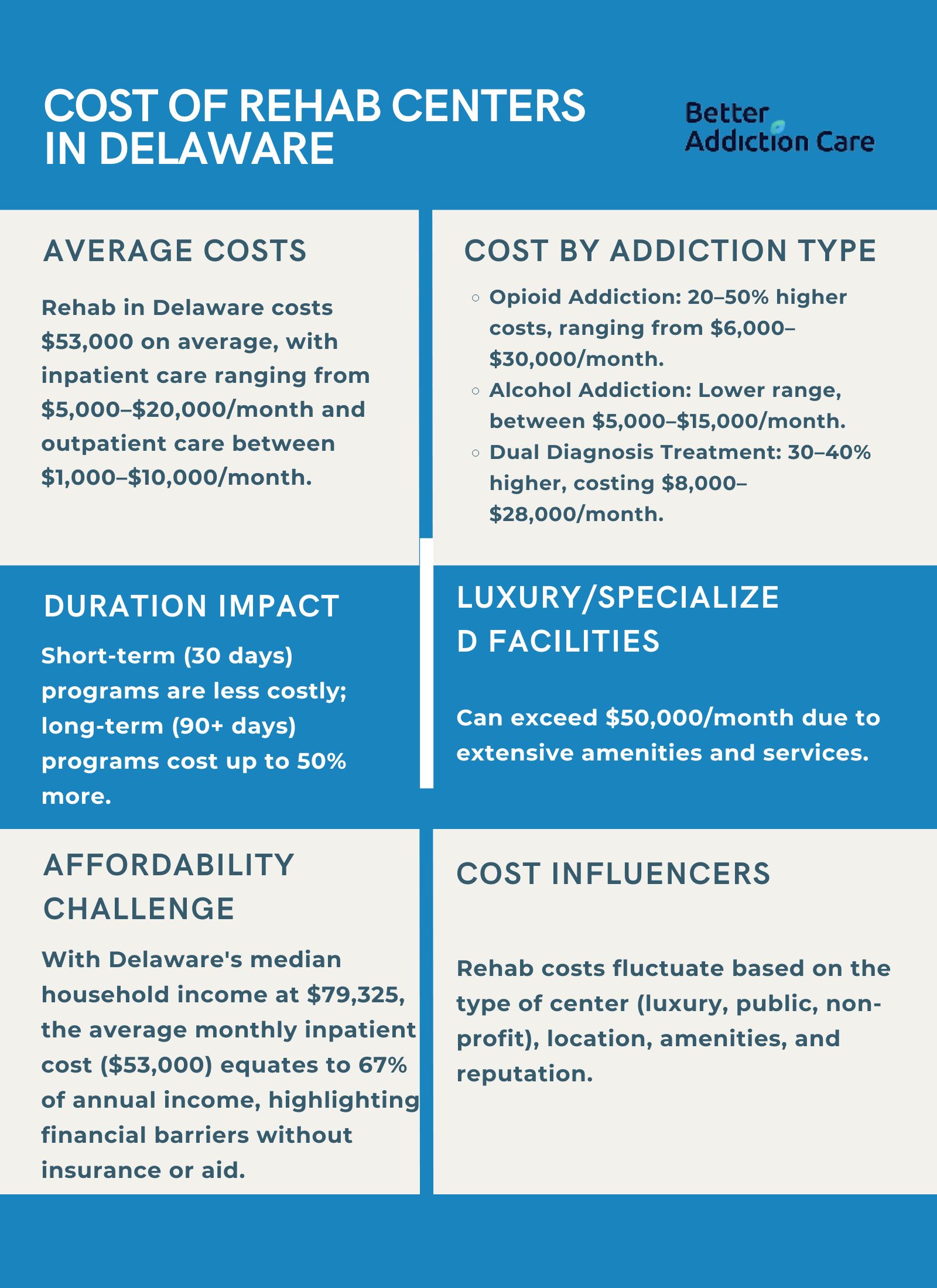
Luxury or specialized rehab centers offering extensive amenities drive the price up, sometimes exceeding $50,000 per month. Delaware's median household income is $79,325 annually, a month of inpatient care at an average cost of $53,000 accounts for nearly 67% of the household's yearly income. This makes rehab unaffordable for many people unless they have insurance or other financial assistance.
The cost of rehab centers in Delaware also fluctuates depending on the type of rehab center chosen. Luxury, private, or specialized centers are much more expensive than public or non-profit options. The location, amenities, and reputation of the rehab facility all play a role in determining the final cost.
What is the cost of LGBTQ+ rehab centers in Delaware?
The cost of LGBTQ+ rehab centers in Delaware is $18,500. On average, inpatient treatment at an LGBTQ+ rehab center in Delaware costs between $10,000 and $30,000 per month, that is 25%. The range depends on the type of treatment, addiction, and the level of care required. The pricing reflects specialized programs tailored to the unique challenges faced by LGBTQ+ individuals, such as addressing stigma, discrimination, and specific mental health concerns. The type of addiction being treated further influences these costs.
For example, treatment for opioid or stimulant addiction at an LGBTQ+ rehab center is more expensive, with costs rising by 20% to 40% compared to the average rate. In this case, treatment ranges from $12,000 to $42,000 per month. Alcohol treatment programs, on the other hand, tend to be more affordable, ranging from $10,000 to $25,000 per month. Many LGBTQ+ individuals seeking rehab also have co-occurring mental health issues, such as depression or anxiety, which increase costs by 30% to 50%, raising the total cost to $13,000 to $45,000 per month.
The length of treatment also plays a significant role in the cost of LGBTQ+ rehab centers. Short-term programs (30 days) tend to be more affordable, while longer programs (60-90 days) increase the cost by 25% to 50%.
Delaware’s median household income is $79,325 per year, a 30-day inpatient program costing $20,000 represents 25% of a household's annual income, and a 90-day program costs as much as $36,000, which is over 50% of a household's yearly income. The cost of LGBTQ+ rehab is often a financial burden for many individuals without adequate insurance or financial support. These pricing figures show how difficult it is for individuals to afford rehab care out-of-pocket.
The cost of LGBTQ+ rehab centers also varies based on the type of rehab center. Luxury or private LGBTQ+ centers, which offer specialized care and extensive amenities, are usually more expensive than public or non-profit centers, making it important for individuals to consider both their treatment needs and financial resources when selecting a facility.
What is the cost of Faith-Based rehab centers in Delaware?
The cost of Faith-Based rehab centers in Delaware is $52,990 without insurance. Inpatient programs are generally more expensive than outpatient services, with inpatient rehab averaging $47,378 (88.6%) and outpatient rehab is $5,500 (10.3%). Faith-Based rehab centers in Delaware combine spiritual guidance with traditional addiction therapies, providing a holistic approach to recovery. Several factors influence these costs, including the type of addiction, treatment duration, and level of care. For instance, specialized care for certain substances or extended treatment periods significantly increase expenses. Medical detoxification reached up to $132,365, representing increases of 12% to 16%, compared to the average rehab cost.
Delaware's median household income is $79,325, making the average rehab cost of Faith-Based rehab centers 68% of the median annual income, a considerable financial burden for most households. Affordability remains a concern for many families. The cost of Faith-based rehab centers varies depending on the type of facility. Faith-based centers have different pricing structures compared to secular institutions. Amenities, program length, and services provided also play significant roles in determining overall expenses.
What is the cost of Men-Only rehab centers in Delaware?
The cost of Men-Only rehab centers in Delaware is $50,690 (63%). Inpatient programs are generally more expensive than outpatient services, with inpatient rehab averaging $40,378 (82%) and outpatient rehab is $5,000 (10%). Men-Only rehab centers in Delaware offer addiction treatment specifically tailored to the needs of male clients. Costs of Men-Only rehab centers vary based on factors such as the type of addiction, treatment duration, and level of care. For example, specialized care for certain substances or extended treatment periods increase expenses. Inpatient programs, which are generally more expensive than outpatient services, cost an average of $40,378, while medical detoxification reaches up to $132,365. These pricing figures reflect increases of 12% and 146%, respectively, compared to the average rehab cost of Men-Only rehab centers.
The median household income in Delaware is $79,325, the average cost of Men-Only rehab accounts for 63% of annual earnings, which indicates a substantial financial commitment for most families. Costs of Men-Only rehab centers vary depending on the type of facility. Men-Only centers have unique pricing structures compared to co-ed institutions, with other factors such as amenities, program length, and services offered further influencing the overall cost.
What is the cost of Women-Only rehab centers in Delaware?
The cost of Women-Only rehab centers in Delaware is $49,690 (62%) without insurance coverage. Inpatient programs are generally more expensive than outpatient services, with inpatient rehab averaging $40,378 (82%) and outpatient rehab is $5,000 (10%). Women-Only rehab centers in Delaware provide specialized addiction treatment tailored to the unique needs of female clients. Various factors influence these costs, including the type of addiction, treatment duration, and level of care. For instance, specialized care for certain substances or extended treatment periods increase expenses. Inpatient programs, which generally cost more than outpatient services, average $40,378, while medical detoxification reaches $132,365. These costs represent increases of 10% and 136%, respectively, compared to the average rehab cost of Women-Only rehab centers in Delaware.
Delaware's median household income is $79,325, the average Women-Only rehab center's expense constitutes 62% of annual earnings, signifying a considerable financial burden. Costs of Women-Only rehab centers vary depending on the type of facility. Women-Only centers have unique pricing structures compared to co-ed institutions, while factors such as amenities, program length, and the scope of services offered further influence the total cost.
What is the cost of Teen rehab centers in Delaware?
The cost of Teen rehab centers in Delaware is $52,990 (67.08%) without insurance. Inpatient programs are generally more expensive than outpatient services, with inpatient rehab averaging $47,378 (88.6%) and outpatient rehab is $5,500 (10.3%). Several factors influence these costs, including the type of addiction, treatment duration, and level of care. For instance, specialized care for certain substances or extended treatment periods significantly increase expenses. Medical detoxification reached up to $132,365, representing increases of 12% to 16%, compared to the average rehab cost.
Delaware's median household income is $79,325, making the average rehab cost of Teen rehab centers 68% of the median annual income, a considerable financial burden for most households. Affordability remains a concern for many families. The cost of Teen rehab centers varies depending on the type of facility. Teen centers have different pricing structures compared to secular institutions. Amenities, program length, and services provided also play significant roles in determining overall expenses.
What is the cost of Young Adult rehab centers in Delaware?
The cost of Young Adult rehab centers in Delaware is $50,690 (63%). Inpatient programs are generally more expensive than outpatient services, with inpatient rehab averaging $40,378 (82%) and outpatient rehab is $5,000 (10%). Young adult rehab centers in Delaware offer specialized programs addressing the unique needs of individuals aged 18 to 25 dealing with substance use disorders. Costs of Young Adult rehab centers vary based on factors such as the type of addiction, treatment duration, and level of care. For example, specialized care for certain substances or extended treatment periods increase expenses. Medical detoxification reaches up to $132,365. These pricing figures reflect increases of 12% and 146%, respectively, compared to the average rehab cost of Young Adult rehab centers.
The median household income in Delaware is $79,325, the average cost of Young Adult rehab accounts for 63% of annual earnings, which indicates a substantial financial commitment for most families. Costs of Young Adult rehab centers vary depending on the type of facility. Young Adult centers have unique pricing structures compared to co-ed institutions, with other factors such as amenities, program length, and services offered further influencing the overall cost.
What is the cost of Luxury Rehab centers in Delaware?
The cost of Luxury Rehab centers in Delaware is $65,000 (82%). Inpatient programs at luxury rehab centers range from $30,000 to $100,000 (80.09%) per month, while outpatient treatment costs between $10,000 and $30,000 (25%) per month. Luxury rehab centers in Delaware provide high-end amenities and personalized treatment plans for individuals seeking substance abuse recovery. Luxury centers, however, offer upscale accommodations, gourmet meals, and holistic therapies, which significantly increase costs. While standard inpatient rehab averages $47,378, luxury facilities charge between $30,000 and $100,000 per month, representing an increase of 56% to 186% compared to the average rehab cost of Luxury Rehab centers.
Delaware’s median household income is $79,325, the average Luxury rehab center cost $65,000, these expenses account for 82% of annual earnings, reflecting a substantial financial commitment. Costs of Luxury Rehab centers vary depending on the type of facility. Luxury centers have unique pricing structures compared to standard institutions, with amenities, program length, and services offered further influencing the overall cost.
What is the cost of Dual Diagnosis rehab centers in Delaware?
The cost of Dual Diagnosis rehab centers in Delaware is $49,690 (62%) without insurance coverage. Inpatient programs are generally more expensive than outpatient services, with inpatient rehab averaging $40,378 (82%) and outpatient rehab is $5,000 (10%). Dual diagnosis rehab centers in Delaware specialize in treating individuals with co-occurring substance use and mental health disorders. Various factors influence these costs, including the type of addiction, treatment duration, and level of care. For instance, specialized care for certain substances or extended treatment periods increase expenses. Inpatient programs, which generally cost more than outpatient services, average $40,378, while medical detoxification reaches $132,365. These costs of Dual Diagnosis rehab centers represent increases of 10% and 136%, respectively, compared to the average rehab cost of Dual Diagnosis rehab centers in Delaware.
Delaware's median household income is $79,325, the average Dual Diagnosis rehab centers expense constitutes 62% of annual earnings, signifying a considerable financial burden. Costs of Dual Diagnosis rehab centers vary depending on the type of facility. Dual Diagnosis rehab centers have unique pricing structures compared to co-ed institutions, while factors such as amenities, program length, and the scope of services offered further influence the total cost.
Is drug abuse and addiction a problem in Delaware?
Yes, drug abuse and addiction is a problem in Delaware, driven by high overdose death rates, the prevalence of opioid abuse, and a rising demand for treatment. Delaware consistently ranks among the top states for drug overdose fatalities, with 549 deaths reported in 2024, the highest rate since 2004, equating to 54 deaths per 100,000 people. The opioid crisis has had a severe impact, particularly with the increased availability and abuse of synthetic opioids like fentanyl, which have been identified as the primary drug threat in the state of Delaware. This has been accompanied by a growing demand for substance abuse treatment, with admissions to publicly funded programs steadily rising between 2012 and 2024, reflecting the escalating need for intervention.
Statistical trends reveal the depth of the issue. Overdose deaths in Delaware surged by 35% from 2019 to 2024, increasing from 228 to 308 fatalities, and reached 549 in 2024, marking a significant upward trend over the past decade. The widespread availability of illicit opioids, particularly fentanyl, has exacerbated the crisis, with rising incidents of trafficking and related fatalities reported annually. The consistent increase in treatment admissions highlights the growing acknowledgment of addiction as a public health challenge. These statistics demonstrate the worsening nature of drug abuse and addiction in Delaware over the years.
Is alcoholism a problem in Delaware?
Yes, alcoholism is a problem in Delaware, evidenced by high rates of alcohol consumption, binge drinking, and alcohol-related fatalities. In 2024, over half (53.6%) of Delaware's adult population reported drinking alcohol at least once in the past 30 days, a figure that has remained largely unchanged over the past decade. Binge drinking, defined as consuming five or more drinks on one occasion for men and four or more for women, was reported by 14.0% of adults in 2024, with the highest prevalence among individuals aged 18-44. Alcohol-related deaths have been on the rise; between 2019 and 2024, Delaware experienced an average of 466 annual deaths attributable to excessive alcohol use, with 2.8% of these involving individuals under 21. These statistics underscore the persistent and growing issue of alcohol misuse in the state over recent years.
Is Mental Health a problem in Delaware?
Yes, mental health is a problem in Delaware, as evidenced by rising rates of serious mental illness (SMI), increased suicide rates, and a growing demand for mental health services. Between 2009–2020 and 2021–2024, the prevalence of SMI among adults in Delaware increased from 3.7% to 6.7%, surpassing both regional and national averages.
The state of Delaware's age-adjusted suicide rate rose from 11.4 deaths per 100,000 in 2019 to 14.8 per 100,000 in 2024, indicating a concerning upward trend. The demand for mental health services has escalated; in February 2024, 32.8% of adults in Delaware reported symptoms of anxiety or depression, with 16.9% unable to access needed counseling or therapy. These statistics highlight the growing mental health challenges facing Delaware over the years.
Can you travel to Delaware for rehab?
Yes, you can travel to Delaware for rehab, as it offers several distinct advantages for addiction treatment. Delaware’s central location along the Eastern Seaboard provides easy access from nearby states such as Pennsylvania, New York, Maryland, and New Jersey, making it convenient for families to visit or participate in therapy sessions, which are often crucial to recovery. Delaware is also known for its comprehensive and specialized treatment programs, offering services like dual diagnosis care, gender-specific therapies, and holistic approaches that cater to individual needs. The state of Delaware’s serene natural environment, with coastal areas and state parks, creates a tranquil setting that fosters relaxation and healing, providing an ideal backdrop for individuals focusing on their recovery journey. These factors make Delaware a compelling choice for rehab.
Can addiction be treated in Delaware?
Yes, addiction can be treated in Delaware due to its diverse treatment options, emphasis on evidence-based practices, and strong community support systems. The state of Delaware offers a variety of rehab programs, including inpatient, outpatient, and specialized services such as dual diagnosis and gender-specific care, ensuring tailored treatment for individual needs.
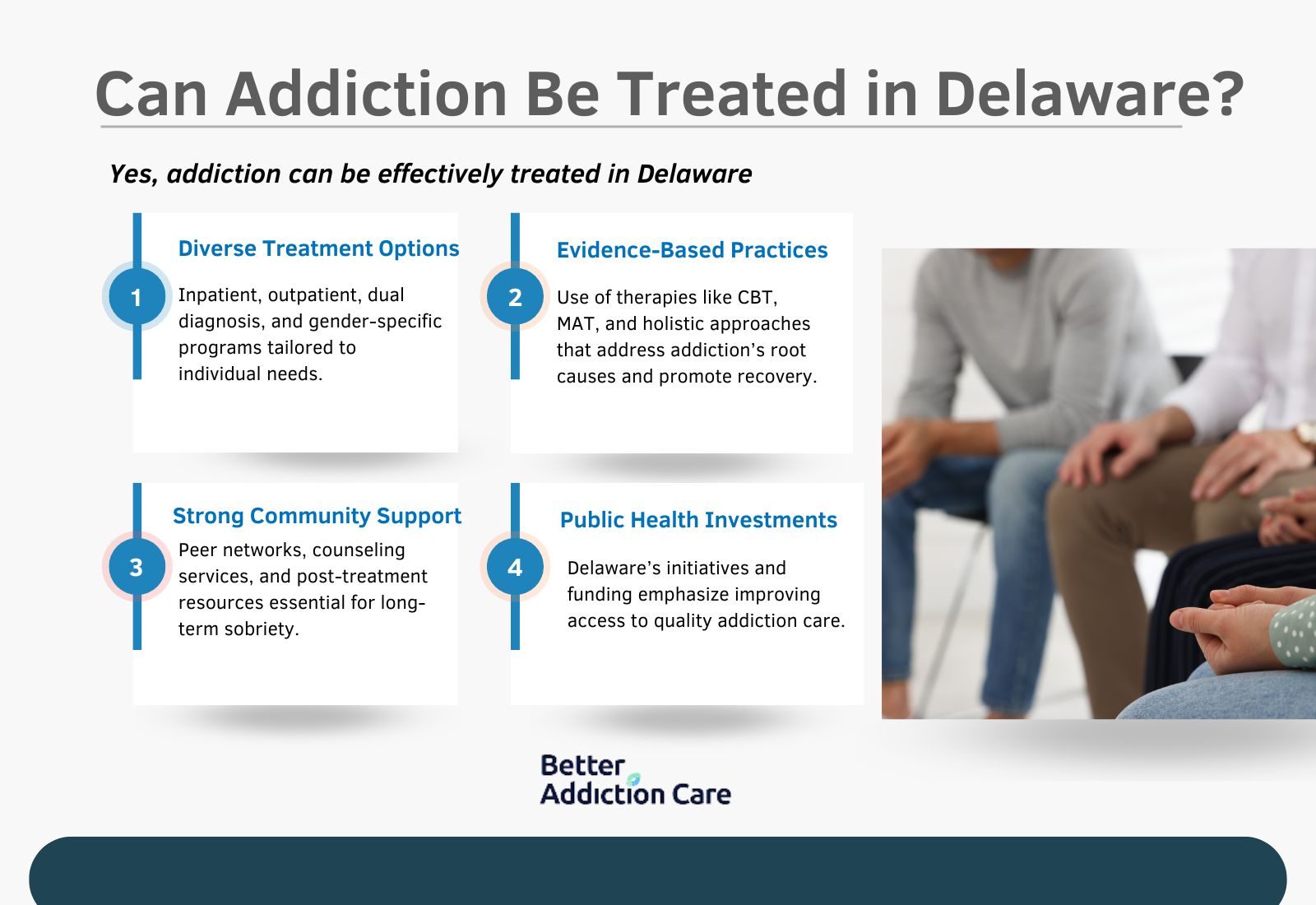
Delaware’s treatment centers focus on evidence-based methods like cognitive-behavioral therapy (CBT), medication-assisted treatment (MAT), and holistic approaches, all of which are scientifically proven to support recovery and address the root causes of addiction. The state of Delaware provides robust community support through peer networks, counseling services, and post-treatment resources, which are critical for maintaining long-term sobriety. Delaware’s investment in public health initiatives further reinforces its dedication to helping individuals overcome addiction.
What is the state of Delaware?
The state of Delaware is in the United States located in the Mid-Atlantic region. It shares borders with Maryland to the south and west, Pennsylvania to the north, and New Jersey to the northeast, with the Atlantic Ocean and Delaware Bay forming its eastern boundary. The state of Delaware has a population of 1,018,396, with a nearly even gender distribution, 49% male (498,000) and 51% female (520,000). Economically, Delaware is considered moderately wealthy, with a median household income of $79,325, which is above the national average. Delaware's economy thrives on its favorable corporate tax laws, making it a hub for business incorporations and financial services. However, while Delaware enjoys economic advantages, certain rural areas face challenges, creating a blend of wealth and localized poverty.
What is the population of Delaware?
The population of Delaware is 1,031,890. The gender distribution is nearly balanced, with males comprising 48.4% (499,000) and females accounting for 51.6% (533,000). In terms of age, 6.0% (61,900) are under 5 years old, 17.9% (184,700) fall within the 5 to 19-year age group, and 19.5% (201,200) are aged 20 to 34 years. The 35 to 49-year group represents 18.2% (187,800), while 20.0% (206,400) are aged 50 to 64 years. Seniors aged 65 and over make up 18.4% (189,900). This distribution reveals that the majority of Delaware’s population is within the working-age range of 20 to 64 years, accounting for nearly 58% of the total, reflecting a balanced demographic with significant representation across all age groups.
What is the income of people from Delaware?
The income of people from Delaware is $42,180, per capita income, while the median household income stands at $79,325. The income of people from Delaware vary across individuals, households, age groups, and genders. Income by age group reveals variation, with households under 25 years earning a median of $41,617, those aged 25 to 44 earning $87,342, and households aged 45 to 64 earning the highest median income at $97,754. Seniors aged 65 and over have a median household income of $67,818. Gender-based income differences are also notable, with male full-time, year-round workers earning a median income of $61,723, compared to $50,202 for female workers. These figures underscore both income diversity and disparities across demographics within the state of Delaware.