(866) 567-3138
Sponsored Helpline
Verify Insurance
When you take Buspirone regularly, your brain gets used to a steady level of serotonin support. Over time, your system adjusts to this new balance. If you stop taking it all at once, the brain doesn’t instantly shift back to its old pattern. It needs time to restart its natural serotonin flow and recalibrate how it handles stress signals.
 Expert Verified
Is withdrawal real? → Yes.
It happens because the brain is adjusting to life without Buspirone. It is temporary and manageable with proper tapering.
How should I stop safely? → Slowly.
A gradual taper under medical guidance is the safest way to avoid discomfort.
What helps recovery? → Support and structure.
Healthy habits, emotional support, therapy, and monitoring can keep symptoms under control and protect long-term mental health.
Buspirone is an anxiolytic, a medication designed to reduce anxiety without sedation, dependence, or addictive effects.
It works by gently modulating serotonin receptors (specifically the 5-HT1A subtype). It also lightly influences dopamine pathways, which play a role in motivation, calmness, and worry control.
Unlike benzodiazepines, Buspirone does not work instantly. It slowly reshapes how the brain responds to stress signals. With consistent use, it helps the mind stay steadier, less reactive, and more capable of managing anxious thinking.
When you take Buspirone regularly, your brain gets used to a steady level of serotonin support. Over time, your system adjusts to this new balance. If you stop taking it all at once, the brain doesn’t instantly shift back to its old pattern. It needs time to restart its natural serotonin flow and recalibrate how it handles stress signals.
During this adjustment period, you may feel temporary discomfort. Common symptoms include dizziness, irritability, muscle tension, restlessness, and sleep disturbances. [1] Some people may also notice mood swings or a brief increase in anxiety. These effects happen because the brain is rebalancing—not because the medication is addictive.
These are withdrawal symptoms, but they are not signs of addiction.
Many people fear that symptoms during tapering mean their anxiety is “coming back.” This isn’t always true.
Withdrawal is a physiological readjustment, not psychological collapse. It fades.
Anxiety relapse is more about old patterns resurfacing and can improve with therapy and support.
Withdrawal from Buspirone does not mean you’re addicted. You won’t crave the medication. You won’t feel any compulsive urges to take more. There’s no reward-driven or dopamine-reinforcing pathway linked to Buspirone, so it simply cannot trigger addictive behaviors.
If you notice symptoms after stopping, it’s just your body rebalancing its natural chemistry. The brain is adjusting its serotonin activity and settling into its original rhythm.[2]
This process can create brief discomfort, but it is temporary biology—not dependency, not relapse, and not a sign of failure. Your system is stabilizing itself exactly the way it’s supposed to.
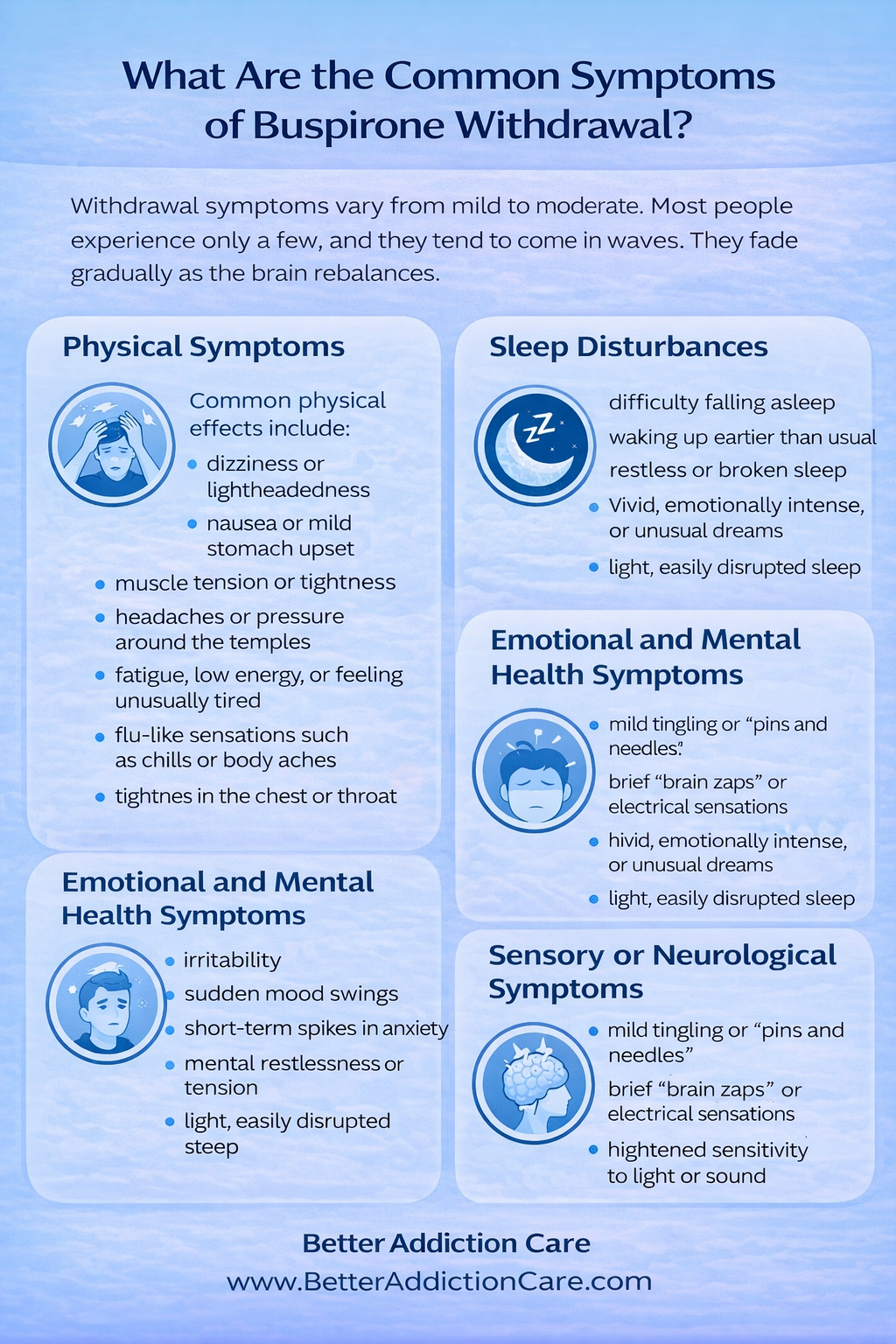
Withdrawal symptoms vary from mild to moderate. Most people experience only a few, and they tend to come in waves. They fade gradually as the brain rebalances.
Common physical effects include:
dizziness or lightheadedness
nausea or mild stomach upset
muscle tension or tightness
headaches or pressure around the temples
fatigue, low energy, or feeling unusually tired
flu-like sensations such as chills or body aches
tightness in the chest or throat
shakiness, trembling, or feeling unsteady
These symptoms can be uncomfortable, but they are almost never medically dangerous. They’re simply signs that your nervous system is recalibrating after losing the steady support Buspirone was providing. For most people, these sensations fade as the taper continues, and each step down becomes easier as the brain settles into its natural rhythm again.
Sleep-related issues are extremely common during Buspirone withdrawal. Many people notice changes in their usual sleep pattern, including:
difficulty falling asleep
waking up earlier than usual
restless or broken sleep
vivid, emotionally intense, or unusual dreams
light, easily disrupted sleep
These disruptions happen because your brain is adjusting to lower serotonin support. For most people, sleep begins to improve around the second or third week of tapering.
As your nervous system settles and serotonin receptors recalibrate, your sleep gradually returns to a more stable, natural rhythm. [3] In some cases, mild disturbances may linger a bit longer, but the overall trend is steady improvement as the taper progresses.
Emotional shifts are very common during Buspirone withdrawal, especially for people who originally started the medication to manage anxiety. As your brain adjusts, you might notice:
irritability
sudden mood swings
short-term spikes in anxiety
mental restlessness or tension
increased sensitivity to stress
feeling mentally “off balance” or unfocused
These reactions can feel alarming and may seem like your original symptoms are returning. In most cases, they’re simply part of the adjustment process as serotonin receptors recalibrate. These emotional ups and downs typically ease as the taper progresses, with noticeable improvement by the end of the withdrawal period.
Buspirone generally doesn’t cause strong neurological effects, but during withdrawal, some people experience temporary sensory changes, such as:
mild tingling or “pins and needles”
brief “brain zaps” or electrical sensations
heightened sensitivity to light or sound
a feeling of internal jitteriness
short bursts of tremors or shaking
These sensations are uncomfortable but not harmful. They usually come and go quickly and tend to reduce in intensity over time. Most people notice these symptoms decreasing steadily within a few weeks as the body adjusts to lower medication levels.
Everyone’s journey looks different, but most people follow a general pattern.
Everyone moves through these stages differently. The timeline depends on:
How long have you been taking Buspirone
your dosage
How fast do you taper
individual sensitivity
hormonal factors
other medications
stress levels
A slow and supported taper reduces withdrawal intensity dramatically.
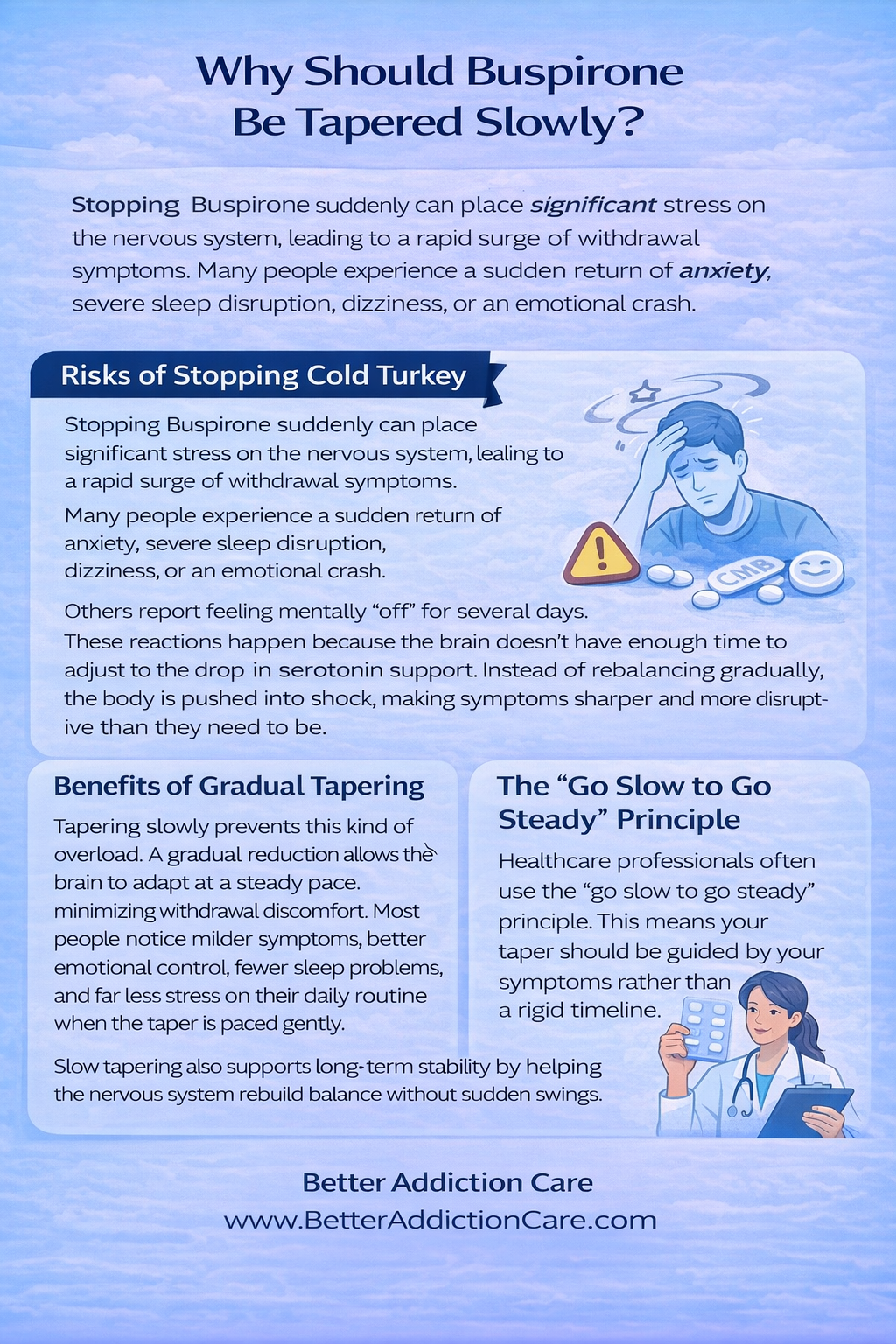
Stopping Buspirone suddenly can place significant stress on the nervous system, leading to a rapid surge of withdrawal symptoms. Many people experience a sudden return of anxiety, severe sleep disruption, dizziness, or an emotional crash.
Others report feeling mentally “off” for several days. These reactions happen because the brain doesn’t have enough time to adjust to the drop in serotonin support. Instead of rebalancing gradually, the body is pushed into shock, making symptoms sharper and more disruptive than they need to be.
Tapering slowly prevents this kind of overload. A gradual reduction allows the brain to adapt at a steady pace, minimizing withdrawal discomfort. Most people notice milder symptoms, better emotional control, fewer sleep problems, and far less stress on their daily routine when the taper is paced gently. Slow tapering also supports long-term stability by helping the nervous system rebuild balance without sudden swings.
The “Go Slow to Go Steady” Principle
Healthcare professionals often use the “go slow to go steady” principle. This means your taper should be guided by your symptoms rather than a rigid timeline. If symptoms intensify, the taper slows down; if they remain mild, the reduction can continue. [4] This flexible, symptom-based approach keeps the process safer, smoother, and far more comfortable overall.
Healthcare professionals play a key role in making Buspirone withdrawal smoother and safer. They monitor the intensity of your symptoms and adjust the tapering speed so your body has enough time to adapt. This helps prevent spikes in discomfort and keeps the process steady.
One of the most important things providers do is help you tell the difference between withdrawal symptoms and a true return of your original condition. Withdrawal can mimic anxiety or emotional instability, but these symptoms are temporary. Doctors watch for patterns, duration, and context to ensure you’re responding to withdrawal—not relapsing.
Providers can offer reassurance and guidance, which often reduces anxiety during the taper. If symptoms become particularly uncomfortable, they may prescribe short-term medications or supportive treatments to help you sleep, manage stress, or stabilize your mood while your system adjusts.
Throughout the tapering process, healthcare professionals track your emotional and mental well-being to prevent setbacks. Regular check-ins allow them to catch early warning signs, adjust your plan, and ensure you remain stable and supported as your brain recalibrates.
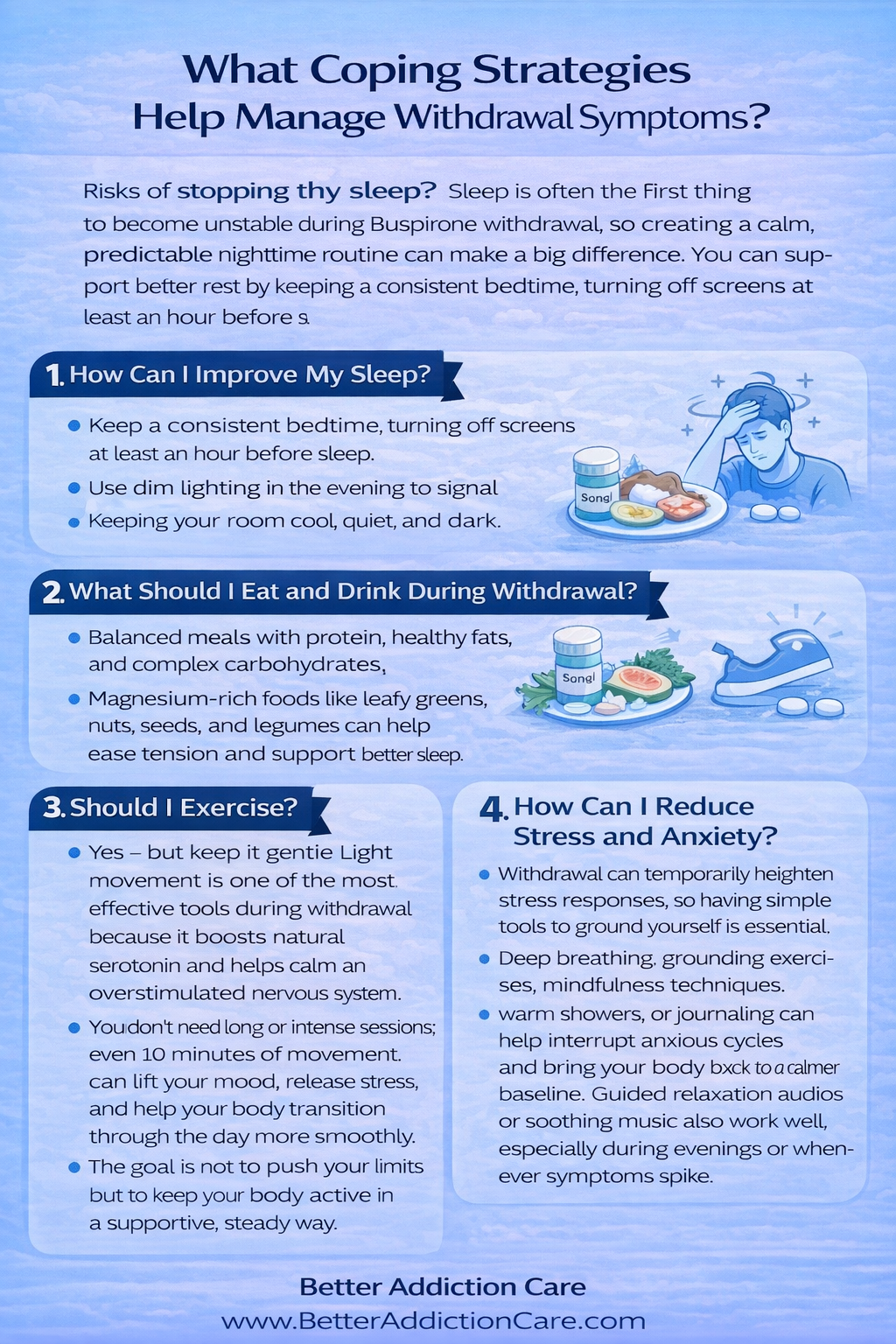
Sleep is often the first thing to become unstable during Buspirone withdrawal, so creating a calm, predictable nighttime routine can make a big difference. You can support better rest by keeping a consistent bedtime, turning off screens at least an hour before sleep, and using dim lighting in the evening to signal to your brain that it’s time to wind down.
Avoiding caffeine later in the day, practicing slow breathing or gentle stretches before bed, and keeping your room cool, quiet, and dark all help your nervous system settle. [5]
Your body needs steady, reliable energy while it’s adjusting, and the foods you choose can directly influence how you feel. Eating balanced meals with protein, healthy fats, and complex carbohydrates keeps your blood sugar stable — which in turn stabilizes mood and reduces irritability. Magnesium-rich foods like leafy greens, nuts, seeds, and legumes can help ease tension and support better sleep.
Yes — but keep it gentle. Light movement is one of the most effective tools during withdrawal because it boosts natural serotonin and helps calm an overstimulated nervous system. Activities like walking, stretching, yoga, or low-intensity workouts are perfect.
You don’t need long or intense sessions; even 10 minutes of movement can lift your mood, release stress, and help your body transition through the day more smoothly. The goal is not to push your limits but to keep your body active in a supportive, steady way.
Withdrawal can temporarily heighten stress responses, so having simple tools to ground yourself is essential. Deep breathing, grounding exercises, mindfulness techniques, warm showers, or journaling can help interrupt anxious cycles and bring your body back to a calmer baseline. Guided relaxation audios or soothing music also work well, especially during evenings or whenever symptoms spike.
Going through withdrawal alone can make symptoms feel heavier, so staying connected is incredibly important. Support can come from a trusted family member, a partner, a close friend, a therapist, or even online communities where others understand what you’re experiencing.
Talking through your feelings reduces fear, normalizes the process, and helps prevent isolation. Sometimes, just knowing someone is aware of what you’re going through can create immense emotional relief.
Yes — routine matters more than most people realize. A predictable rhythm gives your brain a sense of safety and stability while it’s adjusting. Simple things like eating meals at consistent times, having regular wake and sleep schedules, planning gentle daily activities, and building small breaks into your day help regulate your internal clock.
You should call your provider if you notice:
severe anxiety that does not ease
intense insomnia lasting more than a week
panic attacks
chest pain
uncontrollable shaking
thoughts of self-harm
Symptoms that feel overwhelming
These reactions are uncommon but worth discussing. Medical professionals can adjust your taper or provide short-term interventions.
Many people find that once withdrawal fades, they feel clearer, more grounded, and more connected to their natural emotions. They begin to trust their internal coping skills again.
Ongoing Support and Check-Ins
Recovery doesn’t stop at the end of the taper. Regular check-ins with a provider help:
Monitor mental health
reinforce progress
guide lifestyle changes
Healthy routines make the biggest difference, such as:
therapy or counseling
sleep hygiene
physical activity
meaningful connections
mindfulness or relaxation techniques
balanced nutrition
These habits protect your mental health long after medications are stopped.
Recovery is not defined by stopping a medication. It’s defined by rebuilding emotional strength, reconnecting with your life, and learning tools that make anxiety more manageable in the long run.
Buspirone withdrawal can feel uncomfortable, but it is temporary and manageable. It does not mean you are addicted. It does not mean you are failing. It simply reflects your brain finding balance again.
With slow tapering, medical guidance, emotional support, and healthy daily habits, most people move through withdrawal smoothly and regain confidence in their natural coping skills.
Be patient with yourself.
Stay supported.
And never stop medication abruptly without talking to your doctor.
It’s not recommended to stop Buspirone abruptly. Going cold turkey increases the likelihood and intensity of withdrawal symptoms because the brain doesn’t have time to adjust. People who stop suddenly may experience dizziness, anxiety spikes, sleep disruption, and emotional imbalance. The safest approach is to work with a healthcare provider and taper gradually.
Most people notice improvement within 2–4 weeks, as sleep and mood stabilize. A few may experience mild lingering symptoms — such as brief fatigue, emotional dips, or light sensitivity — for another month. Overall, steady improvement occurs when the taper is slow and well-managed.
Not necessarily. Many symptoms during tapering are withdrawal responses, not a true return of anxiety. These sensations usually fade as the brain adjusts. Maintaining routine, practicing grounding techniques, and staying connected to supportive people or therapy can help prevent a genuine relapse.
Lifestyle habits can significantly reduce withdrawal discomfort. A consistent sleep routine, staying hydrated, gentle exercise, and slow breathing or mindfulness exercises help regulate mood and calm the nervous system. Balanced meals and steady nutrients support emotional stability and energy throughout the day.
Support from loved ones makes withdrawal more manageable. They can offer reassurance, check in regularly, and help maintain calm routines like meals and bedtime. Small gestures — listening, assisting with chores, or providing patience — create a sense of safety and emotional comfort.
If symptoms become overwhelming, contact a healthcare professional. They can slow your taper, adjust dosing, or provide short-term strategies to stabilize you. Seeking help early prevents setbacks and ensures the withdrawal process remains safe and manageable.
By calling us, you agree to our Terms & Conditions
For those seeking addiction treatment for themselves or a loved one, our calls are confidential and are available for 24/7 help.
Any treatment center receiving calls from the site is a paid advertiser.
Calls to numbers on a specific treatment center listing will be routed to that treatment center.
Calls to any general helpline will be answered by treatment providers, each of which is a paid advertiser.
By calling the helpline you agree to the terms of use. These calls are offered at no cost to you and with no obligation to enter into treatment. Neither this site nor anyone who answers the call receives a commission or fee dependent upon which treatment provider a visitor may ultimately choose.
If you wish to explore additional treatment options or connect with a specific rehab center, you can: browse top-rated listings, visit our homepage, or visit SAMHSA, or by calling 800-662-HELP. You may also contact The Florida Department of Children and Family Services