(866) 567-3138
Sponsored Helpline
Verify Insurance
When Lisinopril is present consistently, it blocks the hormone angiotensin II—a chemical that narrows blood vessels and increases blood pressure. Removing the medication abruptly allows angiotensin II activity to spike, which can cause:
 Expert Verified
Rapid increases in blood pressure
Dizziness, headaches, neck pressure
Chest discomfort due to increased heart workload
Shortness of breath caused by elevated vascular resistance
Is withdrawal real? Not in the addiction sense. Lisinopril does not cause cravings or dependency. However, stopping it suddenly can lead to rebound hypertension, headaches, dizziness, elevated heart strain, and a rapid return of high blood pressure symptoms.
How should I stop safely? Lisinopril should be tapered or transitioned under medical supervision. Doctors may adjust dosing over several days or weeks to prevent sudden spikes in blood pressure and minimize cardiovascular risk.
What helps recovery? Close monitoring, healthy routines, stress management, family support, and consistent follow-up with a provider help stabilize blood pressure after discontinuation.
Lisinopril is an ACE inhibitor prescribed for hypertension, heart failure, and kidney protection in people with diabetes or chronic kidney disease. It works by relaxing blood vessels and lowering pressure within the cardiovascular system.
When someone stops Lisinopril abruptly, the protective effect on blood vessels is suddenly removed, and the body’s natural hormonal systems—especially the renin-angiotensin system, which raises blood pressure—reactivate quickly.
This leads to a physiological rebound rather than a traditional “withdrawal.” Instead of cravings or dependence, the core risk is that the body’s vasoconstrictive (vessel-tightening) hormones surge rapidly, causing blood pressure to rise.
This response can be uncomfortable for some people and dangerous for others, particularly those with a history of severe hypertension or cardiovascular disease.
When Lisinopril is present consistently, it blocks the hormone angiotensin II—a chemical that narrows blood vessels and increases blood pressure. Removing the medication abruptly allows angiotensin II activity to spike, which can cause:
Rapid increases in blood pressure
Dizziness, headaches, neck pressure
Chest discomfort due to increased heart workload
Shortness of breath caused by elevated vascular resistance
Families often notice their loved one becoming flushed, irritable, or fatigued because the cardiovascular system is working harder than it should.
It’s important to distinguish between two concepts:
Withdrawal: Symptoms caused by the body adapting to the absence of a medication that affects brain chemistry. Lisinopril does not cause this.
Rebound hypertension: A physiologic surge in blood pressure after stopping a blood pressure medication too quickly. This does happen and is the primary risk[1].
There are no neurological withdrawal symptoms. Instead, the concern is the cardiovascular instability created by the sudden absence of medication support.
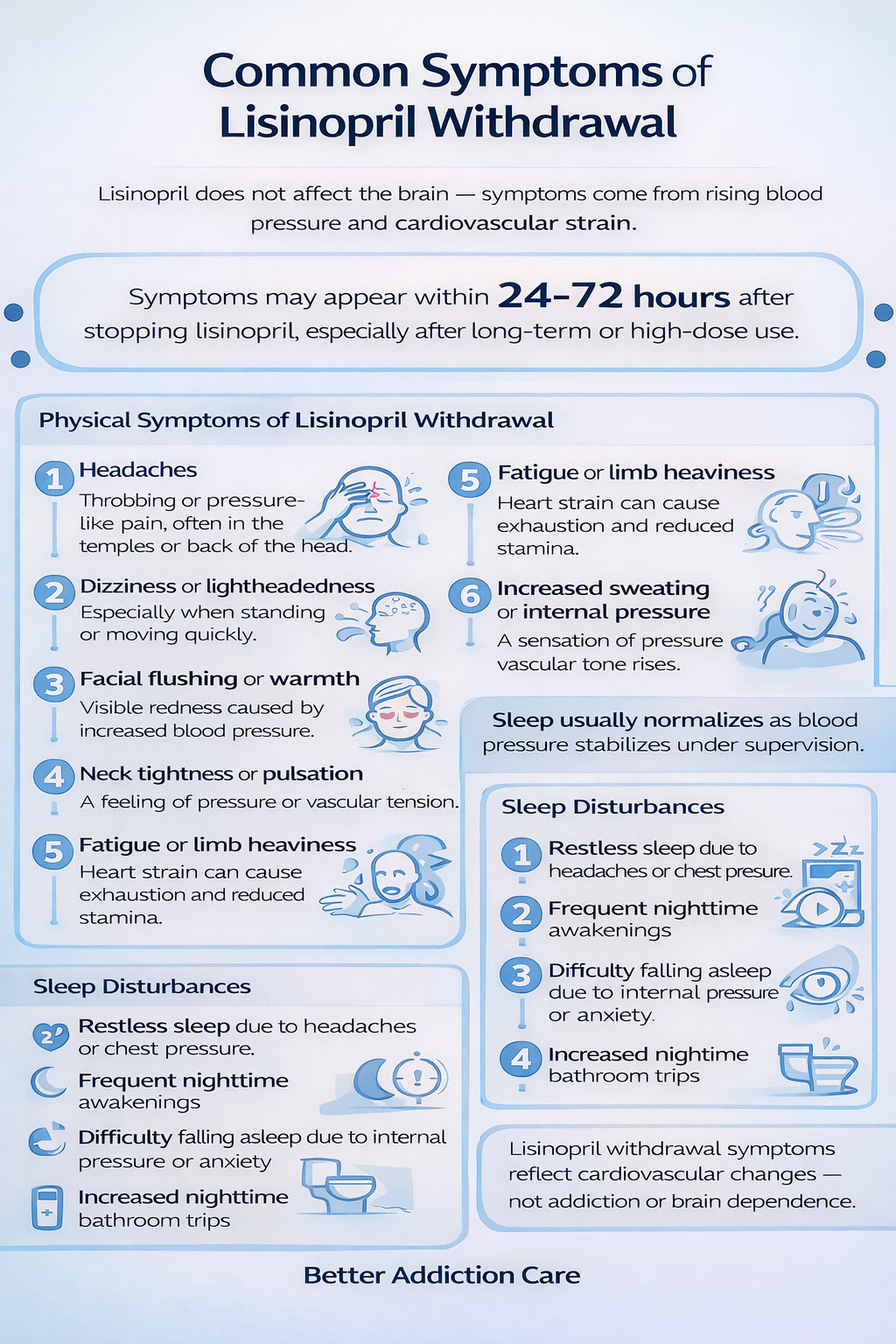
Because Lisinopril acts on blood vessels rather than the brain, symptoms stem from a rise in blood pressure or increased cardiovascular strain. These symptoms can appear within 24–72 hours of stopping the medication, especially if the dose was high or the person was using it long-term.
People may experience noticeable physical changes when blood pressure rises:
Headaches, often throbbing or pressure-like, especially in the temples or back of the head
Dizziness or lightheadedness when standing or moving quickly
Facial flushing, warmth, or visible redness
Neck tightness or a feeling of pulsation
Fatigue or heaviness in the limbs due to heart strain
Increased sweating or a sensation of internal pressure
These physical sensations result from the sudden increase in vascular tone and blood pressure as the medication’s effect wears off.
Although Lisinopril itself does not directly alter sleep patterns, rebound hypertension can lead to:
Restless nights due to chest pressure or headaches
Frequent nighttime awakenings
Difficulty settling into sleep because of internal “pressure” or anxiety
Nighttime bathroom trips if blood pressure becomes elevated
As blood pressure stabilizes through a supervised taper, sleep patterns usually return to normal.
Cardiovascular instability often affects mood because discomfort and internal pressure can create distress. People may experience:
Irritability or agitation when blood pressure spikes
Anxiety, often triggered by physical symptoms
Difficulty staying focused due to headaches or chest pressure
Emotional sensitivity when symptoms interfere with daily tasks
These emotional responses are natural reactions to cardiovascular discomfort, not psychological withdrawal.
Because high blood pressure affects blood flow to the brain and sensory pathways, some individuals notice:
Visual disturbances, such as blurriness
Light sensitivity during headache episodes
Ringing in the ears (pulsatile tinnitus)
Brief episodes of jitteriness or tremors
A feeling of “pressure” behind the eyes
These symptoms generally improve once blood pressure stabilizes under medical supervision.
While experiences vary, especially depending on dose and health conditions, the progression follows predictable phases.
Withdrawal Progression (Phases & What to Expect)
Note: Timelines vary based on the dose being reduced, how long the medication was used, the individual’s health profile, and the speed of the taper.
In the first 48–72 hours, the body begins adjusting to the absence of ACE inhibition. People often notice headaches, dizziness, neck pressure, or general discomfort. Blood pressure readings may start trending upward during this period.
This phase carries the greatest risk because blood pressure may fluctuate significantly. Individuals may experience:
Persistent headaches
Elevated systolic and diastolic pressures
Heightened anxiety due to physical symptoms
Fatigue from increased heart workload
Occasional chest tightness or breathlessness
This is when medical supervision is most important, and tapering adjustments may be needed[2].
As the taper continues or as a new medication takes effect, people typically notice steady improvement.
Symptoms such as headaches and dizziness lessen, blood pressure stabilizes, and emotional tension decreases. Many individuals report clearer thinking, improved sleep, and steadier daily functioning.
Over the next month, the cardiovascular system adapts to the new routine.
Mild fluctuations in energy or blood pressure may still occur, especially during stress or poor sleep, but overall stability improves. Families often notice their loved one becoming more relaxed and comfortable as daily routines settle.
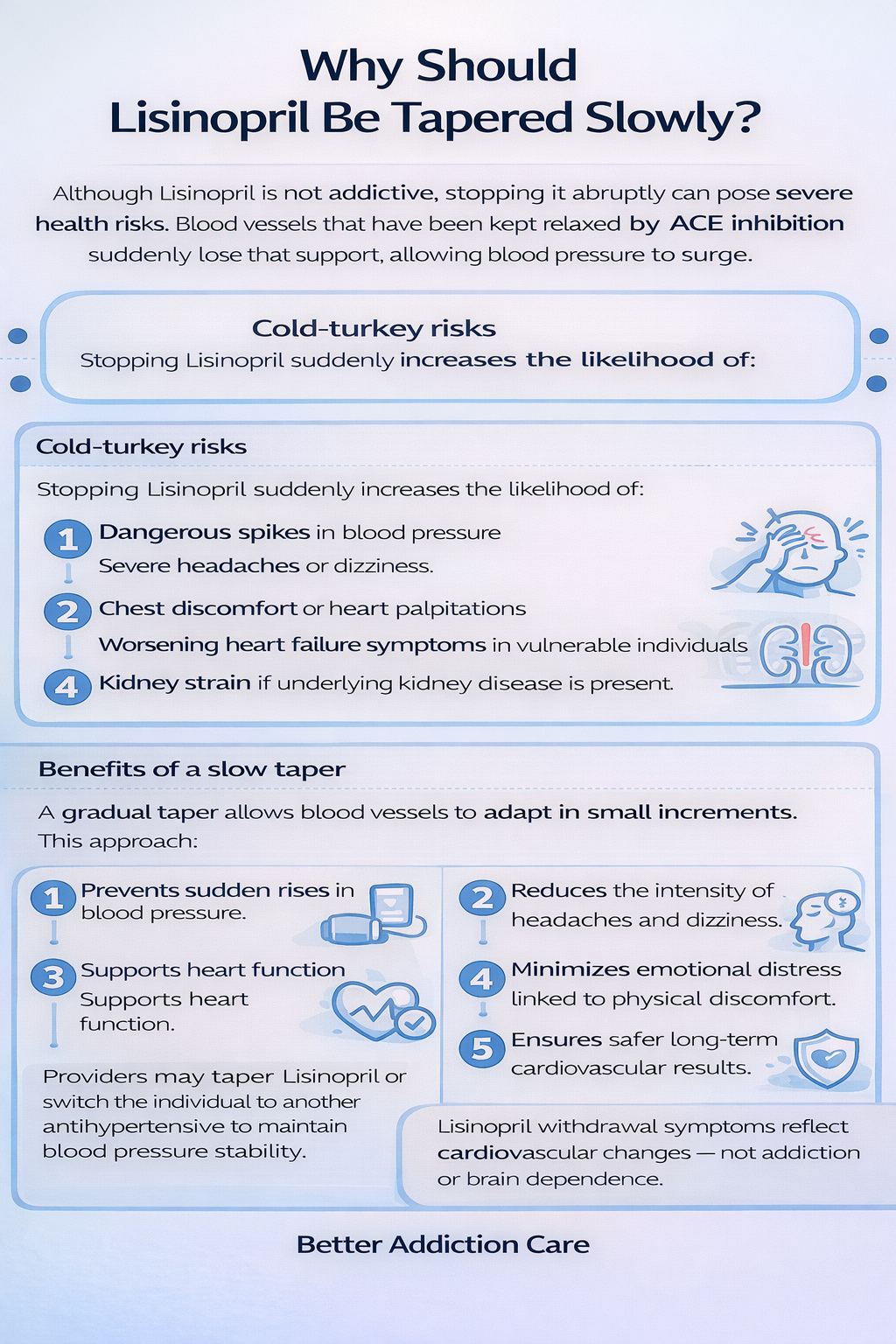
Although Lisinopril is not addictive, stopping it abruptly can pose severe health risks. Blood vessels that have been kept relaxed by ACE inhibition suddenly lose that support, allowing blood pressure to surge.
Stopping Lisinopril suddenly increases the likelihood of:
Dangerous spikes in blood pressure
Severe headaches or dizziness
Chest discomfort or heart palpitations
Worsening heart failure symptoms in vulnerable individuals
Kidney strain if underlying kidney disease is present
A gradual taper allows blood vessels to adapt in small increments. This approach:
Prevents sudden rises in blood pressure
Reduces the intensity of headaches and dizziness
Supports heart function
Minimizes emotional distress linked to physical discomfort
Ensures safer long-term cardiovascular results
Providers may taper Lisinopril or switch the individual to another antihypertensive to maintain blood pressure stability.
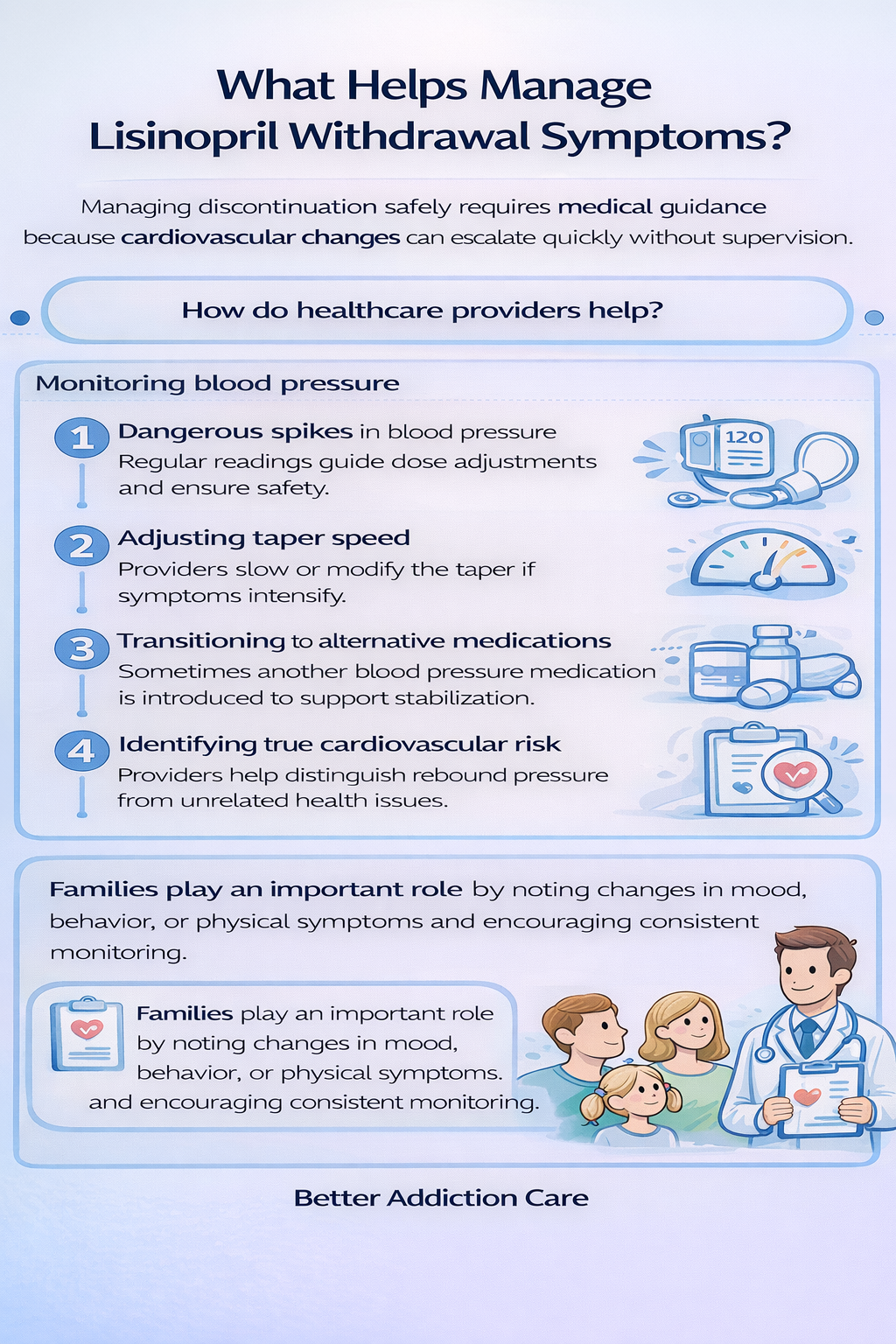
Managing discontinuation safely requires medical guidance because cardiovascular changes can escalate quickly without supervision.
How do healthcare providers help?
Monitoring blood pressure: Regular readings guide dose adjustments and ensure safety.
Adjusting taper speed: Providers slow or modify the taper if symptoms intensify.
Transitioning to alternative medications: Sometimes another blood pressure medication is introduced to support stabilization.
Identifying true cardiovascular risk: Providers help distinguish rebound pressure from unrelated health issues.
Families play an important role by noting changes in mood, behavior, or physical symptoms and encouraging consistent monitoring.
These strategies support cardiovascular stability, emotional steadiness, and daily functioning. They are most effective when practiced consistently and coordinated with medical supervision.
Stabilizing sleep helps regulate blood pressure. A consistent sleep schedule reinforces circadian rhythm, while minimizing screens and bright lights before bedtime helps calm the nervous system. Relaxation activities—gentle stretching, warm showers, or quiet reading—can ease tension.
If elevated nighttime pressure causes restlessness, deep breathing, weighted blankets, and a cool sleep environment may help. Families can support this by maintaining calm evening routines.
Hydration supports cardiovascular balance. Drinking 6–8 glasses of water daily helps blood flow and reduces fatigue. Meals should include steady protein sources, leafy greens, and foods rich in potassium—important for blood pressure stability. Reducing sodium and limiting caffeine may lower spikes in pressure or jitteriness.
Gentle movement promotes healthy circulation. Walking for 20–30 minutes, stretching, or low-impact exercise can reduce tension and support cardiovascular function. Intense workouts that suddenly raise heart rate should be avoided during early stabilization unless approved by a provider. Families can join in daily walks, creating supportive routines.
Cardiovascular symptoms can trigger emotional tension. Breathing exercises that extend the exhale—like inhaling for four seconds and exhaling for six—activate the parasympathetic nervous system. Journaling helps process fear or discomfort. Sensory grounding, such as warm tea, soft lighting, or quiet spaces, calms the body. Brief mindfulness practices help redirect attention away from physical symptoms.
Connection improves emotional stability. Daily check-ins with loved ones, shared meals, and regular conversation reduce isolation and help manage symptom-related stress. Peer support groups, online or in person, provide reassurance and normalize the experience of managing a blood pressure condition.
Routine plays a major role in stabilizing blood pressure. Consistent waking times, regular meals, moderate exercise, and planned daily activities regulate the nervous system. Predictability reduces anxiety and strengthens emotional steadiness during cardiovascular adjustment.
Medical oversight is crucial when stopping or reducing Lisinopril. Seek immediate help if any of the following occur:
Severe headaches accompanied by high blood pressure
Chest pain, tightness, or shortness of breath
Sudden swelling in legs, feet, or hands
Vision changes or confusion
Repeated blood pressure readings in the hypertensive range
Persistent dizziness or fainting episodes
Extreme fatigue or signs of heart strain
These symptoms require urgent evaluation because they may signal significant blood pressure elevation or cardiovascular stress [3].
Long-term recovery focuses on stabilizing cardiovascular health and establishing routines that protect blood pressure.
Over the next 1–3 months, people usually regain stability as their body adjusts to the new plan created by their provider.
Long-term strategies include:
Regular medical appointments
Blood pressure monitoring at home
Consistent exercise routines
Heart-healthy nutrition
Stress-management skills
Limiting alcohol and smoking
Supportive family communication
The goal is not just stabilizing blood pressure but creating sustainable habits that protect long-term cardiovascular health.
Lisinopril does not cause traditional withdrawal, but stopping it abruptly can lead to dangerous rebounds in blood pressure and cardiovascular strain. With a gradual taper, continuous monitoring, medical guidance, and strong family support, most individuals stabilize safely and return to healthy routines.
Patience, consistency, and collaboration with a healthcare provider are the keys to a safe and successful discontinuation process.
No. Stopping Lisinopril suddenly can make blood pressure rise quickly, which may lead to headaches, dizziness, chest discomfort, and cardiovascular strain. These changes can be dangerous, especially if you already have heart or kidney issues. The safest approach is a gradual, medically supervised taper so blood vessels adjust slowly and blood pressure remains stable during the transition.
Rebound symptoms usually appear within the first few days and peak during the first one to two weeks. Most people notice improvement as their taper continues or when another medication is introduced. Mild fluctuations—such as brief headaches or pressure changes—may last several more weeks, depending on overall health, stress levels, and the original dose taken.
It can be if the medication is stopped abruptly. While Lisinopril does not cause addiction, sudden discontinuation can trigger rebound hypertension, which puts extra stress on the heart and blood vessels. This may be risky for individuals with conditions like heart disease or kidney problems. Tapering slowly and checking blood pressure regularly reduces these risks significantly.
Loved ones can support by helping track blood pressure, maintaining calm routines, encouraging gentle activity, and reminding the person to follow medical guidance. Their presence provides reassurance during physical discomfort and helps identify concerning symptoms early. Attending appointments together or sharing simple daily habits, such as walks or structured meals, makes the process feel more manageable.
It often will, especially if Lisinopril was keeping high blood pressure controlled. When the medication is removed suddenly, blood vessels tighten again, causing levels to rise. Doctors may taper the dose slowly or switch you to another medication to prevent spikes. Monitoring at home helps catch changes early so treatment can be adjusted safely.
Seek immediate medical attention if you experience intense headaches, chest pressure, rapid heartbeat, or very high blood pressure readings. These may signal a dangerous spike that needs urgent care. Do not wait for symptoms to settle on their own. A provider can determine whether medication needs to be restarted, tapered differently, or replaced to protect heart and kidney health.
By calling us, you agree to our Terms & Conditions
For those seeking addiction treatment for themselves or a loved one, our calls are confidential and are available for 24/7 help.
Any treatment center receiving calls from the site is a paid advertiser.
Calls to numbers on a specific treatment center listing will be routed to that treatment center.
Calls to any general helpline will be answered by treatment providers, each of which is a paid advertiser.
By calling the helpline you agree to the terms of use. These calls are offered at no cost to you and with no obligation to enter into treatment. Neither this site nor anyone who answers the call receives a commission or fee dependent upon which treatment provider a visitor may ultimately choose.
If you wish to explore additional treatment options or connect with a specific rehab center, you can: browse top-rated listings, visit our homepage, or visit SAMHSA, or by calling 800-662-HELP. You may also contact The Florida Department of Children and Family Services