(866) 567-3138
Sponsored Helpline
Verify Insurance
Meloxicam stays in the body longer than most common NSAIDs because of its long elimination half-life. The half-life refers to the amount of time it takes for the concentration of the medication in the bloodstream to decrease by 50% after a dose. Meloxicam Half-Life: ~15–20 hours

 Expert Verified
Meloxicam remains in the body for an average of 4–5 days, depending on its half-life of 15–20 hours and the individual’s metabolism. Most people discontinue the medication after 75–100 hours, although older adults or those with slower liver/kidney function may require a longer duration.
Meloxicam’s detectability varies across urine, blood, saliva, and hair tests, with urine detecting it longest (up to 5 days) and hair up to 90 days.
Age, dosage, metabolic speed, organ health, body weight, and concurrent medications all affect how long it stays in your system.
Meloxicam (brand name Mobic) is a nonsteroidal anti-inflammatory drug (NSAID) prescribed to manage pain and inflammation related to osteoarthritis, rheumatoid arthritis, and acute musculoskeletal injuries.
It works by blocking cyclooxygenase (COX) enzymes, which reduces the production of inflammatory chemicals known as prostaglandins.
Because Meloxicam affects inflammation signaling throughout the body, it takes time for the liver to metabolize it and fully remove it from the system.
Its effects last much longer than fast-acting NSAIDs such as ibuprofen, which is why many people rely on it for sustained pain control — and why understanding its clearance timeline matters.
For individuals who experience side effects such as stomach discomfort, dizziness, fatigue, or fluid retention, knowing when levels drop can bring a sense of peace of mind.
Families supporting a loved one through medication changes often rely on this information to understand shifts in mood, appetite, activity levels, or discomfort.
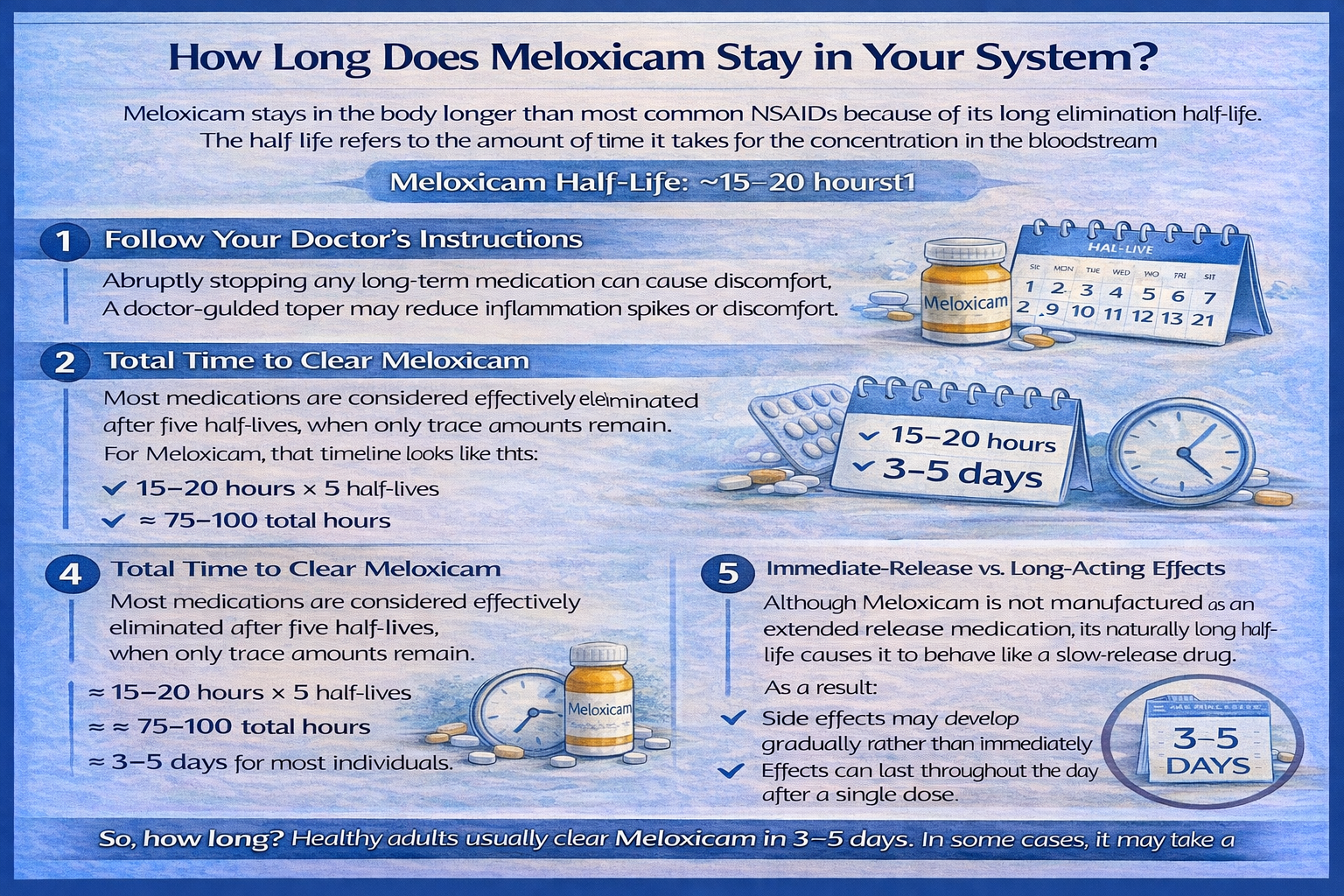
Meloxicam stays in the body longer than most common NSAIDs because of its long elimination half-life. The half-life refers to the amount of time it takes for the concentration of the medication in the bloodstream to decrease by 50% after a dose.
Meloxicam Half-Life: ~15–20 hours[1]
Every 15–20 hours, your body eliminates about half of the remaining Meloxicam. This slow and steady reduction explains why the medication provides all-day pain and inflammation relief, but also why it does not leave the body quickly once dosing stops.
Total Time to Clear Meloxicam
Most medications are considered effectively eliminated after five half-lives, when only trace amounts remain.
For Meloxicam, that timeline looks like this:
15–20 hours × 5 half-lives
≈ 75–100 total hours
≈ 3–5 days for most individuals
In healthy adults with normal liver and kidney function, Meloxicam typically clears within this range. However, for older adults, people with slower metabolism, or those with reduced liver or kidney function, the medication may remain in the system longer than five days.
Immediate-Release vs. Long-Acting Effects
Although Meloxicam is not manufactured as an extended-release medication, its naturally long half-life causes it to behave like a slow-release drug in the body.
As a result:
Side effects may develop gradually rather than immediately
Effects can last throughout the day after a single dose
Steady-state levels are reached after about 4–5 consecutive doses
Clearance after the final dose is gradual, not sudden
This explains why stopping Meloxicam does not lead to instant relief from side effects or interactions.
For individuals experiencing discomfort — and for families supporting a loved one — understanding this elimination process helps set realistic expectations. Symptom changes usually occur in stages, not overnight, and that gradual improvement is a normal part of how Meloxicam leaves the system.
Meloxicam is not a controlled substance and is not typically included in standard drug panels. However, it may appear on specialty tests, medical screenings, or toxicology reports.
Urine testing offers the longest and most reliable detection window for Meloxicam. Because the kidneys are responsible for eliminating much of the drug, trace amounts can remain detectable for up to five days after the last dose.[3]
This window may extend slightly in:
Older adults
People taking higher doses or using the medication long-term
Individuals with reduced kidney function or dehydration
Blood tests typically detect Meloxicam for one to two days after the most recent dose. These tests are usually performed in medical settings, such as when monitoring side effects, evaluating toxicity, or assessing medication levels in individuals with underlying health conditions.
Because Meloxicam leaves the bloodstream before it fully exits the body, blood tests have a shorter detection window than urine tests.
Saliva testing is rarely used for NSAIDs like Meloxicam, but when it is performed, the medication may be detectable for up to two days. Hydration levels, oral health, and dosing frequency can influence how long traces remain present.
Hair testing provides the longest detection window, sometimes identifying Meloxicam use for up to three months. As hair grows, small amounts of the medication can become trapped in the hair shaft, making this method useful for identifying long-term or repeated use rather than recent dosing.
Hair tests are uncommon and usually reserved for specialized investigations rather than routine screening.
These windows vary based on metabolism, dosage, and how consistently the medication has been used.
1. Dosage and Frequency of Use: Higher doses (7.5 mg vs. 15 mg) and long-term use can increase the time Meloxicam stays in your system. The medication may accumulate, especially in adults over 55 or those with slower metabolic rates.
2. Age and Metabolism: Metabolism naturally slows with age. An adult in their 20s may clear Meloxicam faster than someone in their 60s, even when taking the same dose. This difference can add 1–2 days to the elimination timeline.
3. Liver and Kidney Function: Meloxicam is primarily metabolized by the liver and cleared by the kidneys. When these organs are functioning at a reduced capacity, the drug can remain active longer. In clinical studies, individuals with mild organ impairment show notably slower clearance rates. [2]
4. Body Composition and Weight: Meloxicam is fat-soluble, meaning body fat percentage plays a role in how long it remains stored in tissues. Individuals with higher body mass may retain the drug slightly longer.
5. Other Medications: Medications such as blood pressure drugs, anticoagulants, antidepressants, and diuretics may interfere with how quickly Meloxicam clears — and may also make its side effects feel stronger.
6. Hydration and Overall Health: Dehydration slows kidney filtration, extending the clearance timeline. Healthy hydration and consistent nutrition support the natural elimination process.
As Meloxicam levels gradually decline, your body begins adjusting to lower levels of anti-inflammatory support. Because the medication leaves the system slowly, changes tend to happen in stages, not all at once.
You may notice the following shifts as Meloxicam clears:
As the medication wears off, pain relief may decrease, and underlying inflammation can become more noticeable. This doesn’t mean the condition has suddenly worsened — it reflects the body returning to its baseline inflammatory state after the medication’s effects fade.
For some people, stiffness or joint discomfort increases temporarily, especially in the first few days after stopping.
Meloxicam can cause subtle sedation or low-energy feelings in some individuals. As drug levels fall, alertness often improves, and fatigue may lessen. Families sometimes notice their loved one becoming more mentally present or physically active during this phase.
Stomach-related side effects — such as nausea, bloating, or indigestion — often begin to ease as Meloxicam leaves the system. Because NSAIDs affect the stomach lining, this improvement can be gradual rather than immediate.
Some individuals experience dizziness, lightheadedness, or mild swelling while taking Meloxicam. As the medication clears, fluid balance often stabilizes, and these symptoms may fade over several days.
A small number of people experience mild rebound symptoms as the body adjusts. These may include:
Temporary increases in pain or stiffness
Short-term inflammation flare-ups
These effects typically last 24–72 hours and resolve as the body adapts to functioning without the medication.
For individuals who have taken Meloxicam long-term, the adjustment period can feel more noticeable. Loved ones may observe:
Changes in mobility or physical comfort
Shifts in mood related to pain levels
Increased restlessness or stiffness
These reactions are normal, especially after extended use, and usually stabilize within several days. Supporting your loved one with patience and clear expectations during this period can make the transition smoother.
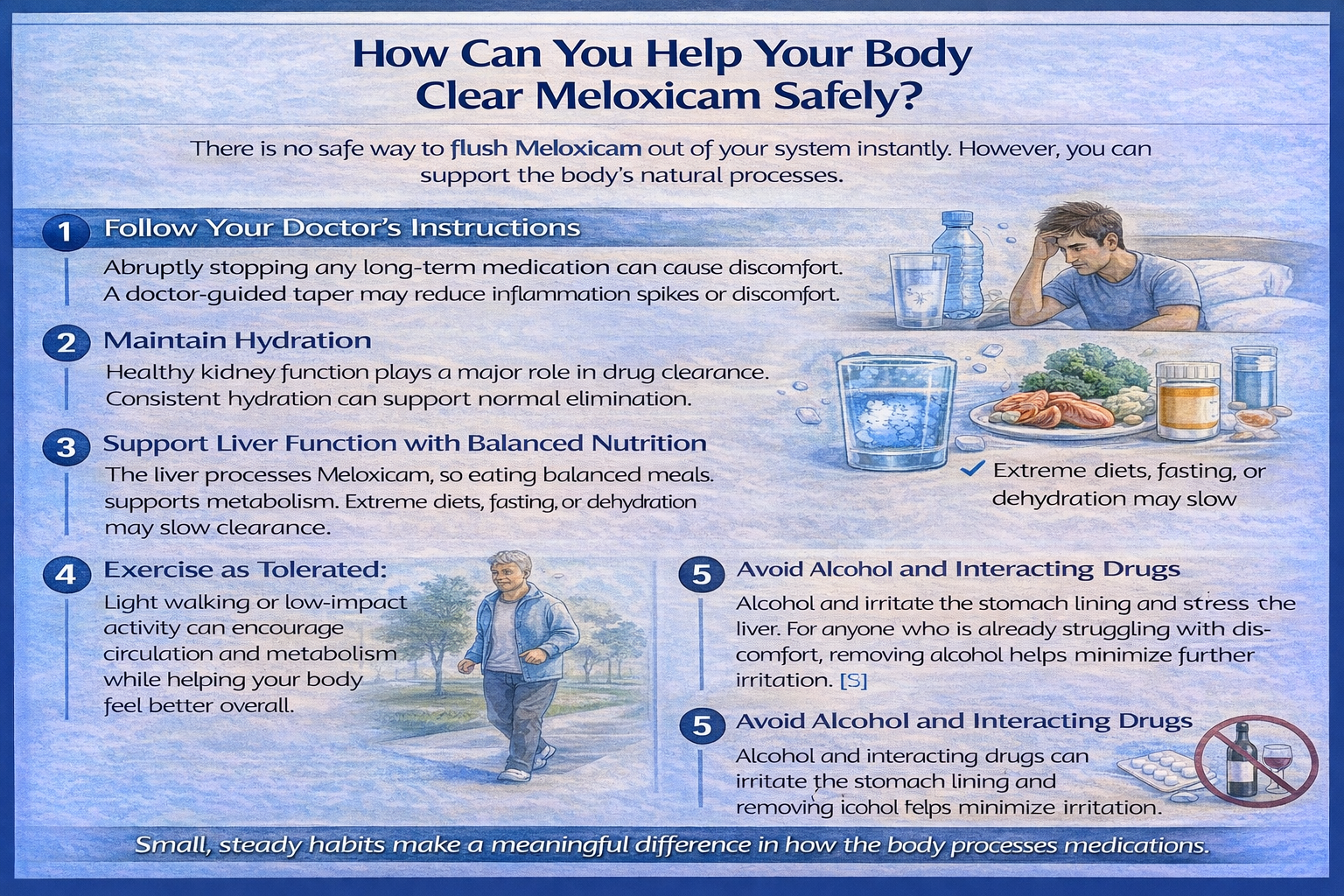
There is no safe way to flush Meloxicam out of your system instantly. However, you can support the body’s natural processes.
1. Follow Your Doctor’s Instructions: Abruptly stopping any long-term medication can cause discomfort. A doctor-guided taper may reduce inflammation spikes or discomfort.
2. Maintain Hydration: Healthy kidney function plays a major role in drug clearance. Consistent hydration can support normal elimination.
3. Support Liver Function with Balanced Nutrition: The liver processes Meloxicam, so eating balanced meals supports metabolism. Extreme diets, fasting, or dehydration may slow clearance.
4. Exercise as Tolerated: Light walking or low-impact activity can support metabolism and circulation — two major contributors to how quickly medications clear.
5. Avoid Alcohol and Interacting Drugs: Alcohol can irritate the stomach lining and stress the liver. For individuals already struggling with discomfort, removing alcohol helps reduce risk.
Small, steady habits make a meaningful difference in how the body processes medications.
Medical guidance can help identify whether symptoms are expected, dose-related, or signs of a developing complication.
You should seek medical advice if:
Side effects worsen or last longer than expected, especially stomach pain, dizziness, swelling, or fatigue that interferes with daily life
You plan to stop Meloxicam after long-term use, as a provider can help manage pain flares and reduce discomfort during the transition
You experience warning symptoms, such as abdominal pain, black or tarry stools, chest discomfort, or shortness of breath, which may require immediate evaluation
You have kidney disease, liver disease, or chronic dehydration, since these conditions can slow drug clearance and increase side-effect risk
You take other medications, including blood thinners, antidepressants, or steroids, that may interact with Meloxicam
Your loved one’s symptoms change suddenly, such as noticeable mood shifts, confusion, worsening pain, or physical decline while taking this medication
Even a brief consultation can provide reassurance, prevent harmful interactions, and help ensure Meloxicam is being used safely and effectively.
Meloxicam typically stays in the body for 3–5 days, depending on factors such as dosage, metabolism, age, and liver or kidney function. While most people clear the medication within this timeframe, detection and symptom changes can vary from person to person.
Because Meloxicam leaves the system gradually, side effects or changes in pain levels may improve in stages rather than all at once. Understanding this timeline helps individuals and families make informed decisions about medication use, testing concerns, and dosing changes.
Always follow medical guidance when starting, stopping, or adjusting Meloxicam. With proper awareness and support, most people can manage this medication safely and confidently without unnecessary worry.
When making any changes to your dosage — especially after long-term use — medical guidance ensures comfort, safety, and a smoother transition.
Meloxicam usually begins relieving pain within 1–2 hours of the first dose. However, its full anti-inflammatory effect develops gradually, often taking 1–2 weeks of consistent daily use. This delayed response is normal and reflects how the medication slowly reduces inflammation rather than providing instant relief.
Meloxicam does not appear on standard employment drug tests because it is not a controlled substance. However, it can be detected on specialized medical or toxicology screenings, especially when testing is done for clinical evaluation, medication monitoring, or investigative purposes rather than routine workplace screening.
Staying well hydrated helps support normal kidney function, which plays a role in eliminating Meloxicam from the body. However, drinking extra water will not significantly speed up clearance. The medication leaves the system at a fixed rate based on metabolism, organ function, and its long half-life.
Yes, dosage strength can influence how long Meloxicam remains in the body. Higher doses or long-term daily use may result in slightly longer clearance times, especially in older adults or those with slower metabolism. Even so, most people still eliminate the medication within several days.
Stopping Meloxicam suddenly may lead to a temporary increase in pain, stiffness, or inflammation, especially after long-term use. These changes usually resolve within a few days as the body adjusts. While Meloxicam does not cause addiction, medical guidance can help manage symptom flare-ups safely.
Yes, Meloxicam can build up slightly because of its long half-life of 15–20 hours. It typically reaches steady-state levels after 4–5 days of daily use. With long-term treatment, small amounts may accumulate, which helps explain why side effects can feel stronger over time.
By calling us, you agree to our Terms & Conditions
For those seeking addiction treatment for themselves or a loved one, our calls are confidential and are available for 24/7 help.
Any treatment center receiving calls from the site is a paid advertiser.
Calls to numbers on a specific treatment center listing will be routed to that treatment center.
Calls to any general helpline will be answered by treatment providers, each of which is a paid advertiser.
By calling the helpline you agree to the terms of use. These calls are offered at no cost to you and with no obligation to enter into treatment. Neither this site nor anyone who answers the call receives a commission or fee dependent upon which treatment provider a visitor may ultimately choose.
If you wish to explore additional treatment options or connect with a specific rehab center, you can: browse top-rated listings, visit our homepage, or visit SAMHSA, or by calling 800-662-HELP. You may also contact The Florida Department of Children and Family Services