(866) 567-3138
Sponsored Helpline
Verify Insurance
Meloxicam overdose can cause serious gastrointestinal bleeding, kidney and heart complications, and neurological symptoms, and requires immediate emergency treatment if severe symptoms such as vomiting blood, black stools, confusion, or fainting occur.
 Expert Verified
Meloxicam is a commonly prescribed anti-inflammatory medication used for pain, arthritis, and mobility support. When taken correctly, it can significantly improve daily functioning. But like many medications that affect inflammation, blood flow, and the stomach lining, an overdose can overwhelm the body quickly.
This can happen accidentally, through confusion about dosing, or when it’s combined with other substances that strain the liver, kidneys, or stomach. [1]
Overdose emergencies require immediate medical help — fast action genuinely saves lives. This article offers compassionate, clear guidance to help families recognize symptoms early and understand what steps to take. It is not medical advice and cannot replace emergency care.
Meloxicam is an NSAID that works by blocking COX enzymes involved in inflammation, which helps reduce pain and swelling but also affects multiple systems in the body, including the stomach, kidneys, liver, and cardiovascular system.
Because it interacts with so many areas, taking more than the recommended amount can quickly overwhelm the body and lead to serious complications.
Sensitivity to meloxicam varies widely from person to person — factors like age, overall health, kidney or liver function, genetics, and other medications can dramatically change how strongly the drug is felt or how long it stays in the system. Older adults, children, and people with chronic medical conditions often feel its effects more intensely, even at standard doses.
An overdose occurs when the body can’t metabolize or eliminate the drug fast enough, causing meloxicam to build up to toxic levels. This can lead to gastrointestinal bleeding, severe stomach irritation, decreased urine output from kidney strain, dangerous shifts in blood pressure, and neurological symptoms such as dizziness, confusion, or even seizures.
The risk becomes even higher when meloxicam is taken with alcohol, blood thinners, other NSAIDs, or certain antidepressants. [2] These combinations increase bleeding risks, slow down drug clearance, and overwhelm the body’s normal protective mechanisms, making severe reactions more likely even with smaller amounts of meloxicam.
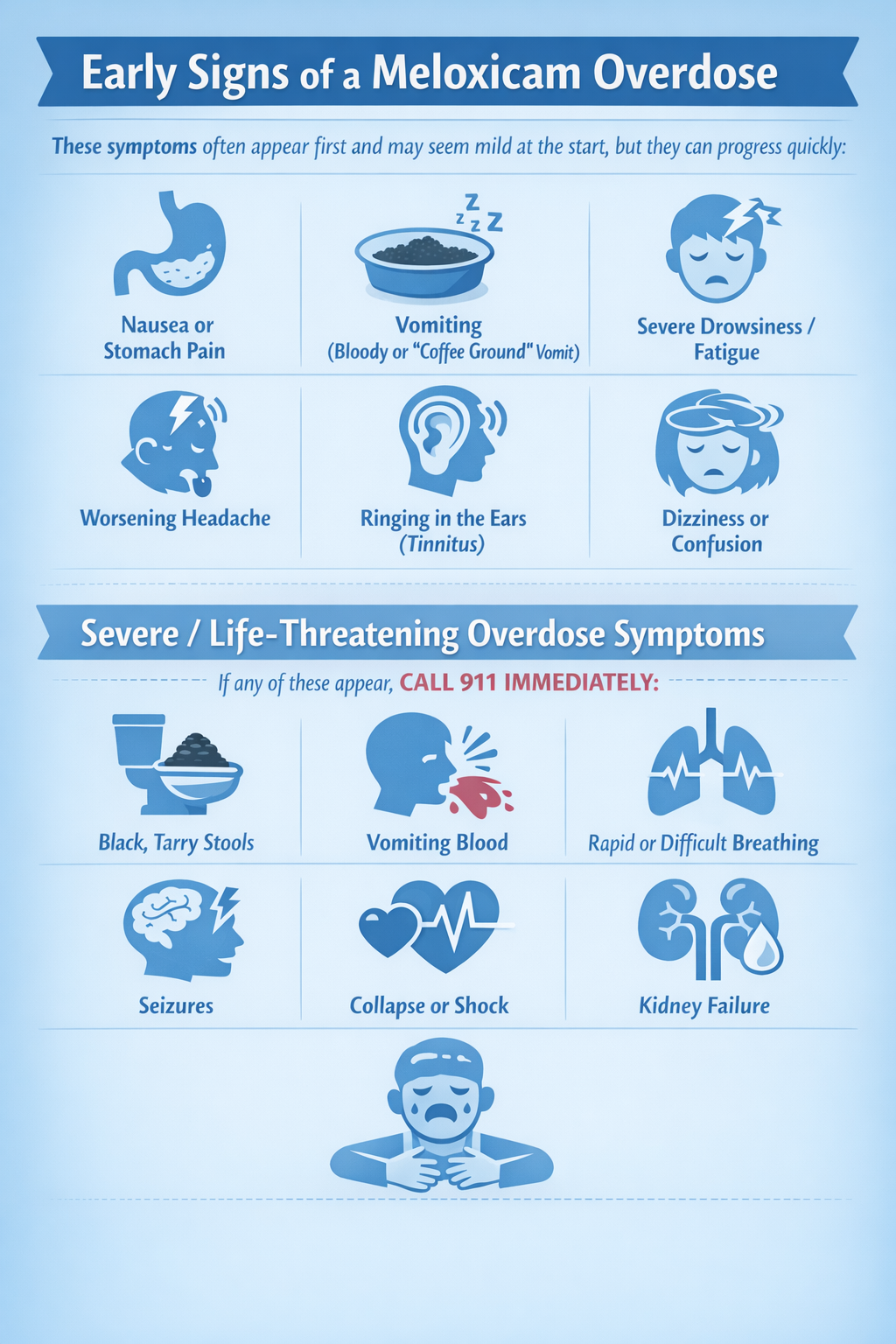
These symptoms often appear first and may seem mild at the start, but they can progress quickly:
Nausea or persistent stomach pain — your stomach may feel irritated, burning, or unsettled.
Vomiting (especially if bloody or resembling coffee grounds) — a sign of stomach or intestinal bleeding. [2]
Severe drowsiness or unusual fatigue — feeling “out of it” or excessively sleepy beyond normal tiredness.
A headache that worsens suddenly — can indicate rising toxicity or internal bleeding.
Ringing in the ears (tinnitus) — a common early warning sign of NSAID overdose.
Dizziness or lightheadedness — may be due to internal blood loss or dropping blood pressure.
Confusion or slowed responses — feeling foggy, disoriented, or unable to think clearly.
Even mild symptoms deserve attention. Overdose signs can escalate quickly — do not wait to seek help.
If any of these appear, it indicates the body is in serious distress. Call emergency services immediately:
Black, tarry stools — this usually indicates bleeding deep within the stomach or intestines. The blood turns dark and sticky as it moves through the digestive tract, making this symptom one of the most serious early markers of internal hemorrhage.
Vomiting blood — also known as hematemesis, this can appear bright red or dark and clotted. It typically signals active, significant gastrointestinal bleeding, which can worsen rapidly without emergency treatment.
Rapid, shallow, or difficult breathing — breathing may become strained as the body struggles to cope with toxicity, low oxygen levels, blood loss, or cardiovascular stress. This can progress to respiratory failure if not addressed immediately.
Seizures — these occur when the overdose disrupts the brain’s electrical activity. They may appear as full-body convulsions, sudden body stiffening, or brief episodes of unresponsiveness, all of which require urgent medical care.
Sudden, sharp drop in blood pressure — known as hypotensive shock, this can cause cold skin, sweating, dizziness, or collapse. It means the body is no longer able to maintain blood flow to vital organs, putting the heart, brain, and kidneys at risk.
Dangerous heart rhythm changes — including palpitations, skipped beats, fluttering, or a racing heartbeat. These arrhythmias occur when meloxicam toxicity affects the heart’s electrical system and can quickly become life-threatening.
Loss of consciousness — fainting, collapsing, or becoming fully unresponsive indicates severe overdose progression, often linked to shock, extreme blood loss, or heart rhythm disturbances. Immediate emergency treatment is critical.
Signs of kidney failure (little or no urine output, swelling in the legs or face, sudden confusion, or extreme fatigue) — meloxicam can drastically reduce kidney function during an overdose, causing dangerous fluid buildup and toxin accumulation in the body.
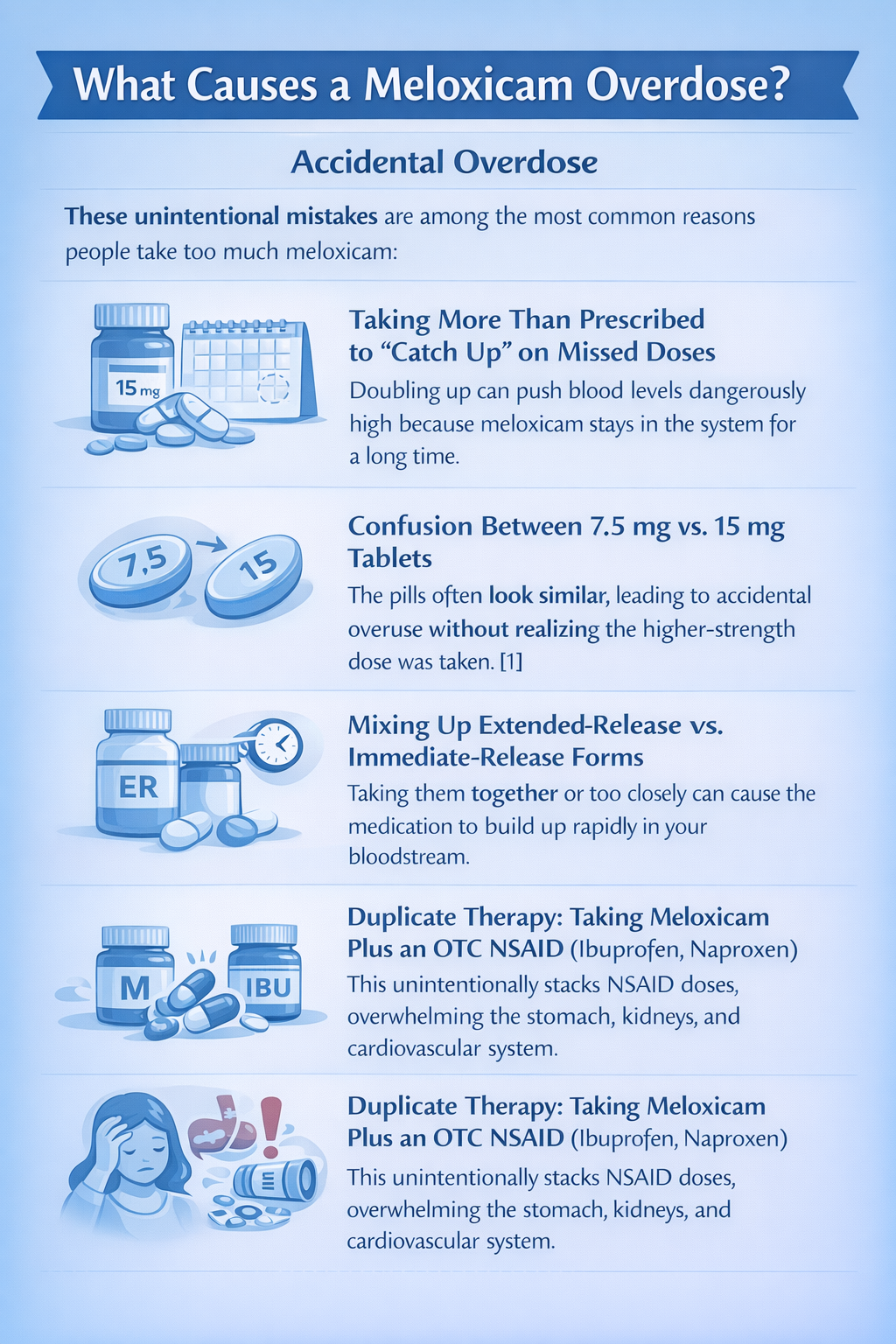
These unintentional mistakes are among the most common reasons people take too much meloxicam:
Taking more than prescribed to “catch up” on missed doses — doubling up can push blood levels dangerously high because meloxicam stays in the system for a long time.
Confusion between 7.5 mg vs. 15 mg tablets — the pills often look similar, leading to accidental overuse without realizing the higher-strength dose was taken. [1]
Mixing up extended-release vs. immediate-release forms — taking them together or too closely can cause the medication to build up rapidly in your bloodstream.
Duplicate therapy: taking meloxicam plus an OTC NSAID (ibuprofen, naproxen) — this unintentionally stacks NSAID doses, overwhelming the stomach, kidneys, and cardiovascular system.
Certain combinations drastically increase toxicity and put major organs at risk:
Especially dangerous combinations include:
Alcohol — irritates the stomach lining and increases the chance of bleeding.
Other NSAIDs — compounds stomach and kidney damage by doubling similar drug effects.
Blood thinners (warfarin, apixaban) — the combination can cause uncontrollable bleeding.
Steroids — significantly heighten the risk of ulcers and gastrointestinal tears.
Certain antidepressants (e.g., SSRIs/SNRIs) — reduce platelet function, making meloxicam-related bleeding more severe and harder to stop.
Together, these interactions amplify the chances of GI bleeding, stomach perforation, worsening kidney function, and dangerous cardiovascular stress.
Some medical conditions make the body far more sensitive to meloxicam and raise overdose risk even at lower doses:
Kidney or liver disease — these organs clear meloxicam; if they’re compromised, the medication builds up quickly.
Stomach ulcers or GERD — the stomach lining is already weakened, so bleeding and irritation occur more easily.
Heart disease or high blood pressure — meloxicam can cause fluid retention and strain the cardiovascular system. [3]
Age-related vulnerability (children & older adults absorb differently) — both groups process drugs less predictably, making standard doses potentially harmful.
Once too much meloxicam is in the body—even temporarily—the following complications can appear within hours:
Severe stomach irritation or bleeding — ranging from sharp abdominal pain to dangerous internal hemorrhage.
Breathing difficulty due to metabolic complications — the overdose can alter the body’s acid-base balance, affecting lung function.
Irregular heart rhythms — toxicity can disrupt the heart’s electrical signaling, leading to palpitations or dangerous arrhythmias.
Risk of aspiration or choking if vomiting occurs — especially if the person is very drowsy or semi-conscious.
Acute stress on the kidneys and liver — these organs work overtime to filter the drug, which can cause sudden inflammation or reduced function.
Keep steps simple, calm, and action-oriented:
Call emergency services immediately.
Stay with the person — keep them awake and talking if possible.
If they’re vomiting, roll them onto their side to prevent choking.
Do not give food, drinks, activated charcoal, or more medication.
Tell medics the dose taken, the time taken, and any other substances used.
If possible, bring the medication bottle with you.
Your presence and calmness can make a powerful difference during those critical minutes.
When someone arrives at the hospital with a suspected meloxicam overdose, the medical team’s priority is to stabilize vital functions and prevent complications before they progress.
Treatment focuses on protecting critical organs and identifying any early signs of internal bleeding or toxicity.
Monitoring breathing, blood pressure, oxygen levels, and heart rhythm — continuous monitoring helps doctors catch sudden changes like dropping oxygen levels, unstable heart rhythms, or shock. These signs can develop quickly, so real-time tracking is essential.
Blood tests to assess meloxicam levels and organ stress — labs typically include kidney and liver function tests, complete blood count (to check for hidden bleeding), coagulation studies, and electrolytes. These results guide immediate interventions and help determine the severity of the overdose.
IV fluids to support kidney function — fluids help maintain circulation, dilute toxins, and reduce the strain on the kidneys as they attempt to filter the drug. This step is especially important if the person is dehydrated or has early signs of kidney stress.
Medications for stomach protection and bleeding control — doctors may use proton pump inhibitors or other GI-protective agents to reduce stomach acidity and minimize further irritation. If bleeding is suspected, additional medications or interventions may be needed to prevent worsening blood loss.
Activated charcoal (only if medically appropriate and timed correctly) — charcoal can bind meloxicam still present in the stomach, but it’s typically only given within a short window after ingestion and only if the patient is fully alert and able to swallow safely.
Observation until the person is stable and safe to discharge — monitoring may last several hours or extend overnight. Doctors ensure that vital signs are stable, lab values are improving, and no delayed symptoms (such as internal bleeding or kidney issues) are emerging.
Most meloxicam overdoses are very treatable, especially when medical attention is sought early. Prompt care significantly reduces the risk of serious complications.
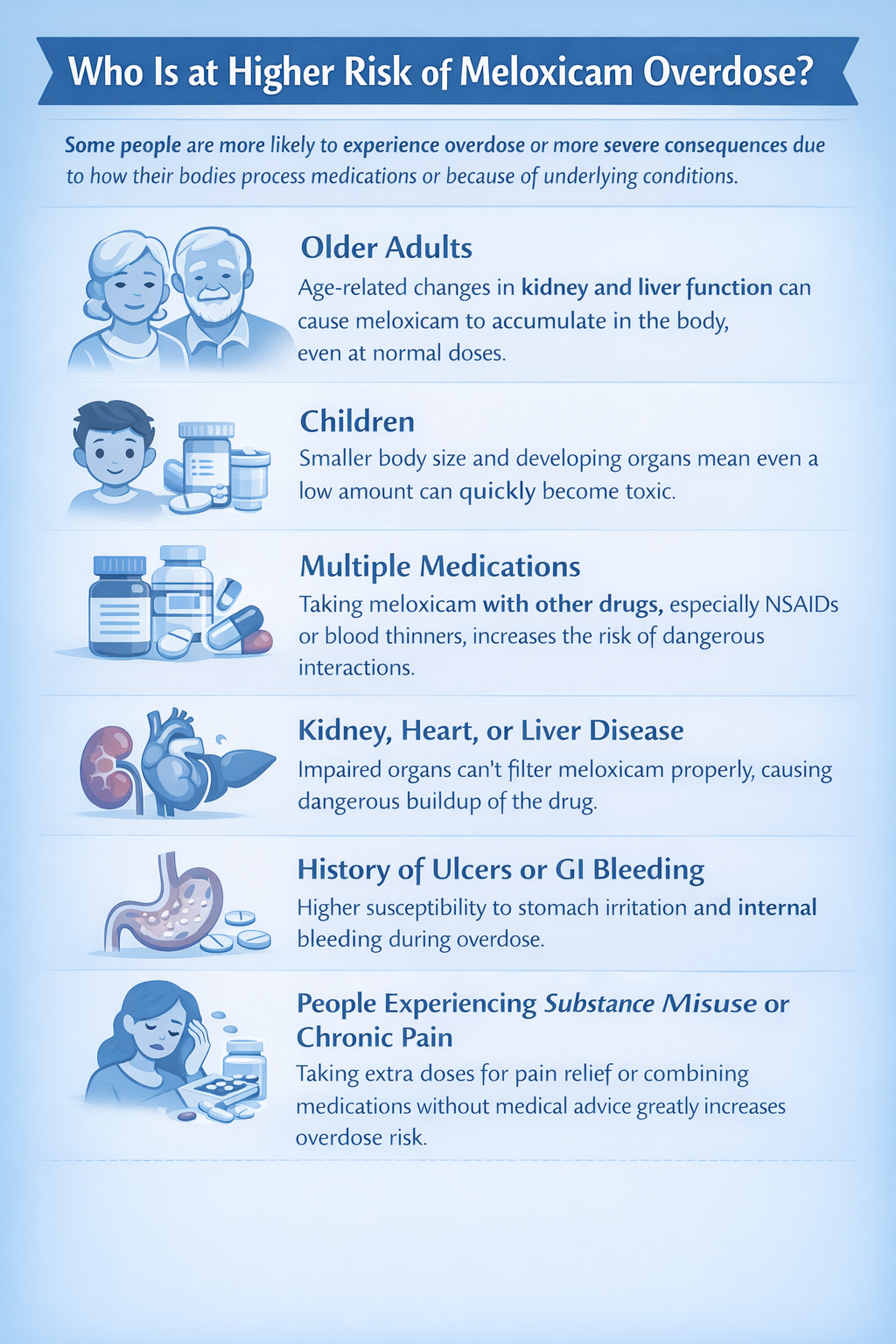
Some people are more likely to experience overdose or more severe consequences due to how their bodies process medications or because of underlying conditions.
Older adults — age-related changes in kidney and liver function can cause meloxicam to accumulate in the body, even at normal doses.
Children — because of their smaller body size and developing organs, even a relatively low amount can quickly become toxic.
People combining multiple medications — taking meloxicam alongside other drugs, especially NSAIDs or blood thinners, increases the risk of accidental overdose and dangerous interactions.
Individuals with kidney, heart, or liver disease — these organs help filter and metabolize meloxicam, and when they are impaired, the drug can build up to unsafe levels.
Those with a history of ulcers or GI bleeding — their digestive tract is more susceptible to irritation, making internal bleeding far more likely during an overdose.
People experiencing substance misuse or chronic pain self-medication patterns — taking extra doses for pain relief or combining medications without medical advice significantly increase overdose risk. [4]
Practical, compassionate guidance families can use to keep loved ones safe:
Follow prescriptions exactly as written — take meloxicam at the prescribed dose and time. Even one extra tablet can significantly increase the risk of stomach bleeding or kidney stress because the drug stays in the system for many hours.
Never mix meloxicam with alcohol or other NSAIDs — this combination sharply increases the chances of GI bleeding, ulcers, and kidney damage. If pain relief is still inadequate, it’s safer to call a doctor rather than add another medication.
Use a pill organizer to avoid double-dosing — weekly pill boxes or smartphone reminders help prevent accidental “Did I take it already?” mistakes, especially for older adults or people on multiple medications.
Schedule regular doctor visits for safety monitoring — routine check-ins allow healthcare providers to adjust the dose, assess kidney and liver function, and catch early signs of complications before they become serious.
Keep medications stored safely away from children — child-resistant containers and high storage areas reduce the risk of accidental ingestion, which can be dangerous even in small amounts.
Ask the doctor before adding OTC pain relievers — many over-the-counter products contain hidden NSAIDs. Confirming with a doctor or pharmacist helps prevent unintentional stacking of similar drugs.
It may be time to seek support if someone:
Repeatedly misuses meloxicam to manage pain
Feels anxious about losing control over their medication use
Increases their dose without medical direction
Shows signs of dependence or withdrawal-like symptoms
Struggles with underlying emotional or chronic pain challenges
Support may include counseling, medical pain management, or addiction recovery services. Recovery is possible — and you do not have to navigate it alone.
Meloxicam overdose can escalate from mild symptoms to medical emergencies.
Gastrointestinal bleeding, low blood pressure, and kidney failure require immediate attention.
Quick action — calling emergency services and staying with the person — can save a life.
Prevention through safe dosing and medical oversight greatly reduces risks.
With timely treatment and long-term support, most people recover fully.
Symptoms of a meloxicam overdose can range from mild to severe. Early signs often include nausea, vomiting, stomach pain, dizziness, drowsiness, and headache. More serious symptoms may involve black or bloody stools, vomiting blood, shortness of breath, confusion, severe weakness, or fainting, which can indicate gastrointestinal bleeding or systemic toxicity and require immediate medical attention.
A meloxicam overdose increases the risk of serious gastrointestinal bleeding, kidney injury, cardiovascular complications, and central nervous system effects. People with underlying kidney disease, heart conditions, a history of ulcers, or those taking other NSAIDs, blood thinners, or alcohol are at higher risk of severe complications. In extreme cases, overdose can be life-threatening if not treated promptly.
By calling us, you agree to our Terms & Conditions
For those seeking addiction treatment for themselves or a loved one, our calls are confidential and are available for 24/7 help.
Any treatment center receiving calls from the site is a paid advertiser.
Calls to numbers on a specific treatment center listing will be routed to that treatment center.
Calls to any general helpline will be answered by treatment providers, each of which is a paid advertiser.
By calling the helpline you agree to the terms of use. These calls are offered at no cost to you and with no obligation to enter into treatment. Neither this site nor anyone who answers the call receives a commission or fee dependent upon which treatment provider a visitor may ultimately choose.
If you wish to explore additional treatment options or connect with a specific rehab center, you can: browse top-rated listings, visit our homepage, or visit SAMHSA, or by calling 800-662-HELP. You may also contact The Florida Department of Children and Family Services