(866) 567-3138
Sponsored Helpline
Verify Insurance
Yes, but only when the combination is prescribed and monitored by a medical professional. For individuals struggling with pain that affects their daily function, combining these medications can seem like a fast way to regain comfort, mobility, and stability.
 Expert Verified
Taking Meloxicam and Tramadol Together: These medications can be combined, but only under close medical supervision. The combination may provide stronger pain relief, yet it also narrows the margin of safety, making monitoring important.
Potential Risks: Using them together can raise the risk of stomach bleeding, excessive drowsiness, slowed breathing, kidney strain, and, in rare cases, serotonin syndrome.
When It’s Considered Safe: This combination is usually prescribed only for conditions with inflammation plus moderate-to-severe pain. Safe use requires strictly controlled doses and ongoing supervision by a healthcare professional.
Meloxicam (brand name Mobic) is a nonsteroidal anti-inflammatory drug (NSAID) used to reduce inflammation, swelling, stiffness, and pain. It blocks prostaglandins, chemical messengers that trigger inflammatory responses and intensify pain signals.
Tramadol (brand name Ultram) is a centrally acting opioid analgesic, meaning it reduces pain by changing how the central nervous system processes and interprets pain signals. It also increases the neurotransmitters serotonin and norepinephrine, both of which help regulate pain perception and emotional response.
These medications work on different parts of the pain pathway:
Meloxicam:
Lowers inflammation at the tissue and joint level
Helps reduce swelling and stiffness
Best for inflammatory pain (arthritis, tendon irritation, joint damage)
Tramadol:
Reduces pain perception in the brain and spinal cord
Useful for moderate–severe pain, nerve pain, and post-surgical discomfort
Acts on opioid receptors while also influencing mood-regulating chemicals
Because they target different aspects of pain, doctors sometimes use them together — but only when the benefits outweigh the risks and proper monitoring is in place.
Yes, but only when the combination is prescribed and monitored by a medical professional. For individuals struggling with pain that affects their daily function, combining these medications can seem like a fast way to regain comfort, mobility, and stability.
But combining them without guidance increases the risk of serious side effects. Doctors may combine these medications when:
Pain involves both inflammation and nerve-related components
For example, conditions like sciatica, severe arthritis flare-ups, or injuries that cause swelling and nerve compression may require treatment from multiple angles.
A single medication is not providing enough relief
People who still experience moderate pain despite taking Meloxicam might benefit from Tramadol short-term, but this must be monitored because of Tramadol’s opioid-like effects.
Short-term, stronger pain control is needed while other treatments take effect
This includes post-surgical recovery, acute musculoskeletal injuries, or severe inflammatory flare-ups.
However, taking both medications without medical oversight can be dangerous.
The combination may intensify sedation, increase bleeding risk, and place additional stress on the liver, kidneys, and gastrointestinal system.
If you are considering adding one medication to the other, consult your provider first to ensure safe dosing and avoid potentially life-threatening interactions.
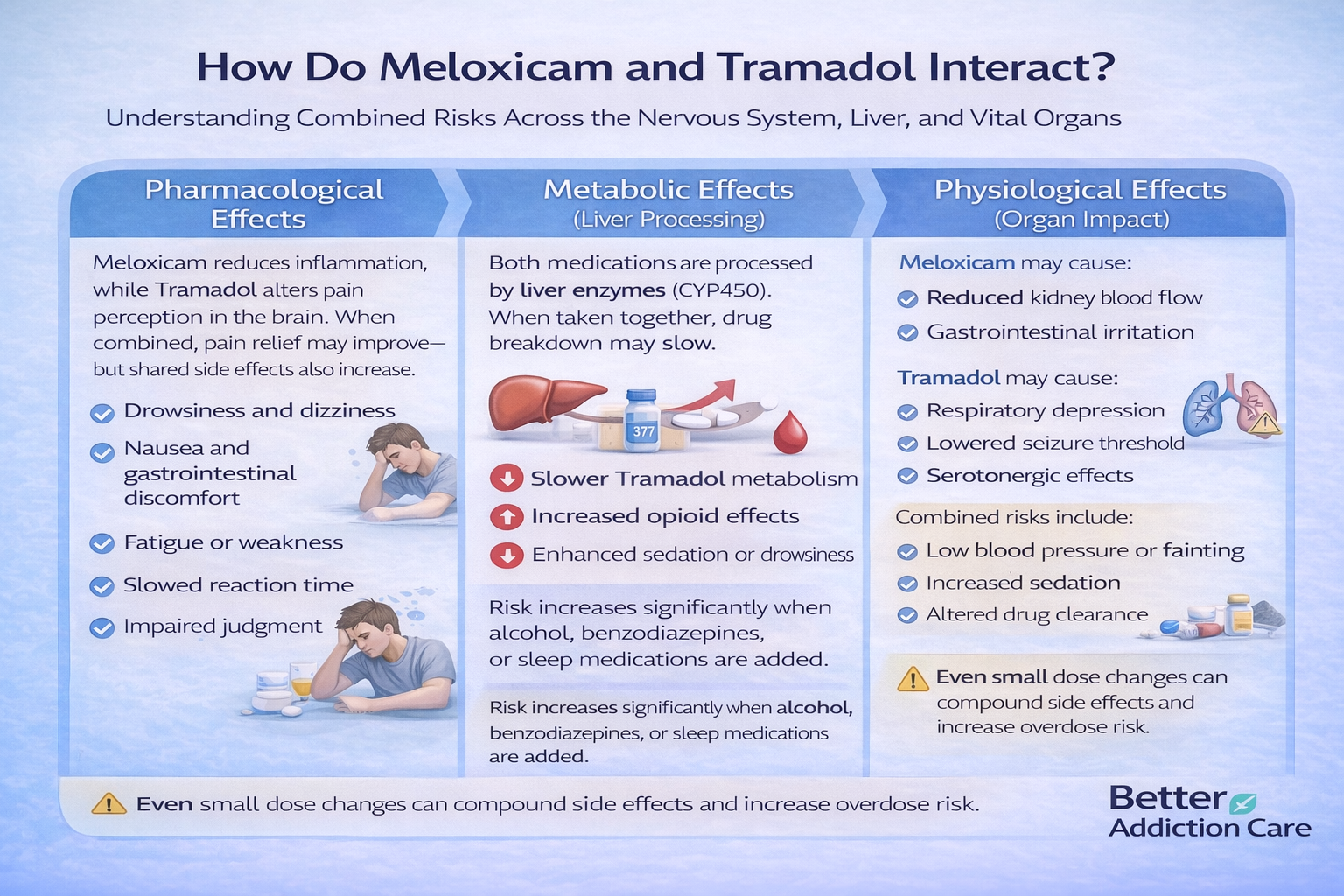
Meloxicam reduces inflammation, while Tramadol alters pain perception in the brain.
Used together, the result may be synergistic pain relief, meaning some individuals feel significantly better than they would with either medication alone.
But combining them also increases shared side effects such as:
Dizziness and lightheadedness due to central nervous system sensitivity
Nausea and stomach discomfort, especially when taken on an empty stomach
Fatigue or weakness, making daily tasks more difficult
Slowed reaction time, increasing the risk of falls or accidents
Impaired judgment, especially when Tramadol levels rise higher than expected
Because both medications affect how the nervous system and major organs respond to stress, even minor dose increases can compound effects.
Both medications are processed in the liver, particularly through the CYP450 enzyme system, which plays a central role in breaking down drugs.
Tramadol is heavily dependent on this system, and when two medications depend on the same enzymes, one drug may slow down the metabolism of the other.
When Meloxicam and Tramadol are taken together:
Blood levels of Tramadol may rise, leading to stronger-than-expected opioid effects
Sedation or drowsiness may intensify, even at normal doses
Risk of respiratory depression increases, especially for people with lung diseases
Liver strain may worsen, particularly for those with existing liver impairment or heavy alcohol use
This interaction becomes significantly more dangerous when substances like benzodiazepines, sleep medications, or alcohol are added, as they also rely heavily on liver processing and depress the nervous system.
Both medications may affect vital organ systems in different ways:
Meloxicam
Can reduce kidney blood flow, especially in individuals who are dehydrated or have hypertension
May worsen kidney function in long-term use
Can irritate the stomach lining or increase acid production
Tramadol
May slow the respiratory rate, especially at higher doses
Can lower the seizure threshold, increasing the likelihood of seizures
Affects serotonergic pathways, raising the risk of serotonin syndrome
Combined effects may include:
Lower blood pressure, leading to dizziness or fainting
Higher stomach irritation, especially in individuals with existing digestive issues
Increased sedation, making it unsafe to drive or perform physical tasks
Altered medication clearance, raising the risk of overdose
These overlapping effects make the combination riskier in:
Older adults
Individuals with kidney or liver conditions
People with a history of stomach ulcers
Anyone taking additional medications that interact with opioids or NSAIDs

Below are the key risks, expanded for clarity and safety awareness. These sections integrate competitor-gap insights such as mental health impact, sleep disruption, long-term dependence, and withdrawal concerns, which many competitor pages fail to explain.
Meloxicam, like other NSAIDs, can irritate the stomach lining and increase the risk of bleeding, ulcers, or perforation.
When paired with Tramadol — which may cause nausea, vomiting, or slowed digestion — the combined impact is greater.
Stomach irritation that makes eating uncomfortable
Painful or burning sensations after meals or medication use
Ulcers caused by prolonged irritation of the stomach tissue
Gastrointestinal bleeding, which can become life-threatening if not detected early
Worsening acid reflux, especially for those with GERD
Persistent nausea and vomiting, leading to dehydration
Black, tar-like stools
Vomiting blood or “coffee ground”-like material
Sharp or worsening stomach pain
Feeling weak or faint after standing
Anyone with a history of ulcers, GERD, stomach bleeding, or NSAID sensitivity should avoid combining these medications unless strictly monitored.
Tramadol has a direct impact on the CNS because it activates opioid receptors.
Although Meloxicam is not sedating, the combination can amplify CNS-dampening effects.
Dizziness and imbalance, increasing fall risk
Heavy drowsiness, affecting concentration and alertness
Confusion or slowed mental processing, especially in older adults
Reduced coordination, making physical tasks unsafe
Impaired memory or difficulty focusing, particularly at higher doses
Heightened risk of accidents, especially when driving or using machinery
Alcohol is consumed
Cannabis or sedatives are added
Tramadol doses exceed the prescribed limits
Sleep hygiene is poor
The individual is dehydrated or exhausted
Because CNS depressant effects can escalate rapidly, it’s important to monitor your body closely when starting this combination.
Kidney Risks (Meloxicam-related)
Meloxicam reduces blood flow to the kidneys by inhibiting prostaglandins, which help maintain kidney perfusion.
This can lead to:
Reduced urine output
Kidney inflammation
Elevated creatinine levels
Acute kidney injury (AKI), especially in dehydrated individuals
Liver Risks (Tramadol-related)
Tramadol is metabolized by liver enzymes. When the liver is stressed, Tramadol may accumulate, leading to:
Elevated liver enzymes
Yellowing of the eyes or skin (jaundice)
Dark urine
Upper-right abdominal discomfort
Combined-use complications:
Greater strain on both liver and kidneys
Higher risk of long-term organ damage
Interference with other medications metabolized by the liver
Dehydration-induced complications
Routine bloodwork may be needed if using these medications together for more than a few days.
Tramadol slows breathing in some individuals, especially when doses rise or metabolism is slowed.
This risk increases when:
Combined with alcohol
Benzodiazepines are also used
Sleep disorders like sleep apnea are present
The individual has underlying lung conditions (asthma, COPD)
Signs include shallow breathing, extreme fatigue, and difficulty waking up.
Tramadol lowers the seizure threshold — meaning seizures can happen even in people without a seizure history.
Risk increases when combined with:
Antidepressants
Stimulants
Alcohol
High Tramadol doses
Dehydration or electrolyte imbalance
A dangerous build-up of serotonin characterized by:
Agitation or restlessness
Severe sweating
Fever or shivering
Rapid heartbeat
Muscle rigidity
Tremors or involuntary movement
This risk grows for anyone using medications that also boost serotonin (SSRIs, SNRIs, MAOIs).
Doctors may prescribe this combination when pain involves both inflammation and central pain processing pathways, such as:
Severe arthritis flare-ups: Pain is driven by inflammation, but nerve pathways also amplify sensitivity.
Acute musculoskeletal injury: After falls, strains, or accidents, inflammation and acute pain often overlap.
Post-surgical pain with inflammatory swelling: Meloxicam targets swelling; Tramadol helps manage deeper pain.
Chronic joint diseases with persistent inflammation: Some individuals experience both tissue-level inflammation and nerve hypersensitivity.
Conditions combining nerve pain and inflammation: Examples include sciatica, spinal disc irritation, or carpal tunnel–related swelling.
Most providers prescribe this combination short term due to increased risk when used long-term.
Avoid or use extreme caution with the combination if you have:
A history of stomach ulcers or gastrointestinal bleeding:
Meloxicam can irritate and thin the stomach lining, while Tramadol may slow digestion, making it harder to detect early symptoms of bleeding. Anyone with a GI history has a much higher risk of internal bleeding or perforation when combining NSAIDs and opioids.
Kidney disease:
Meloxicam reduces kidney blood flow and can worsen kidney function, especially during dehydration or illness. When paired with Tramadol — which is processed by the liver but filtered through the kidneys — the strain is significantly higher.
Liver impairment:
Tramadol is metabolized through the liver’s CYP450 system. Impaired liver function slows drug clearance, raising the risk of overdose, excessive sedation, or respiratory problems.
Respiratory disorders (like COPD or sleep apnea):
Opioid-like medications such as Tramadol can slow breathing. Individuals with existing respiratory issues are far more likely to experience dangerous oxygen drops or nighttime breathing interruptions.
Seizure disorders:
Tramadol lowers the seizure threshold. Combining it with an NSAID does not directly cause seizures, but metabolic changes and drug accumulation can increase this risk dramatically.
Alcohol use disorder:
Alcohol significantly raises the risks of respiratory depression, liver strain, sedation, and gastrointestinal bleeding — all of which are already increased by Meloxicam and Tramadol.
Use of benzodiazepines, sedatives, or sleep aids:
Medications like Xanax, Ativan, or Ambien sharply increase sedation and slow breathing when paired with Tramadol. This combination is one of the most common causes of opioid-related medical emergencies.
Use of SSRIs, SNRIs, or other serotonergic medications:
Because Tramadol increases serotonin, mixing it with antidepressants can trigger serotonin syndrome — a potentially life-threatening condition with agitation, fever, tremor, and severe confusion.
Pregnancy or breastfeeding:
Meloxicam may affect fetal kidney development, and Tramadol can cause neonatal withdrawal or breathing problems. Use only under specific medical supervision.
Certain factors dramatically increase the danger of combining these medications, especially alcohol use, higher-than-prescribed doses, dehydration, heat exposure, fasting, or combining other CNS depressants.
Track symptoms daily and contact a medical professional immediately if you experience:
Here are practical, research-backed safety steps to protect yourself if your provider recommends both medications:
Always take Meloxicam with food
Stay hydrated to protect your kidneys
Avoid alcohol entirely while taking Tramadol
Do not drive until you know how the combination affects you
Avoid doubling doses if pain returns early
Inform your provider if you use antidepressants
Space doses as prescribed
Use the lowest effective doses for the shortest duration
Keep medications secured
Alternatives your provider may discuss include:
Acetaminophen instead of NSAIDs: Ideal for individuals with GI risk, stomach ulcers, or NSAID sensitivity. It reduces pain without affecting inflammation and can be safely paired with many other medications.
Non-opioid pain relievers: Drugs like celecoxib or naproxen (when monitored) may work for inflammation with fewer central nervous system effects.
Physical therapy or guided exercise: A central recommendation across competitor pages — improves mobility, reduces inflammation, and supports long-term pain management without medications.
Heat/ice therapy: Helps control swelling, nerve irritation, and joint stiffness. Good for acute injuries or arthritis flare-ups.
Corticosteroid injections: Targets inflammation directly at the source and can reduce pain for weeks or months.
Nerve-targeting medications like gabapentin or pregabalin: Helpful for sciatica, nerve compression, and neuropathic pain.
Short-term muscle relaxants: Useful in cases where muscle spasms aggravate nerve irritation or joint pain.
Topical NSAIDs (diclofenac gel): Deliver anti-inflammatory effects with far lower systemic exposure, reducing GI and kidney risk.
Never switch medications without consultation — each alternative carries its own specific safety considerations.
Meloxicam and Tramadol can work together to provide strong, multi-pathway pain relief — but this combination narrows the safety margin.
For individuals dealing with acute pain, chronic inflammation, or painful flare-ups, understanding the risks helps prevent dangerous complications.
Used carefully, under strict medical supervision, this combination can offer meaningful relief while other long-term treatments begin working.
But self-medicating, adjusting doses, or mixing these medications with alcohol or sedatives can lead to serious health consequences.
Always speak with your healthcare provider before combining pain medications, and report side effects early.
You deserve pain relief that is both effective and safe.
Most individuals take this combination only for a short period, typically a few days to several weeks, depending on the condition being treated. Long-term use increases risks such as stomach bleeding, kidney strain, and dependency-like behaviors associated with Tramadol. If your pain lasts longer than expected, your provider may adjust doses, switch medications, or order tests to ensure your organs remain healthy.
Yes, you can take them together if your provider recommends it. Some people take Meloxicam in the morning because it works best when taken consistently with food, while Tramadol may be taken later in the day to manage worsening symptoms. What matters most is maintaining a schedule that avoids doubling doses or adjusting timing without medical approval.
Yes, especially due to Tramadol’s impact on serotonin and norepinephrine, both of which influence emotional regulation. Some people may feel more anxious, unusually energetic, or emotionally flat. If you notice sudden irritability, panic, depressive feelings, or emotional swings, contact your provider immediately. These symptoms could signal a medication imbalance or early signs of serotonin syndrome.
No. Alcohol dramatically increases sedation, slows your breathing, and intensifies Tramadol’s opioid-like effects. Combined with Meloxicam, alcohol raises the risk of stomach bleeding, gastric irritation, and liver stress. Even small amounts — like one drink — can significantly increase side effects or trigger dangerous respiratory issues, especially at night.
Tramadol is generally stronger for nerve-related or moderate-to-severe pain, while Meloxicam is more effective for inflammatory pain, such as arthritis or soft-tissue swelling. Together, they target both inflammation and central pain pathways. But stronger pain relief also comes with added risk, so doctors usually prescribe the combination only for short-term use or specific conditions.
Do not stop abruptly unless your provider instructs you, especially if you’ve been taking Tramadol for several days or weeks. Stopping suddenly may cause withdrawal symptoms like irritability, sweating, tremors, or restlessness. Instead, contact your provider, describe your symptoms, and let them determine whether dose adjustments or medication changes are necessary.
By calling us, you agree to our Terms & Conditions
For those seeking addiction treatment for themselves or a loved one, our calls are confidential and are available for 24/7 help.
Any treatment center receiving calls from the site is a paid advertiser.
Calls to numbers on a specific treatment center listing will be routed to that treatment center.
Calls to any general helpline will be answered by treatment providers, each of which is a paid advertiser.
By calling the helpline you agree to the terms of use. These calls are offered at no cost to you and with no obligation to enter into treatment. Neither this site nor anyone who answers the call receives a commission or fee dependent upon which treatment provider a visitor may ultimately choose.
If you wish to explore additional treatment options or connect with a specific rehab center, you can: browse top-rated listings, visit our homepage, or visit SAMHSA, or by calling 800-662-HELP. You may also contact The Florida Department of Children and Family Services