(866) 567-3138
Sponsored Helpline
Verify Insurance
Paxil (paroxetine) is a selective serotonin reuptake inhibitor (SSRI) used to treat depression, anxiety disorders, panic disorder, PTSD, and related conditions. It works by increasing the availability of serotonin, a neurotransmitter involved in mood regulation, emotional balance, sleep, and stress response.
 Expert Verified
Paxil (paroxetine) withdrawal is a real but temporary process as the brain adjusts to lower medication levels. Because Paxil leaves the body quickly, symptoms may feel intense at first, but they usually ease with time.
The safest way to stop is through a slow, medically supervised taper, as stopping suddenly can worsen withdrawal and emotional instability.
Recovery is smoother with medical guidance, stable routines, healthy sleep, balanced nutrition, gentle activity, and emotional support.
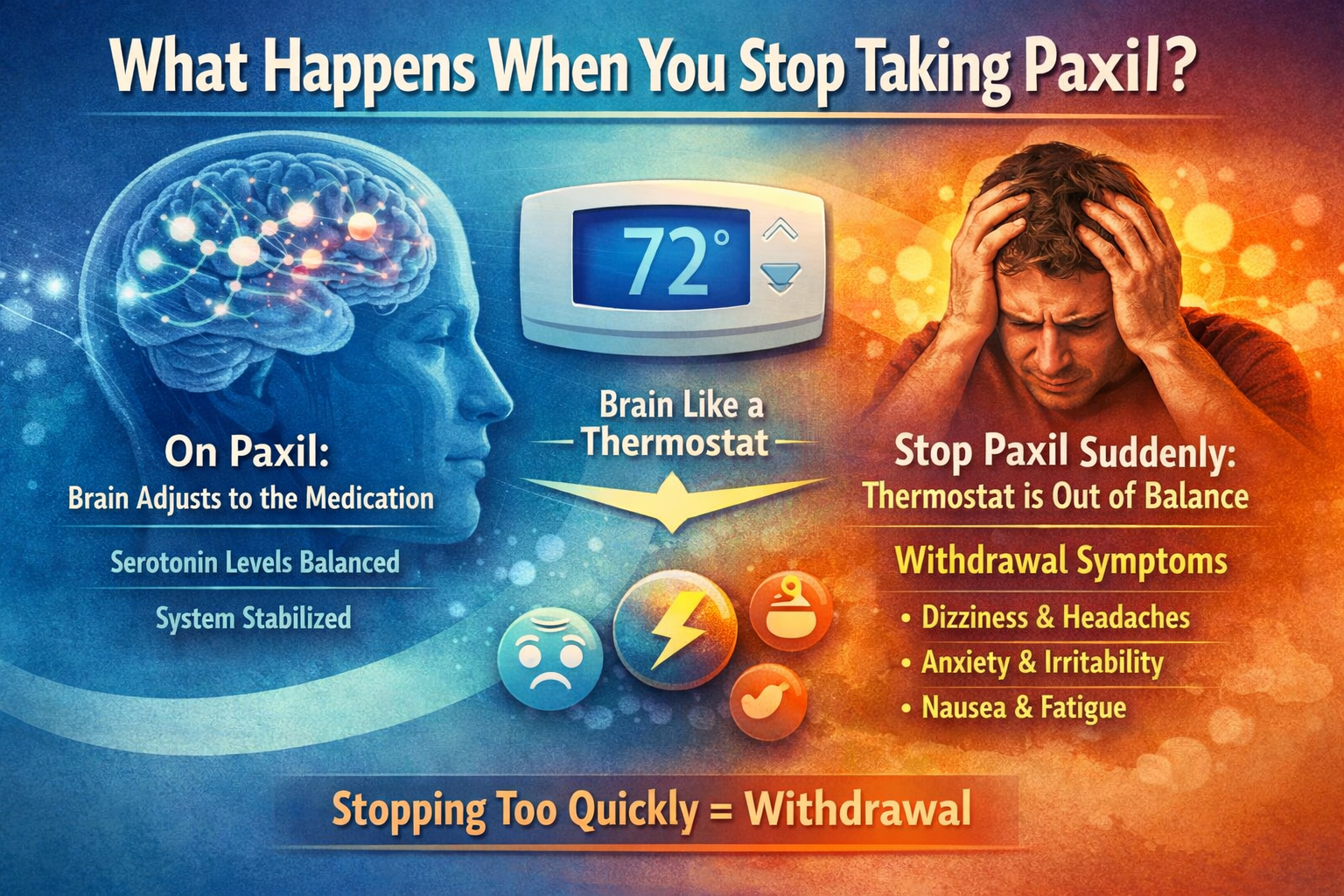
When someone takes Paxil consistently, the brain adapts to its presence. Serotonin receptors adjust their sensitivity, signaling pathways recalibrate, and the nervous system learns to function with the medication in place. This adaptation is gradual and automatic.
A helpful way to think about this process is like a thermostat. Over time, the brain resets its internal “temperature” to match the medication’s effects.
When Paxil is reduced too quickly—or stopped suddenly—the thermostat hasn’t had time to catch up. The result is withdrawal.
Paxil has one of the shortest half-lives among SSRIs, meaning it leaves the body faster than medications like fluoxetine (Prozac). This rapid drop can stress the nervous system.
When Paxil levels fall abruptly, several changes occur at once:
Serotonin signaling drops, contributing to anxiety, low mood, and emotional sensitivity
Autonomic nervous system regulation fluctuates, affecting sleep, digestion, heart rate, and temperature
Sensory processing becomes unstable, leading to dizziness or “brain zaps” [1]
This cluster of effects is known as antidepressant discontinuation syndrome. It is well-documented and reflects physiological adjustment—not psychological dependence.
Families often worry that withdrawal symptoms mean their loved one is “dependent” or addicted. This is a common misconception.
Paxil withdrawal is not addiction:
There are no cravings
There is no compulsive drug-seeking
There is no loss of control over use
Withdrawal reflects the brain rebalancing after long-term serotonin modulation. It is a biological readjustment, not a behavioral disorder.
One of the most distressing aspects of Paxil withdrawal is that symptoms can resemble returning anxiety or depression. [2]
Key differences help clinicians tell them apart:
Withdrawal
Begins within days to weeks of dose reduction
Includes physical and sensory symptoms
Fluctuates and improves over time
Relapse
Develops gradually over weeks to months
Is primarily emotional and cognitive
Does not steadily improve without treatment changes
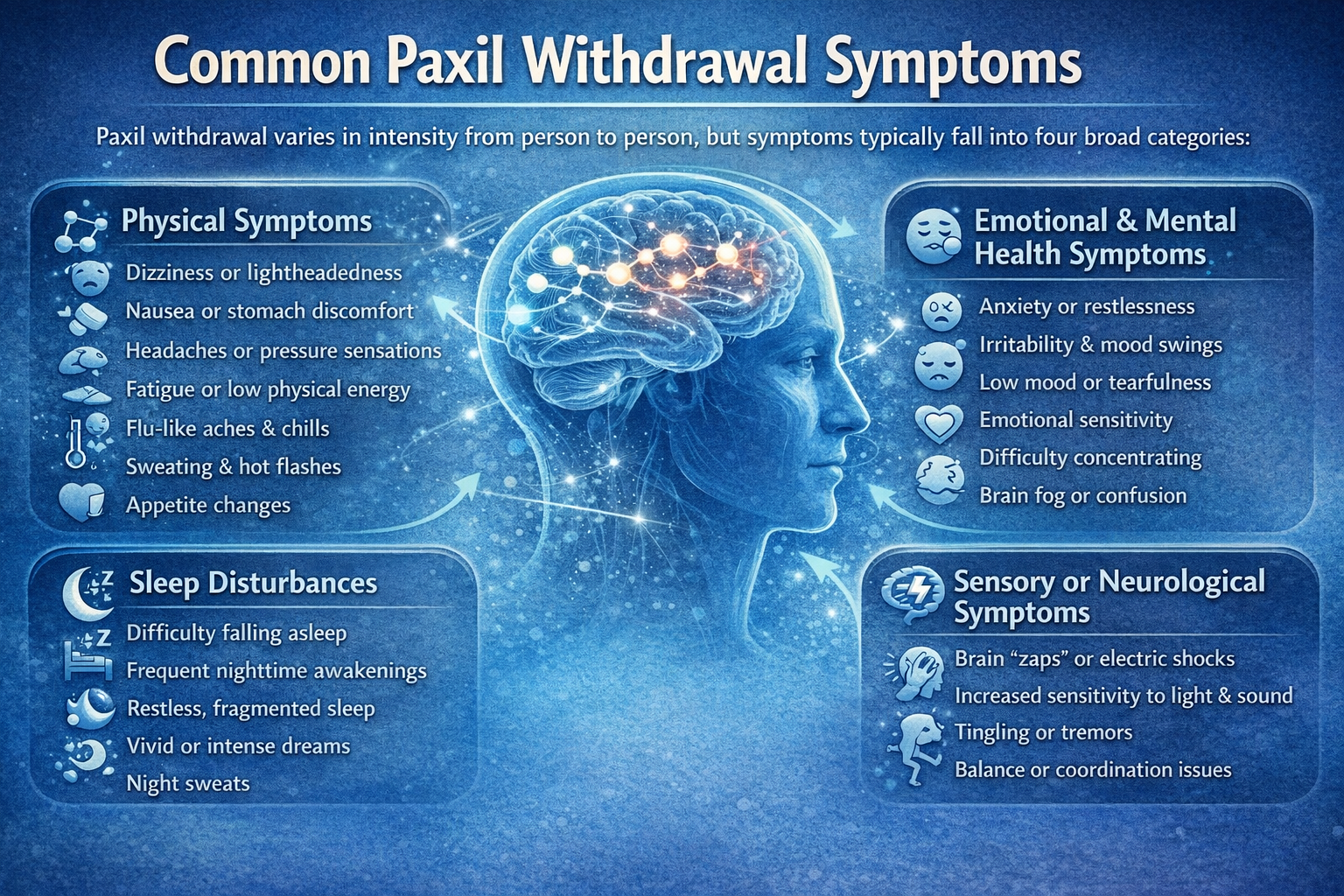
Paxil withdrawal varies in intensity from person to person, but symptoms typically fall into four broad categories. Each category reflects specific neurochemical adjustments taking place as serotonin signaling gradually rebalances during tapering.
While these symptoms can feel distressing, they are a known and temporary part of the withdrawal process.
Because Paxil affects serotonin receptors throughout the body—not just in the brain—physical symptoms often appear early in withdrawal. These sensations can feel sudden or unfamiliar, which may increase anxiety if not anticipated.
Common physical symptoms include:
Dizziness or lightheadedness, especially when standing, caused by temporary blood pressure and autonomic regulation changes
Nausea or stomach discomfort, reflecting serotonin’s role in gut function
Headaches or pressure sensations, which may fluctuate throughout the day
Fatigue or low physical energy, even after adequate rest
Flu-like symptoms, including body aches, chills, or general malaise without infection
Sweating or temperature sensitivity, such as feeling hot or cold unexpectedly
Appetite changes, ranging from reduced hunger to increased cravings
Heart palpitations related to autonomic instability, often brief and anxiety-provoking but not dangerous
These symptoms can feel alarming, especially early on, but they are common and tend to ease as the nervous system adapts.
Paxil influences sleep architecture by altering serotonin pathways involved in circadian rhythm regulation.
When the dose is reduced, sleep patterns may temporarily become irregular as the brain relearns how to regulate sleep independently.
Common sleep-related symptoms include:
Difficulty falling asleep, despite feeling physically tired
Frequent nighttime awakenings, often with heightened alertness
Restless or fragmented sleep, leading to non-restorative rest
Vivid, intense, or emotionally charged dreams, sometimes remembered in detail
Night sweats, particularly during early withdrawal
Feeling wired at night but exhausted during the day, reflecting circadian disruption
The brain gradually restores natural sleep regulation. Most people notice improvement within 1–3 weeks, especially with slow tapering, consistent sleep schedules, and calming nighttime routines.
Emotional and cognitive symptoms tend to cause the most concern because they can closely resemble anxiety or depressive relapse. Understanding their timing and pattern is key to reducing fear.
Common emotional symptoms include:
Increased anxiety or inner restlessness, often described as nervous energy
Irritability or frustration, sometimes over minor stressors
Temporary low mood or emotional flatness, which comes and goes
Heightened emotional sensitivity or tearfulness, even without clear triggers
Mood swings, shifting rapidly throughout the day
Difficulty concentrating or mental fog, affecting focus and decision-making
These symptoms typically peak during weeks 1–2 and gradually soften as serotonin signaling stabilizes and the nervous system regains balance.
Less common but often unsettling, sensory and neurological symptoms occur as neural signaling pathways recalibrate. Although they may feel intense, they do not indicate brain damage.
Possible symptoms include:
“Brain zaps” or electric shock sensations, often triggered by movement or eye shifts
Increased sensitivity to light or sound, making environments feel overwhelming
Tremors or internal shaking, especially during rest
Tingling sensations or restlessness, particularly in the limbs
Balance disturbances, sometimes described as feeling like walking on a boat
These sensations reflect temporary sensory misfiring during withdrawal and typically fade as neural communication stabilizes over time.
Withdrawal unfolds in phases. While individual experiences vary, this general timeline helps families recognize expected patterns. [3]
Timelines vary based on:
Dose and duration of use
Individual sensitivity
Taper speed
Co-occurring mental health conditions
Clinicians may slow or pause tapering if symptoms become overwhelming.
Stopping Paxil abruptly places the nervous system under sudden strain. [4] Because Paxil strongly affects serotonin regulation, a rapid drop can overwhelm the brain’s adaptive capacity.
Cold turkey increases the risk of:
Severe withdrawal symptoms
Emotional destabilization
Sleep collapse
Panic-like episodes
ER visits driven by fear rather than danger
Confusion between withdrawal and relapse
A gradual taper allows the brain to adjust in small, tolerable steps:
Neurotransmitters decline gradually
Withdrawal peaks are milder
Sleep disruption is reduced
Emotional swings are easier to manage
Relapse risk decreases
Families play an important role by reinforcing patience and discouraging impulsive dose changes during difficult days.
Healthcare providers play a key role in creating structure, safety, and reassurance throughout the tapering process. Their involvement helps reduce uncertainty and prevents unnecessary distress as the nervous system adjusts.
Clinicians support patients by carefully monitoring progress and responding to symptoms in a timely, informed way.
Monitoring symptom patterns: Providers track how symptoms appear, fluctuate, and resolve over time to identify normal withdrawal responses versus concerning changes. This pattern recognition helps guide safer taper decisions.
Distinguishing withdrawal from relapse: Clinicians assess timing, intensity, and symptom type to determine whether discomfort is part of withdrawal or a return of the original condition. This prevents premature conclusions and unnecessary medication changes.
Adjusting taper speed: Based on symptom severity and tolerance, providers may slow the taper, hold a dose longer, or make smaller reductions to allow the nervous system more time to stabilize.
Offering short-term symptom support if needed: When appropriate, clinicians may suggest temporary strategies or supportive treatments to ease sleep disruption, anxiety, or physical discomfort during difficult phases.
Tracking sleep and emotional stability: Regular assessment of sleep quality, mood, and stress tolerance helps ensure overall stability and catch issues early before they escalate.
Regular check-ins provide reassurance, reduce fear, and allow timely adjustments, helping patients move through withdrawal with greater confidence and less suffering.
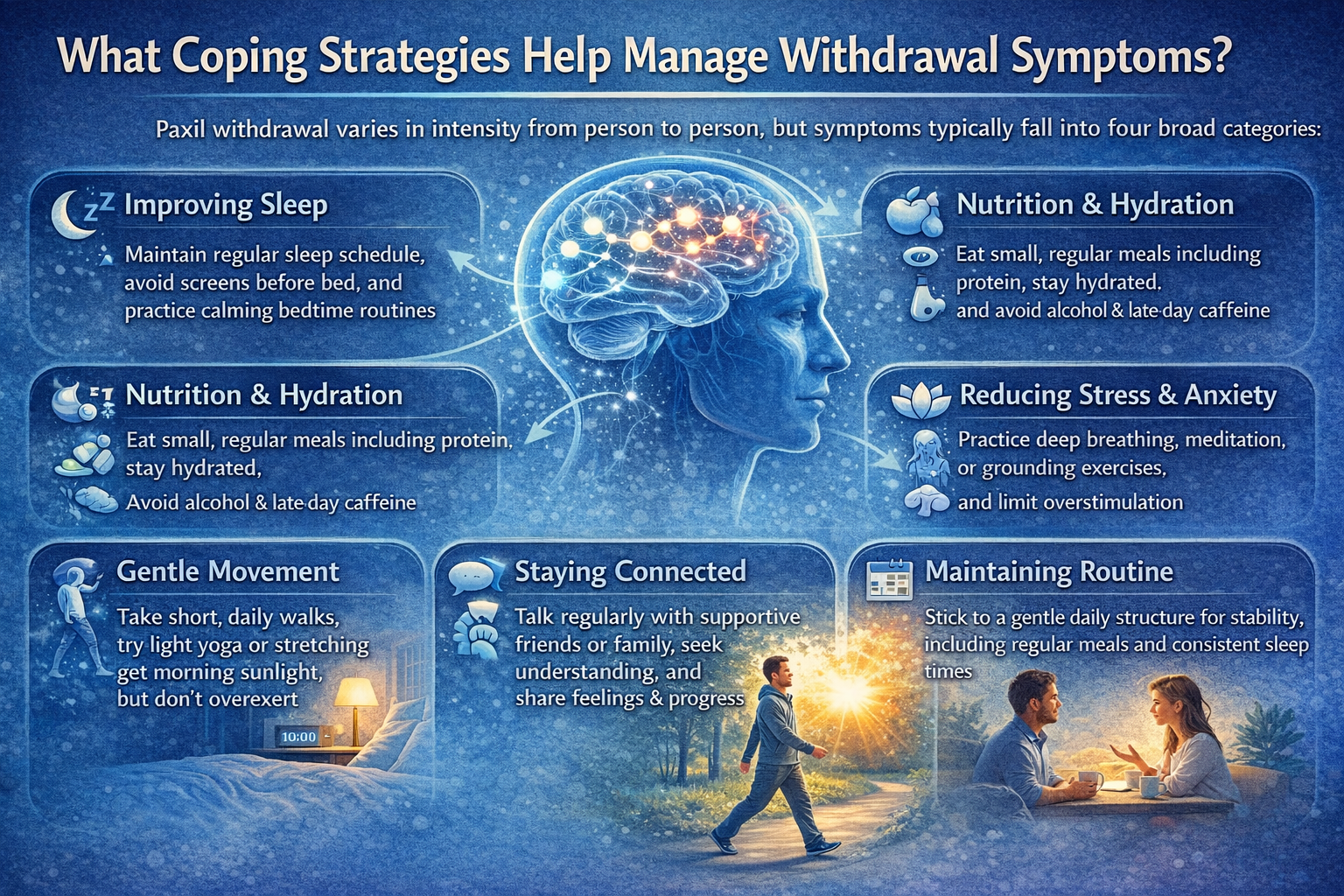
Sleep disruption is common during Paxil withdrawal, so focusing on gentle sleep support can make a meaningful difference. Try to go to bed and wake up at the same time each day to help reset your body clock.
Keep evenings calm and low-light, and avoid screens close to bedtime, as blue light can overstimulate the nervous system.
Gentle breathing, grounding exercises, or relaxation techniques before bed can help your body wind down. Creating a cool, dark, and quiet sleeping environment also supports deeper, more restorative rest.
Eating and drinking consistently can help stabilize blood sugar and reduce withdrawal-related symptoms like dizziness, weakness, or anxiety. Small, frequent meals are often easier to tolerate than large ones.
Aim for balanced meals that include protein and complex carbohydrates to support steady energy and mood. Staying well hydrated is important, while alcohol and late-day caffeine are best avoided, as they can worsen sleep issues and nervous system sensitivity.
Light physical activity can support both mood and nervous system regulation without overwhelming your body. Short daily walks, especially outdoors, help with circulation and natural stress relief.
Gentle stretching or yoga can ease muscle tension and promote relaxation. Exposure to sunlight earlier in the day also helps regulate sleep-wake rhythms and may improve overall energy levels.
Withdrawal can heighten stress responses, so calming techniques are especially helpful. Slow breathing with a longer exhale signals safety to the nervous system and can reduce anxiety. Mindfulness practices or body scans help you stay grounded in the present moment.
Limiting overstimulation—such as excessive noise, screens, or multitasking—can prevent symptom flares. Journaling symptoms may also reduce fear by helping you track patterns and remind yourself that changes are temporary.
Emotional support plays an important role during withdrawal. Regular check-ins with trusted friends or family members can provide reassurance and reduce feelings of isolation.
Low-pressure social contact, even brief conversations, can be comforting without feeling overwhelming. Letting family members know about symptom spikes can help them offer understanding and reassurance when you need it most.
A predictable daily routine helps stabilize the nervous system by reducing uncertainty. Scheduling meals, maintaining consistent sleep times, and creating a gentle daily structure can make symptoms feel more manageable.
Regular follow-ups with a healthcare provider also provide guidance and reassurance, reinforcing that you are supported throughout the withdrawal process.
Seek immediate medical support if any of the following occur:
Suicidal thoughts or worsening depression
Severe or escalating anxiety
Confusion or hallucinations
Fainting or irregular heartbeat
Seizures
Persistent vomiting
Inability to sleep for several consecutive days
Withdrawal is not the end of healing—it is a transition phase. As the brain continues to rebalance and restore its natural rhythms, many people begin to notice meaningful improvements.
Emotional responses often feel more regulated, thinking becomes clearer, sleep patterns grow more predictable, and overall resilience to everyday stress gradually increases. These changes tend to emerge slowly, reinforcing that recovery is a process rather than an instant shift. [5]
Therapy can play an important role in maintaining long-term stability after withdrawal. It helps individuals build practical coping skills and recognize the difference between normal emotional fluctuations and warning signs of relapse. Therapy also reduces the risk of misinterpreting temporary stress or low moods as failure, while supporting healthier lifestyle choices that protect mental well-being over time.
Sustained recovery is strengthened by consistent daily habits that support nervous system balance. Maintaining regular sleep routines, eating balanced and nourishing meals, and engaging in gentle, regular exercise all help stabilize mood and energy.
Ongoing stress-management practices and strong social connections further protect emotional health, while avoiding substances that can destabilize mood supports long-term resilience.
Family involvement remains valuable well beyond withdrawal, providing reassurance, understanding, and encouragement throughout continued healing.
Paxil withdrawal is temporary, manageable, and not a sign of failure. It reflects the brain and nervous system adjusting to change, not a setback or loss of progress. While symptoms can feel uncomfortable or discouraging at times, they are part of a healing transition rather than an indication that something is wrong.
With gradual tapering, proper medical supervision, and supportive daily habits, most people notice steady improvement over time. Small, consistent steps, such as protecting sleep, reducing stress, and maintaining routine, can significantly ease the process and build confidence as recovery unfolds.
Stay patient with your body, stay connected to supportive people, and never stop Paxil abruptly. Healing takes time, but it does happen. With the right guidance and self-care, you can move forward safely and regain a sense of stability, clarity, and control.
No. Abrupt discontinuation significantly increases withdrawal severity and emotional instability. Paxil leaves the body quickly, which can shock the nervous system if stopped suddenly. A gradual, medically supervised taper is the safest approach and greatly reduces the risk of intense symptoms.
Most people improve within weeks, though full adjustment may take longer depending on taper speed and individual factors. Some symptoms can come and go in waves, which is a normal part of nervous system healing. Progress is often gradual rather than linear.
Not necessarily. Timing and symptom patterns help clinicians distinguish withdrawal from relapse. Withdrawal symptoms often feel physical and fluctuate rapidly, while relapse tends to develop more slowly. Careful monitoring during tapering helps clarify the difference.
Routine, sleep support, hydration, gentle movement, grounding techniques, and reassurance are key. Reducing stress and overstimulation can prevent symptom spikes. Consistency over time is more effective than trying many changes at once.
By staying patient, validating the experience, tracking symptoms, and encouraging medical guidance. Calm reassurance during symptom flares can significantly reduce fear. Practical support with daily tasks can also ease emotional strain.
Contact the prescriber. Slowing the taper often provides significant relief. In some cases, adjusting the dose or taper schedule can quickly stabilize symptoms and make the process more manageable.
By calling us, you agree to our Terms & Conditions
For those seeking addiction treatment for themselves or a loved one, our calls are confidential and are available for 24/7 help.
Any treatment center receiving calls from the site is a paid advertiser.
Calls to numbers on a specific treatment center listing will be routed to that treatment center.
Calls to any general helpline will be answered by treatment providers, each of which is a paid advertiser.
By calling the helpline you agree to the terms of use. These calls are offered at no cost to you and with no obligation to enter into treatment. Neither this site nor anyone who answers the call receives a commission or fee dependent upon which treatment provider a visitor may ultimately choose.
If you wish to explore additional treatment options or connect with a specific rehab center, you can: browse top-rated listings, visit our homepage, or visit SAMHSA, or by calling 800-662-HELP. You may also contact The Florida Department of Children and Family Services