(866) 567-3138
Sponsored Helpline
Verify Insurance
Prozac can provide meaningful relief for depression, but some people may gradually misuse it—raising doses, doubling missed doses, or taking it to feel emotionally numb.
While not physically addictive, it can create psychological dependence, making daily functioning feel impossible without the medication.
 Expert Verified
Key Takeaways
Prozac (fluoxetine) is not traditionally classified as an “addictive” drug, but psychological dependence, misuse, and difficult withdrawal can develop in vulnerable individuals—especially when doses are increased without guidance or stopped abruptly.
Dependence is not a moral failure. It reflects the interaction of brain chemistry, underlying mental health conditions, trauma history, and environmental stressors.
Recovery is possible. Supervised tapering, emotional regulation skills, therapy, and appropriate medication adjustments greatly improve outcomes.
Families may notice personality changes, emotional detachment, or withdrawal symptoms that resemble relapse. Understanding these warning signs and knowing how misuse develops can help guide safe treatment, withdrawal management, and support a realistic path to recovery.
Prozac (fluoxetine) is an SSRI antidepressant approved for:
major depressive disorder,
generalized anxiety,
obsessive–compulsive disorder,
panic disorder,
premenstrual dysphoric disorder (PMDD),
bulimia nervosa.
It works by increasing serotonin availability, gradually stabilizing mood and reducing anxiety.
Tolerance with SSRIs is not as common as with sedatives or opioids. Still, some individuals notice that:
The emotional “lift” they experienced early on diminishes,
They need higher doses to feel stable,
They rely on the medication as their primary coping mechanism.
Dependence develops when the body adapts to Prozac’s presence. When doses are reduced or stopped, the person may experience:
dizziness,
headaches,
flu-like sensations,
emotional instability,
anxiety spikes,
sleep disturbances.
Though Prozac has a long half-life (which reduces abrupt withdrawal), significant symptoms can still occur—especially after long-term or high-dose use.
Addiction involves compulsive use despite harm.
With Prozac, addiction may present as:
taking excessive doses for emotional numbing or “mood boosting,”
inability to cut down despite wanting to stop,
hiding medication use,
continuing use despite negative consequences on mood, sleep, or functioning.
It is less about intoxication and more about compulsive emotional reliance.
While not identical to substance withdrawal, symptoms of Prozac misuse or discontinuation can manifest physically, including: [1]
headaches or migraines
nausea, gastrointestinal upset
dizziness or vertigo
increased sweating
insomnia or excessive sleep
fatigue
tremors
“brain zaps” or electrical-sensation symptoms (common in SSRI discontinuation)
sexual dysfunction
appetite changes
flu-like symptoms during withdrawal
Prozac alters serotonin levels, which can lead to emotional dysregulation when misused or stopped abruptly. Psychological indicators include:
intense anxiety or agitation
severe mood swings
irritability or anger outbursts
emotional blunting or detachment
depressive crashes between doses
cravings for the emotional stabilization the medication provides
panic attacks
heightened sensitivity to stress
feelings of “not being able to function without it.
Behavioral changes often provide the clearest signs of misuse:
Taking higher doses than prescribed
Stockpiling medication “just in case.”
Doctor shopping or requesting early refills
Using Prozac during periods of emotional stress rather than on a stable schedule
Withdrawing from family or responsibilities
Using the medication to cope rather than alongside therapy
Mixing Prozac with alcohol or other substances to influence its effect
Hiding pill use, counting pills obsessively, or feeling panic when doses are missed
Prozac (fluoxetine) remains one of the most commonly prescribed SSRIs, but most national surveys report antidepressant use overall rather than drug-by-drug counts.
In the United States, 2020 data show 16.5% of adults had taken prescription medication for a mental health condition in the past 12 months (which includes SSRIs like fluoxetine). [2]
In clinical practice, the groups with higher antidepressant exposure (and therefore greater representation among Prozac users) include: older adults, women, and people receiving ongoing mental-health treatment or long-term maintenance therapy.
For example, antidepressant use is consistently higher in women and in middle-to-older age groups in national surveys, so these groups are more commonly represented among fluoxetine users in clinic populations. [3]
People more likely to experience problems when stopping or changing antidepressants in clinical settings include:
Those on long-term therapy (years).
Those stopping abruptly rather than tapering.
Patients on multiple serotonergic drugs or with prior sensitivity to dose changes.
A 2024 meta-analysis reported substantial rates of discontinuation symptoms overall, with estimates that can reach roughly one in three patients experiencing some discontinuation symptoms after stopping antidepressants. [4]
Where fluoxetine (Prozac) fits in?
Fluoxetine’s longer half-life generally lowers the immediate risk of discontinuation symptoms compared with SSRIs or SNRIs that have shorter half-lives (for example, paroxetine or venlafaxine/desvenlafaxine).
Several recent reviews and clinical summaries list fluoxetine among the antidepressants associated with lower discontinuation risk, though it is not zero; some people stopping fluoxetine still report symptoms, especially after long-term use or abrupt cessation. [5]
Prozac (fluoxetine) works by blocking the reuptake of serotonin, increasing the amount available in the synaptic space. At first, this boost changes the communication between mood-regulating circuits such as the prefrontal cortex, amygdala, and limbic pathways.
Over time, however, the brain begins to adapt. Serotonin receptors gradually adjust their sensitivity, certain receptor sites down-regulate, and secondary neurotransmitter systems—like dopamine and norepinephrine—shift to accommodate the long-term presence of elevated serotonin.
These adaptations explain why the drug can create:
Emotional stability and reduced reactivity when taken consistently
Irritability, dizziness, or emotional swings when serotonin levels drop after missed or delayed doses
A “shock-like” discontinuity sensation in some users during rapid changes
Long-term exposure can also shape emotional expectations. Some individuals develop psychological reinforcement, believing that Prozac is their only protective barrier against instability, depression, or emotional overwhelm. This isn’t addiction in a classic sense, but it can create dependence-like thinking and a strong fear of stopping or reducing the medication.
Biological predispositions can significantly influence how someone responds to fluoxetine. Research suggests genetics may account for 40–60% of vulnerability to mood disorders, anxiety, and substance-misuse tendencies.[6]
These inherited factors shape how the brain regulates serotonin, stress hormones, and reward pathways.
Key contributors include:
Family history of depression, anxiety, or mood instability, which increases SSRI responsiveness but also sensitivity to dose changes
A personal or family history of substance use disorder, which raises the likelihood of turning to medications for emotional regulation
Differences in CYP2D6 metabolism affect how quickly fluoxetine is processed and how strongly side effects or withdrawal sensations appear
Baseline neurotransmitter imbalances, such as low serotonin tone or impaired stress-response pathways
Co-existing psychiatric conditions like PTSD, OCD, chronic anxiety, or bipolar depression, which make emotional disruptions feel more threatening
These factors can create a situation where Prozac feels essential for daily functioning, raising the risk of dependence-like behaviors even when taken as prescribed.
Misuse or overreliance on Prozac is often driven by emotional rather than chemical factors. For many people, the medication becomes tied to a sense of safety and predictability. When life becomes overwhelming, they may increase doses on their own or take it inconsistently to manage shifting emotions.
Common psychological drivers include:
Seeking relief from intense stress or emotional overload
Using the medication for emotional blunting or numbing difficult memories
Avoiding uncomfortable emotions, especially when therapy is unavailable
Managing unresolved trauma or long-term grief
A deep fear of relapse, particularly in people who have had severe depressive episodes
In these situations, Prozac becomes a coping mechanism, not just a treatment tool—raising the risk for psychological dependence.
Environmental pressure often shapes medication behavior. People under chronic stress or unstable conditions are more likely to self-adjust their Prozac dose, skip days, or take extra amounts to regain stability quickly.
Key external risk factors include:
Chronic workplace stress, high productivity demands, or burnout
Social isolation, which amplifies anxiety and rumination
Relationship conflict making emotional regulation harder
Financial strain, which fuels anxiety and depressive relapse fears
Limited access to mental-health support leads people to rely solely on medication
Unstable or chaotic home environments, increasing emotional volatility
In these scenarios, Prozac becomes a “control tool” people use to manage external chaos. This does not represent classic addiction, but it does increase the likelihood of dose manipulation, dependence-like patterns, and withdrawal discomfort if the medication is interrupted.
The path is gradual:
Symptoms improve
Emotional relief becomes a safety signal
Tolerance or diminished effect leads to increased dosing
Withdrawal emerges between doses
The person feels unable to function without Prozac
Compulsive use develops
Families often recognize this final stage before the individual does.
People who take Prozac for years—especially in the 40–80 mg/day range—may experience:
Emotional reliance,
withdrawal when doses are missed,
and difficulty tapering after long-term use. [5]
The brain becomes accustomed to steady serotonin modulation, making changes destabilizing.
Those with long-standing mood disorders may rely heavily on the medication to maintain emotional baseline functioning. The fear of relapse can encourage misuse, such as:
taking extra doses during triggers,
refusing to taper despite medical recommendations,
staying on high doses indefinitely.
Prozac is sometimes used by individuals with SUD histories as a way to:
stabilize mood between substance use episodes,
self-medicate emotional crashes,
counterbalance stimulant “comedowns.”
This creates a cycle of reliance that is more psychological than pharmacological.
Trauma increases vulnerability to both mental health challenges and medication misuse. Prozac may serve psychologically as:
An emotional buffer,
a numbing agent,
a stabilizer during overwhelming memories or triggers.
Socially Isolated Individuals
Isolation increases the risk of depending heavily on medication for emotional regulation, especially when lacking access to therapy, supportive relationships, or consistent medical follow-up.
Short-term misuse often amplifies common SSRI side effects:
Insomnia or sleep cycle disruption: overstimulation due to serotonergic effects.
Agitation or restlessness: sometimes mistaken for worsening anxiety.
Nausea, gastrointestinal upset, or diarrhea: especially when doses are raised too quickly.
Sweating or heat intolerance: due to serotonergic activation.
Mild euphoria (rare): may encourage some individuals to escalate doses.
Dry mouth, headaches, or dizziness: particularly common during dose changes.
Emotional blunting: used by some as a coping mechanism, but can worsen over time.
When these symptoms appear, individuals may increase or decrease doses without guidance, unintentionally creating a cycle of instability.
Long-term misuse produces deeper biological and psychological impacts.
Consistently taking the medication outside prescribed boundaries may lead to:
reduced serotonin receptor sensitivity
emotional dysregulation
exaggerated withdrawal symptoms
periods of severe irritability or emotional numbness
The brain begins to rely heavily on external serotonin modulation rather than its own regulatory systems.
Individuals may experience:
cognitive fog
difficulty concentration
slowed processing
memory lapses
problems with decision-making
These symptoms often arise during withdrawal or after inconsistent dosing patterns.
Ironically, misuse can eventually worsen the conditions Prozac was intended to treat. This may manifest as:
rebound anxiety
depressive crashes
increased irritability
panic episodes
emotional hypersensitivity
episodes of dysphoria
These changes are often misinterpreted as “the illness coming back,” rather than destabilization due to irregular medication patterns.
Long-term SSRI use is associated with:
reduced libido
delayed orgasm
erectile dysfunction
reduced sexual sensitivity
When doses are escalated beyond prescribed limits, these effects may intensify, contributing to interpersonal strain.
Misuse—especially combining Prozac with:
MAOIs,
tramadol,
certain anti-migraine medications,
recreational substances,
other antidepressants,
high amounts of alcohol—
can elevate serotonin to dangerous levels.
Symptoms include:
confusion or agitation
tremors
muscle rigidity
rapid heart rate
fever or sweating
shivering
diarrhea
seizures (in severe cases)
This condition requires immediate emergency care.
Prozac misuse creates a ripple effect that touches work, relationships, physical health, and self-esteem.
Irregular dosing and withdrawal can impair:
focus
memory
cognitive flexibility
emotional stability
motivation
Missed days, performance drops, or increased errors can lead to job instability or academic struggles.
Families often misinterpret personality changes related to misuse as:
moodiness
irresponsibility
emotional distance
loss of interest
declining communication
Loved ones can feel confused, hurt, or helpless—especially when they believed Prozac was supposed to “fix” things.
While Prozac is not expensive, misuse sometimes leads to:
multiple doctor visits
early refill attempts
emergency room trips during withdrawal
risky behaviors due to emotional instability
These indirect effects contribute to a broader pattern of functional impairment.
Finding the right treatment for Prozac dependency is not about judgment.
It’s about rebuilding stability, protecting mental health, and guiding the body back to balance. A personalized plan works best because recovery is not “one-size-fits-all.”
The most effective approach blends medical care, psychological therapy, and social support, allowing individuals and families to move forward with clarity and hope.
Prozac withdrawal can be uncomfortable, but it can be managed safely with the right support. Treatment may happen in an outpatient setting for stable individuals, or inpatient care if symptoms become overwhelming or safety is a concern.
Stopping Prozac “cold turkey” is not recommended. A supervised tapering plan allows the brain to adjust slowly, lowering the risk of severe mood crashes or flu-like symptoms.
During detox, clinicians may use adjunct medications to ease anxiety, nausea, sleep issues, or agitation.
Withdrawal is temporary, and with proper guidance, it becomes manageable rather than frightening.
(Used when Prozac misuse occurs alongside opioids or other substances)
Methadone: Stabilizes the brain’s opioid receptors and prevents severe cravings.
Buprenorphine: Reduces withdrawal symptoms while providing a “ceiling effect” that lowers overdose risk.
Naltrexone: Blocks the rewarding effects of opioids and alcohol, helping prevent relapse.
Provides structure, 24/7 supervision, and a safe space to stabilize.
This environment is especially helpful for complex withdrawal, co-occurring mental health issues, or limited home support.
Allows individuals to continue work or family life while attending therapy several times per week.
Medical oversight ensures medications, mood, and withdrawal symptoms remain stable.
Each level is chosen based on safety, severity, and support at home.
Therapy helps individuals understand why the dependence formed and how to break the cycle.
Cognitive Behavioral Therapy (CBT): Reframes negative thinking patterns and builds coping tools.
Motivational Interviewing (MI): Strengthens motivation for change without pressure or shame.
Family Therapy: Helps rebuild trust, improve communication, and strengthen the recovery environment.
These therapies teach skills for handling triggers, cravings, emotional swings, and relapse prevention.
Recovery grows stronger when people don’t walk it alone. Peer support groups—such as NA, SMART Recovery, or other community programs—offer connection, accountability, and shared experience.
Recovery capital includes relationships, health, routines, employment, and community resources. The more we build it, the more stable the recovery becomes.
Prozac withdrawal affects both mind and body.
Holistic practices help regulate mood and rebuild resilience:
Gentle exercise or walking
Mindfulness or breathing routines
Consistent sleep schedule
Balanced nutrition to support energy and mood
These tools don’t replace medical care, but they strengthen the recovery foundation.
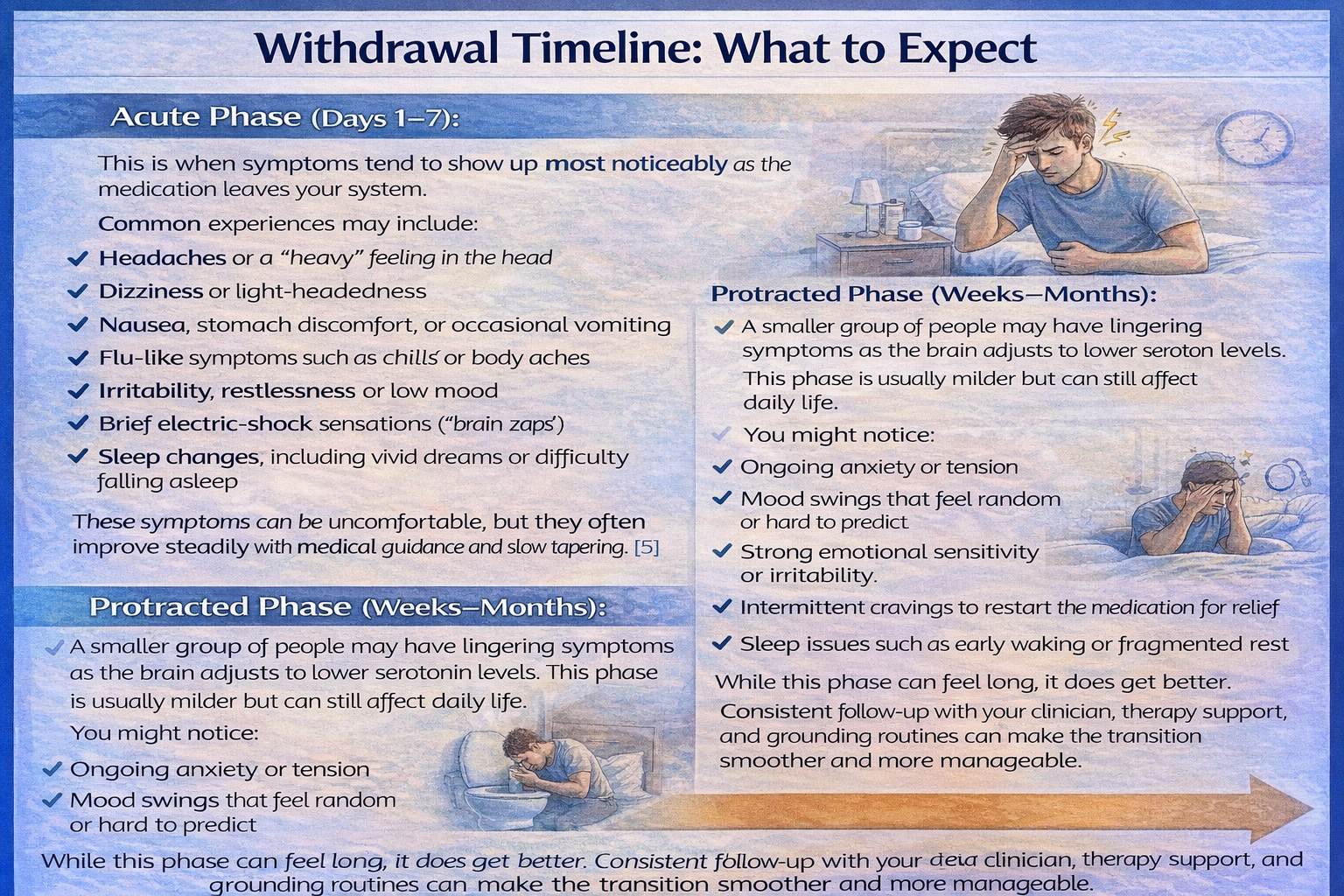
This is when symptoms tend to show up most noticeably as the medication leaves your system.
Common experiences may include:
Headaches or a “heavy” feeling in the head
Dizziness or light-headedness
Nausea, stomach discomfort, or occasional vomiting
Flu-like symptoms such as chills or body aches
Irritability, restlessness, or low mood
Brief electric-shock sensations (“brain zaps”)
Sleep changes, including vivid dreams or difficulty falling asleep
These symptoms can be uncomfortable, but they often improve steadily with medical guidance and slow tapering. [5]
A smaller group of people may have lingering symptoms as the brain adjusts to lower serotonin levels. This phase is usually milder but can still affect daily life.
You might notice:
Ongoing anxiety or tension
Mood swings that feel random or hard to predict
Strong emotional sensitivity or irritability
Intermittent cravings to restart the medication for relief
Sleep issues such as early waking or fragmented rest
While this phase can feel long, it does get better. Consistent follow-up with your clinician, therapy support, and grounding routines can make the transition smoother and more manageable.
Some symptoms go beyond “watch and wait” and require urgent medical attention. These warning signs can escalate quickly, and getting help right away can prevent serious complications.
Persistent vomiting or signs of dehydration: If you can’t keep fluids down, experience dizziness, dry mouth, or dark urine, this may indicate a medical emergency. Dehydration can progress rapidly and shouldn’t be ignored.
Hallucinations or sudden confusion: Seeing, hearing, or believing things that aren’t real—or suddenly feeling disoriented—can signal severe reactions to medication, overdose, or a mental health crisis. Immediate evaluation is critical.
Suicidal thoughts or urges to self-harm: Any shift toward hopelessness, impulsive behavior, or self-harm thoughts requires fast intervention. Call emergency services or reach out to a crisis helpline right away. You deserve safety and support in that moment.
Overdose signs: Slowed breathing, blue or pale lips, extreme drowsiness, or unresponsiveness indicate a life-threatening emergency. Don’t wait it out—call for help right away.
If opioid use is also involved, naloxone may reverse dangerous breathing problems and save a life, but emergency care is still essential. When in doubt, it’s always safer to reach out. Getting help quickly can make all the difference.
Prozac is usually prescribed in a controlled range, starting low and gradually increasing based on symptoms and response. Most adults fall within 20–60 mg per day, depending on the condition being treated and how they tolerate the medication.
Mixing Prozac with alcohol, benzodiazepines, opioids, or other sedatives can increase impairment, slow breathing, and raise the risk of dangerous reactions. These combinations should always be avoided unless a clinician explicitly guides the plan.
A Prozac overdose can overwhelm the central nervous system. Severe cases may lead to confusion, seizures, dangerously fast heart rate, and respiratory depression.
If opioids are involved, naloxone can reverse breathing problems and save lives, but emergency care is still required.
Store medication securely, never share prescriptions, and dispose of unused doses through a pharmacy take-back program or other approved method. Proper handling keeps the medication effective—and keeps your household safe.
Prozac addiction can be treated, and recovery is absolutely within reach.
With the right mix of medical guidance, structured therapy, and steady emotional support, people truly do heal.
Your next steps can start now:
Get a professional evaluation to understand what you need.
Select the right level of care, whether it’s supervised detox, medication support, or ongoing therapy.
Strengthen your support network by involving trusted family, peers, and consistent follow-ups with your care team.
You’re not expected to do this on your own.
Help is here. Healing is possible. And you deserve both.
True “addiction” to Prozac is rare, because it does not create the same dopamine-driven reward cycle as opioids or benzodiazepines. However, dependence and withdrawal symptoms can still occur, especially if doses are changed too quickly or stopped abruptly. The safest path is consistent medical monitoring to prevent dose escalation or emotional reliance on the medication.
Serious risks include serotonin syndrome, extreme agitation, and—in rare cases—overdose if Prozac is taken in very high amounts or mixed with other substances. Combining Prozac with alcohol, benzodiazepines, or opioids increases sedation and breathing problems. Any sudden mental health changes, suicidal thoughts, or severe physical symptoms require immediate medical attention.
Relapse doesn’t mean failure. It often means the brain is still readjusting after long-term use or that stressors have resurfaced. A relapse simply signals that the treatment plan needs adjustment—maybe slower tapering, more therapy, or better support at home. Recovery is a process, and each setback is a chance to refine the plan.
Self-detox is not recommended. Stopping Prozac without medical guidance can trigger severe withdrawal symptoms like mood crashes, panic spikes, dizziness, and “brain zaps.” A supervised taper is safer, more comfortable, and reduces the risk of emotional instability or relapse into misuse.
Families can make a powerful difference. Start with education—understanding withdrawal, mood changes, and relapse triggers. Offer non-judgmental support, encourage consistency with treatment, and participate in family therapy when possible. A calm, compassionate home environment reduces stress and strengthens recovery.
By calling us, you agree to our Terms & Conditions
For those seeking addiction treatment for themselves or a loved one, our calls are confidential and are available for 24/7 help.
Any treatment center receiving calls from the site is a paid advertiser.
Calls to numbers on a specific treatment center listing will be routed to that treatment center.
Calls to any general helpline will be answered by treatment providers, each of which is a paid advertiser.
By calling the helpline you agree to the terms of use. These calls are offered at no cost to you and with no obligation to enter into treatment. Neither this site nor anyone who answers the call receives a commission or fee dependent upon which treatment provider a visitor may ultimately choose.
If you wish to explore additional treatment options or connect with a specific rehab center, you can: browse top-rated listings, visit our homepage, or visit SAMHSA, or by calling 800-662-HELP. You may also contact The Florida Department of Children and Family Services