(866) 567-3138
Sponsored Helpline
Verify Insurance
Libido changes on Vyvanse are possible, and they can look very different from person to person. Because the medication influences dopamine and norepinephrine—the same pathways involved in desire, reward, and arousal—sexual shifts are understandable and often temporary.
 Expert Verified
Vyvanse (lisdexamfetamine) is a prescription stimulant commonly used to treat ADHD and binge-eating disorder. While it helps many individuals improve focus, emotional regulation, and daily functioning, some people notice changes in sexual desire after starting or adjusting the medication.
These shifts—whether an increase or decrease—can feel confusing, especially when they affect relationships or self-confidence. It is important to understand that libido changes are a known and manageable part of stimulant treatment for some individuals.
With compassionate medical support, open communication, and realistic expectations, individuals and families can navigate these changes without shame or fear.
Vyvanse is an amphetamine-based stimulant designed to increase mental clarity, stabilize attention, and support executive functioning. It works by converting into its active form, lisdexamfetamine, after digestion, which allows the medication to release steadily throughout the day. [1]
This gradual activation raises levels of dopamine and norepinephrine—two neurotransmitters central to how the brain organizes focus, motivation, reward, and self-regulation.
Dopamine plays a key role in how you anticipate rewards, feel pleasure, and stay engaged in tasks. It fuels motivation and helps the brain recognize what feels stimulating or interesting. Norepinephrine boosts alertness, increases energy, and helps the body shift into a state of readiness.
Together, these chemicals balance the brain’s ability to prioritize, concentrate, and follow through on tasks, making them essential targets for ADHD medications like Vyvanse. [2]
These same pathways also influence sexual desire, interest, and physiological arousal. Dopamine contributes to excitement, anticipation, and the emotional aspects of desire. Norepinephrine supports the physical aspects—such as increased heart rate, responsiveness, and overall sexual readiness.
When Vyvanse enhances these neurotransmitters, it can unintentionally cause shifts in libido. For some, it creates heightened desire because reward pathways feel more responsive. For others, it decreases interest due to appetite suppression, increased focus on tasks, or mild overstimulation that leaves less mental space for sexual cues.
Importantly, these changes are not signs of harm or addiction. Instead, they reflect the natural overlap between attention circuits, emotional regulation, and sexual functioning. The brain doesn’t separate these systems neatly—adjusting one inevitably influences the others.
Understanding this connection helps individuals and families interpret changes with more clarity and less worry, recognizing that shifts in libido are often temporary and highly individualized rather than dangerous or permanent.
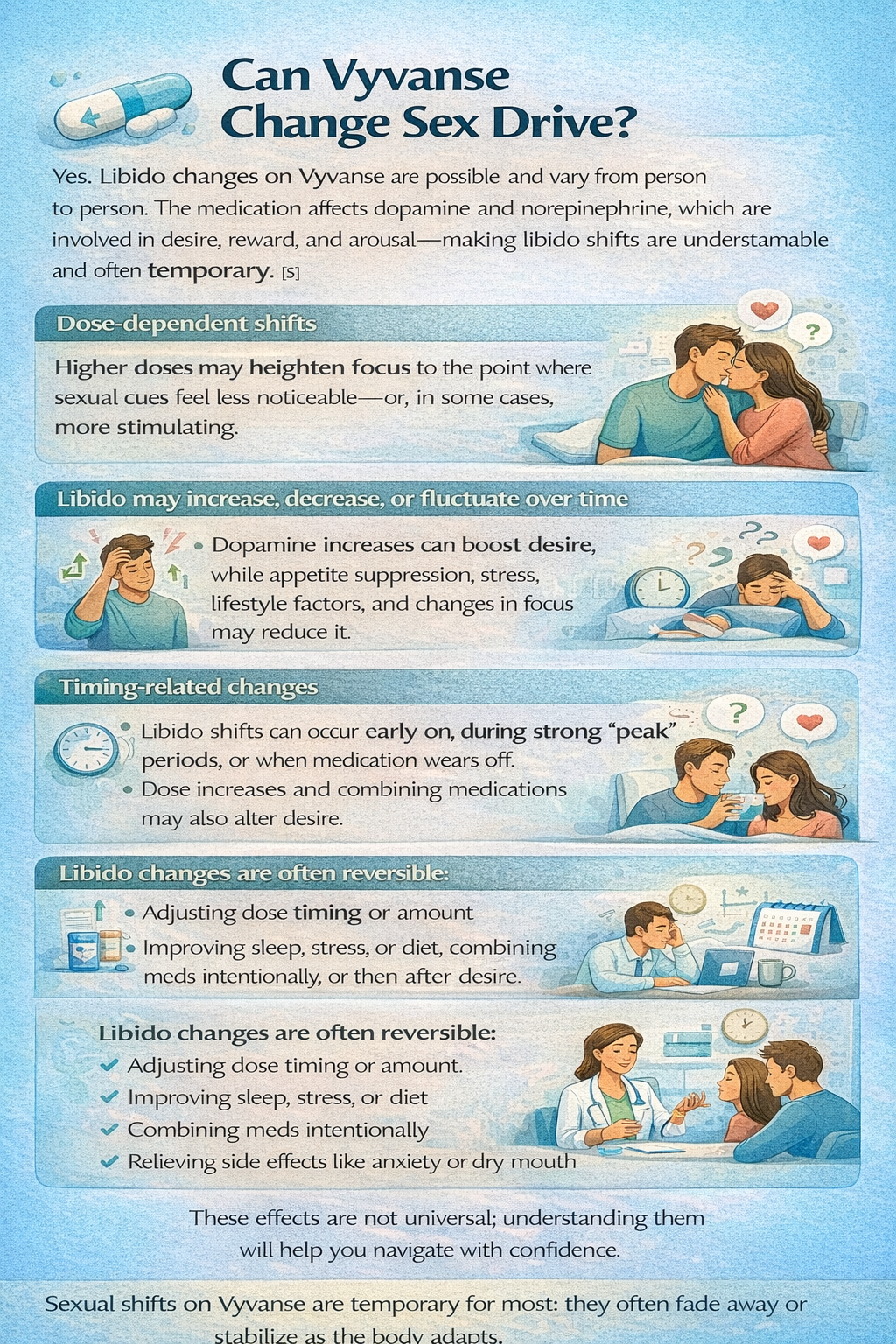
Yes. Libido changes on Vyvanse are possible, and they can look very different from person to person. Because the medication influences dopamine and norepinephrine—the same pathways involved in desire, reward, and arousal—sexual shifts are understandable and often temporary. [3]
Dose-dependent shifts may occur, meaning higher doses can intensify changes. Higher doses may heighten focus and energy to the point where sexual cues feel less noticeable—or, in some cases, more stimulating. People who experience anxiety or overstimulation at higher doses may see lowered interest, while those who feel more motivated and reward-driven might experience increased desire.
Libido may increase, decrease, or fluctuate over time. Increased libido sometimes happens when dopamine becomes more active, enhancing reward sensitivity. Decreased libido can occur if Vyvanse suppresses appetite, increases stress levels, or shifts daily priorities. Fluctuating desire is also common as the body adjusts to the medication’s effects across the day, especially during the “peak” and “wear-off” periods.
Some individuals see changes only in the early weeks of treatment; others notice them later. Early shifts often come from the body learning how to regulate new dopamine and norepinephrine levels. Later changes may appear when lifestyle factors (sleep, stress, emotional load) interact with the medication. For some, changes show up only when doses are increased or combined with other medications.
These effects are not universal and are often reversible with dosage adjustments or supportive care. Many people regain their baseline libido by modifying dosage, changing the timing of medication, addressing stress or sleep issues, or managing side effects like anxiety or dry mouth. In many cases, sexual side effects fade as the brain adapts, making them temporary rather than permanent.
Understanding these nuances helps individuals and families navigate the experience without fear, guilt, or self-blame.
Sexual functioning is heavily influenced by biology, emotion, and daily stressors, so changes on Vyvanse often reflect normal neurochemical adjustments rather than something harmful or irreversible.
Vyvanse increases dopamine—a neurotransmitter tied to pleasure, reward seeking, and emotional excitement. When dopamine levels rise, the brain becomes more responsive to activities that feel stimulating or enjoyable, including sexual experiences. [4]
This can heighten sexual interest, particularly in the early phases of treatment when the brain is adjusting to the medication. For some people, this boost feels like a renewed sense of curiosity, motivation, or emotional engagement. It’s not addiction—it’s simply the result of activating the reward and arousal pathways that dopamine controls.
Vyvanse often improves focus, emotional regulation, and daily productivity. When individuals feel more capable, organized, or mentally clear, their confidence naturally rises. This sense of competence can spill over into relationships and intimacy.
Increased energy may also reduce fatigue or stress—two common barriers to libido. As a result, people may feel more open to connection, more interactive with partners, and more interested in sexual experiences simply because they feel better overall.
Some individuals become more attuned to pleasurable activities while on stimulant medications. When the brain’s reward circuits respond more strongly, experiences like touch, affection, or excitement may feel more noticeable. This enhanced sensitivity can translate into higher sexual desire or stronger emotional engagement during intimacy.
For people whose ADHD symptoms previously caused distraction, irritability, or emotional disconnection, Vyvanse may create more stability and presence. [5]
Feeling calmer, more regulated, and more emotionally available can deepen intimacy and increase desire. When partners feel more connected, libido naturally follows.
These shifts don’t happen to everyone, and they aren’t inherently “good” or “bad.” They simply reflect how closely tied dopamine, motivation, and intimacy can be in the brain’s reward system.
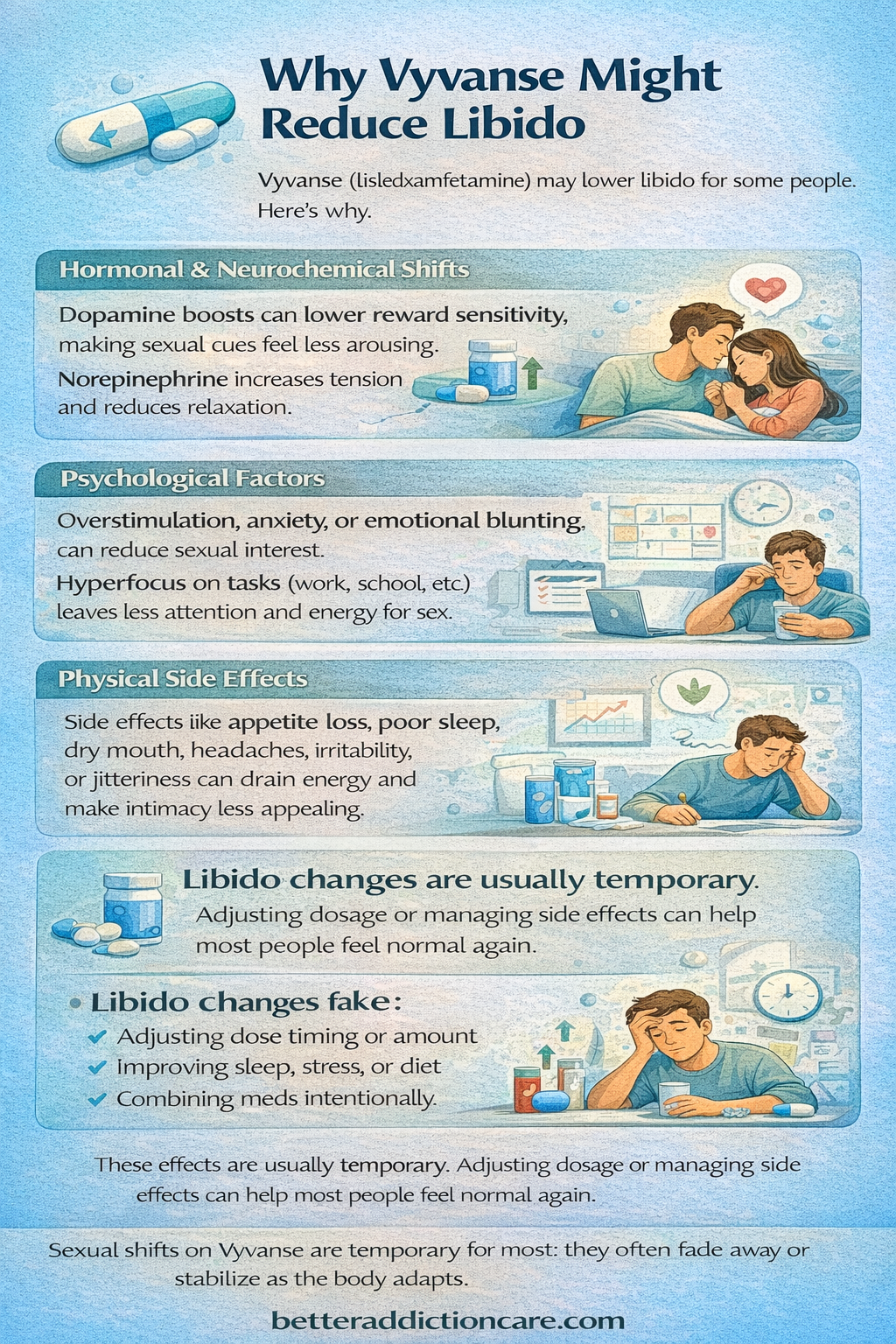
While Vyvanse increases dopamine and norepinephrine, these boosts can come with temporary imbalances as the brain adjusts to stimulant exposure. When dopamine rises sharply, the brain may reduce its sensitivity to reward signals, making sexual cues feel less stimulating or slower to register. Norepinephrine increases can also heighten physical tension or reduce relaxation—both of which are essential for arousal.
Over time, the brain often recalibrates, but during the adjustment phase, many people notice reduced libido, delayed orgasm, or decreased physical responsiveness. These shifts are not permanent and usually reflect the brain trying to maintain equilibrium, not a sign of harm or hormonal decline.
Not all sexual changes come from chemistry; psychological effects matter, too. Some individuals feel more anxious, overstimulated, or emotionally flattened on Vyvanse. Anxiety can interrupt the mental flow that supports desire, while emotional blunting can make intimacy feel less engaging or less rewarding. Others become hyper-focused on tasks—school, work, responsibilities—and this narrow focus leaves less room for spontaneous desire.
When your brain is locked into productivity mode, sexual interest can drop simply because attention and emotional presence shift elsewhere. These psychological patterns can be subtle but powerful, shaping sexual desire without people fully realizing the connection.
Stimulants often cause appetite suppression, dry mouth, headaches, reduced sleep, irritability, or general physical tension. [5] When the body feels drained, underfed, or sleep-deprived, sexual desire consistently drops because the nervous system prioritizes energy conservation over pleasure.
Even mild side effects—like dehydration or restlessness—can interfere with physical arousal or make intimacy feel less appealing. In some cases, people may also experience increased heart rate or jitters, which can disrupt relaxation and make sexual activity harder to initiate or enjoy. These physical side effects often improve with dose adjustments, meal planning, hydration, or better sleep habits.
Libido shifts on Vyvanse do not happen in isolation—several biological, psychological, and relational factors can increase the likelihood of sexual side-effect changes.
Understanding these contributing elements helps individuals and families maintain perspective, respond with empathy, and avoid assuming the worst.
Higher Vyvanse doses: Sexual side effects tend to intensify as the dosage increases. Higher stimulant exposure can amplify dopamine and norepinephrine activity, which may either overstimulate the nervous system—reducing desire—or create temporary spikes in drive that feel hard to regulate. This dose-response pattern is well-documented in stimulant pharmacology, highlighting the importance of careful titration and follow-up.
Combining Vyvanse with antidepressants or antipsychotics: Medication interactions can significantly influence libido. [6] For example, SSRIs often suppress sexual drive, while certain antipsychotics can blunt dopamine pathways. When these medications are combined with Vyvanse, individuals may notice more pronounced or unpredictable shifts in desire. This does not mean the medications are unsafe, but it does mean that sexual side effects should be openly discussed during treatment planning.
High stress or untreated mental health conditions: Stress, anxiety, depression, and emotional burnout are major inhibitors of sexual desire. When these conditions coexist with stimulant therapy, the body’s stress response may override pleasure pathways. Even if Vyvanse improves focus or reduces impulsivity, persistent stress can keep libido low, creating confusion for individuals and families.
Poor sleep or significant appetite changes: Vyvanse can disrupt sleep or reduce appetite—two factors closely tied to hormonal balance, energy levels, and overall well-being. When the body is fatigued, undernourished, or functioning in a “survival mode” state, sexual desire typically declines. Addressing sleep hygiene and nutrition often helps restore stability.
Hormonal differences (e.g., testosterone or estrogen fluctuations): Natural hormonal shifts—especially in puberty, postpartum phases, perimenopause, or testosterone decline—can interact with stimulant effects. These fluctuations can magnify libido changes or make individuals more sensitive to medication adjustments. Hormones and stimulants both influence dopamine signaling, which explains why the interaction can feel strong.
Pre-existing relationship stress or burnout: Libido is deeply connected to emotional safety and relational satisfaction. When a relationship is strained, sexual desire often changes regardless of medication. Vyvanse may simply make existing tension more noticeable by increasing emotional awareness or altering energy patterns.
Discussing sexual concerns can feel intimidating, yet clinicians address these issues routinely. Supportive strategies include:
Share changes early rather than waiting for them to worsen: Addressing concerns at the first sign of change prevents misunderstandings and emotional distance. When individuals describe what they’re experiencing early on, partners and clinicians can respond with empathy, not alarm. Early communication also helps separate medication-related effects from relational or emotional stressors.
Track timing and patterns—such as when the libido change began and how intense it feels: Noting when the change started, how long it lasts, and whether it fluctuates helps identify whether the issue is dose-related, stress-related, or connected to another factor such as sleep disruptions or hormonal shifts. A simple journal or note-taking app can give clinicians valuable insight during follow-up appointments.
Describe emotional impacts—feeling disconnected, anxious, insecure, or pressured matters: Changes in sexual desire are not just physical; they affect emotional closeness, self-esteem, and relationship dynamics. Sharing these feelings helps partners understand the full picture and prevents misinterpretations such as “losing interest” or “being distant.” Emotional transparency strengthens connection during a confusing time.
Doctors may adjust the dose, timing, or medication, or monitor hormone levels if needed: A clinician can make targeted changes once they understand the pattern. Adjusting the dosage, shifting the medication time, or prescribing supportive treatments often helps stabilize libido. In some cases, simple lab work to check testosterone, estrogen, thyroid activity, or overall metabolic health can uncover additional contributors.
For some individuals, switching from Vyvanse to another ADHD medication resolves the issue: Not every medication affects the body the same way. If sexual side effects remain persistent or distressing despite adjustments, clinicians may transition the individual to another stimulant or a non-stimulant option such as atomoxetine, guanfacine, or methylphenidate. Many people find that their libido returns to baseline once the medication is changed.
While medication adjustments often help, certain lifestyle habits can support sexual health during Vyvanse treatment:
Maintaining consistent sleep routines: Stable sleep patterns help regulate hormones, mood, and energy—three foundations of healthy sexual functioning. Even small improvements in sleep quality can reduce the intensity of stimulant-related libido changes.
Eating balanced meals despite appetite changes: Nourishing the body helps stabilize blood sugar and support overall well-being. Regular meals prevent the fatigue and irritability that often contribute to reduced sexual interest.
Hydration to offset stimulant-related dryness or fatigue: Staying well-hydrated supports circulation and bodily comfort, both of which influence sexual responsiveness. Adequate fluids also reduce the physical tension and headaches that can accompany stimulant use.
Stress reduction strategies (mindfulness, therapy, gentle exercise): Lowering stress calms the nervous system, making it easier for desire to return naturally. Even brief daily practices can create measurable improvements in mood and overall sexual wellbeing.
Strengthening emotional communication with partners: Open dialogue increases safety, trust, and connection within the relationship. When partners feel emotionally aligned, sexual intimacy often improves naturally—even before the medication issue is fully resolved.
These steps do not “cure” libido changes but can reduce contributing stressors and enhance overall well-being.
Additional professional help may be appropriate when:
Sexual distress disrupts self-esteem or relationships
Sudden libido changes coincide with mood swings or anxiety
Signs of hypersexuality appear (compulsive behaviors, risky choices)
Significant erectile or lubrication difficulties persist
Emotional closeness feels compromised for weeks or months
Support may include therapy, medical review, or couples counseling. Sexual health is treatable, and individuals deserve compassionate care.
Vyvanse can influence libido in either direction—higher, lower, or fluctuating.
Dopamine, norepinephrine, and lifestyle factors all play roles in these changes.
Most sexual effects are manageable with medical guidance and supportive habits.
Open, honest communication—with healthcare providers and partners—helps individuals navigate these shifts with confidence and dignity.
Sexual wellness is part of recovery and overall mental health. No one has to manage these changes alone.
Yes, Vyvanse can affect sex drive, but the direction and intensity of change vary from person to person. Because Vyvanse influences dopamine and norepinephrine—neurotransmitters involved in motivation, focus, and reward—some individuals notice increased libido, while others experience reduced sexual interest. These changes are often dose-related and temporary, especially during the early weeks of treatment.
Libido changes may occur because Vyvanse can alter arousal pathways, stress levels, sleep patterns, and appetite, all of which play a role in sexual desire. Increased focus or stimulation may make sexual cues less noticeable, while anxiety, overstimulation, or fatigue can lower interest. As the body adjusts to the medication and daily rhythms stabilize, sexual side effects often improve.
If sexual changes become concerning or persistent, it’s important to talk with a healthcare provider rather than stopping the medication abruptly. Management options may include adjusting the dose or timing, addressing sleep or nutrition, managing anxiety, or evaluating other contributing factors such as stress or relationship dynamics. In many cases, libido changes can be managed without sacrificing the benefits of treatment.
By calling us, you agree to our Terms & Conditions
For those seeking addiction treatment for themselves or a loved one, our calls are confidential and are available for 24/7 help.
Any treatment center receiving calls from the site is a paid advertiser.
Calls to numbers on a specific treatment center listing will be routed to that treatment center.
Calls to any general helpline will be answered by treatment providers, each of which is a paid advertiser.
By calling the helpline you agree to the terms of use. These calls are offered at no cost to you and with no obligation to enter into treatment. Neither this site nor anyone who answers the call receives a commission or fee dependent upon which treatment provider a visitor may ultimately choose.
If you wish to explore additional treatment options or connect with a specific rehab center, you can: browse top-rated listings, visit our homepage, or visit SAMHSA, or by calling 800-662-HELP. You may also contact The Florida Department of Children and Family Services