(866) 567-3138
Sponsored Helpline
Verify Insurance
When someone starts a medication like Wellbutrin, they are often doing so with hope. Hope for relief. Hope for stability. Hope that things will finally start to feel manageable. So when hair begins shedding unexpectedly, that hope can quickly turn into fear.
 Expert Verified
Questions surface almost immediately:
Is this medication hurting me?
Is this permanent?
Do I have to choose between my mental health and my appearance?
These fears are deeply human. This article exists to answer them honestly—without minimizing distress, without exaggerating risk, and without pushing people into unsafe decisions.
Knowledge, when shared with care, can reduce panic and protect recovery.
What Is Wellbutrin Prescribed For?
Wellbutrin, known generically as bupropion, is a prescription medication widely used in behavioral and mental health care. It has a distinct profile compared to many traditional antidepressants.
It is commonly prescribed for:
Because Wellbutrin works differently from many antidepressants, it is sometimes chosen for individuals who:
However, “different” does not mean “side-effect free,” and understanding its full impact—including less discussed effects like hair loss—helps people make informed, safer choices.
How Wellbutrin Works in the Body?
Wellbutrin primarily affects dopamine and norepinephrine, neurotransmitters that play a major role in motivation, alertness, reward processing, and emotional regulation.
By increasing the availability of these neurotransmitters, Wellbutrin may help:
But neurotransmitters don’t operate in isolation. They interact with:
Hair growth depends on all of these systems working in balance.
Even subtle shifts—especially during early treatment—can temporarily disrupt hair growth cycles in vulnerable individuals.
Is Hair Loss a Reported Side Effect of Wellbutrin?
Yes, hair loss has been reported, but it is considered uncommon.
It is not listed among Wellbutrin’s most frequent side effects, which include:
Most evidence linking Wellbutrin to hair loss comes from:
This distinction matters. It suggests that hair loss:
What Type of Hair Loss Is Associated With Wellbutrin?
The most commonly described pattern is diffuse hair shedding, rather than localized bald spots or scarring.
This pattern aligns with telogen effluvium, a condition in which:
Key features include:
This distinction is important because telogen effluvium is generally temporary and reversible.
How Common Is Hair Loss With Wellbutrin?
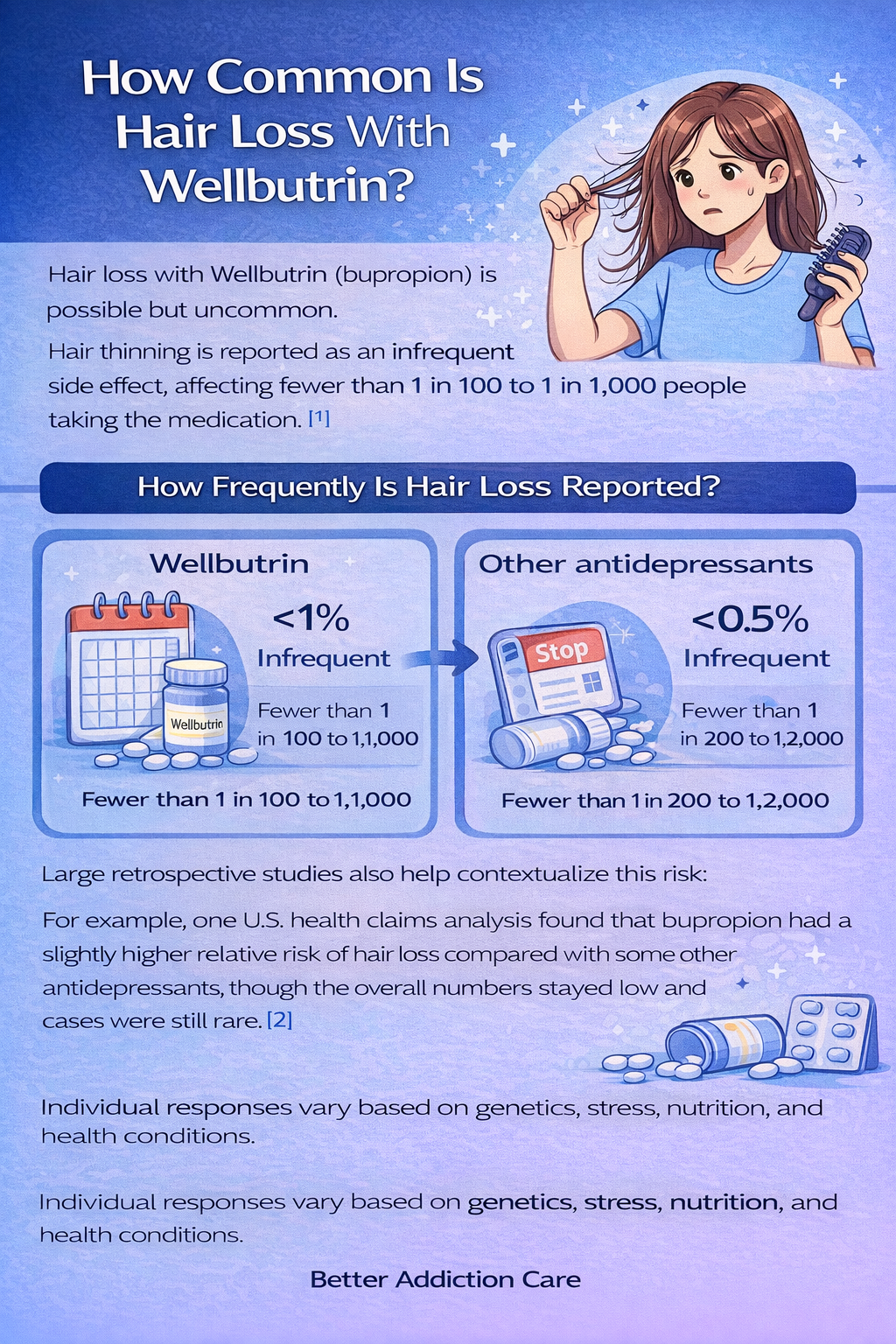
Hair loss with Wellbutrin (bupropion) is possible but uncommon.
According to clinical safety information and post-marketing data, alopecia or hair thinning is categorized as an infrequent side effect — meaning it’s generally reported in fewer than about 1 in 100 to 1 in 1,000 people taking the drug. [1]
Large retrospective studies also help contextualize this risk.
For example, one U.S. health claims analysis found that bupropion had a slightly higher relative risk of hair loss compared with some other antidepressants, though the overall numbers stayed low and cases were still rare.[2]
Beyond formal studies, many individuals share personal experiences online — some reporting noticeable thinning or diffuse shedding after starting or increasing doses, and others reporting no changes at all. These varied accounts underscore that individual responses can differ widely based on genetics, stress, nutrition, dosage, and underlying health conditions.
Why Wellbutrin May Contribute to Hair Loss?
Hair growth is sensitive to internal stress—even positive change can be stressful to the body. Several overlapping mechanisms may explain why some individuals notice hair shedding.
Neurochemical and Stress Response Changes
Starting an antidepressant can temporarily activate the stress response system.
Even when mood improves, the body may experience:
These changes can push hair follicles into a resting phase weeks later.
Appetite and Nutritional Intake
Wellbutrin may reduce appetite in some people.
Over time, reduced intake of:
Can subtly weaken hair growth without obvious symptoms.
Sleep Disruption
Insomnia or fragmented sleep is a known early side effect.
Sleep deprivation interferes with:
Individual Sensitivity
Some people are simply more sensitive to medication-induced cycle changes, especially if they’ve experienced hair shedding with stress, illness, or other medications in the past.
When Does Hair Loss Typically Start?
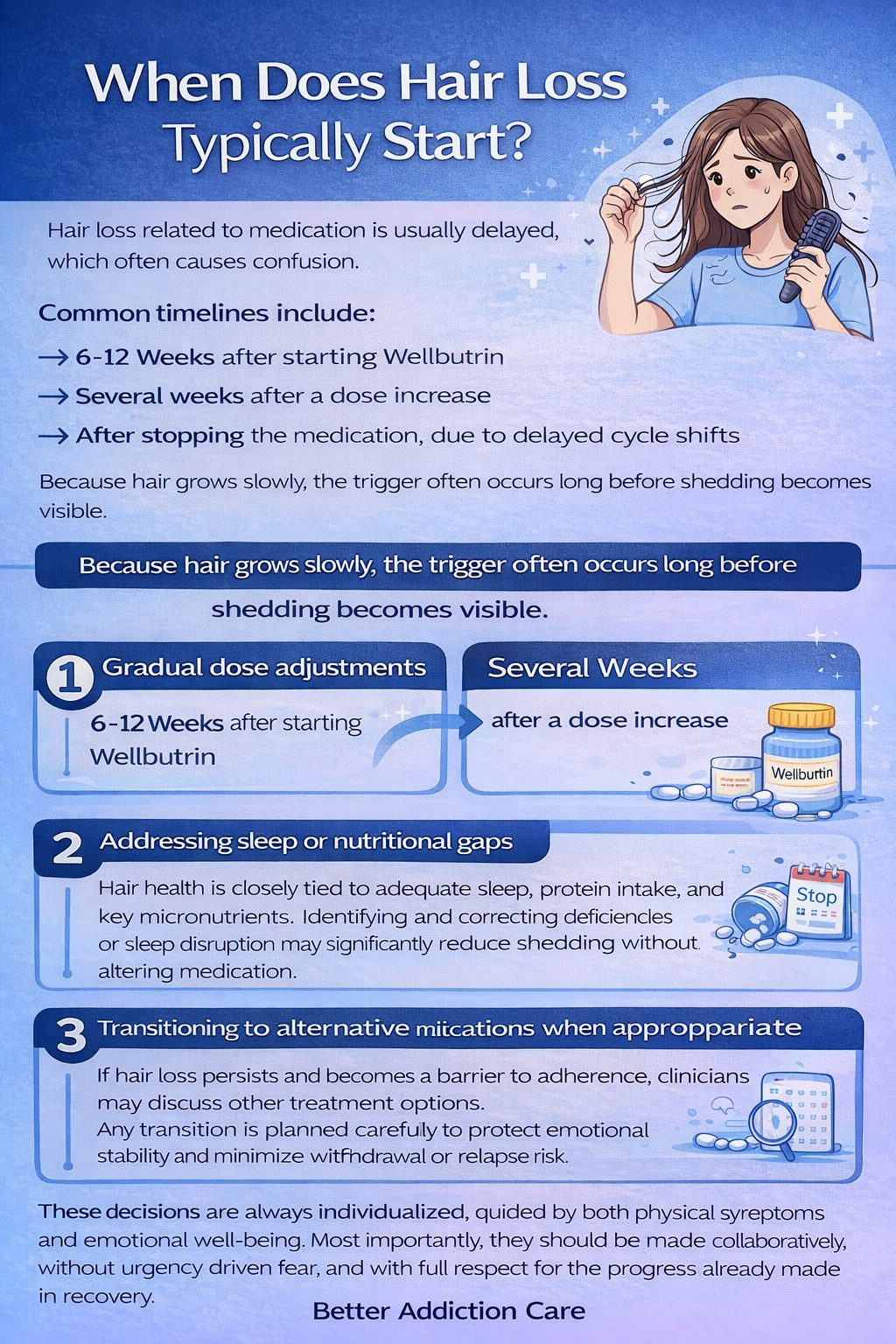
Hair loss related to medication is usually delayed, which often causes confusion.
Common timelines include:
Because hair grows slowly, the trigger often occurs long before shedding becomes visible.
Is Hair Loss From Wellbutrin Temporary or Permanent?
In most reported cases, hair loss associated with Wellbutrin is temporary.
Hair regrowth often occurs:
Permanent hair loss is not commonly associated with Wellbutrin in medical literature.
Other Common Side Effects of Wellbutrin
Viewing hair loss in full context helps avoid distorted risk perception.
More common side effects include:
Many of these effects improve within the first few weeks.
Less Common but Serious Side Effects to Be Aware Of
While rare, certain side effects require medical attention:
These risks are unrelated to hair loss but important for safety awareness.
Factors That May Increase the Risk of Hair Loss
Hair shedding rarely has a single, simple cause. More often, it reflects several overlapping factors that affect the body at the same time. Recognizing these layers is important because it helps reduce self-blame and prevents oversimplifying what is often a complex biological response.
Risk may be higher in individuals who:
Understanding these contributing factors helps create a more accurate and compassionate picture.
Hair loss in this context is not a personal failure or a sign that treatment is “wrong.” Instead, it is often a signal that the body is responding to multiple changes at once—and that those changes can usually be addressed with time, support, and thoughtful care.
Managing Hair Loss While Taking Wellbutrin
Supportive, non-prescriptive steps may help reduce distress:
Early awareness allows for safer decisions.
Should You Stop Wellbutrin Because of Hair Loss?
Stopping Wellbutrin abruptly is not recommended without medical guidance, even when hair loss is distressing. While shedding can feel alarming, sudden discontinuation often carries greater risks than benefits—especially for individuals actively managing depression or other behavioral health conditions.
Abruptly stopping Wellbutrin may:
Worsen depressive symptoms, including low mood, fatigue, or loss of motivation
Increase emotional instability, making anxiety, irritability, or mood swings harder to manage
Undermine recovery progress, particularly if Wellbutrin has been helping restore daily functioning or emotional balance
It’s also important to recognize that stopping a medication suddenly does not always lead to immediate improvement in hair shedding. Because hair growth cycles are delayed, shedding may continue for weeks even after discontinuation, which can add confusion and frustration.
Hair loss alone is rarely a medical emergency. Instead of reacting quickly, the safest approach is to pause, gather information, and involve a provider who understands both mental health treatment and physical side effects. A clinician can help weigh:
The benefits Wellbutrin provides
Balancing mental health stability with physical concerns is not a sign of weakness—it’s part of thoughtful, long-term recovery.
With guidance and patience, most people are able to find a path forward without sacrificing progress or hope.
Alternatives or Adjustments if Hair Loss Persists
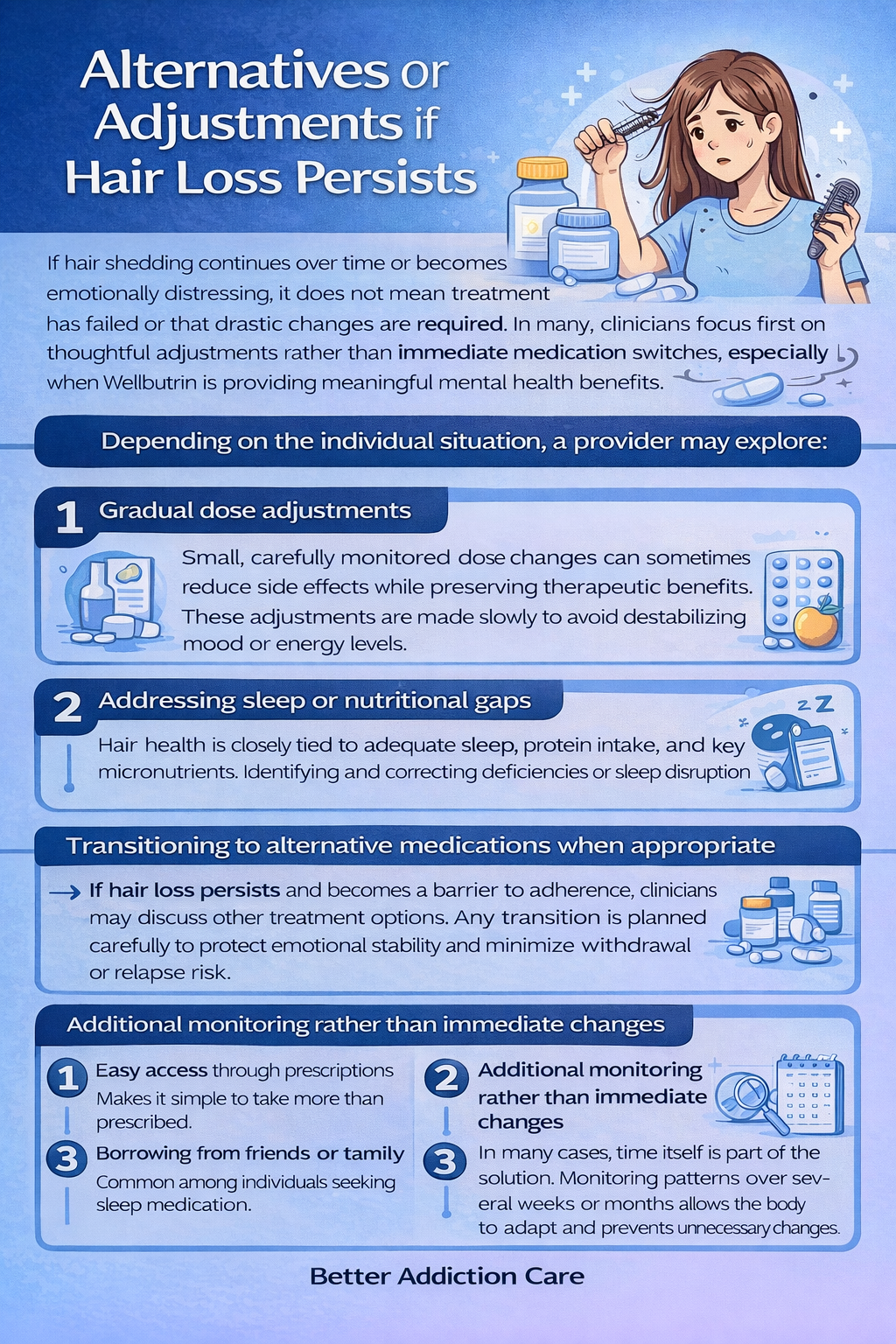
If hair shedding continues over time or becomes emotionally distressing, it does not mean treatment has failed or that drastic changes are required.
In many cases, clinicians focus first on thoughtful adjustments rather than immediate medication switches, especially when Wellbutrin is providing meaningful mental health benefits.
Depending on the individual situation, a provider may explore:
These decisions are always individualized, guided by both physical symptoms and emotional well-being. Most importantly, they should be made collaboratively, without urgency-driven fear, and with full respect for the progress already made in recovery.
Emotional Impact: Hair Loss, Self-Image, and Mental Health
Hair loss can quietly but powerfully affect self-esteem, especially for individuals already managing depression, anxiety, or long-term behavioral health challenges.
Because hair is closely tied to identity, self-expression, and how we present ourselves to the world, changes to it can feel deeply personal and unexpectedly destabilizing.
For some people, hair loss becomes a daily reminder of illness or treatment, making it harder to feel “normal” or move forward in recovery. Even when mental health symptoms are improving, visible physical changes can trigger new layers of emotional distress.
Common emotional responses may include:
These reactions are not vanity-driven or superficial. They reflect a very real struggle between wanting to heal internally while also wanting to feel comfortable in one’s own body.
Hair-related distress can also:
Because of this, concerns about hair loss deserve space in mental health conversations. When acknowledged openly, they can be addressed in ways that protect both emotional well-being and treatment progress.
Validation matters. Feeling seen and taken seriously can reduce shame, ease anxiety, and help individuals stay engaged in recovery without feeling forced to choose between mental health and self-image.
When to Talk to a Doctor?
Reaching out to a healthcare provider can feel intimidating, especially when you’re already managing mental health treatment. However, early conversations often prevent unnecessary anxiety and help protect both emotional stability and physical well-being.
Medical input is especially important if:
Starting the conversation early allows providers to:
Addressing concerns sooner rather than later helps prevent misinformation, panic-driven decisions, and unnecessary suffering—while keeping hope, safety, and healing at the center of care.
Final Takeaway: Understanding Risk Without Panic
Wellbutrin has helped many people reclaim motivation, stability, and quality of life.
Hair loss, while possible, is uncommon, usually temporary, and highly individual.
Understanding the risk allows individuals and families to:
Hope does not mean ignoring side effects.
Hope means knowing that challenges can be addressed—without sacrificing recovery.
No. Most people do not experience hair loss while taking Wellbutrin. When it does occur, it tends to affect a small subset of individuals and is influenced by personal factors such as stress levels, nutritional status, and biological sensitivity rather than the medication alone.
If shedding occurs, it often stabilizes within a few months as the body adjusts to the medication. Hair growth cycles move slowly, so visible improvement may take time even after shedding slows, which can be frustrating but is usually part of normal recovery.
In most reported cases, yes, hair regrowth is common once contributing factors are addressed. Regrowth may take several months, and outcomes depend on overall health, stress management, and whether the medication change is guided carefully by a clinician.
Supporting consistent sleep, adequate nutrition, and stress regulation may help reduce risk. Avoiding rapid medication changes and addressing underlying deficiencies early can also support healthier hair cycles over time.
Hair shedding is more often reported after starting Wellbutrin or following a dose adjustment rather than during long-term stable use. These periods represent times of biological adjustment, which can temporarily disrupt hair growth cycles in sensitive individuals.
Hair loss alone is rarely a medical emergency and does not usually require stopping treatment abruptly. Sudden discontinuation can worsen mental health symptoms, so any changes should be discussed with a healthcare provider to protect both emotional stability and physical well-being.
By calling us, you agree to our Terms & Conditions
For those seeking addiction treatment for themselves or a loved one, our calls are confidential and are available for 24/7 help.
Any treatment center receiving calls from the site is a paid advertiser.
Calls to numbers on a specific treatment center listing will be routed to that treatment center.
Calls to any general helpline will be answered by treatment providers, each of which is a paid advertiser.
By calling the helpline you agree to the terms of use. These calls are offered at no cost to you and with no obligation to enter into treatment. Neither this site nor anyone who answers the call receives a commission or fee dependent upon which treatment provider a visitor may ultimately choose.
If you wish to explore additional treatment options or connect with a specific rehab center, you can: browse top-rated listings, visit our homepage, or visit SAMHSA, or by calling 800-662-HELP. You may also contact The Florida Department of Children and Family Services