(866) 567-3138
Sponsored Helpline
Verify Insurance
While many antidepressants are associated with noticeable weight gain, Wellbutrin is generally considered weight-neutral or even slightly weight-reducing. However, individual experiences can vary due to factors like metabolism, activity levels, and mood-related changes in appetite.
 Expert Verified
Wellbutrin, also known as bupropion, is a prescription antidepressant that belongs to the norepinephrine-dopamine reuptake inhibitor (NDRI) class. It is commonly prescribed to treat major depressive disorder, seasonal affective disorder, and to aid in smoking cessation.
Unlike many other antidepressants, Wellbutrin is not primarily focused on serotonin; instead, it enhances the activity of dopamine and norepinephrine, two neurotransmitters that play key roles in mood regulation, motivation, and energy levels.
Wellbutrin works by preventing the reuptake of dopamine and norepinephrine in the brain, which increases the concentration of these neurotransmitters in synaptic spaces.
This boost in neurotransmitters can improve mood, increase focus, and elevate energy levels. Interestingly, these same neurotransmitters are linked to appetite and reward pathways, which is why some patients notice changes in their eating habits or weight during treatment.
Although Wellbutrin is generally weight-neutral and often associated with mild weight loss, some individuals may experience weight gain indirectly. Factors include:
Mood improvement: When depressive symptoms improve, some patients regain previously lost appetite, which may lead to increased calorie intake.
Lifestyle factors: Sedentary habits, poor diet, or changes in physical activity can influence weight changes during treatment.
Individual metabolic differences: Age, genetics, and baseline metabolism can contribute to how a person’s weight responds to Wellbutrin.
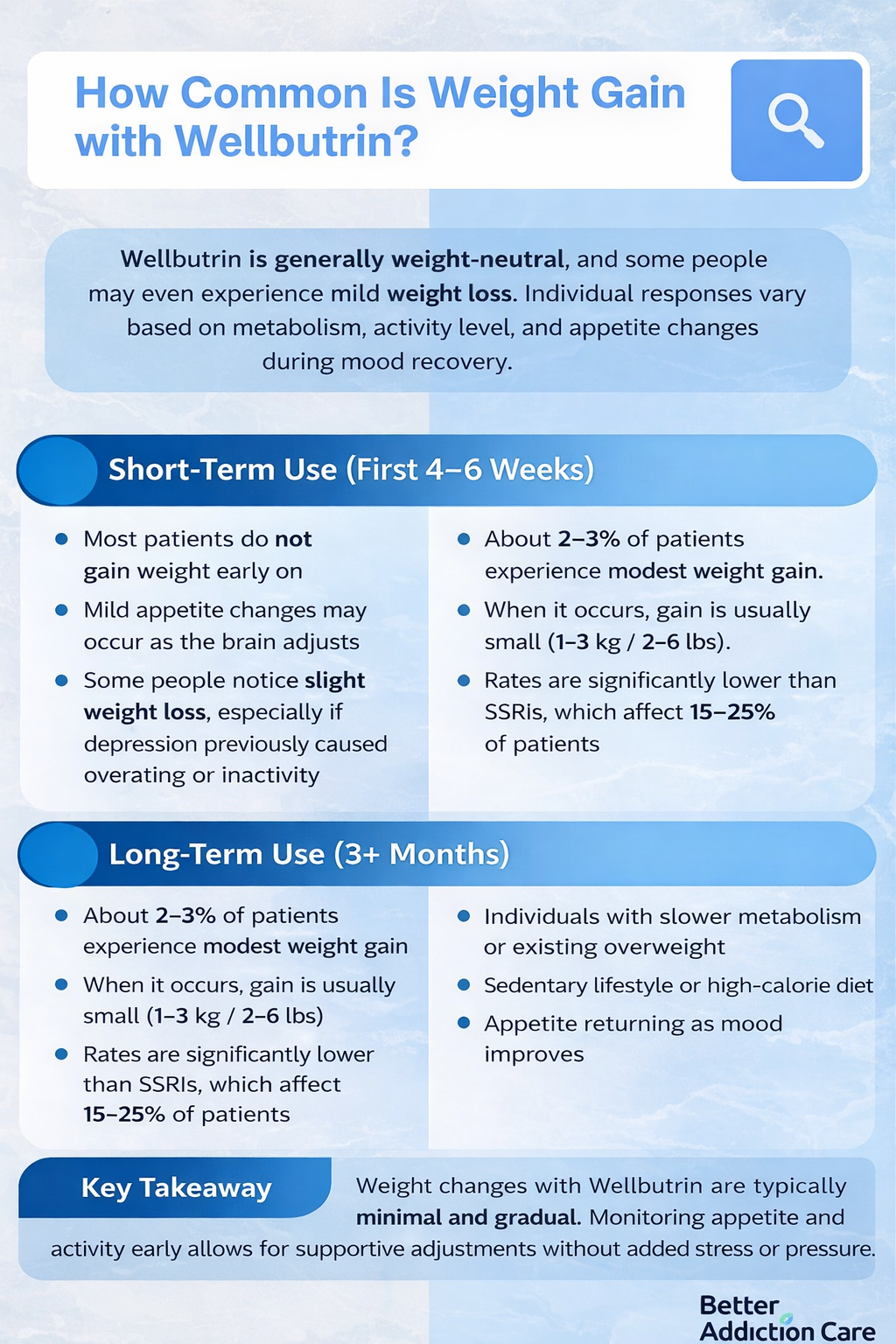
While many antidepressants are associated with noticeable weight gain, Wellbutrin is generally considered weight-neutral or even slightly weight-reducing.
However, individual experiences can vary due to factors like metabolism, activity levels, and mood-related changes in appetite.
Short-Term Use (First 4–6 Weeks)
Most patients do not experience significant weight gain in the early weeks.
Mild appetite changes may occur as the brain adapts to increased dopamine and norepinephrine levels.
Some individuals may notice slight weight loss, particularly if depressive symptoms include overeating or low energy that limits activity.
Long-Term Use (3+ Months)
Clinical studies report that up to 2–3% of patients may experience modest weight gain over several months.
The amount of weight gain, when it occurs, is generally small—typically 1–3 kg (2–6 lbs).
For comparison, many selective serotonin reuptake inhibitors (SSRIs) show weight gain in 15–25% of patients, making Wellbutrin an option for those concerned about this side effect.
At-Risk Groups
Individuals with slower metabolism or pre-existing overweight/obesity may be slightly more prone to gaining weight.
Sedentary lifestyles or high-calorie diets can amplify minor metabolic changes.
Mood improvement may restore appetite in those previously depressed, leading to a return of normal or slightly elevated caloric intake.
Families often notice subtle shifts before they become visible. Tracking early patterns in appetite, snacking, or activity levels allows for gentle, proactive guidance—without creating anxiety or pressure around the patient’s weight.
Clinical Evidence:
A meta-analysis reviewing antidepressant-associated weight changes found that Wellbutrin had one of the lowest weight gain profiles, often resulting in slight weight loss rather than gain[1].
In placebo-controlled studies, weight gain in Wellbutrin-treated patients was not statistically significant compared to placebo, supporting its reputation as a weight-conscious choice for depression treatment[2].
Understanding prevalence empowers families to set realistic expectations. Most patients do not experience noticeable weight gain, but monitoring remains crucial to catch any changes early.
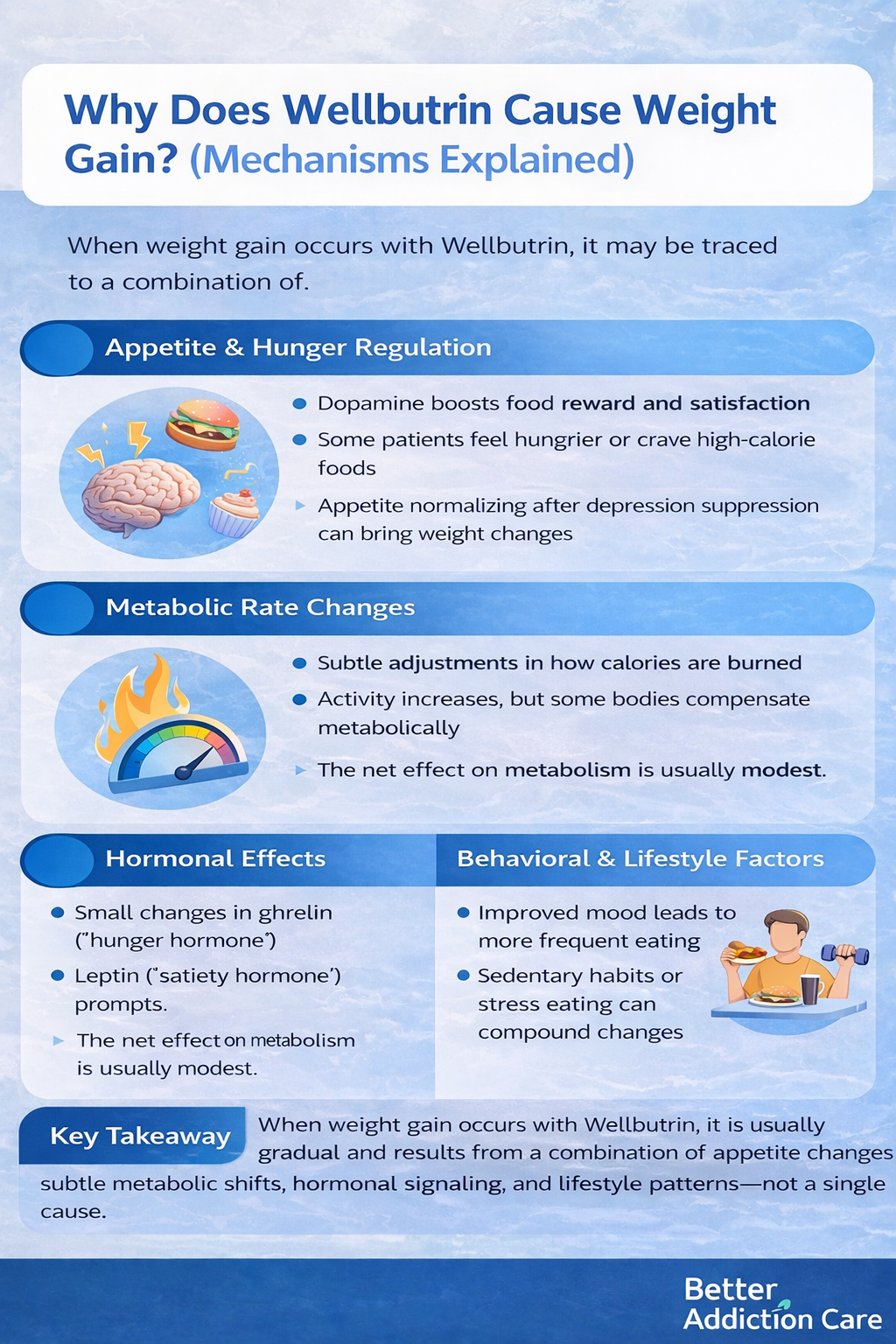
Weight changes, even when uncommon, can be traced to four main mechanisms:
Dopamine plays a key role in the brain’s reward system, affecting how satisfying food feels.
When dopamine levels increase, some patients may experience renewed appetite or cravings, especially for high-calorie foods.
For patients previously depressed with low appetite, this can lead to weight gain as caloric intake normalizes.
Wellbutrin can subtly influence energy expenditure.
While it often increases motivation for activity, some individuals may have minor compensatory metabolic adjustments, slightly altering how the body burns calories.
Indirect effects on leptin (satiety hormone) and ghrelin (hunger hormone) can occur, although these changes are typically modest.
These hormonal shifts may affect feelings of fullness or hunger, contributing to weight fluctuations in sensitive individuals.
Improvement in mood may lead patients to eat more social meals, snack more often, or enjoy foods previously avoided, indirectly causing weight gain.
Sedentary habits or stress eating can compound these effects.
Families can support healthy behavioral patterns by encouraging regular meals, balanced snacks, and gentle physical activity.
Simple habits like shared meals with portion control or walking routines can prevent small shifts from becoming significant weight changes.
While Wellbutrin is generally considered weight-neutral, some patients do experience small but noticeable weight changes.
Most weight changes are temporary, manageable, and reversible with a combination of early monitoring, lifestyle adjustments, and professional guidance.
Patients and families can maintain treatment benefits without sacrificing physical health.
Recognizing weight change as a normal aspect of recovery—rather than a failure—reduces anxiety and empowers informed action.
Research indicates that most minor weight changes plateau within 3–6 months of treatment.
For patients who experience an increase in appetite as depressive symptoms improve, this usually represents a return to baseline eating patterns rather than an ongoing trend toward obesity.
Families may notice subtle weight shifts first, and early monitoring helps prevent small gains from becoming significant.
When Wellbutrin is tapered or discontinued under medical supervision, patients often experience a gradual return to pre-treatment weight.
Tapering should always be guided by a physician to prevent withdrawal symptoms or mood relapse, which can otherwise indirectly contribute to weight fluctuations.
Adjusting the dose under professional guidance may also reduce minor weight increases without sacrificing treatment benefits.
Structured Nutrition Plans – Balanced meals, adequate protein, fiber, and hydration to manage appetite.
Regular Physical Activity – Gentle exercise routines that fit the patient’s lifestyle, gradually increasing intensity over time.
Behavioral Interventions – Mindful eating, tracking calorie intake, and establishing consistent meal times.
Medical Consultation – Dose adjustments, alternative medications, or adjunct therapies may be explored.
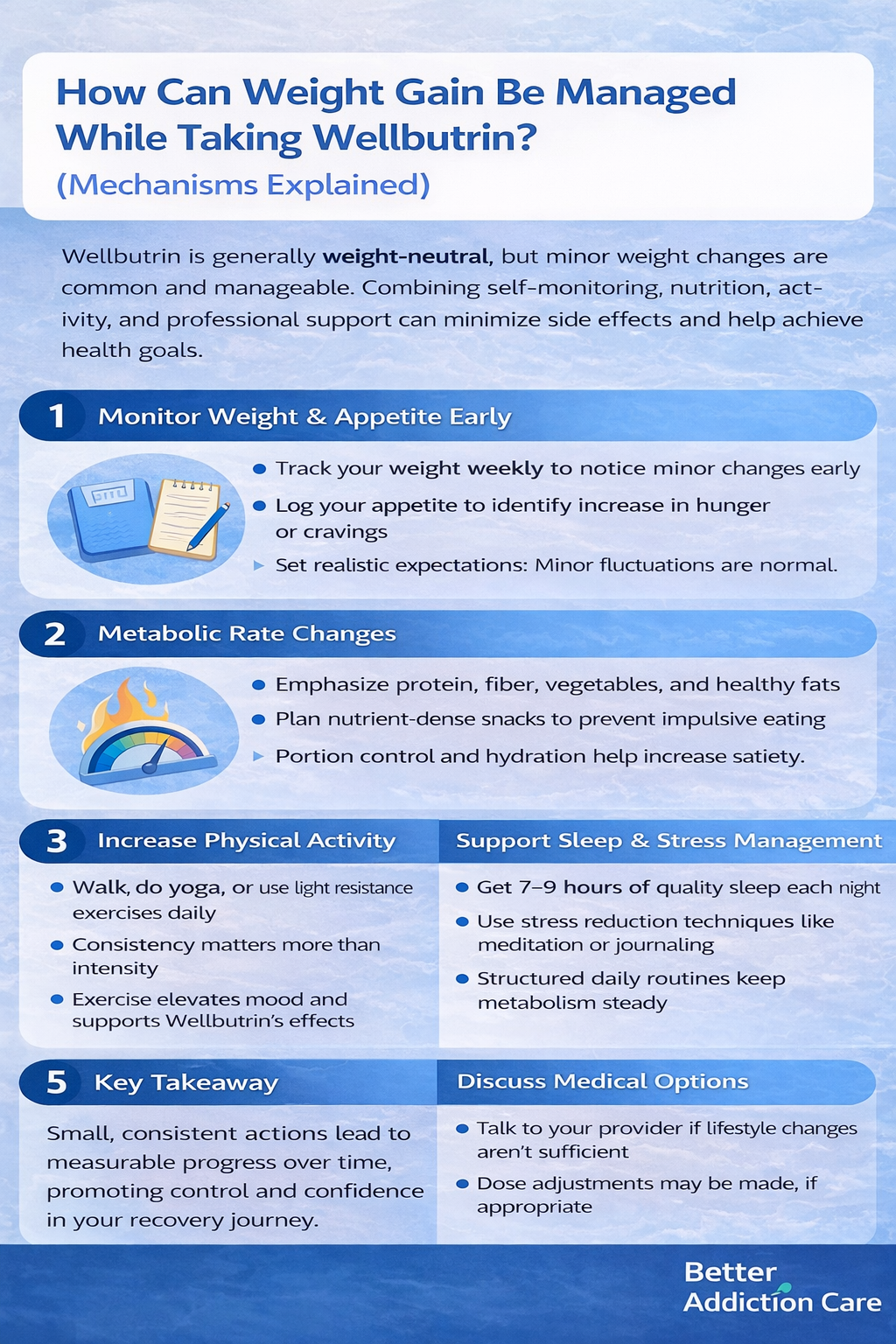
Even though Wellbutrin is usually weight-neutral, some patients may experience minor changes in weight or appetite. Minor weight changes are common and manageable, not a reason to stop treatment.
Combining self-monitoring, nutrition, activity, and professional guidance allows you to maintain treatment benefits while keeping your weight stable.
Small, consistent actions lead to measurable results over time, giving you control and confidence in your recovery journey.
Track your weight regularly: Weekly measurements help you notice subtle changes before they become significant.
Log appetite patterns: Note when you feel hungrier or cravings increase, especially after mood improvements.
Set realistic expectations: Minor fluctuations are normal during antidepressant treatment. Recognizing this reduces stress and promotes healthy habits.
Balanced meals: Emphasize lean protein, vegetables, whole grains, and healthy fats.
Mindful snacking: Plan snacks to prevent impulsive eating, focusing on nutrient-dense options.
Hydration and fiber: Drinking water and eating fiber-rich foods can improve satiety and reduce unnecessary calorie intake.
Portion control: Even small adjustments in portion sizes can prevent gradual weight gain.
Start gently: Activities like walking, yoga, or light resistance exercises are effective and sustainable.
Consistency over intensity: Daily moderate activity is more beneficial than occasional intense workouts.
Mood and energy benefits: Exercise not only helps regulate weight but also enhances the dopamine and norepinephrine systems that Wellbutrin targets, amplifying antidepressant effects.
Adequate sleep: Poor sleep increases hunger hormones and appetite. Aim for 7–9 hours nightly.
Stress reduction techniques: Mindfulness, meditation, or journaling can prevent stress-related overeating.
Routine establishment: Structured daily routines for meals, activity, and sleep improve metabolic regulation.
If lifestyle strategies are insufficient, talk to your healthcare provider before making any medication changes.
Options may include:
Dose adjustments under supervision
Alternative antidepressants with lower weight impact (if clinically appropriate)
Adjunct therapies that target appetite regulation
Even though weight gain on Wellbutrin is uncommon, monitoring changes and knowing when to consult a healthcare professional ensures early intervention and peace of mind.
Red Flags for Seeking Professional Guidance
Rapid weight increase: More than 2–3 kg (4–6 lbs) in a month.
Unexplained weight changes: Changes without corresponding shifts in diet or activity.
Metabolic concerns: Signs like elevated blood sugar, cholesterol, or blood pressure.
Mood fluctuations linked to weight changes: Increased anxiety, low self-esteem, or relapse in depression.
What Your Doctor Can Do?
Review your current dose and medication schedule.
Evaluate the need for adjunct therapy or lifestyle support.
Recommend nutritional counseling, physical activity programs, or lab tests if necessary.
Discuss potential alternative medications if weight gain persists despite lifestyle efforts
Seeking medical guidance is a proactive step, not a failure. Early consultation can prevent minor weight changes from becoming long-term challenges while maintaining the mental health benefits of Wellbutrin.
Preventing weight gain is not guaranteed, but proactive strategies dramatically reduce risk. Patients who plan often experience greater success in balancing mental and physical health.
Record weight, BMI, and waist circumference before starting treatment.
Tracking baseline helps you notice even small changes early.
Incorporate daily movement from the start, even gentle walks or stretching.
Consistency is more important than intensity, especially in the first weeks of treatment.
Focus on nutrient-dense foods and regular meals.
Hydration and fiber help manage appetite naturally.
Avoid skipping meals, which can trigger compensatory overeating.
Track changes in appetite, cravings, and weight weekly.
Early adjustments in diet or activity prevent gradual, unnoticed weight gain.
Discuss concerns before they become problematic.
Early professional guidance allows for safe adjustments, preserving both mental and physical health.
Wellbutrin is a safe and effective antidepressant that is generally weight-neutral, though minor changes can occur in some patients. Even if slight weight gain happens, it is rarely permanent and usually stabilizes within a few months.
By monitoring your weight, following a balanced diet, staying physically active, and consulting your healthcare provider, you can maintain both mental health and physical well-being.
Remember, weight fluctuations are a normal part of treatment and do not indicate failure. Taking proactive, consistent steps empowers you to continue benefiting from Wellbutrin without compromising your confidence or health.
With awareness and small adjustments, it’s possible to achieve long-term balance, control, and recovery, making your treatment journey both effective and sustainable.
Weight monitoring and early lifestyle adjustments are your first line of defense.
Minor fluctuations are normal and reversible.
Maintaining open communication with your healthcare provider ensures both mental health benefits and physical well-being are preserved.
No. Wellbutrin is generally considered weight-neutral, though individual responses differ. Some patients may notice slight weight loss, while others maintain a stable weight. Rarely, small gains occur due to appetite normalization as depression improves. Monitoring weight early and following healthy eating and activity habits can help you manage changes effectively while benefiting from the medication.
Weight changes on Wellbutrin are usually subtle and gradual, often appearing within 4–12 weeks of starting treatment. Minor fluctuations are typically temporary. Regular monitoring of weight, appetite, and lifestyle habits allows you to respond early. Early detection and proactive adjustments in nutrition, activity, and hydration can prevent small changes from becoming long-term concerns.
While no strategy guarantees total prevention, combining balanced nutrition, hydration, and consistent physical activity significantly reduces the risk of weight gain. Structured meal planning, mindful snacking, and daily movement help your metabolism remain stable. Early monitoring of weight trends and small lifestyle adjustments make it easier to maintain a healthy balance without disrupting the mental health benefits of Wellbutrin.
Age-related metabolic changes may slightly increase the risk of weight fluctuations, but Wellbutrin remains mostly weight-neutral even in older adults. Maintaining activity, managing portion sizes, and focusing on nutrient-rich meals help prevent small gains. Monitoring weight and discussing trends with your healthcare provider ensures safe management and preserves both physical health and mental well-being.
Yes. Pediatric and adolescent patients may respond differently due to growth, hormones, and metabolic differences. While Wellbutrin is generally safe, monitoring weight, appetite, and mood is essential. Parents and caregivers should observe subtle changes and coordinate with healthcare providers. Early attention and adjustments in diet or activity help children and teens maintain a stable weight while benefiting from therapy.
Weight changes, even minor ones, can impact confidence and mental health. Address concerns openly with your healthcare provider. Combining lifestyle strategies—balanced diet, exercise, and sleep—with professional guidance can restore control. Remember, weight fluctuations are often temporary and manageable. Maintaining perspective and proactive habits supports both your physical health and emotional resilience during treatment.
Switching medications is possible but should always be done under medical supervision. Discuss your concerns with your provider, who may suggest dose adjustments, alternative antidepressants, or adjunct therapies. Early intervention ensures that your mental health remains stable while addressing physical changes. Safe transitions prevent relapse, maintain treatment efficacy, and support long-term well-being.
By calling us, you agree to our Terms & Conditions
For those seeking addiction treatment for themselves or a loved one, our calls are confidential and are available for 24/7 help.
Any treatment center receiving calls from the site is a paid advertiser.
Calls to numbers on a specific treatment center listing will be routed to that treatment center.
Calls to any general helpline will be answered by treatment providers, each of which is a paid advertiser.
By calling the helpline you agree to the terms of use. These calls are offered at no cost to you and with no obligation to enter into treatment. Neither this site nor anyone who answers the call receives a commission or fee dependent upon which treatment provider a visitor may ultimately choose.
If you wish to explore additional treatment options or connect with a specific rehab center, you can: browse top-rated listings, visit our homepage, or visit SAMHSA, or by calling 800-662-HELP. You may also contact The Florida Department of Children and Family Services