(866) 567-3138
Sponsored Helpline
Verify Insurance
Sudden changes in sexual behavior can feel confusing, frightening, and deeply personal.
For some individuals, these changes appear after starting or using certain drugs or medications.
This article explores how specific drugs can affect sexual behavior and the reproductive system, including increased libido, risky sexual behavior, fertility problems, and sexual dysfunction.
 Expert Verified
Reactions vary widely from person to person.
What feels manageable for one individual may feel overwhelming for another. Because of this, medical supervision and early communication are essential—especially when these changes begin to affect mental health, relationships, or personal safety.
Drugs influence sexual health through two primary systems:
Neurotransmitters are chemical messengers that facilitate communication within the brain.
They help control how we think, feel, and act—including how we experience sexual desire.
Certain drugs can raise or lower these chemicals too much, throwing the system off balance.
Key areas affected include:
Desire
Drugs may increase sexual thoughts or urges, or in some cases reduce interest entirely. This can happen quickly, sometimes within days or weeks of use.
Pleasure and reward
Some substances intensify how pleasurable sex feels, which can make the brain crave it more often. Over time, this can lead to compulsive behavior rather than healthy enjoyment.
Impulse control
Drugs can weaken the brain’s ability to pause, reflect, or set boundaries. This makes it harder to resist urges—even when someone knows the behavior may cause harm.
Emotional regulation
Mood swings, anxiety, or emotional numbness can change how a person relates to intimacy, partners, and personal values.
Important neurotransmitters involved:
Dopamine (motivation and reward)
When overstimulated, dopamine can push the brain into “seeking mode,” where sexual urges feel urgent and hard to ignore.
Serotonin (mood and inhibition)
Low serotonin may reduce self-control, while high levels can blunt desire or delay sexual response.
Norepinephrine (arousal and alertness)
Elevated levels can increase physical arousal and restlessness, sometimes without emotional connection.
When these chemicals are overstimulated or suppressed, sexual behavior can shift in ways that feel sudden, intense, or unfamiliar.
Hormones are the body’s chemical regulators, controlling growth, reproduction, and sexual function.
Many drugs interfere with hormone production or balance—sometimes without obvious warning signs.
Hormones commonly affected include:
Testosterone
Important for sexual desire, energy, and sperm production in men, and libido and muscle health in women.
Estrogen
Regulates menstrual cycles, vaginal health, and fertility in women, and supports sexual function in men as well.
Progesterone
Helps regulate menstrual cycles and prepare for pregnancy.
Prolactin
Elevated levels can suppress sexual desire and interfere with normal reproductive function.
When these hormones are disrupted, people may experience:
Changes in sexual desire (higher or lower than usual)
Irregular or missed menstrual cycles
Difficulty with erections or arousal
Reduced sperm quality or count
Challenges with ovulation or fertility
Even small hormonal shifts can lead to noticeable physical or emotional changes—especially when combined with brain chemistry effects.
These changes are medical effects—not personal failures—and they are often manageable with proper support. Why This Feels So Overwhelming? Because brain chemicals and hormones work together, drug-related changes can affect both:
How do sexual urges feel?
How does the body respond physically?
This is why someone may feel:
“Not like themselves.”
Confused by sudden urges or loss of interest
Ashamed or scared to talk about it
These changes are medical effects—not personal failures—and they are often manageable with proper support.
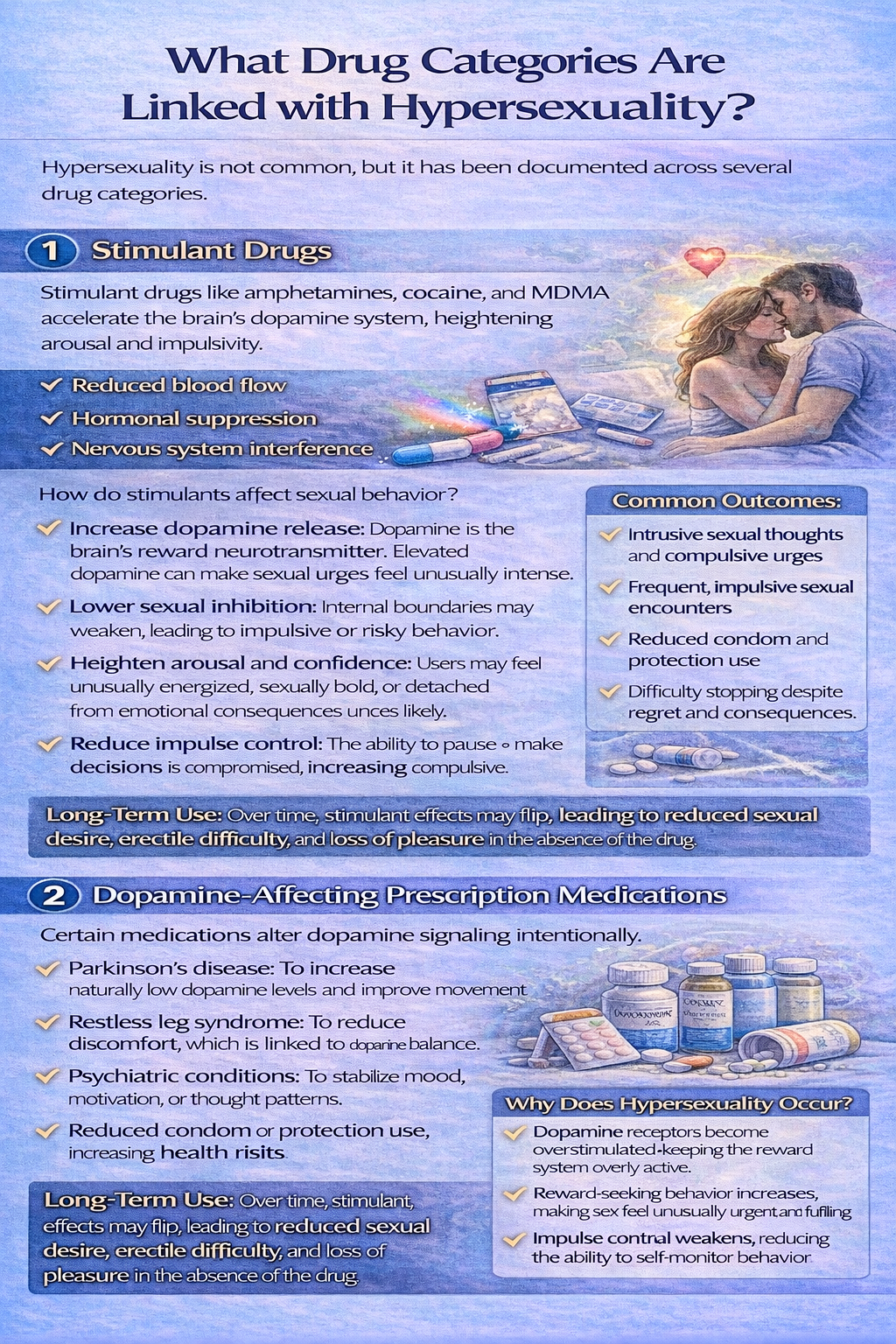
Hypersexuality is not common, but it has been documented across several drug categories.
Stimulant drugs strongly activate the brain’s reward system, which is responsible for motivation, pleasure, and desire.
These substances push the brain into a heightened state of alertness and excitement—often faster and more intensely than the body can regulate.
How do stimulants affect sexual behavior? Stimulants may:
Increase dopamine release: Dopamine signals “wanting” and reward. When levels surge, sexual urges can feel urgent, powerful, and difficult to ignore.
Lower sexual inhibition: Internal boundaries that usually guide decision-making may weaken, making risky or out-of-character behavior more likely.
Heighten arousal and confidence: Users may feel unusually confident, energized, or sexually bold—even when an emotional connection is absent.
Reduce impulse control: The brain’s ability to pause and assess consequences decreases, especially during prolonged or repeated use.
Common outcomes reported by users
Compulsive sexual thoughts that feel intrusive or hard to turn off
Increased frequency of sexual activity, sometimes interfering with daily responsibilities
Multiple or anonymous partners, often without emotional connection
Reduced condom or protection use, increasing health risks
Difficulty stopping sexual behaviors once started, even when regret or concern is present
For many, these behaviors feel confusing or distressing once the drug wears off.
Additional emotional and relational risks
Beyond physical health concerns, stimulant-related hypersexuality can cause:
Emotional detachment, where sex feels mechanical rather than intimate
Shame or guilt cycles after use, which may fuel further substance use
Increased risk of sexually transmitted infections (STIs)
Relationship strain, including loss of trust, secrecy, or conflict with partners
Long-term effects to be aware of
While stimulants may initially increase libido, long-term or heavy use often has the opposite effect.
Over time, individuals may experience:
Reduced sexual desire
Erectile difficulties
Difficulty experiencing pleasure without the drug
This shift can feel especially distressing and may persist even after stopping use, making early intervention important.
Some prescription medications alter dopamine signaling intentionally.
These medications are often used for:
Parkinson’s disease, where dopamine levels are naturally low and need to be increased to support movement and coordination
Restless leg syndrome, a condition involving uncomfortable sensations and an urge to move, is often linked to a dopamine imbalance
Certain psychiatric conditions, where dopamine regulation helps stabilize mood, motivation, or thought patterns
Why can hypersexuality occur?
Dopamine receptors become overstimulated, meaning the brain’s reward system stays “switched on” longer than intended
Reward-seeking behavior increases, making pleasurable activities—especially sex—feel unusually compelling or urgent
Inhibitory control weakens, reducing the brain’s ability to slow down, self-monitor, or recognize when a behavior is crossing personal or social boundaries
What makes this especially dangerous?
Behaviors may feel “out of character”, causing confusion or distress for the individual and their loved ones
Urges can escalate quickly, sometimes within weeks of starting or increasing a dose
Financial, legal, and relationship harm can follow, including impulsive spending, secrecy, infidelity, or risky situations
Healthcare providers actively monitor for these effects because, in many cases, symptoms improve or fully reverse when the medication is adjusted or changed (2).
Not all changes in sexual desire caused by medications are harmful or concerning. In some cases, an increase in libido is a side effect of overall improvement in mental or physical health.
Some medications may:
Improve mood, reducing depression or emotional numbness that previously suppressed sexual interest
Increase energy levels, helping individuals feel more physically capable of intimacy
Reduce sexual anxiety, making it easier to relax, connect, and feel present during intimate moments
As a result, this can lead to:
Increased sexual interest, especially after a period of low desire or emotional withdrawal
Improved sexual confidence, where intimacy feels more natural rather than stressful or forced
The difference between healthy vs. problematic changes:
Healthy: Sexual desire increases gradually and remains within personal values and boundaries, with the ability to pause, choose, or say no
Problematic: Sexual urges feel compulsive, intrusive, or risky, and may interfere with daily life, relationships, or personal safety
The key factor is loss of control, not desire itself. When a person feels unable to manage or regulate these urges, professional guidance becomes important.
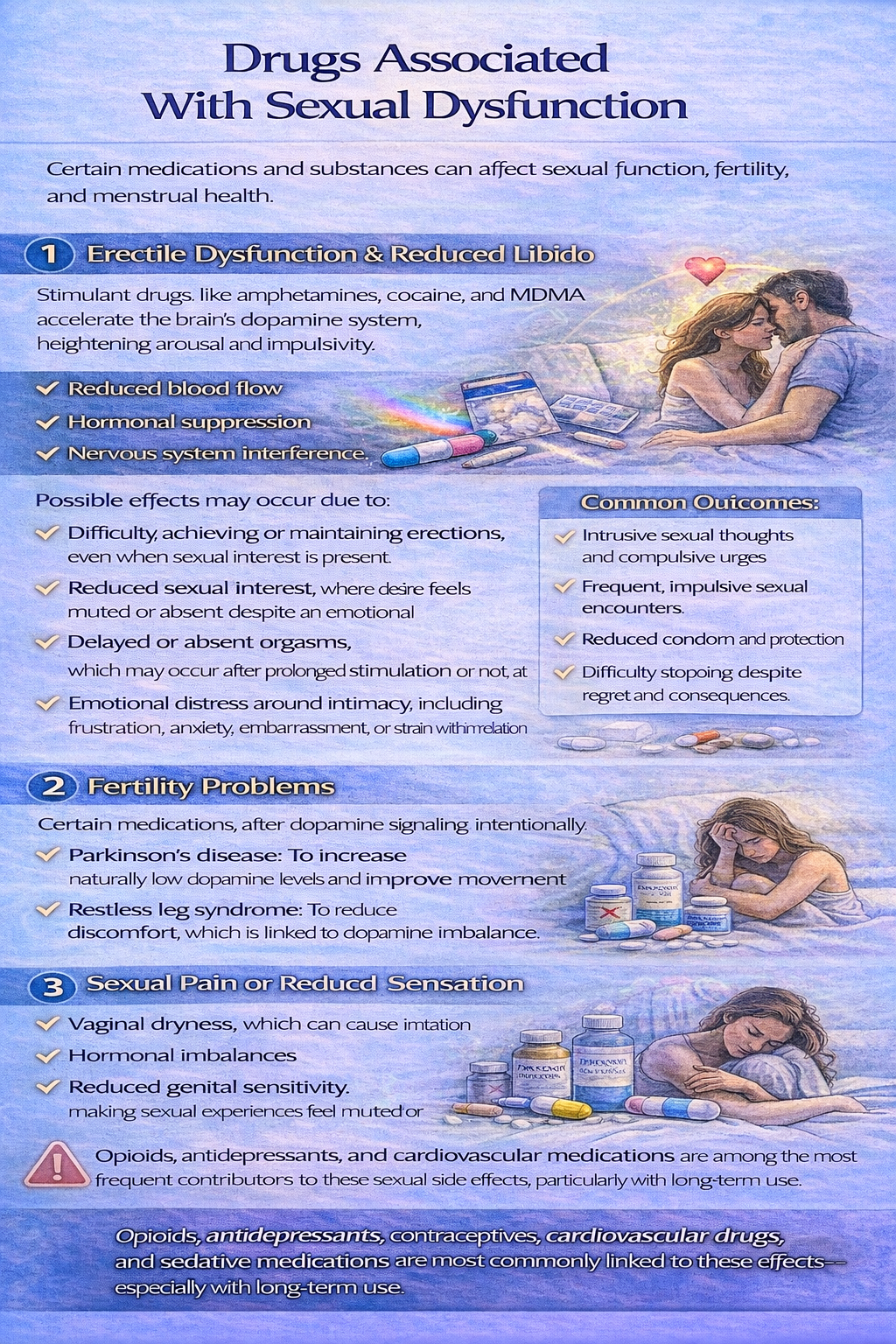
Sexual dysfunction is far more common than hypersexuality. This can be frustrating, confusing, and emotionally difficult—especially when they are unexpected.
These effects may occur due to:
Reduced blood flow, which can limit the physical ability to achieve or maintain an erection or become adequately aroused
Hormonal suppression, where drugs lower testosterone, estrogen, or other hormones essential for sexual desire and function
Nervous system interference, affecting how sexual signals travel between the brain and the body
Possible experiences include:
Difficulty achieving or maintaining erections, even when sexual interest is present
Reduced sexual interest, where desire feels muted or absent despite an emotional connection
Delayed or absent orgasm, which may occur after prolonged stimulation or not at all
Emotional distress around intimacy, including frustration, anxiety, embarrassment, or strain within relationships
Opioids, antidepressants, and cardiovascular medications are among the most frequent contributors to these sexual side effects, particularly with long-term use (1).
Drugs that interfere with the body’s hormone systems can disrupt the menstrual cycle in ways that feel confusing or concerning.
These changes may include:
Irregular periods, where cycles no longer follow a predictable pattern and timing varies month to month
Missed cycles, which can be distressing when menstruation stops unexpectedly
Heavier or lighter bleeding, sometimes accompanied by changes in cramping or cycle length
Suppressed ovulation, meaning the body may not release an egg consistently
For many individuals, these shifts raise immediate concerns—especially for those who are trying to conceive or rely on regular cycles as an indicator of overall health. While unsettling, these changes often improve once the underlying cause is addressed.
Reproductive health effects related to substance use or certain medications may develop gradually, sometimes without obvious early warning signs.
In men, these effects may include:
Reduced sperm count, which can lower fertility potential
Decreased sperm motility, affecting the sperm’s ability to reach and fertilize an egg
Lower testosterone levels, which may also influence energy, mood, and sexual desire
In women, possible effects include:
Irregular or absent ovulation, making conception more difficult
Hormonal imbalances, which can affect physical comfort and emotional well-being
Challenges sustaining pregnancy, particularly when hormone levels are disrupted
Some reproductive effects begin to improve after stopping the substance or adjusting treatment, while others may take time to stabilize. Recovery timelines vary, and medical support plays an important role in protecting long-term reproductive health.
Less commonly discussed—but equally important—are changes related to physical comfort and sexual sensation.
These effects may include:
Vaginal dryness, which can cause irritation or discomfort during intimacy
Reduced genital sensitivity, making sexual experiences feel muted or less satisfying
Pain during intercourse, which may lead to avoidance of intimacy
Persistent numbness or discomfort, affecting body confidence and connection
When these symptoms go unaddressed, they can impact emotional well-being, intimate relationships, and self-esteem. Compassionate medical care can help identify underlying causes and support both physical healing and emotional recovery.
Drug-induced hypersexuality is often closely linked with impaired judgment, meaning decisions that normally feel clear or manageable may become harder to make in the moment.
This shift happens when:
Impulsivity increases, making urges feel urgent and difficult to pause or reconsider
Emotional regulation weakens, reducing the ability to manage stress, excitement, or emotional discomfort
Consequences feel distant or unimportant, even when a person would normally recognize potential risks
When these changes occur together, individuals may engage in behaviors they would not otherwise choose.
Common risks associated with this pattern include:
Unprotected sex increases the likelihood of sexually transmitted infections or unintended pregnancy
Multiple sexual partners, often without adequate time or space for informed decision-making
Higher exposure to STIs, particularly when protective measures are not consistently used
Increased vulnerability to coercion or exploitation, especially when judgment and awareness are impaired
Research consistently shows that substance use is associated with significantly higher sexual health risks, with younger adults being particularly vulnerable due to ongoing brain development and social pressures [3].
Notes: Duration depends on:
Drug type
Dosage
Length of use
Genetics
Overall health
Certain individuals face higher vulnerability:
Existing hormonal disorders
Neurological conditions
History of compulsive behaviors
Multiple drug use
Younger age groups
Long-term or high-dose exposure
Awareness allows earlier intervention.
Seek professional help if you notice
Sudden personality or behavior changes — aggression, impulsivity, or hyperactivity that feels unusual.
Sexual urges that feel uncontrollable — acting on impulses in ways that worry you or others.
Physical pain during intimacy — discomfort, erectile issues, or other unexplained symptoms.
Fertility concerns — difficulty conceiving, irregular cycles, or other reproductive changes.
Emotional distress or shame — anxiety, guilt, or low mood related to sexual behavior.
Relationship damage — conflicts, mistrust, or breakdowns linked to sexual or behavioral changes.
Doctors treat these issues confidentially and without judgment — early consultation can prevent long-term complications and help you regain control.
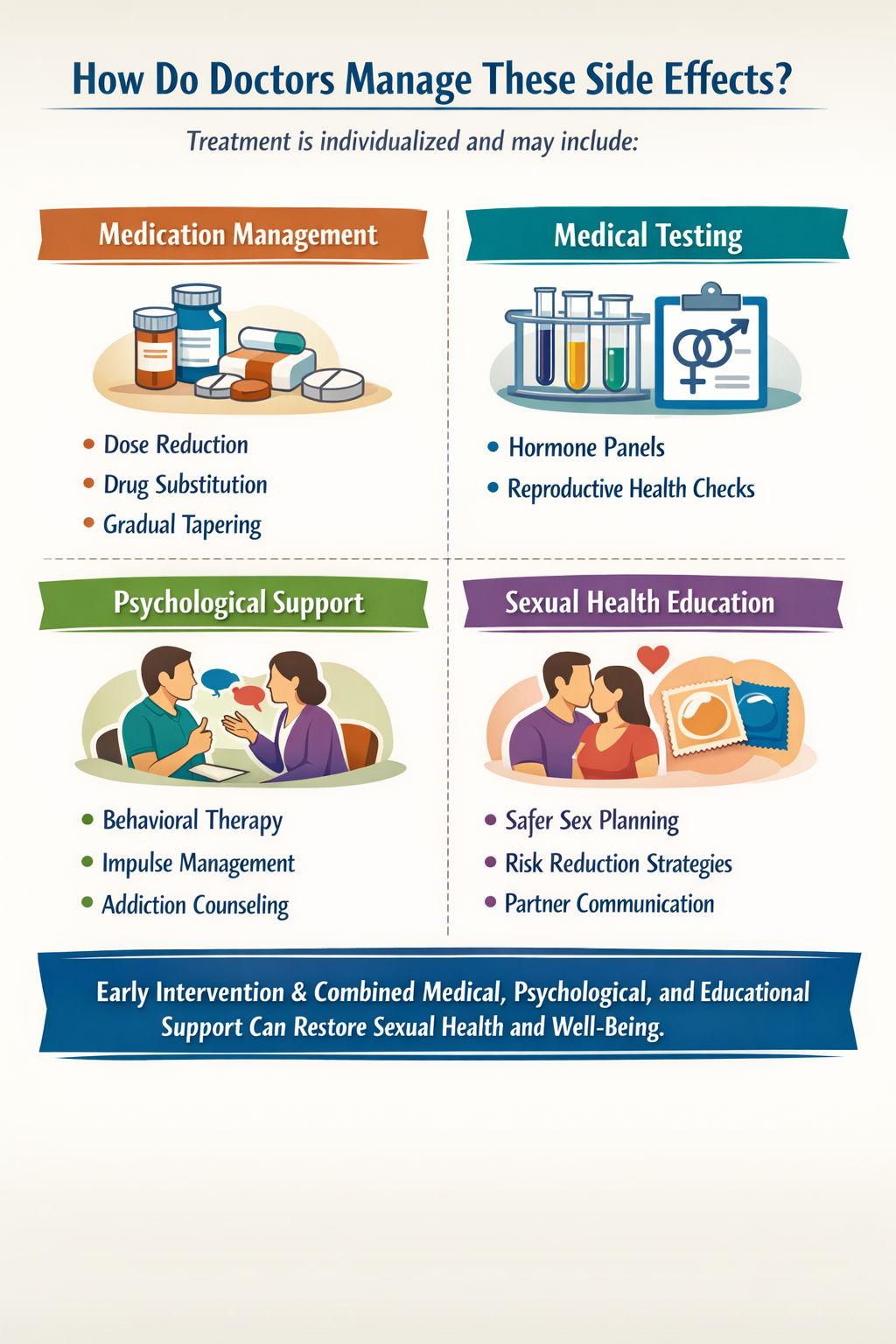
Treatment is individualized and may include:
Medication Changes
Dose reduction — lowering medication under medical supervision to reduce side effects.
Drug substitution — switching to alternative medications with fewer sexual or behavioral effects.
Gradual tapering — slowly decreasing dosage to minimize withdrawal or rebound symptoms.
Medical Testing
Hormone panels — checking testosterone, estrogen, and other hormones that affect sexual function.
Reproductive health assessments — evaluating fertility, menstrual cycles, or sperm quality.
Psychological Support
Behavioral therapy — addressing impulsivity, hypersexuality, or related behaviors.
Impulse management strategies — learning techniques to control urges safely.
Addiction-informed counseling — guidance for co-occurring substance use or behavioral patterns.
Sexual Health Education
Safer sex planning — ensuring protection and risk awareness during sexual activity
Risk reduction strategies — minimizing harm from behaviors linked to medications or substances.
Partner communication guidance — improving openness and consent in sexual relationships.
Most drug-induced sexual effects improve once addressed [2]; therefore, early intervention and combined medical, psychological, and educational support can restore sexual health and well-being.
Take medications exactly as prescribed — never adjust dose without consulting your doctor.
Avoid mixing substances — combining drugs or alcohol can amplify risks.
Track behavioral and physical changes — note mood swings, libido shifts, or other unusual symptoms.
Use protection consistently — condoms, dental dams, or other methods reduce sexual and reproductive risks.
Ask for help early — reach out to healthcare providers, counselors, or support groups if concerns arise.
Include trusted loved ones when possible — accountability and support improve safety.
Early action prevents long-term harm — small, timely steps can protect your physical and sexual health.
Drugs can profoundly affect sexual behavior and reproductive health in ways that feel isolating and frightening. Hypersexuality, while rare, is real and serious. Sexual dysfunction and fertility changes are far more common—and equally deserving of care.
The most important step is early communication. With medical guidance, behavioral support, and harm reduction strategies, many individuals regain balance, safety, and confidence.
Help exists. Recovery is possible.
Certain medications can affect sexual drive and behavior by altering dopamine, serotonin, or hormonal pathways in the brain. Drugs most commonly linked to hypersexuality include dopamine agonists (often used in Parkinson’s disease), some stimulants, and certain psychiatric medications. These effects are not intentional and result from changes in reward processing, impulse control, and arousal regulation.
Yes. In addition to increased libido, some medications may cause reduced libido, erectile dysfunction, delayed ejaculation, menstrual changes, fertility issues, or hormonal imbalances. The direction of the effect varies depending on the drug, dosage, duration of use, and individual sensitivity. Sexual side effects can affect both physical function and emotional well-being.
Any new or distressing sexual changes should be discussed with a healthcare provider, rather than stopping the medication abruptly. Management options may include adjusting the dose, changing the timing of medication, switching to an alternative treatment, or addressing contributing factors such as stress, sleep disruption, or other medications. In many cases, these side effects are reversible once the underlying cause is addressed.
By calling us, you agree to our Terms & Conditions
For those seeking addiction treatment for themselves or a loved one, our calls are confidential and are available for 24/7 help.
Any treatment center receiving calls from the site is a paid advertiser.
Calls to numbers on a specific treatment center listing will be routed to that treatment center.
Calls to any general helpline will be answered by treatment providers, each of which is a paid advertiser.
By calling the helpline you agree to the terms of use. These calls are offered at no cost to you and with no obligation to enter into treatment. Neither this site nor anyone who answers the call receives a commission or fee dependent upon which treatment provider a visitor may ultimately choose.
If you wish to explore additional treatment options or connect with a specific rehab center, you can: browse top-rated listings, visit our homepage, or visit SAMHSA, or by calling 800-662-HELP. You may also contact The Florida Department of Children and Family Services