(866) 567-3138
Sponsored Helpline
Verify Insurance
Studies show that weight gain with Seroquel varies from person to person and depends on factors such as dose, duration of treatment, metabolism, and individual sensitivity to appetite or hormonal changes. Some people notice only mild changes, while others experience more noticeable increases over time.

 Expert Verified
Seroquel (quetiapine) is a widely used antipsychotic that helps stabilize mood, reduce intrusive thoughts, and restore emotional balance — but for many people, it can also lead to weight gain.
Weight gain with Seroquel is common but not inevitable, and the amount varies widely from person to person.
This side effect is linked to how the medication affects appetite, metabolism, sleep, hormones, and energy levels.
Weight changes often plateau after the first few months, and many people can manage or even reverse the gain with the right support.
No one should feel ashamed for experiencing medication-related weight changes — it’s a biological response, not a personal failure.
With early monitoring, small lifestyle shifts, and guidance from a clinician, weight gain can be addressed without losing the mental-health benefits Seroquel provides.
Seroquel (quetiapine) is an atypical antipsychotic used to treat bipolar disorder, schizophrenia, major depressive disorder (as an adjunct), and severe anxiety or agitation.
For many individuals and families, Seroquel offers something deeply meaningful: stability after months or years of emotional chaos. It can quiet racing thoughts, regulate mood swings, and help restore restorative sleep.
Seroquel acts on several neurotransmitter systems — serotonin, dopamine, and histamine. These pathways influence mood, sleep, hunger, and energy levels.
This connection is the heart of the issue: the same mechanisms that calm the mind can also increase appetite, slow metabolism, and change how the body stores energy.
Studies show that weight gain with Seroquel varies from person to person and depends on factors such as dose, duration of treatment, metabolism, and individual sensitivity to appetite or hormonal changes. Some people notice only mild changes, while others experience more noticeable increases over time.
During the first month, many people experience early shifts that may signal how their body will respond. These often include a mild increase in appetite, cravings for carbohydrates, and a decrease in activity due to sedation. Some individuals also notice slight fluid retention or bloating. While these early changes are usually modest, they can set the pattern for later weight trends if they persist.
Over several months of treatment, weight gain becomes more visible for a meaningful portion of users. Research suggests that approximately 20–40% of people on Seroquel experience clinically significant weight gain during long-term therapy.[1] Average increases vary widely, but studies commonly report 5–10 kg (10–20+ lb) over extended use. Some individuals gain little or no weight, while others gain more, reflecting the highly individual nature of antipsychotic response
Certain groups appear more vulnerable to weight changes. People with naturally slower metabolic rates or preexisting weight concerns may gain more easily. Those who experience strong sedation may move less throughout the day, contributing to weight gain. Risk is also higher for individuals who have limited access to nutrient-dense foods or safe spaces for regular physical activity. These factors increase the likelihood but do not guarantee weight gain — each person’s body responds differently.
In clinical research, Seroquel has a moderate risk of weight gain compared to other antipsychotics. A 2025 meta-analysis of low-dose quetiapine (< 200 mg) found a mean weight gain of around 0.58 kg (95% CI: 0.32–0.83 kg), and patients were more than twice as likely (odds ratio ≈ 2.12) to gain ≥ 7% of their baseline weight. [2]
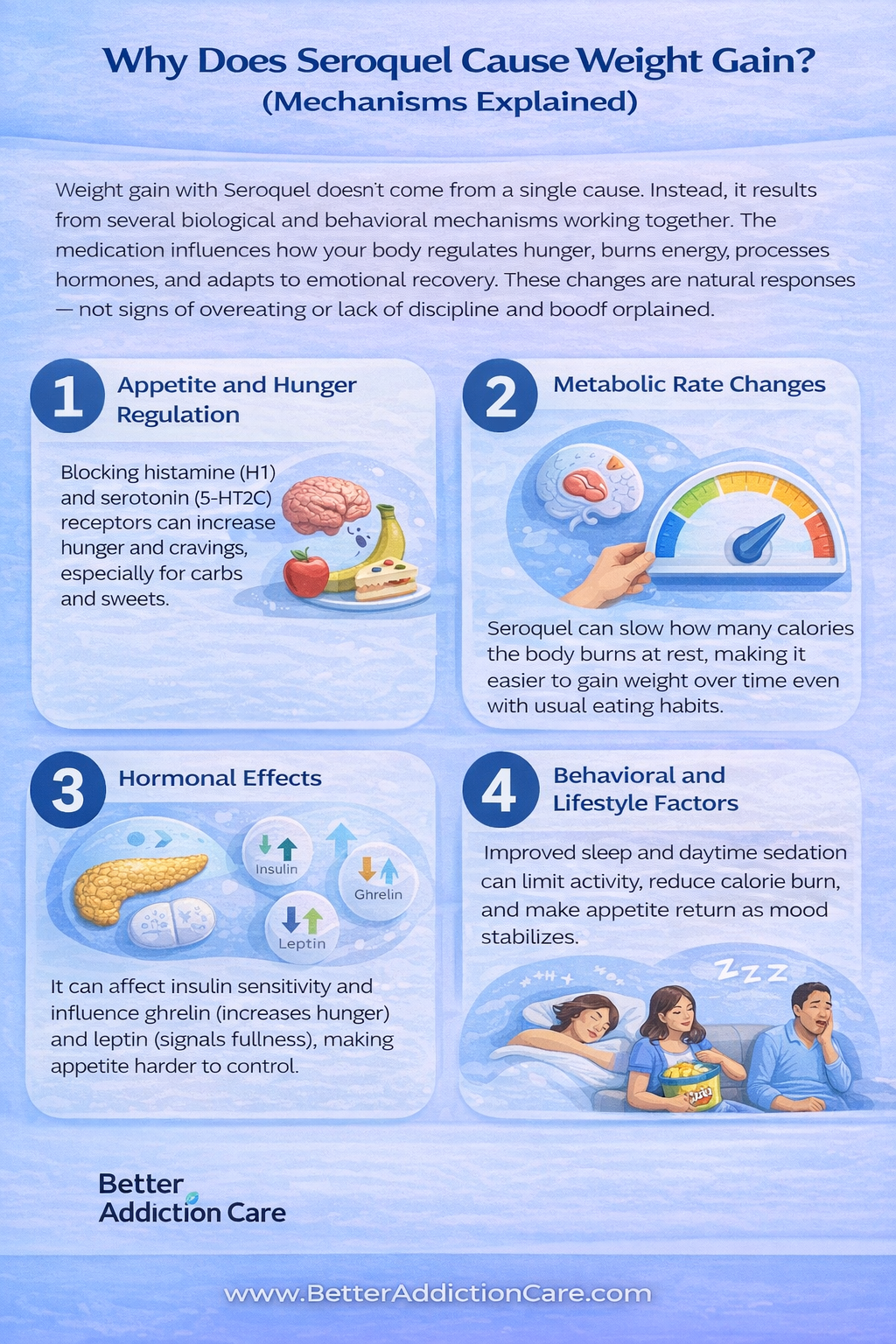
Weight gain with Seroquel doesn’t come from a single cause. Instead, it results from several biological and behavioral mechanisms working together. The medication influences how your body regulates hunger, burns energy, processes hormones, and adapts to emotional recovery. These changes are normal responses to the drug’s effects — not signs of overeating or lack of discipline.
One major factor is how Seroquel affects appetite control. The medication blocks histamine (H1) and serotonin (5-HT2C) receptors in the brain, which normally help you feel full after eating.
When these receptors are blocked, satiety signals weaken, leading to stronger hunger cues and more intense cravings, especially for carbohydrates and sweets.
Many people describe feeling “never quite full,” even with normal meals. Emotional recovery can also contribute — after long periods of stress or depression, food can naturally become a source of comfort, which is a normal and human response.
Seroquel can also slow the body’s metabolic rate. Antipsychotics may reduce how many calories your body burns at rest, which means familiar portion sizes may cause gradual weight gain.
Over time, this metabolic shift can lead to noticeable increases in weight even when eating habits haven’t significantly changed. This isn’t about willpower — it’s a biological change in how the body uses and stores energy.
Hormonal changes also play an important role. Seroquel may affect insulin sensitivity, making it harder for the body to manage blood sugar efficiently. It can also influence ghrelin (the hormone that increases hunger) and leptin (the hormone that signals fullness).[3]
When these systems are disrupted, hunger can rise while fullness signals weaken, making weight management more challenging even with consistent effort. These effects can happen quietly in the background without any major change in eating patterns.
Finally, lifestyle changes often appear as symptoms improve. Better sleep — a common benefit of Seroquel — reduces the number of waking hours available for spontaneous activity. Daytime sedation or fatigue may also lower daily movement, which reduces calorie burn.
For many people, appetite returns as emotional health stabilizes, especially after periods of stress, depression, or under-eating. These shifts are not bad habits; they are part of the body’s natural adjustment during healing and recovery.
Not necessarily. Weight gain connected to Seroquel is often influenced by timing, dose, individual metabolism, and how your body adapts over the first several months. Many people experience an initial increase, but eventually the body settles into a rhythm.
For a large portion of users, this means weight gain naturally plateaus once the early appetite shifts and sedation-related fatigue become more predictable. This stabilization is common and reflects your system finding balance, not something spiraling out of control.
When the medication is tapered or discontinued — always under careful medical supervision — weight often decreases gradually rather than dramatically. Appetite tends to normalize first, followed by improvements in energy levels and metabolic function.
As sedation lessens, movement becomes easier, which further supports gentle, steady weight loss. The process is slow, but it’s real, and it happens for many people once the dose is reduced or the medication is no longer needed.
For some, however, weight gain may persist or feel harder to reverse. This does not mean the weight is “stuck” or that your body has failed you. Instead, persistent weight gain is usually a sign that multiple factors are interacting — hormonal shifts, sleep patterns, emotional stress, or the lingering metabolic effects of the medication.
In these situations, dietary changes, behavioral strategies, and sometimes medication adjustments can make a significant difference. A clinician can help identify what’s contributing and guide you toward changes that feel doable rather than overwhelming.
The key is consistency — not perfection. Early lifestyle management, gentle routines, and ongoing support from your care team help prevent large fluctuations later. With the right guidance, Seroquel-related weight changes can be managed, improved, and in many cases reversed, without compromising your mental health progress.
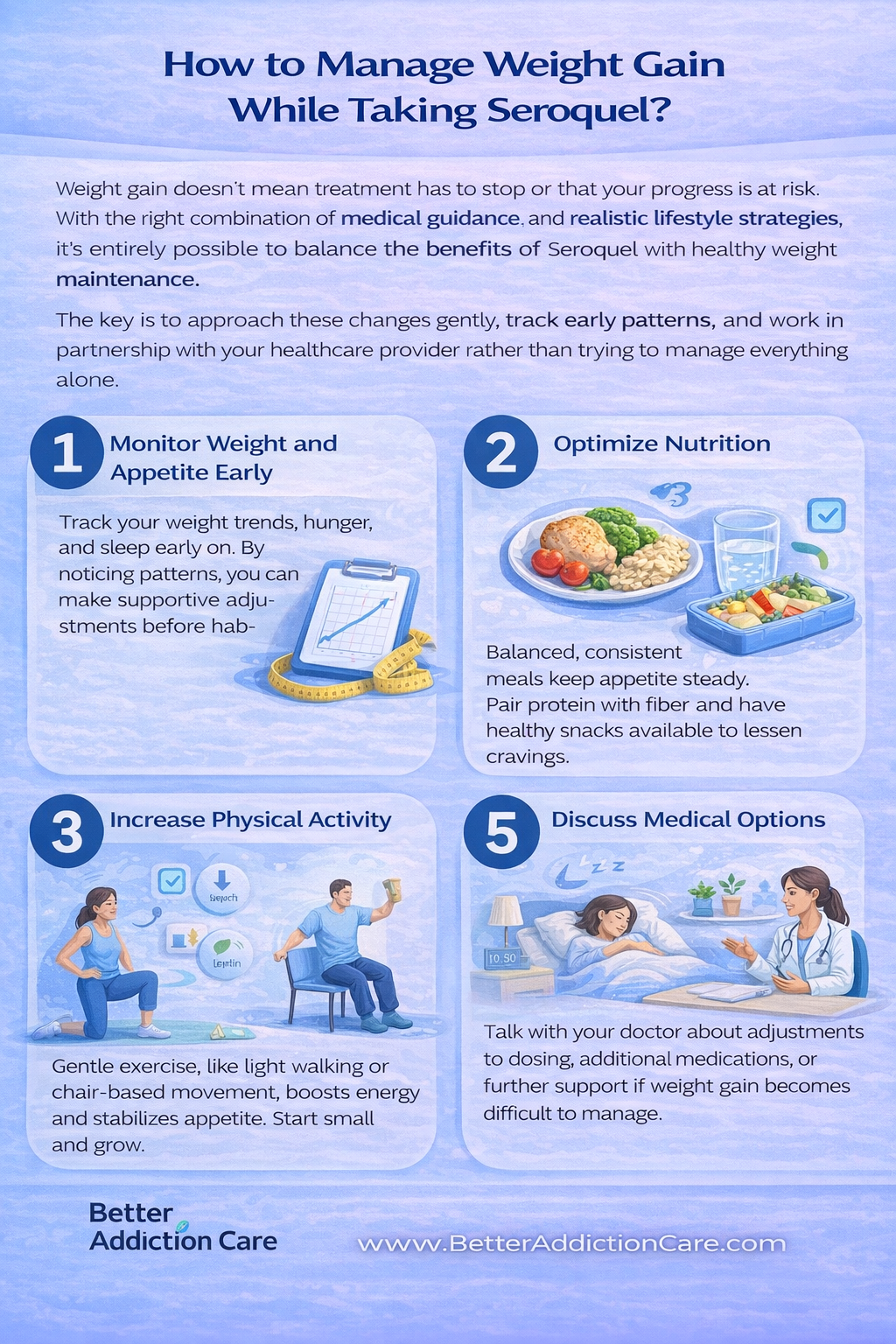
Weight gain doesn’t mean treatment has to stop or that your progress is at risk. With the right combination of medical guidance and realistic lifestyle strategies, it’s entirely possible to balance the benefits of Seroquel with healthy weight maintenance.
The key is to approach these changes gently, track early patterns, and work in partnership with your healthcare provider rather than trying to manage everything alone.
Noticing patterns early can make a huge difference. Many people find that appetite changes, shifts in sleep, or gradual increases in weight happen within the first few weeks of starting Seroquel.
Paying attention to your daily hunger levels, portion sizes, sleep quality, and how your weight trends over time allows you to catch small changes before they become overwhelming.
Early monitoring isn’t about obsessing over numbers—it's about giving yourself information so you can make supportive adjustments and communicate clearly with your provider.
You never need extreme dieting or restrictive rules to manage medication-related weight gain. A realistic nutrition approach focuses on stability and support rather than perfection. Balanced meals that pair protein with fiber help control appetite naturally.
Having planned snacks available can reduce impulsive eating during intense hunger spikes.
Staying hydrated often lessens cravings, and keeping mealtimes consistent throughout the day helps regulate blood sugar. When nutrition feels predictable and steady, your body is less likely to push toward overeating caused by medication-related metabolic shifts.
Sedation from Seroquel can make movement feel difficult at first, which is why activity needs to start gently. Even light walking, stretching, or ten to fifteen minutes of intentional movement can improve energy, stabilize appetite, and support mental clarity.
If fatigue is especially strong, chair-based exercises or low-pressure routines can help maintain activity without draining your energy. The goal is not perfect workouts or rapid results—it's steady, sustainable movement that strengthens your body and helps counter medication-related metabolic slowdown.
Improving sleep and reducing stress can directly influence appetite, cravings, and weight. A regular sleep schedule helps your body regulate hormones that impact hunger. Reducing caffeine, especially later in the day, can improve nighttime rest. [4]
Simple practices like breathing exercises, grounding techniques, or short mindfulness sessions can calm stress-driven eating and help you feel more centered. When your nervous system is supported, your appetite becomes easier to manage, and your energy improves throughout the day.
If weight changes become difficult to manage, a conversation with your doctor can open up additional options.
Your provider may adjust your dose, shift to an extended-release (XR) version to reduce sedation and appetite spikes, or slow down titration to help your body adapt more comfortably. In some cases, switching to a more weight-neutral medication may be appropriate.
For others, adjunct medications that regulate appetite or support metabolism can help counteract Seroquel’s effects. These medical decisions are never a sign of failure—they’re part of building a treatment plan that protects both your mental and physical well-being.
Reach out to your healthcare provider if you begin noticing changes that feel unusual for your body.
Rapid or unexpected weight gain — such as putting on several pounds within a couple of weeks — is one of the clearest signs that your body may be reacting strongly to Seroquel.
Another important signal is intense or uncontrollable hunger, especially if the cravings feel new, overwhelming, or emotionally difficult to manage.
You should also contact your provider if you experience extreme fatigue or a sudden drop in energy levels. These shifts can sometimes indicate metabolic changes or a dose that needs adjusting.
Pay attention to signs like increased thirst, more frequent urination, or episodes of dizziness, as these may point to changes in blood sugar or insulin sensitivity.
Noticeable swelling, bloating, or fluid retention — particularly in the ankles, feet, or abdomen — is another reason to check in.
And if weight changes begin affecting your mood, self-esteem, or sense of safety with the medication — for example, if you feel anxious, ashamed, or discouraged about continuing treatment — that emotional distress is just as important as physical symptoms.
These signs do not necessarily mean something serious is happening, but they do mean your body is asking for attention. Early conversations with your doctor can make a meaningful difference.
How Your Provider Can Help?
Your clinician’s support goes far beyond checking numbers on a chart. When you share concerns about weight changes, your provider can help you feel grounded, understood, and guided toward safer solutions.
They may begin by ordering metabolic labs, such as glucose, A1c, lipid levels, or thyroid tests, to understand how your body is responding.
From there, they can review your current medication plan to determine whether Seroquel is still the best fit or if adjusting the dose could reduce appetite, sedation, or metabolic side effects. In some cases, switching to the extended-release (XR) version can help minimize cravings or daytime tiredness.
If needed, your provider can discuss alternative medications or supportive add-on treatments that help manage appetite or stabilize metabolism. They can also work with you to create realistic, compassionate goals that prioritize both your mental health and your physical well-being — goals that do not involve shame, pressure, or blame.
Most importantly, your provider can offer emotional reassurance. They can remind you that weight gain with Seroquel is a known, manageable side effect and that you are not at fault for the changes you’re experiencing. Their role is to partner with you, not judge you, and to help you find a path that supports your overall health and recovery.
Your concerns about weight changes are valid.
You deserve to discuss them without feeling embarrassed or afraid of being dismissed.
Reaching out early protects both your mental health and your physical health, and it strengthens the trust between you and your care team.
You are never a burden for bringing up how your body is changing — it is an essential part of good treatment.
While weight gain can’t be fully prevented for everyone, starting Seroquel with a proactive plan significantly reduces the risk. The goal is not perfection — it’s early awareness, gentle habits, and open communication with your care team. These small steps help you stay ahead of changes before they become overwhelming.
Before taking the first dose, it helps to establish simple, nonjudgmental benchmarks:
Weight
BMI
Waist circumference
Blood sugar and lipid panel
These measurements are not about labeling yourself — they are tools that help you and your provider understand what’s “normal” for your body. Having this baseline often reduces anxiety later because you’re able to track changes with clarity, not guesswork.
Seroquel’s sedating effects can make exercise feel harder once treatment begins.
That’s why having a gentle movement routine before side effects set in makes a meaningful difference.
Recommended approaches:
Light daily walks
Stretching or yoga
Short 10–15 minute sessions to build consistency
Low-pressure, enjoyable activities rather than intense workouts
Movement doesn’t need to be strenuous — it just needs to be sustainable. Starting early builds momentum and protects your energy levels when sedation increases.
Seroquel can increase hunger signals and cravings, especially for carbohydrates.
Supporting your body with simple nutritional habits can help stabilize appetite:
Hydration goals (regular water intake throughout the day)
Fiber-rich meals, such as vegetables, whole grains, or legumes
Protein at each meal to promote fullness
Healthy snacks prepared ahead of time to avoid impulsive overeating
These habits create a calming sense of structure — not restriction — and can prevent the sharp appetite spikes many people experience.
Weight changes should never be hidden or ignored. They are medically relevant and emotionally valid.
Regular communication with your care team allows for:
Early identification of concerning trends
Quick dose adjustments, when needed
Switching to extended-release formulations to reduce sedation
Exploring alternative medications if weight gain becomes distressing
Emotional reassurance during a vulnerable phase of recovery
Prevention works best when you feel supported. It’s not your job to manage everything alone — your provider is part of your team.
Weight gain from Seroquel is common, understandable, and — importantly — manageable.
For many people, Seroquel provides emotional stability that is life-changing. Weight changes can feel discouraging, but they are not a sign of personal failure or lack of willpower. They are a biological response to a powerful medication.
With early monitoring, compassionate lifestyle support, and medical guidance, most people can protect both their mental health and their physical well-being.
You deserve treatment that allows you to feel safe, stable, and hopeful — without sacrificing one part of your health for another.
No. Many people gain weight, but others experience minimal or no change.
Even low doses can affect appetite and metabolism, but the risk is usually lower.
Some people find the extended-release version causes less sedation and fewer cravings.
Genetics, metabolism, lifestyle, and sensitivity to neurotransmitter changes all play a role.
Never stop without medical guidance. There are safer ways to address the issue.
By calling us, you agree to our Terms & Conditions
For those seeking addiction treatment for themselves or a loved one, our calls are confidential and are available for 24/7 help.
Any treatment center receiving calls from the site is a paid advertiser.
Calls to numbers on a specific treatment center listing will be routed to that treatment center.
Calls to any general helpline will be answered by treatment providers, each of which is a paid advertiser.
By calling the helpline you agree to the terms of use. These calls are offered at no cost to you and with no obligation to enter into treatment. Neither this site nor anyone who answers the call receives a commission or fee dependent upon which treatment provider a visitor may ultimately choose.
If you wish to explore additional treatment options or connect with a specific rehab center, you can: browse top-rated listings, visit our homepage, or visit SAMHSA, or by calling 800-662-HELP. You may also contact The Florida Department of Children and Family Services