Alcoholism, Drug Abuse, Mental Health, and Treatment in Kansas
What are the main addictions people in Kansas suffer from?
The main addictions people in Kansas suffer from include:
- Alcohol Addiction: 298,000 individuals aged 12 or older experienced AUD in the past year, representing 12.45% of this age group. 178,000 (59%) males have higher prevalence compared to 120,000 (40%) females.
- Illicit Drug Addiction: 165,000 individuals aged 12 or older had an illicit drug use disorder in the past year, accounting for 6.89% of this population. 89,000 (53.9%) males are more likely to use illicit drugs than 76,000 (46%) females.
- Marijuana Addiction: 387,000 individuals aged 12 or older used marijuana in 2024, equating to 16.20% of this age group. 249,000 individuals (10.42%) used marijuana in the past month. 210,000 (54%) males have higher usage rates than 177,000 (45%) females.
- Prescription Pain Reliever Addiction: 82,000 individuals aged 12 or older misused prescription pain relievers in the past year, representing 3.43% of this population. 45,000 (54.8%) males have slightly higher misuse rates than 37,000 (45%) females.
- Tobacco Addiction: 544,000 individuals aged 12 or older used tobacco products in the past month, accounting for 22.77% of this age group. 389,000 (71.5%) males are more likely to use tobacco products than 155,000 (28.4%) females.
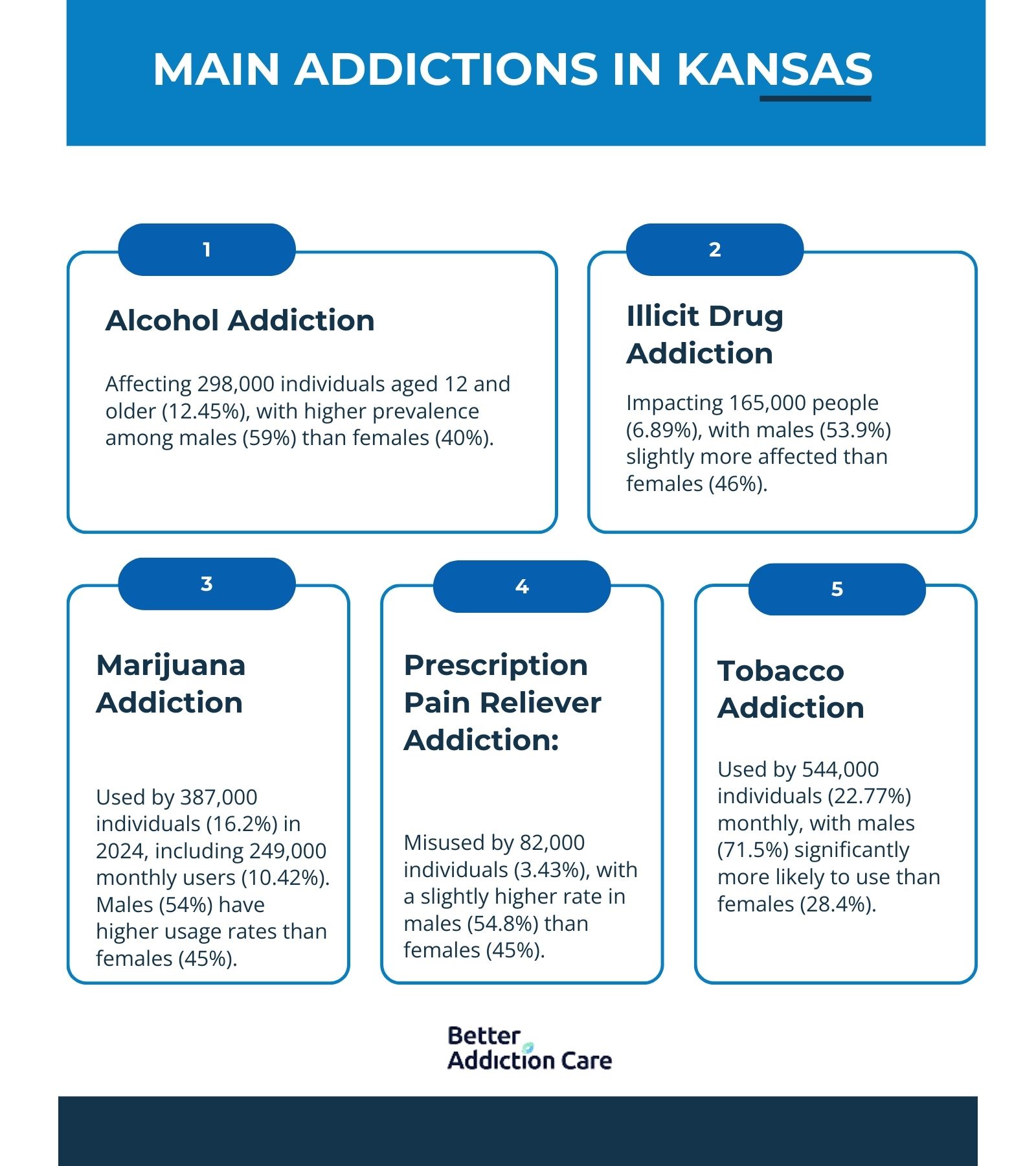
These statistics of main addiction in Kansas highlight the significant impact of substance addiction in Kansas, with notable differences in prevalence between males and females.
What is the cost of rehab centers in Kansas?
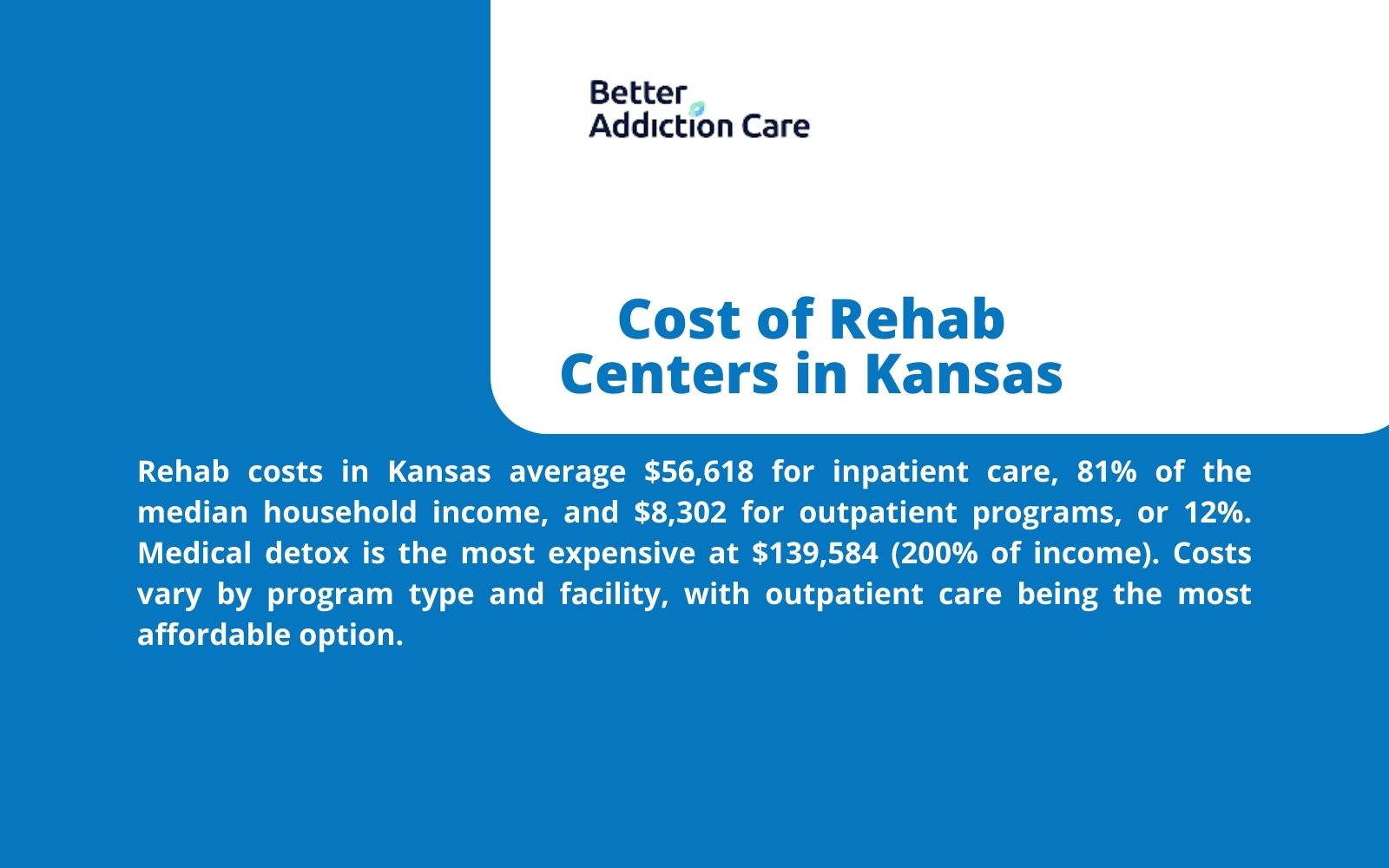
The cost of rehab centers in Kansas is $56,618, equating to 81%. The average cost for a 30-day inpatient rehab program is $56,618, while outpatient programs are more affordable, averaging $8,302. It varies depending on the type of program and the specific needs of the individual. For individuals requiring medical detoxification, which is often necessary for addictions to substances like alcohol or opioids, the cost rises to an average of $139,584.
Kansas’s median household income is $69,747, the affordability of these programs becomes a consideration. The cost of rehab centers represent 81% of the average household income, making it a substantial financial commitment. Medical detox costs, averaging 200% of the median household income, are even less accessible for most households. Conversely, outpatient programs, which cost 12% of the median household income, offer a more economical option.
The type of rehab center impacts the overall cost. Standard facilities are generally less expensive, while luxury or private centers charge higher rates, particularly when specialized services are included.
What is the cost of LGBTQ+ rehab centers in Kansas?
The cost of LGBTQ+ rehab centers in Kansas is $55,618, which equates to 79%. The cost of LGBTQ+ rehab centers in Kansas for a 30-day inpatient program is $56,618, similar to standard rehab facilities. Outpatient programs offer a more affordable option, with an average cost of $8,302. The cost of LGBTQ+ rehab centers rise based on the type of addiction being treated. For example, medical detoxification, often necessary for substance dependencies like alcohol or opioids, increases costs to an average of $139,584. This represents a 146% increase compared to the main average cost of LGBTQ+ inpatient programs.
Kansas’ median household income is $69,747, the cost of LGBTQ+ rehab centers represents 79% of the median income, posing a substantial financial burden for many families. Medical detoxification costs are even less accessible, equating to 200% of the median income. On the other hand, outpatient programs are relatively more affordable, requiring 12% of the average household income.
The cost of LGBTQ+ rehab centers vary based on the facility type. Luxury or private centers catering specifically to the LGBTQ+ community often charge higher rates, especially when specialized or inclusive services are offered to address unique needs.
What is the cost of Faith-Based rehab centers in Kansas?
The cost of Faith-Based rehab centers in Kansas is $55,000, which equates to 78%. The cost of Faith-Based rehab centers in Kansas for a 30-day inpatient program is $56,618, similar to standard rehab facilities. Outpatient programs offer a more affordable option, with an average cost of $8,302. The cost of Faith-Based rehab centers rise based on the type of addiction being treated. For example, medical detoxification, often necessary for substance dependencies like alcohol or opioids, increases costs to an average of $139,584. This represents a 146% increase compared to the main average cost of Faith-Based inpatient programs.
Kansas’s median household income is $69,747, the cost of Faith-Based rehab centers represents 78% of the median income, posing a substantial financial burden for many families. Medical detoxification costs are even less accessible, equating to 200% of the median income. On the other hand, outpatient programs are relatively more affordable, requiring 12% of the average household income.
The cost of Faith-Based rehab centers vary based on the facility type. Luxury or private centers catering specifically to the Faith-Based community often charge higher rates, especially when specialized or inclusive services are offered to address unique needs.
What is the cost of Men-Only rehab centers in Kansas?
The cost of Men-Only rehab centers in Kansas is $54,500, which equates to 78.1%. The cost of Men-Only rehab centers in Kansas for a 30-day inpatient program is $56,618, similar to standard rehab facilities. Outpatient programs offer a more affordable option, with an average cost of $8,302. The cost of Men-Only rehab centers rise based on the type of addiction being treated. For example, medical detoxification, often necessary for substance dependencies like alcohol or opioids, increases costs to an average of $139,584. This represents a 146% increase compared to the main average cost of Men-Only inpatient programs.
Kansas’s median household income is $69,747, the cost of Men-Only rehab centers represents 78.1% of the median income, posing a substantial financial burden for many families. Medical detoxification costs are even less accessible, equating to 200% of the median income. On the other hand, outpatient programs are relatively more affordable, requiring 12% of the average household income.
The cost of Men-Only rehab centers vary based on the facility type. Luxury or private centers catering specifically to the Men-Only community often charge higher rates, especially when specialized or inclusive services are offered to address unique needs.
What is the cost of Women-Only rehab centers in Kansas?
The cost of Women-Only rehab centers in Kansas is $53,500, which equates to 76.7%. The cost of Women-Only rehab centers in Kansas for a 30-day inpatient program is $56,618, similar to standard rehab facilities. Outpatient programs offer a more affordable option, with an average cost of $8,302. The cost of Women-Only rehab centers rise based on the type of addiction being treated. For example, medical detoxification, often necessary for substance dependencies like alcohol or opioids, increases costs to an average of $139,584. This represents a 146% increase compared to the main average cost of Women-Only inpatient programs.
Kansas’s median household income is $69,747, the cost of Women-Only rehab centers represents 76.7% of the median income, posing a substantial financial burden for many families. Medical detoxification costs are even less accessible, equating to 200% of the median income. On the other hand, outpatient programs are relatively more affordable, requiring 12% of the average household income.
The cost of Women-Only rehab centers vary based on the facility type. Luxury or private centers catering specifically to the Women-Only community often charge higher rates, especially when specialized or inclusive services are offered to address unique needs.
What is the cost of Teen rehab centers in Kansas?
The cost of Teen rehab centers in Kansas is $50,618, which equates to 72%. The cost of Teen rehab centers in Kansas for a 30-day inpatient program is $56,618, similar to standard rehab facilities. Outpatient programs offer a more affordable option, with an average cost of $8,302. The cost of Teen rehab centers rise based on the type of addiction being treated. For example, medical detoxification, often necessary for substance dependencies like alcohol or opioids, increases costs to an average of $139,584. This represents a 146% increase compared to the main average cost of Teen Rehab inpatient programs.
Kansas’s median household income is $69,747, the cost of Teen rehab centers represents 72% of the median income, posing a substantial financial burden for many families. Medical detoxification costs are even less accessible, equating to 200% of the median income. On the other hand, outpatient programs are relatively more affordable, requiring 12% of the average household income.
The cost of Teen rehab centers vary based on the facility type. Luxury or private centers catering specifically to the Teen Rehab community often charge higher rates, especially when specialized or inclusive services are offered to address unique needs.
What is the cost of Young Adult rehab centers in Kansas?
The cost of Young Adult rehab centers in Kansas is $50,900, which equates to 72.9%. The cost of Young Adult rehab centers in Kansas for a 30-day inpatient program is $56,618, similar to standard rehab facilities. Outpatient programs offer a more affordable option, with an average cost of $8,302. The cost of Young Adult rehab centers rise based on the type of addiction being treated. For example, medical detoxification, often necessary for substance dependencies like alcohol or opioids, increases costs to an average of $139,584. This represents a 146% increase compared to the main average cost of Young Adult inpatient programs.
Kansas’ median household income is $69,747, the cost of Young Adult rehab centers represents 72.9% of the median income, posing a substantial financial burden for many families. Medical detoxification costs are even less accessible, equating to 200% of the median income. On the other hand, outpatient programs are relatively more affordable, requiring 12% of the average household income.
The cost of Young Adult rehab centers vary based on the facility type. Luxury or private centers catering specifically to the Young Adult community often charge higher rates, especially when specialized or inclusive services are offered to address unique needs.
What is the cost of Luxury Rehab centers in Kansas?
The cost of Luxury Rehab centers in Kansas is 65,000, which equates to 93%. The cost of Luxury Rehab centers in Kansas for a 30-day inpatient program ranges between $15,000 and $75,000. This is notably higher than the average cost of standard inpatient rehab programs, which stands at $56,618. Factors such as the type of addiction further increase these costs. For example, medical detoxification, often required for alcohol or opioid dependencies, averages $139,584, representing a 146% increase compared to standard inpatient programs.
Kansas’s median household income is $69,747. The cost of Luxury Rehab centers constitutes 93% of the median income. In contrast, outpatient programs, which cost $8,302, represent only 12% of the median income, making them a more affordable option.
Luxury rehab centers also vary in cost based on the amenities and specialized services provided, with high-end facilities offering more personalized care and upscale accommodations at increased prices.
What is the cost of Dual Diagnosis rehab centers in Kansas?
The cost of Dual Diagnosis rehab centers in Kansas is $52,000, which equates to 74.5%. The cost of Dual Diagnosis rehab centers in Kansas for a 30-day inpatient program is $56,618, similar to standard rehab facilities. Outpatient programs offer a more affordable option, with an average cost of $8,302. The cost of Dual Diagnosis rehab centers rise based on the type of addiction being treated. For example, medical detoxification, often necessary for substance dependencies like alcohol or opioids, increases costs to an average of $139,584. This represents a 146% increase compared to the main average cost of Dual Diagnosis inpatient programs.
Kansas’ median household income is $69,747, the cost of Dual Diagnosis rehab centers represents 74.5% of the median income, posing a substantial financial burden for many families. Medical detoxification costs are even less accessible, equating to 200% of the median income. On the other hand, outpatient programs are relatively more affordable, requiring 12% of the average household income.
The cost of Dual Diagnosis rehab centers vary based on the facility type. Luxury or private centers catering specifically to the Dual Diagnosis community often charge higher rates, especially when specialized or inclusive services are offered to address unique needs.
Is drug abuse and addiction a problem in Kansas?
Yes, drug abuse and addiction is a problem in Kansas. One reason is the increasing prevalence of opioid use, which has contributed to a growing number of overdoses. Between 2022 and 2024, opioid-related deaths in Kansas rose by over 40%, reflecting a nationwide trend of escalating opioid misuse. Another reason is the widespread availability and misuse of methamphetamine. Methamphetamine remains the most commonly seized drug in Kansas, with its use doubling over the past decade.
Finally, the increasing rates of marijuana and prescription drug misuse, particularly among adolescents, highlight the broader substance use challenges. From 2017 to 2024, reported cases of marijuana use among high school students increased by 20%, and prescription drug misuse among youth remained alarmingly steady despite statewide prevention efforts. These statistics underscore the persistent and evolving nature of drug abuse in Kansas, necessitating targeted interventions and continued monitoring.
Is alcoholism a problem in Kansas?
Yes, alcoholism is a problem in Kansas. One reason is the high prevalence of binge drinking, which affects 18% of adults in Kansas, exceeding the national average. Over the past decade, binge drinking rates in Kansas have remained consistently high, showing limited improvement despite public health campaigns. Another reason is the economic impact of alcohol-related harm, with Kansas incurring nearly $1.5 billion annually in costs related to healthcare, lost productivity, and criminal justice expenses, this cost has steadily increased over the years, reflecting the growing burden of alcohol misuse. Lastly, the rise in alcohol-related traffic fatalities highlights the severity of the issue. In 2024, alcohol was a factor in 25% of all traffic deaths in Kansas, a slight increase compared to 2022. These trends demonstrate the ongoing challenges posed by alcoholism in Kansas, emphasizing the need for effective prevention and intervention strategies.
Is Mental Health a problem in Kansas?
Yes, mental health is a problem in Kansas. One reason is the high prevalence of mental illness, with nearly 20% of adults reporting symptoms of anxiety or depression, a rate that has risen by over 30% in the last decade. Another reason is the shortage of mental health professionals, with Kansas ranking among the states with the lowest provider-to-population ratios. In rural areas, this shortage is even more acute, leaving many residents without access to necessary care. Finally, the increasing suicide rates highlight the severity of the issue. Between 2020 and 2024, the suicide rate in Kansas increased by 23%, with suicide now being one of the leading causes of death among individuals aged 10 to 34. These statistics underscore the growing mental health crisis in Kansas and the urgent need for expanded services and resources.
Can you travel to Kansas for rehab?
Yes, you can travel to Kansas for rehab, and there are several reasons why it might be a good choice. Firstly, Kansas offers a serene and calming environment, with its wide-open spaces and rural settings providing a peaceful backdrop ideal for recovery. This tranquility helps minimize external distractions, allowing individuals to focus entirely on healing. Secondly, Kansas is home to a variety of specialized rehab centers, including faith-based, LGBTQ+, and gender-specific facilities, ensuring tailored treatment options to meet diverse needs.
These specialized programs enhance the effectiveness of rehab by addressing unique challenges. Thirdly, the affordability of treatment in Kansas, compared to many other states, makes it an attractive option. The availability of both luxury and standard facilities at various price points ensures that individuals find quality care within their budget. These factors make Kansas a compelling destination for those seeking recovery.
Can addiction be treated in Kansas?
Yes, addiction can be treated in Kansas, and it offers several advantages for effective recovery. One reason is the availability of a wide range of treatment facilities, including inpatient, outpatient, and specialized programs like faith-based or LGBTQ+ rehab centers, which cater to specific needs and preferences. Another reason is the presence of evidence-based treatment approaches, such as medication-assisted treatment (MAT) for opioid and alcohol dependency, combined with counseling and behavioral therapies to address the root causes of addiction.
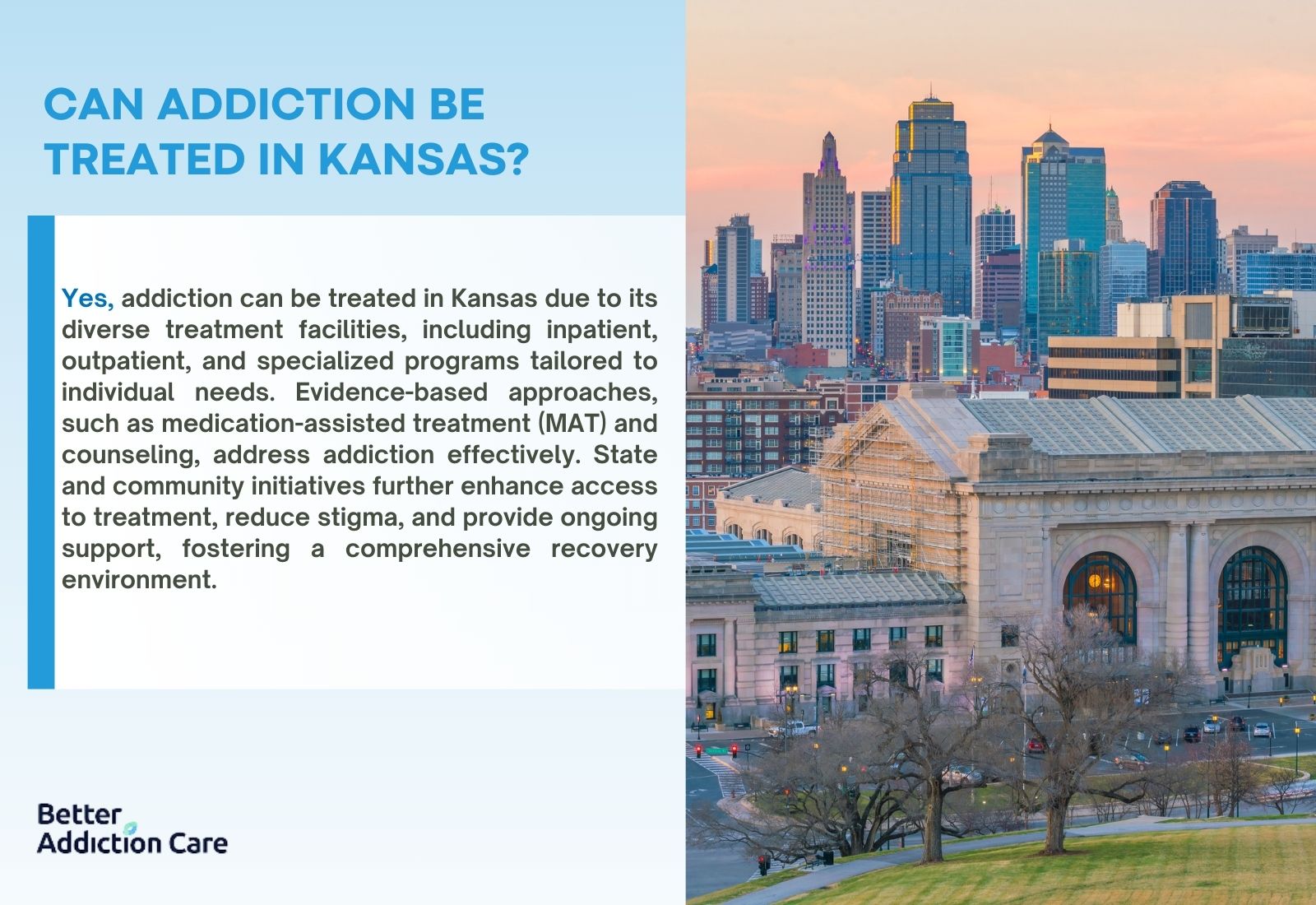
Kansas has ongoing community and state-level initiatives aimed at increasing access to treatment, reducing stigma, and providing support services like aftercare and peer support groups. These resources create a comprehensive environment for individuals to achieve and sustain recovery.
What is the state of Kansas?
The state of Kansas is in the central United States, often referred to as part of the Midwest. As of the latest estimates, the population of Kansas is 2.93 million, with a near-equal gender distribution of 1.45 million males and 1.48 million females. Located geographically in the heart of the country, Kansas is bordered by Nebraska to the north, Missouri to the east, and Oklahoma to the south, and Colorado to the west. Economically, Kansas has a mixed profile. It is known for its strong agricultural sector, contributing significantly to the state's wealth, but it also faces challenges with lower median household incomes compared to the national average. The median household income is $69,747, placing it slightly below wealthier states, although the cost of living is relatively low, making it more affordable for residents.
What is the population of Kansas?
The population of Kansas is 2,937,880, with a near-equal gender distribution of 49.7% male, equating to 1,459,000 individuals, and 50.3% female, or 1,478,000 individuals. The population distribution by age shows that 6.0%, or 176,273 individuals, are under the age of five. Those under 18 years make up 23.5% of the population, 689,398 individuals, while 17.2%, or 504,308 people, are 65 years and older. These figures of Kansas population reflect a balanced gender ratio and a broad age range, characteristic of a demographically diverse state.
What is the income of people from Kansas?
The income of people from Kansas is $38,108, per capita income, which is 88% of the national average of $43,313. The median household income in Kansas is $69,747, reflecting an 8.1% increase from the previous year. Income levels vary by age group, with individuals under 25 earning a median income of $35,320, or 51% of the Kansas's median household income. Those aged 25 to 44 have a median income of $71,976, 103% of the Kansas median, while individuals aged 45 to 64 earn the highest median income at $78,885, representing 113% of the Kansas median.
For individuals aged 65 and older, the median income is $49,216, 71% of the Kansas median. Gender also plays a role in income disparities, with males earning a per capita income of $40,000 compared to $36,000 for females, indicating that males earn 11% more than females on average. These figures illustrate the variation in income across different demographics in Kansas.