(866) 567-3138
Sponsored Helpline
Verify Insurance
The average elimination time for Seroquel depends on its half-life, which is the period your body needs to remove half of a single dose. Approximately 6 hours for immediate-release Seroquel. This means that every six hours, the amount of medication in your bloodstream is reduced by about half.

 Expert Verified
Seroquel leaves the body gradually, and the timeline varies from person to person.
Its average half-life is about 6 hours, meaning most of the drug clears within 1–2 days.
Age, liver function, metabolism, and other medications can change how long Seroquel remains detectable.
Traces of Seroquel may appear in urine, blood, saliva, or hair for different lengths of time.
Seroquel, or quetiapine, is an atypical antipsychotic prescribed to treat conditions such as schizophrenia, bipolar disorder, and major depressive disorder.[1] Some people also receive it off-label for severe insomnia or anxiety when symptoms interfere with daily functioning.
While the medication carries a clinical label, its purpose is deeply human: stabilizing racing thoughts, softening overwhelming emotions, and helping individuals regain a sense of balance and safety.
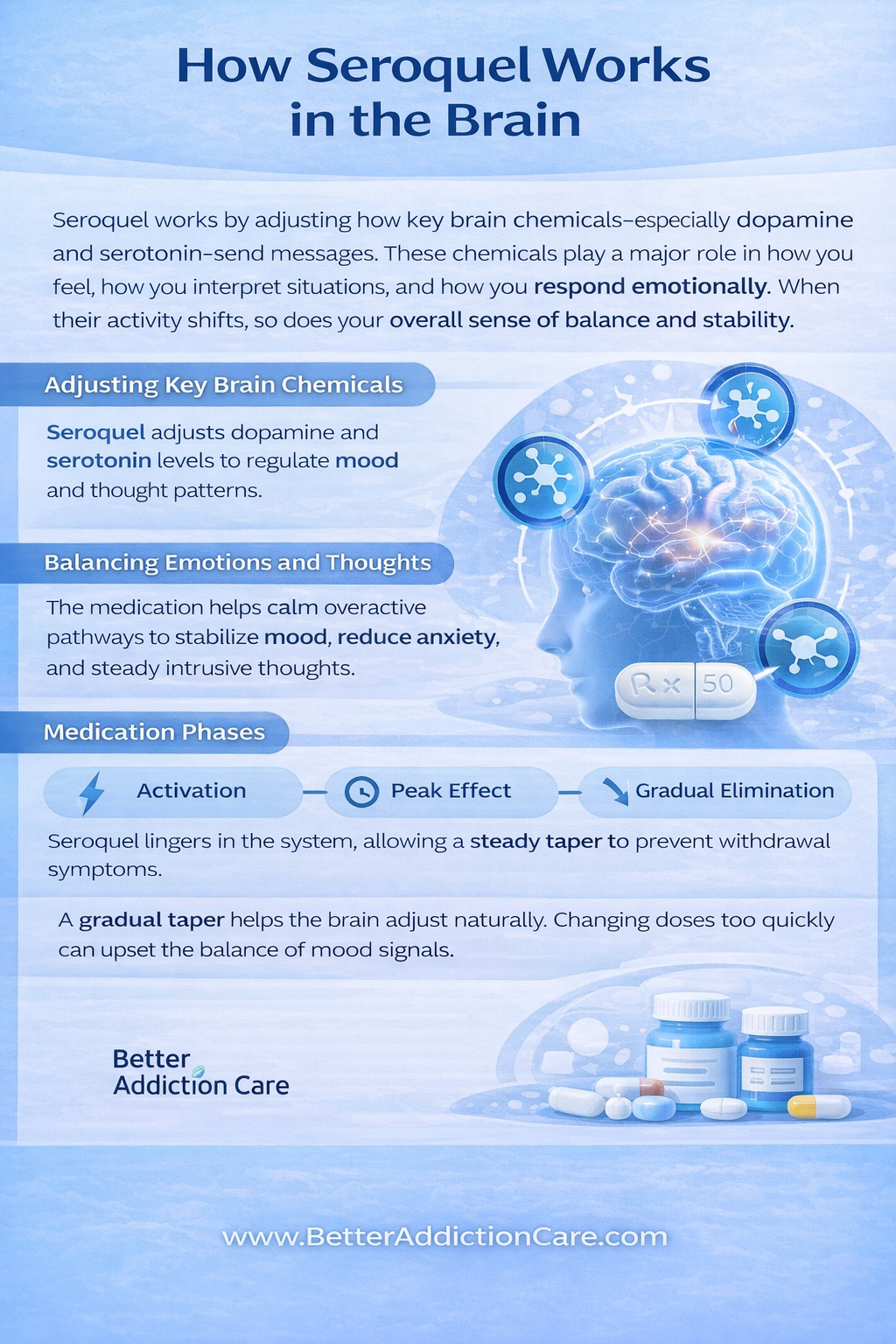
Seroquel works by adjusting how key brain chemicals—especially dopamine and serotonin—send messages. These chemicals play a major role in how you feel, how you interpret situations, and how you respond emotionally. When their activity shifts, so does your overall sense of balance and stability.
Seroquel doesn’t simply “switch off” symptoms. Instead, it slows down overactive pathways, calms racing thoughts, and stabilizes mood signals. This is why many people experience relief from anxiety, agitation, or intrusive thoughts when they start the medication. It helps create a steadier baseline so the brain can function more predictably.
Because Seroquel acts directly on the central nervous system, your body needs time to absorb it, break it down, and then clear it out. The medication moves through different phases—activation, peak effect, and gradual elimination. Each phase can influence how you feel.
For example, some people notice sedation early on, while others feel a gradual calming effect that builds over hours. [2]
The length of time Seroquel stays active in your system helps you manage treatment or taper safely. If the dose changes too quickly, the brain’s chemical signals may swing out of balance, which can lead to withdrawal symptoms or a return of earlier challenges. A slow, thoughtful taper gives your brain the time it needs to adjust and regain its natural rhythm without unnecessary discomfort.
The average elimination time for Seroquel depends on its half-life, which is the period your body needs to remove half of a single dose. This gives us a clearer picture of how long the medication remains active in the system and how long it may take before it fully clears.
Approximately 6 hours for immediate-release Seroquel. This means that every six hours, the amount of medication in your bloodstream is reduced by about half. For many people, this process feels gradual—not sudden—because the brain is still adjusting during each step of the decline.
Usually within 5 half-lives, or about 30 hours total. In real-life terms, this means Seroquel typically leaves the body within 1–2 days. However, people who have taken Seroquel for months or years may notice lingering emotional or physical sensations as their system adjusts to lower levels of the medication. These feelings aren’t a sign of failure—they’re simply the body recalibrating.
Extended-release (XR) forms may remain in the system slightly longer.
XR versions are designed to release the medication slowly over many hours, so the body processes them at a gentler pace. As a result, the overall clearance timeline may extend beyond the immediate-release form.
Detectability varies. A person with a slower metabolism or liver challenges may test positive for slightly longer than the typical ranges.
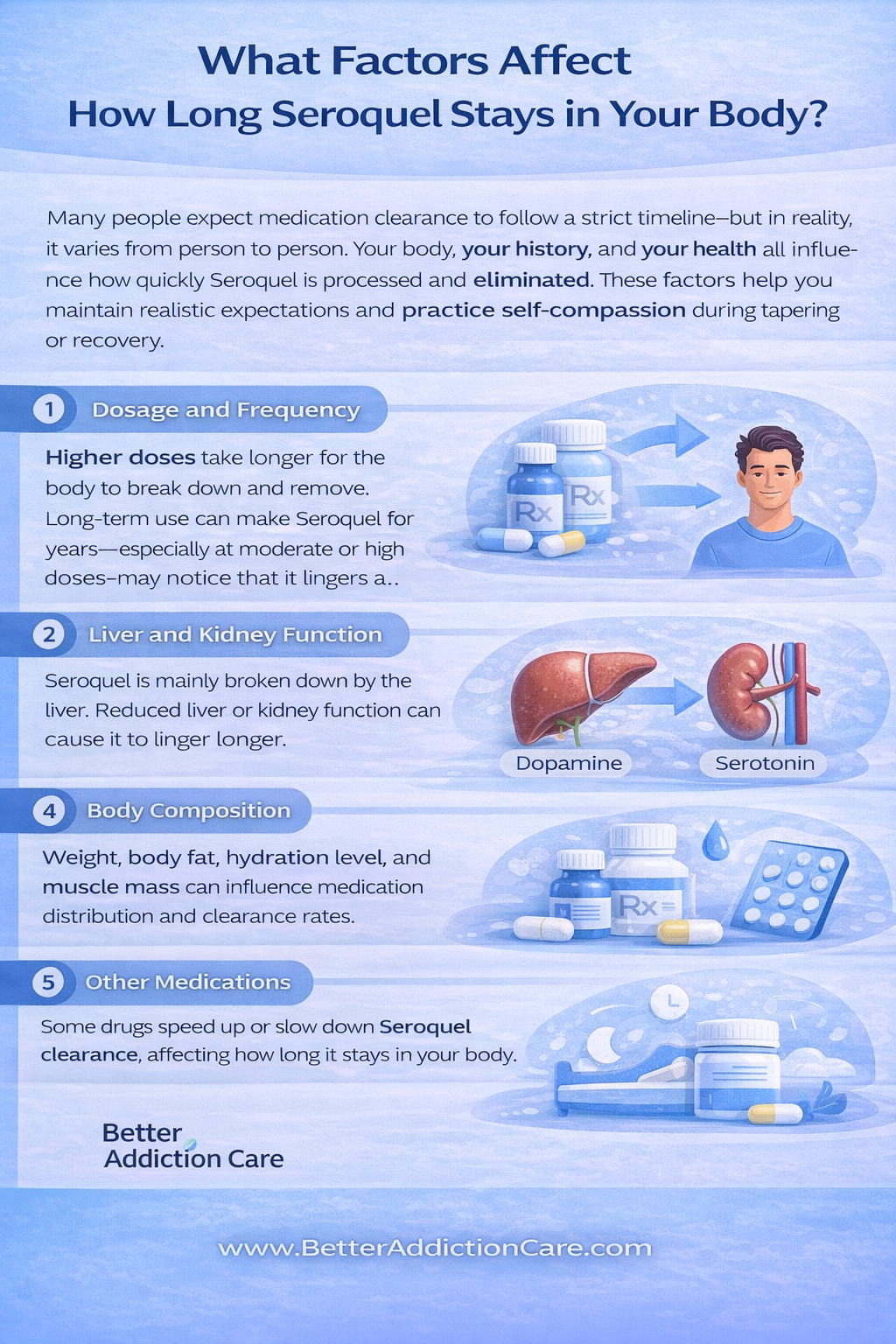
Many people expect medication clearance to follow a strict timeline—but in reality, it varies from person to person. Your body, your history, and your health all influence how quickly Seroquel is processed and eliminated. These factors help you maintain realistic expectations and practice self-compassion during tapering or recovery.
Higher doses take longer for the body to break down and remove. People who have taken Seroquel for years—especially at moderate or high doses—may notice that it lingers a bit longer, not just physically but emotionally. Long-term use allows the medication to settle into the body’s “routine,” so sudden changes may feel more pronounced. This is normal and reflects your system adjusting, not a lack of strength.
Younger individuals often metabolize medications more quickly because their liver and kidney functions tend to be more efficient. Their bodies typically break down and eliminate drugs at a faster rate, which can make the effects of Seroquel feel shorter or more predictable.
As people age, natural metabolic changes gradually slow these processes. The liver may process medications more slowly, and the kidneys may take longer to filter out byproducts. This can make Seroquel stay active or detectable for a longer period, even when the dose remains the same.
This doesn’t mean anything is “wrong”—it’s simply part of how the body changes over time.
Seroquel is primarily broken down by the liver, which means liver health directly affects how quickly the medication is processed. [3] If someone has reduced liver function, fatty liver disease, or another liver-related condition, the breakdown of Seroquel can slow down, causing it to stay in the body for a longer period. This doesn’t necessarily mean something is wrong—it simply reflects how the body’s metabolic systems operate.
The kidneys also play an important supporting role. Once the liver has processed Seroquel, the kidneys help filter out the remaining byproducts. When kidney function is reduced, this final step can take more time, slightly extending how long the medication remains detectable.
Because these two organs carry much of the workload, healthcare providers often monitor liver and kidney function for anyone taking psychiatric medications long-term. Healthy systems support safer dosing, smoother tapering, and more predictable medication effects.
Weight, body fat percentage, hydration level, and muscle mass all influence how medications travel and settle within the body. Because Seroquel is carried through the bloodstream and processed by the liver, the way your body is built can subtly affect how long the medication stays active or detectable.
For example, people with higher body fat may store certain medications differently, while those with more muscle or better hydration may process and clear them at a different pace.
These differences are not moral judgments—they’re simply natural biological variations. Everybody handles medications in their own way. This knowledge removes shame or confusion and shows that experiences during treatment or tapering come from your physiology, not personal failure.
Some medications can slow or speed up Seroquel clearance by interacting with liver enzymes, especially CYP3A4.[4] Drugs that inhibit CYP3A4 may cause Seroquel to stay longer. Drugs that induce CYP3A4 may clear it more quickly. Because many people taking Seroquel are also on other psychiatric or medical medications, these interactions are common and nothing to be ashamed of.
Your overall well-being plays a surprisingly important role in how your body processes Seroquel. Staying hydrated helps your kidneys filter and remove the medication more efficiently. Eating balanced, nutrient-rich meals supports your liver—the main organ responsible for breaking down the drug before it leaves your system.
Lifestyle factors matter too. High stress, irregular routines, or ongoing sleep disruption can slow down the body’s natural metabolic processes, which may cause the medication to stay active a bit longer. Even emotional strain can influence how your body responds, especially if you’re managing anxiety, depression, or other mental health challenges.
Taking care of your basic health needs—sleep, nutrition, hydration, and stress management—can make a real difference in how smoothly your treatment or taper goes. These small, supportive habits help your body stay steady while your brain adjusts to medication changes.
When Seroquel begins to clear from the body, changes can show up emotionally, mentally, and physically. These changes don’t mean something is going wrong — they simply reflect your brain and nervous system adjusting to a new baseline after relying on the medication for support.
As Seroquel levels drop, some people notice shifts in sleep, mood, anxiety, or irritability. This reduction in the medication’s calming or stabilizing effects does not automatically indicate relapse. It often means the brain is learning to function with less chemical support. For many individuals, this phase passes gradually as the body recalibrates and finds its new rhythm.
These early sensations can feel unsettling, but they are a natural part of the adjustment process — not a sign that you’re “going backward.”
When Seroquel leaves the system too quickly — especially if someone stops abruptly — the nervous system may react with temporary discomfort. These symptoms vary widely but often include:
Fatigue or slowed energy
Insomnia or disrupted sleep
Irritability or emotional sensitivity
Anxiety or a sense of internal tension
Nausea or digestive upset
Restlessness
Lightheadedness or feeling “off-balance”
Temporary spikes in mood swings or racing thoughts
These sensations can be confusing, especially for individuals who’ve worked hard on their recovery. But it’s important to remember: these symptoms are not an indication of personal weakness or failure. They are simply signals that the brain is adjusting to lower amounts of the medication.
Seroquel affects neurotransmitters such as dopamine and serotonin, which play significant roles in mood regulation, sleep, and emotional balance.
When the medication decreases, these brain chemicals need time to find their natural equilibrium. This transition can create temporary discomfort, much like adjusting to a dimmer light after being in a brightly lit room.
This recalibration process is normal, expected, and manageable — especially when supported with a slow, medically guided taper and compassionate emotional care. Many people move through this phase successfully with the right guidance and realistic expectations.
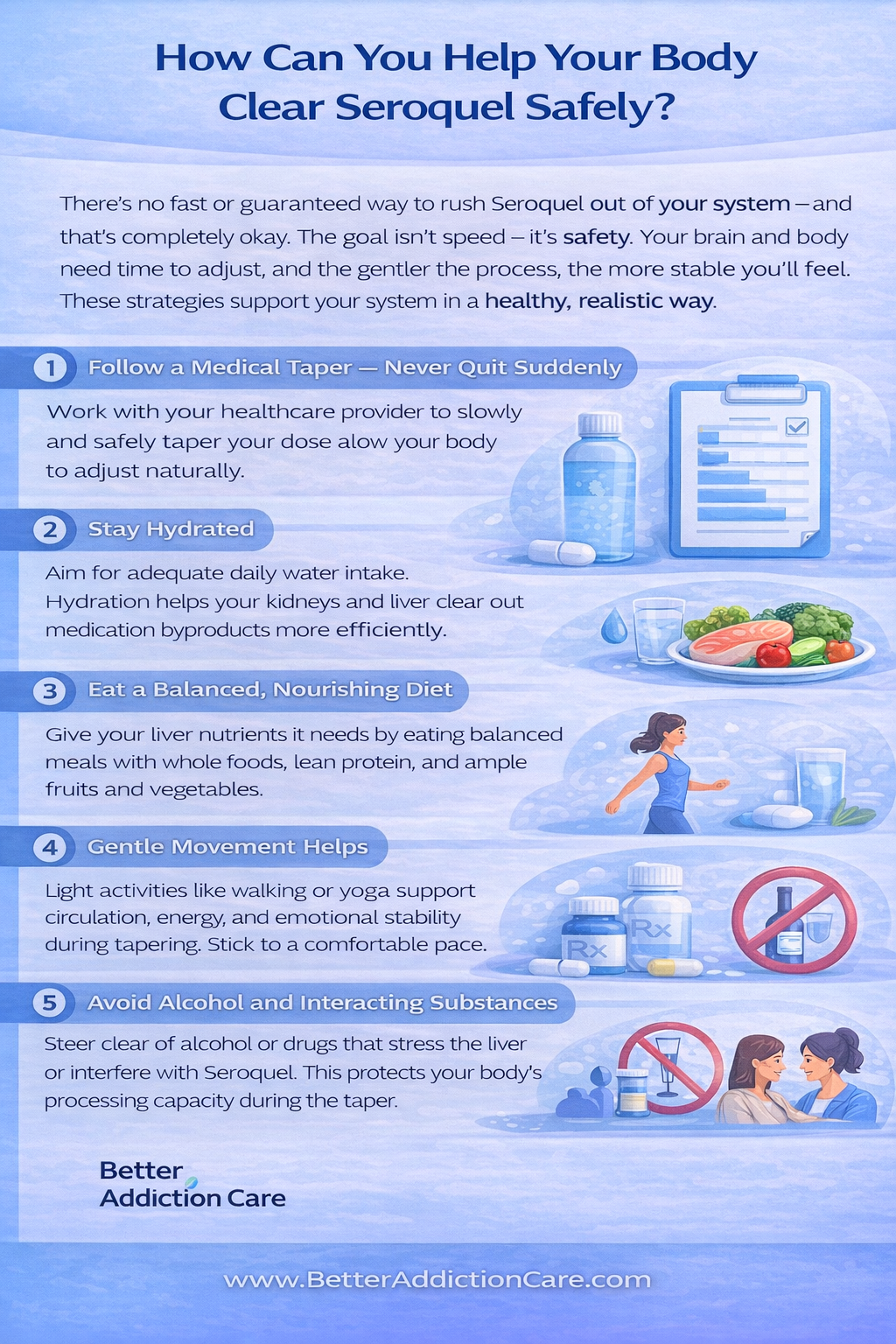
There’s no fast or guaranteed way to rush Seroquel out of your system — and that’s completely okay. The goal isn’t speed — it’s safety. Your brain and body need time to adjust, and the gentler the process, the more stable you’ll feel. These strategies support your system in a healthy, realistic way.
The most important step is working with a healthcare provider to slowly reduce your dose. A gradual taper gives your brain space to rebalance neurotransmitters and prevents the sudden drop that can trigger withdrawal-like symptoms.
Even tiny dose adjustments can make a big difference in how comfortable and safe the process feels. Stopping abruptly is never a reflection of willpower — it’s simply too harsh on the nervous system. A structured, supportive taper protects your emotional stability.
Water plays a quiet but essential role in medication clearance. Adequate hydration helps the kidneys and liver—your body’s natural “filters”—do their job more efficiently. Even small improvements in daily water intake can make your system feel steadier during the adjustment period.
Your liver, which metabolizes Seroquel, functions best when it’s supported with nutrients. Balanced meals, especially those rich in whole foods, can strengthen your body’s ability to eliminate the medication at a natural pace. You don’t need a special detox diet—just gentle, consistent nourishment.
Light physical activity—like walking, stretching, yoga, or slow-paced movement—can support metabolism without overwhelming your system. Exercise doesn’t “push out” the medication, but it does improve circulation, energy levels, and emotional stability, all of which help your body navigate the taper more comfortably.
Alcohol and certain drugs can place extra stress on the liver or interfere with how Seroquel leaves your system.[5] Avoiding these substances during tapering protects your body’s processing capacity and can significantly reduce withdrawal intensity. This isn’t about restriction—it’s about giving your body the calmest environment possible.
Clearing Seroquel isn’t only a physical process. It’s emotional, too. Changes in medication can stir up anxiety, irritability, or vulnerability. Having supportive people around—family, friends, therapists, recovery communities—can provide grounding and reassurance when things feel uncertain.
You deserve support. You don’t have to navigate this process alone.
Reach out to a healthcare provider if you:
Experience strong or persistent withdrawal symptoms: If symptoms like anxiety, insomnia, mood swings, nausea, or restlessness feel overwhelming or last longer than expected, a doctor can adjust your taper or provide support.
Plan to stop Seroquel or adjust your dose: Never make dose changes alone. A medical professional can create a taper schedule that fits your body’s needs and reduces discomfort.
Are starting a new medication that may interact: Many drugs—especially those affecting liver enzymes—can change how Seroquel breaks down in your body. A doctor can help you avoid unwanted side effects or interactions.
Have liver or kidney health concerns: Since Seroquel is processed largely through the liver, any underlying issues may slow clearance. Medical guidance ensures your plan is safe and tailored.
Notice changes in sleep, mood, or behavior: If your emotional or mental health shifts during tapering, checking in early can prevent unnecessary distress and help you stay stable.
Are you preparing for a medical, legal, or employment drug test? Even though Seroquel isn’t typically screened, some specialty tests detect it. A doctor can help you understand what to expect and provide documentation if needed.
Feel unsure about what you’re experiencing: Any uncertainty—physical or emotional—is a valid reason to ask for help. You don’t need to hit a crisis point to reach out.
These conversations aren’t about being in trouble or doing something wrong—they’re about protecting your health, staying comfortable, and giving yourself the safest path forward.
Seroquel typically stays in your body for 1–2 days, though testing methods may detect it longer. Clearance depends on many personal factors, and there is no single timeline that fits everyone.
More importantly, coming off Seroquel—if that is part of your journey—doesn’t have to be frightening. With medical guidance, emotional support, and realistic expectations, most people taper safely and successfully.
Recovery is not linear, but it is possible. Being aware of your medication is a powerful first step toward informed, healthy decisions for yourself or your loved one.
Many people feel the calming or sedating effects within a few hours of taking their dose. These early effects often help with sleep or anxiety. Mood-related improvements, such as reduced irritability or emotional stability, usually take longer. It may take several days to a few weeks as the medication reaches steady levels in your system.
Standard workplace or medical drug tests do not typically screen for Seroquel. It isn’t part of the usual panel that looks for substances like opioids or stimulants. However, some specialized tests can detect it, especially in hospital or legal settings. If a test is coming up, it’s always safe to check with a healthcare provider.
Staying hydrated helps your body work efficiently, including how it processes medications. Light movement also supports overall metabolism. However, no amount of water, exercise, or home remedy can instantly flush Seroquel out. Your body still needs time to clear it naturally. Slow and steady remains the safest approach.
Yes. Higher doses or taking Seroquel multiple times a day usually extend how long it remains detectable. Long-term use also increases the time your body needs to fully eliminate it. This is why clearance varies so much from person to person.
When you stop Seroquel abruptly, it can lead to uncomfortable withdrawal-like symptoms. These may include insomnia, irritability, nausea, anxiety, or mood swings. Sudden changes can also create emotional instability for some people. A gradual taper, planned with a doctor, greatly reduces those risks and makes the transition easier.
Yes. Because the medication is taken daily and processed through the liver, it can accumulate with long-term or high-dose use. This buildup is normal but important to consider when planning a taper. Reducing the dose slowly allows your body to adjust and prevent sudden drops in drug levels.
By calling us, you agree to our Terms & Conditions
For those seeking addiction treatment for themselves or a loved one, our calls are confidential and are available for 24/7 help.
Any treatment center receiving calls from the site is a paid advertiser.
Calls to numbers on a specific treatment center listing will be routed to that treatment center.
Calls to any general helpline will be answered by treatment providers, each of which is a paid advertiser.
By calling the helpline you agree to the terms of use. These calls are offered at no cost to you and with no obligation to enter into treatment. Neither this site nor anyone who answers the call receives a commission or fee dependent upon which treatment provider a visitor may ultimately choose.
If you wish to explore additional treatment options or connect with a specific rehab center, you can: browse top-rated listings, visit our homepage, or visit SAMHSA, or by calling 800-662-HELP. You may also contact The Florida Department of Children and Family Services