(866) 567-3138
Sponsored Helpline
Verify Insurance
Confronting a person with an alcohol abuse problem is crucial, mostly for the health of the addict as well as their loved ones. Discussing an addiction with them might help them realize how serious their issue is and how they need to make changes.
Binge drinking is fueled by a campus culture that normalizes heavy alcohol use, poses a serious public health crisis due to its health consequences, and is influenced by socioeconomic factors that shape access and attitudes toward drinking.
If you're struggling with alcohol addiction and contemplating quitting, you're not alone. The road to recovery can seem daunting, especially with fears and questions about alcohol withdrawal. This guide provides clear, supportive, and practical information to help you understand what to expect and how to manage this challenging process.
Alcohol is central to many cultures and social events. Even though a little alcohol may seem harmless, it's important to understand the risks that too much alcohol over time can have on our health.Around 5% of all deaths worldwide result from alcohol misuse; that's 3 million deaths a year.
Outpatient alcohol treatment provides structured therapy and medical support while allowing individuals to live at home, offering flexibility and lower costs compared to inpatient care, though effectiveness depends on commitment and support systems.
Nowadays, alcohol is everywhere you look! You have seen it in movies, heard about it in songs, and encountered it while scrolling through social media. Over the decades, popular culture has played a key role in glorifying the way our society perceives alcohol.
The overdose after the completion of the drug detox program is closely related to the key problem of "dropping dead" on the way to becoming sober, as the process of getting rid of the dependence on drugs becomes a lethal encounter.
With the CAGE questionnaire, you can quickly detect alcohol use issues by asking four short questions that highlight drinking habits and emotional responses linked to alcohol. These questions help health professionals decide if someone might need further evaluation or support.
Alcohol poisoning is a severe illness that can be deadly if you drink a lot of alcohol in a short amount of time. Alcohol poisoning occurs when the concentration of alcohol in the blood becomes so high that it interferes with vital biological functions such as breathing, heart rate, and temperature regulation.
In the United States, college drinking is a major problem due to its high frequency and negative effects on students' social lives, academic performance, and health. Some specific environments inside the campus have a strong culture of alcohol consumption, which is sometimes seen as a basic feature of the academic experience or a necessary ritual to complete.
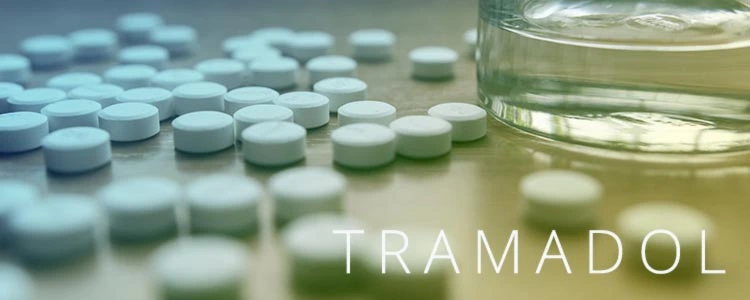
Tramadol is an opioid analgesic painkiller that goes by the brand name Ultram. There is an extended-release version of this drug and a variation that combines tramadol with acetaminophen. Tramadol is prescribed to treat moderate to severe pain and is considered safer than other narcotics, like Vicodin.
Halfway houses, also known as sober living homes or transitional living facilities, are housing programs offered to individuals who are transitioning back into society after completing a rehabilitation program, serving a prison term, or experiencing other kinds of life struggles that require extra structure and support to reintegrate into everyday life.
The Sinclair Method (TSM) is a new way to treat Alcohol Use Disorder (AUD) that uses drugs, specifically naltrexone, to promote recovery. This method has the unique characteristic of allowing people with AUD to consume alcohol while taking naltrexone.
The long-term effects of cocaine addiction are severe, complex, and, many times, irreversible. The first addictive effects of the substance include pleasure, boosted energy, and confidence. Ongoing use, however, leads to tolerance, and higher dosages are needed to achieve the same results, which raises the risk of addiction and health problems.
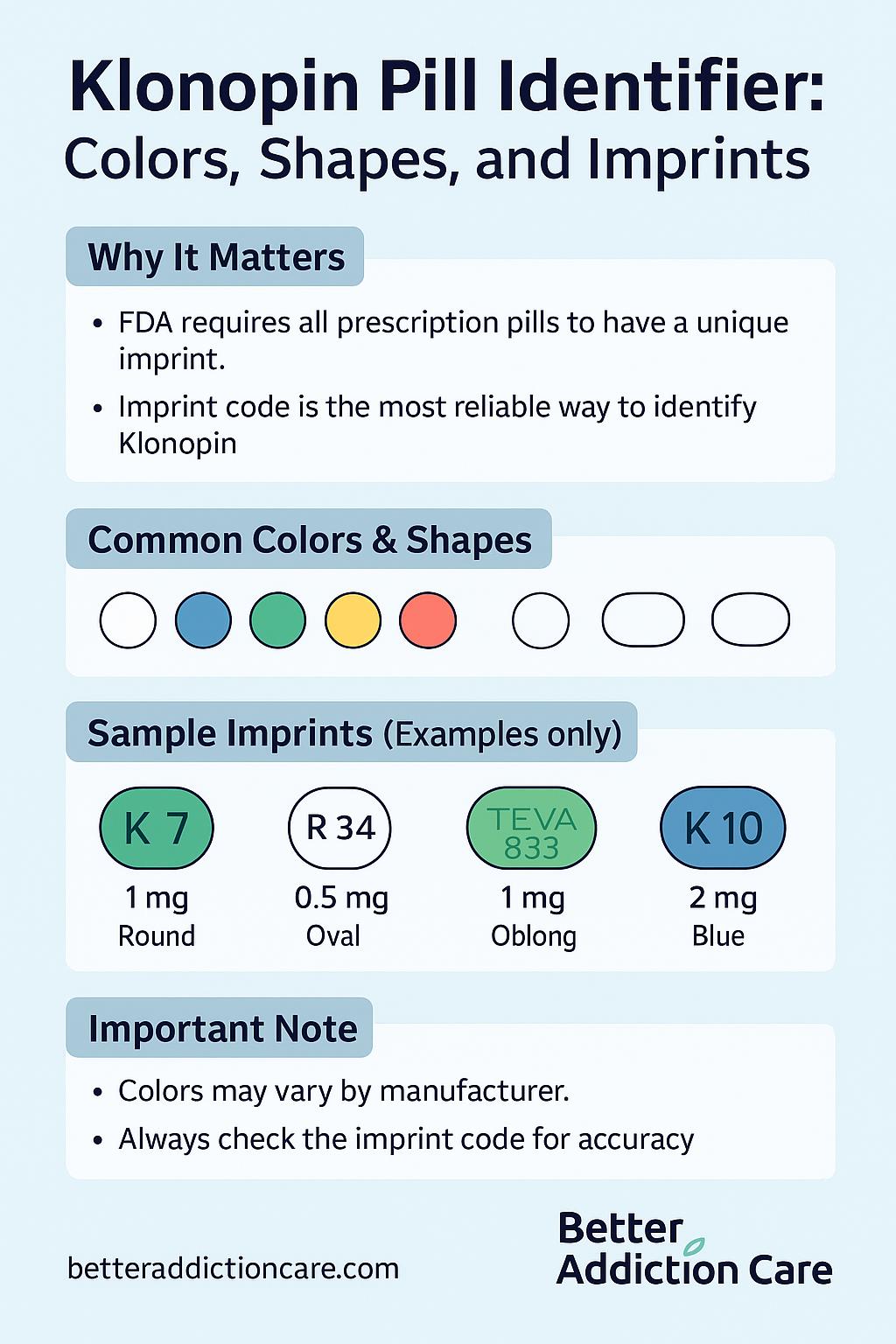
Klonopin isn’t just another pill—it’s often a lifeline for those managing anxiety, panic, or seizures. But there’s also worry—What if it isn’t the right pill?
What if this refill looks different? Or worse, what if it’s counterfeit? Klonopin can be reliably identified by its FDA-approved colors, shapes, and imprints.
Klonopin isn’t just another pill—it’s often a lifeline for those managing anxiety, panic, or seizures. But there’s also worry—What if it isn’t the right pill?
What if this refill looks different? Or worse, what if it’s counterfeit? Klonopin can be reliably identified by its FDA-approved colors, shapes, and imprints.
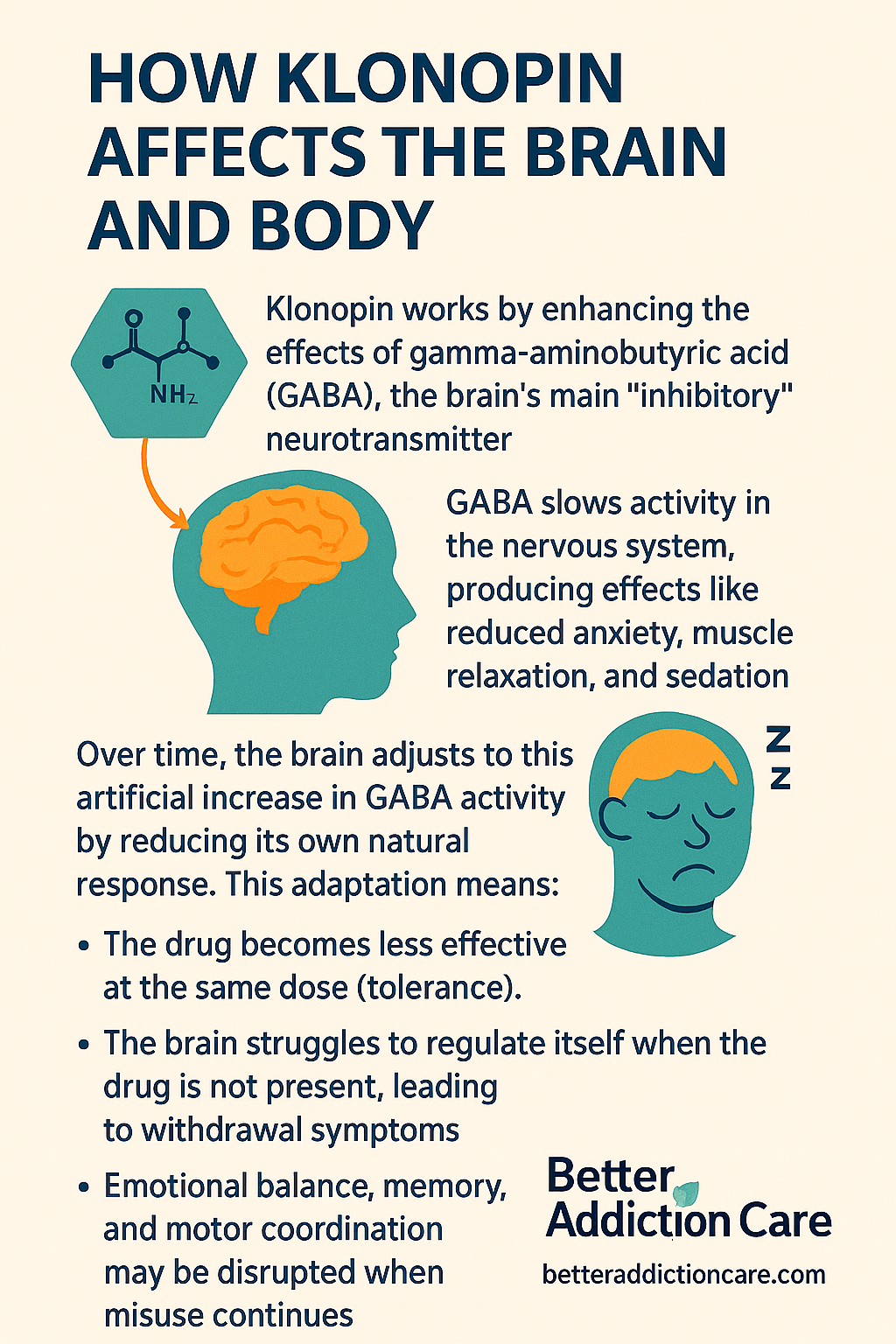
Klonopin (clonazepam), a medication prescribed to manage anxiety, seizures, and panic disorders, may initially offer relief but can gradually lead to dependence and addiction.
Klonopin addiction develops when the brain becomes dependent on the drug’s calming effects, leading to tolerance, escalating use, and difficulty stopping.
Klonopin (clonazepam), a medication prescribed to manage anxiety, seizures, and panic disorders, may initially offer relief but can gradually lead to dependence and addiction.
Klonopin addiction develops when the brain becomes dependent on the drug’s calming effects, leading to tolerance, escalating use, and difficulty stopping.
Hydrocodone is prescribed to ease pain, but for many, it brings a very different kind of suffering, dependence that reshapes health, relationships, and daily life.
What begins as relief after an injury or surgery can quietly progress into cravings, withdrawal symptoms, and cycles that feel impossible to break.
For care providers, families, and people around, this shift is heartbreaking to watch; for individuals, it’s overwhelming to live through.
Given the challenges, a critical question arises: What exactly is hydrocodone addiction, how does it affect people, and what can be done to treat it?
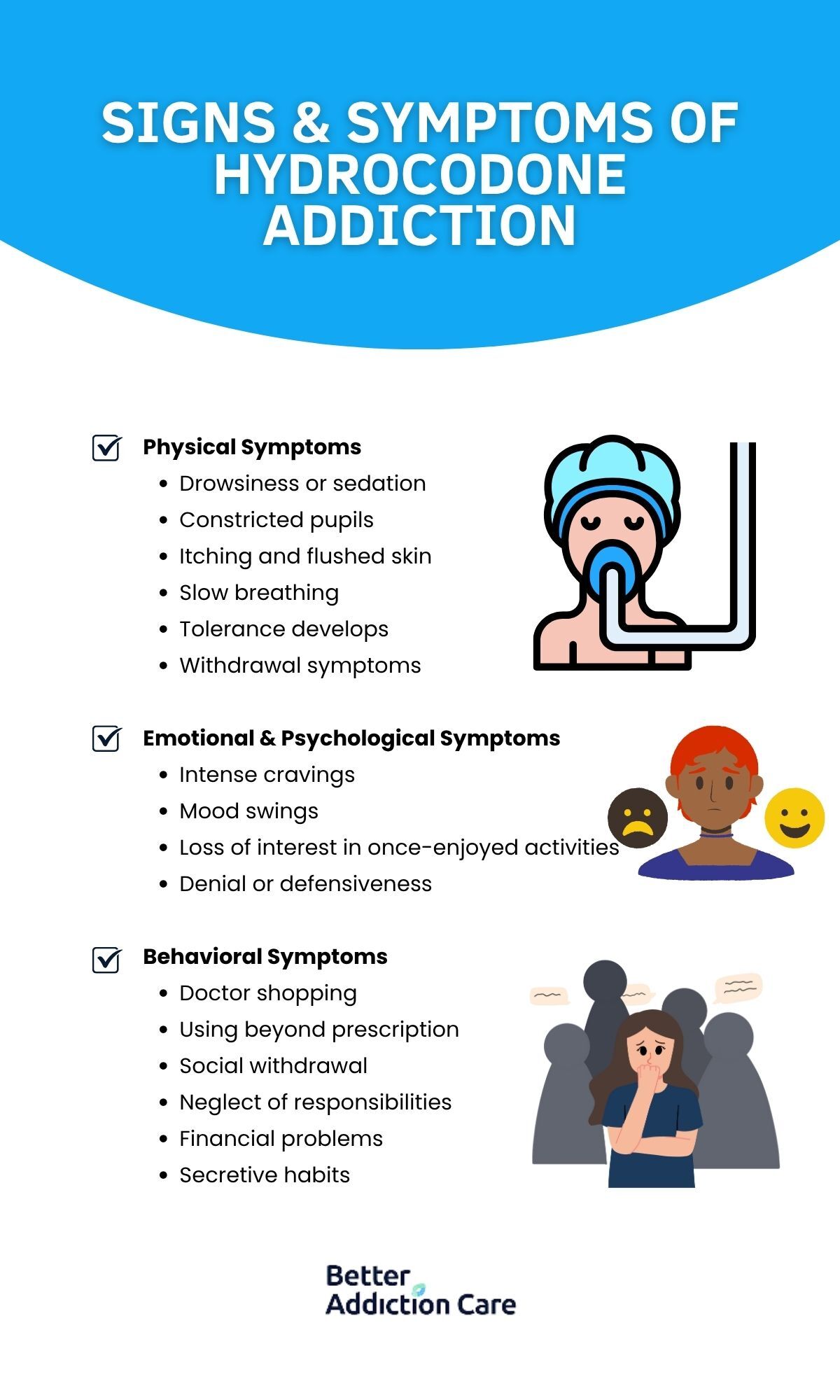
Hydrocodone addiction develops when repeated use rewires the brain’s reward system, leading to tolerance, dependence, and withdrawal if use stops.
Hydrocodone is prescribed to ease pain, but for many, it brings a very different kind of suffering, dependence that reshapes health, relationships, and daily life.
What begins as relief after an injury or surgery can quietly progress into cravings, withdrawal symptoms, and cycles that feel impossible to break.
For care providers, families, and people around, this shift is heartbreaking to watch; for individuals, it’s overwhelming to live through.
Given the challenges, a critical question arises: What exactly is hydrocodone addiction, how does it affect people, and what can be done to treat it?
Hydrocodone addiction develops when repeated use rewires the brain’s reward system, leading to tolerance, dependence, and withdrawal if use stops.
By calling us, you agree to our Terms & Conditions
For those seeking addiction treatment for themselves or a loved one, our calls are confidential and are available for 24/7 help.
Any treatment center receiving calls from the site is a paid advertiser.
Calls to numbers on a specific treatment center listing will be routed to that treatment center.
Calls to any general helpline will be answered by treatment providers, each of which is a paid advertiser.
By calling the helpline you agree to the terms of use. These calls are offered at no cost to you and with no obligation to enter into treatment. Neither this site nor anyone who answers the call receives a commission or fee dependent upon which treatment provider a visitor may ultimately choose.
If you wish to explore additional treatment options or connect with a specific rehab center, you can: browse top-rated listings, visit our homepage, or visit SAMHSA, or by calling 800-662-HELP. You may also contact The Florida Department of Children and Family Services